Batteries for Christmas presents and every day life

This isn’t going to be my last post with Christmas in the title. I warn you.

But this is just  a short little entry, without reference to my childhood about a good place to get cheap batteries.

7DAYSHOP is where I get all my batteries, and have done for years. Its based in Guernsey so lots of things are VAT free. I buy a box of 40 Duracell AA batteries for just over £13. Don’t even get me started on the price difference on CR2032s which are those ‘coin’ lithium batteries you need for so many things.

Postage is generally free, so when you next need batteries, just be a tiny bit more organised and get them from there.

Spicy butternut squash and coconut soup: soup for a cold day or for when you have a cold.

I’m in the mood for soup. I’ve got a cold. I’m cold. I’m fairly miserable, which my partner tells me is pretty standard nowadays (“you’re disproportionately miserable” he whispers to me in my ear).

Soup can only help can’t it? Plus it’s vegetables.

I came across this recipe last year. I can’t remember where from but when I feel better I will attempt to find out because it makes me REALLY CROSS when people don’t credit recipes and say “oh here is my recipe for XYZ”. I know recipes are all nicked from somewhere anyway, but as a professional writer, I care very much about the value of words. If you know where something comes from, sodding credit it you teef.

So this isn’t my recipe although I’ve adapted it to suit my own selfish means. I’ve adapted it in a very small way, because I’m just not that clever to do a handbrake turn with a recipe and completely reinvent it.

This is what you need:

A butternut squash, it really doesn’t matter what the size is since they’re all bred nowadays to be ‘supermarket size’ anyway. Peel it, which is a bastard job, and cut it into chunks. I cut it into chunks and then peel it, actually.
4 tablespoons of olive oil
1 onion, peeled and chopped
1 teaspoon of ground cumin
1 teaspoon of garam masala
1-2 teaspoon of dried chilli flakes(one gives it a nice warmth, two a kick, I’ve not tried more than that. The original recipe calls for three dried whole chillies which you cook with the squash, then take out two of them before the blending stage. I used dried cos we always have in)
6 garlic cloves, peeled
600ml chicken stock – made with a cube, for goodness sake. I’m all for chicken broth made from proper dead chickens when you’re using it as the actual stuff you’re eating, for pastina in brodo for instance but when you’re chucking it into a soup, a cube is just fine. I use Kallo organic cos it makes me feel better.
400ml coconut milk (the original said 200ml, but all the coconut  milk I find comes in 400ml tins and if you use 200ml you end up wasting the other 200ml. I think this is a shame, so I use the whole tin, it makes for a slightly creamier soup, but since when was that a bad idea? The point is, if you have a use for the other 200ml of coconut milk, use less and tell me what that use is).
Juice of one lime (not essential, so don’t panic if you don’t have it, but it adds a nice taste and has useful vitamin C).

Preheat oven to 200C.

Take 2 tablespoons of the olive oil, put in a small receptacle and into that put your spices and chilli. Mix around and then drizzle over the squash. Put it in the oven for 20mins. After 20 mins scatter over the garlic and cook for another 10 mins, after which the squash should be lovely and squashy and soft, if not give it a bit more.

Whilst that is doing, use the other two tablespoons of oil to soften the onion. Do it with the lid on. You want lovely transparent onion, all soft and relaxed, not mean and burned and angry.

Scrape the squash and all the spicy bits into a blender. Add the onion. Pour in a bit of the chicken stock so that it’s easier to blend the whole lot up. Blend it up. Brr brr brrr so that the whole lot is thick and velvety and GOOD.

Put into a pan, add the rest of the stock and the coconut milk. Heat it up, add lime juice, season if you want to (I never do, stock cubes have so much sodding seasoning already) eat it and think of nice autumn things and what you want for Christmas.

This just isn’t the most interesting picture, I mean, it could be custard. But I forgot to take a pic at any other, more photogenic point in making it. What would have been ideal is a picture of someone in knitted fingerless gloves, nursing a mug of this and wearing slouchy socks, kinda Toast-catalogue styley. Although nursing these days means a different thing to me, so I mean: holding the mug, not breastfeeding it.

Making sourdough: what equipment do you need?

As has been mentioned before, I like gadgets, I like buying new kit. But there are some things that are more important than others. Making sourdough bread should be about connecting you to an easier, but also harder, time. When things were simpler, but more effort went into them. I promise you that once you start making and eating sourdough on a regular basis, your life changes in little ways.

Yeh, yeh, whateva. But until that happens: shopping.

What to keep your sourdough starter in?

You need to be a bit careful about what you keep it in. A clean glass jar will do, but it has to have room for the starter to grow. If you refresh it to capacity, there’s a very real possibility that your starter could explode the jar as it ferments. I use a Kilner jar. You can use a large jam jar. You can keep your starter in plastic of course, but yuk.

My starter in its Kilner jar, aka the mothership

Okay what other bits do I need?

Disappointingly little, really. If you want a past-time that involves spending loads of money on kit, you need to take up fishing or golf. Things that I use and think are really useful are:

Large stainless steel bowls that I bought in Ikea once. Actually that’s a lie, I inherited them from my boyfriend when we moved in together. But you can buy stainless steel bowls anywhere. Don’t spend loads and bigger rather than smaller but not so big you could spin yourself round in them. But don’t sweat it if you don’t have the, any big old bowls would do.

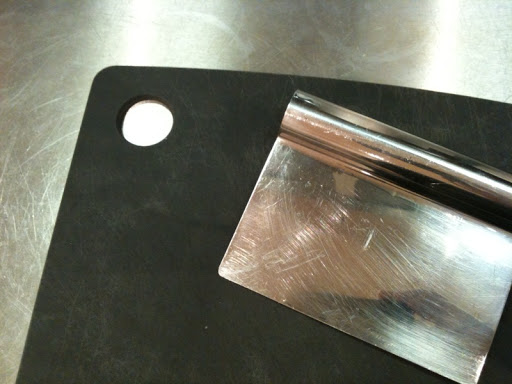
A dough scraper: absolutely worth buying if you don’t have one. When the dough is really frisky, there are times it’s hard to handle and I knead it using just the dough scraper, moving the dough around as I go. Without wishing to start sounding like an ad for it, ours is from Ikea. It’s stainless steel and I also inherited it when my boyfriend/partner blah de blah moved in together. See “living with a boy” as Monica from Friends once put it, has it uses. I recommend using a stiff (rather than those super flexi ones) dough scraper, insofar as I’m experienced enough to recommend anything bready. They make it easier to handle the dough and easier to scrap up bits of dough that have dried on any surface you’ve been working on.

Bannetons or proving baskets – covered in full here. You can make sourdough without them, but they make life so much easier and sweeter.

You also need something to cook the bread on. You’ll have baking trays, so use them. I use my Mermaid baking trays which I also use for tons of other stuff: not cheap but I bake a lot and they last years. I love the older Mermaid trays, the anodised aluminum ones rather than the non stick ones. Non stick, I find a bit scary. Again, any old baking tray will do, what’s important is to preheat it.

Top Gourmet chopping board with my scraper. 

Top Gourmet chopping boards – I really rate these. As chopping boards but also as surfaces to make your bread on. I have the big size one (40cm by 30cm) and I can move it around the kitchen as I work. You may not work like that and working on your regular kitchen work top may be fine for you, but remember that sourdough is hours in the making, which means it could be taking up that bit of work surface for half the day. I oil my board before each kneading and rest the bread on it (covered with an oiled bowl, so I lift the dough up, oil underneath where it was laying, then knead etc). So any chopping board will do in theory, but these are good: light and therefore easy to move around, hygenic (you can dishwasher them if you want to, bear this in mind when ordering the really big ones) and they store easily as they’re so thin. These are the future of chopping boards as far as I’m concerned. Plus they’re black so chic in my book.

What you really don’t need when you first start out:

You really don’t need a peel if you use bannetons, you just flip the bread out onto the tray (always preheat the tray).

You don’t need a bread stone. But when you get one, you’ll need a peel.

Special dough hand whisks: a fork will do just as well.

You don’t need a grignette or lame, just use a bread knife.

You don’t need a couche proving cloth until you start making baguettes.

Save all that stuff as incentives to go further into making sourdough and for present material.

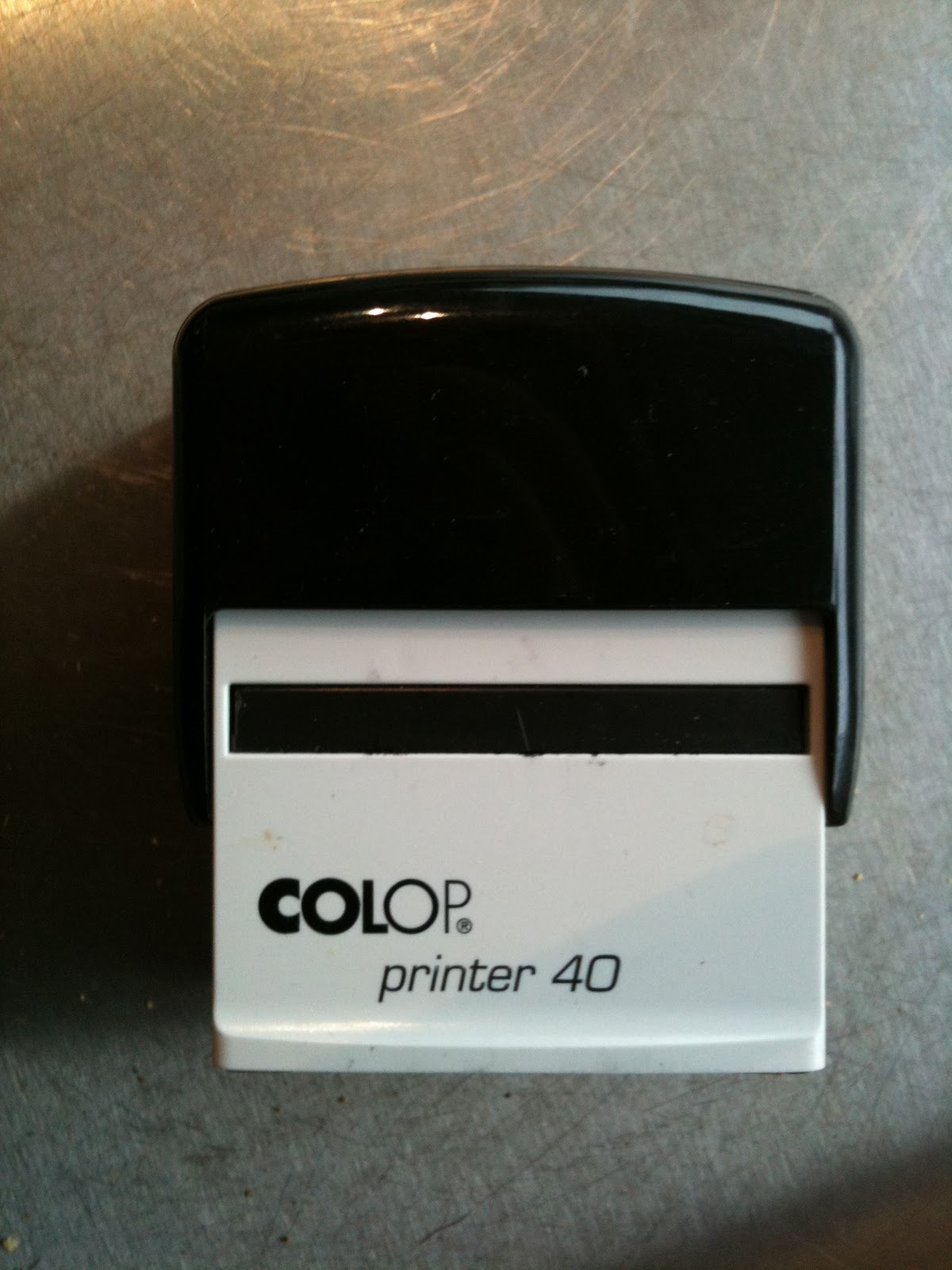
Gobbledegook stamp

I first came across this when I was writing a piece for the Guardian’s Education supplement about What to Take With You to University. Which I researched heavily because I never went. I was far too busy joining the army and learning how to strip down my personal weapon (a Sterling Sub-Machine gun, bullet capacity: 32, although only a numbskull would load it with anymore than 28) in my “noddy suit” (NBC suit – nucleur, biological, chemical suit) in a gas chamber with actual tear gas being pumped in. And interrogate people. And pick locks. And avoid assault courses.

So, to get to the point. You know how everyone is so obsessed with not getting their identity stolen theseadays? How you must shred everything that has any personal information on it whatsoever? Well, this is easy to do if you have an industrial shredder attached to a belt around your waist and have something you can do with the shredded paper (you can’t recycle it), such as keep a rabbit or a gerbil or run a mail order business (you can use if for packing, although be aware if you use a strip shredder – one which shreds paper into long strips – it is theoretically possible to piece together a document again, better to go for a cross-shredder).  But otherwise, it can mean you end up with lots of bits of paper hanging around for the mythical day when you lug the top-heavy shredder out from under the desk, plug it in, and shred everything you’ve saved up.

Obviously, you should shred bank statements (and wow, what’s that like, to not keep bank statements??) and just about anything if you’re Andy Coulson. But lots of things just need you to obliterate your name and address.

This is where the Gobbledegook Stamp (be aware this is the name I have given it) comes in. When I first featured it, Lakeland had just started stocking it (some of the reviews for it on the Lakeland site are not promising, saying you have to ‘stamp over the address a few times’, well der, yes, big deal?). They weren’t sure they’d carry on stocking it and I had to grapple with them slightly to let them let me feature it: it’s now a best seller. You just happily stamp over your personal details and then put the letter in the recycling as per. You can get replacement ink pads for it at any stationers although I’ve not had to replace mine yet.

And with just over 100 days til Christmas, it’d make a very unglamorous little gift for someone paranoid in your life.

Arkansas bread

I have a habit of not being able to say certain words correctly. Often I’ve said a word the same way for years, in the privacy of my head, but no-one knows I can’t pronounce it properly.  It’s rarely a problem unless I have to suddenly say that word out loud and can’t get away from it and then people start pointing and laughing. And because of this, I often get words mixed up.

It started with ‘calzolaio’ and ‘colazione’. When I was a little girl, and in Italy with my Daddie (I feel compelled to point out that my parents are still together, my mother was just back home in central London, this wasn’t a ‘summer with the estranged parent kinda thing), I remember seeing a sign saying ‘calzolaio’ (cobblers, shoe-menders). The next day I said to my father “I’ve found a place we can go to for breakfast (colazione).” You can guess the rest.

Like a lot of stupid people, I used to pronounce ‘Arkansas’ just as it looks ‘Ar-Kan-sas’, instead of Ar-kan-saw. In my head, I still do.  I’m not related to George Bush, I promise.

What has any of this to do with bread?

In the search for more sourdough recipes, I recently bought Andrew Whitley’s Bread Matters. Loads of people, far more experienced bakers than I, rave about this book. So I in no way mean to detract from that. The fact that I didn’t get on with it – I didn’t – is entirely due to my own failings.

It’s a big book with almost no photographs. I need pictures to help me with the words where food is concerned. Where almost anything is concerned. The way Whitley makes his sourdough is also different from the way Dan Lepard makes his. I can see how people would think sourdough is even more complicated than it is after reading Bread Matters. I just couldn’t get my head round it and I almost ended up crying.

Anyway, in it was, and I’m imagining still is, a recipe for Arkatena bread. Which I immediately, and persistently read as Ar-kan-sas bread,  hence the name of this post. I fancied the look of it because it contains gram (chickpea) flour, which I had in and wanted to find a use for. But I could see instantly that I’d never be able to follow the recipe for it, so before I threw myself down and started kicking my feet into the wooden floor, I decided to bloody well vary the recipe to suit myself.

This is what I did.

I used 300g white levain starter

to this I added

50g gram flour
50g wholemeal flour
300g white bread flour
7g sea salt, ground up in a pestle and mortar
300g cold water

I mixed the starter up with the water, then added the flours and salt and then kneaded it for 10-15 seconds at a time, resting it for 10 mins. Then kneading it for 10-15 seconds and resting it for another ten minutes, then kneading it for 10-15 seconds and resting it for another ten minutes then repeating but this time resting it for

30 mins
1 hour
1 hour
1 hour


Then I shaped it and put it in a banneton to prove overnight at 4 degrees. Then I cooked it at 220 for 20 mins or so.

It was probably the most ‘worthy’ loaf I’ve ever made, in other words it was quite dense. And it smelled very ‘yeasty’ despite me not adding any yeast. It would be very, very good with some soup or cheese and chutney. I’m not sure I’d like it for sandwiches.

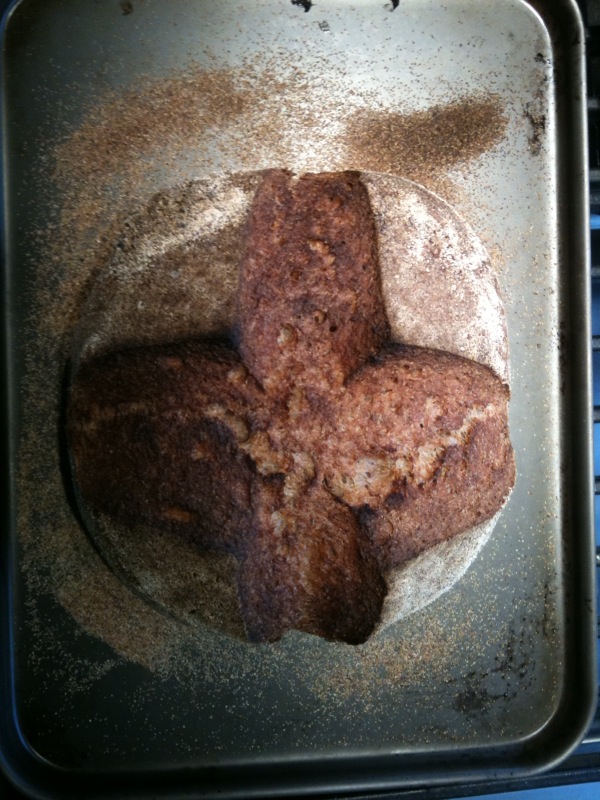
The Arkansas bread as I’ve named it, with a big cross slash to celebrate the forthcoming visit of the Pope.  Yeh right.
The crumb. Pretty impressive save, me thinks.


Chocolate Ganache Hot Chocolate

I was going to write about Fruit Leathers aka Fruit Roll ups. But I just can’t be bothered. It’s too cold (at least where I am, which is in Suffolk) to write about blackberries and fruit stuff.

Instead I want to write about hot chocolate.

I’ve never been satisfied with commercially available hot chocolate mixes. My dad, in his coffee shop that he used to have, used to make the most exquisite hot chocolate – made with Cadbury’s Hot Chocolate syrup which you couldn’t buy it in the shops.  Cadbury’s has stopped making it now anyway. My dad would make me a cup of half hot milk with the syrup and half ‘schiuma’ – what you English call ‘foam’. It was the best ever hot chocolate and has never, really, been beaten. I’m guessing that if I tasted it now I’d think it was really sweet. But memories, and all that..

For a long time, in the absence of Mr Cadbury’s syrup, the way I’d make hot chocolate was by heating up some milk with some 70% cocoa content chocolate in it, then whisking it all up. It would be dark, rich and not too sweet.

When I was out and I could get it (and you can’t here in Suffolk, please could you open up a branch Antonio), I’d drink Carluccio’s Cioccolata Fiorentina, which is served in espresso cups and is dark and custard-thick. It’s delicious – I urge you to try it if you are ever in a Carluccio’s. You can buy the powder to recreate this drink at home, but it’s hard to replicate what they do in the shop and to have any hope of success you need to make it in large quantities. Also, don’t look at the ingredients as it will put you off.

But the idea of a small cup of something that really hits the spot appeals. I’ve never been a fan of large, mediocre drinks: small and potent is what I’m after.

Last year my youngest daughter was baptised. For the cake part of the party, I made lots of chocolate cupcakes using Nigella Lawson’s recipe (Nigella Domestic Goddess p.168). The icing was chocolate ganache – chocolate melted with cream (I don’t really do sugar or buttercream icing, I mean, it’s nice, for the first mouthful but then it leaves you in a diabetic coma). Nigella’s recipe always makes more ganache icing than you could possibly ever pour onto the cupcakes (as it is, the  icing is a good centimetre thick), but I always make the amount she recommends because I live in fear of my cupcakes one day going naked cos I skimped. On this occasion I had plenty left over, so I kept the rest in the fridge.

(For those interested, I topped the cupcakes with an orange wafer rose from Jane Asher. The effect – orange on a glossy dark brown cupcake in brown paper holders – was smart and sleek which is just what I wanted).

As the party wore on, some die-hards remained. It was October and the evening air was fairly fresh and I fancied hot chocolate. I looked at my now set-solid chocolate ganache in the fridge. I wondered what would happen if I melted it again, added some hot milk and whizzed it up with my Aerolatte frother wand-thing.

It made hot chocolate that was so superb that everyone commented on it, even though by that stage they were fairly tipsy and deep in conversation. Everyone said it was the best hot chocolate they’d ever tasted, even those I didn’t get in an arm lock.

I served it in little ceramic cups so you got just a few mouthfuls, which is all you’d want as it’s imaginably rich…

Chocolate Ganache Hot Chocolate

I’ve adapted this from Nigella’s original recipe as otherwise you’d be drinking it for a week…

90g 70% cocoa chocolate (I use Waitrose Continental – which comes in a black, rather unassuming wrapper – it’s very good)
40g milk chocolate (I use Green and Black’s as it’s a higher percentage cocoa than most milk chocolates, but I don’t use its plain chocolate as I don’t like it as much as Waitrose’s)
100ml double cream
a few drops of vanilla extract (about quarter of a teaspoon).
Milk to suit

Melt the milk and dark chocolate with the cream. You can do it straight in a pan but you may feel safer doing it in a bowl, above a pan of boiling water. Stir until melted.

You should have a very thick mixture. Warm up some milk separately, then carefully and slowly add it to the chocolate/cream mixture. What you’re aiming to do is loosen up the ganache, but you don’t want to add so much milk that you change it into a really runny mixture. You want to end up with something that’s thick: so thick you could eat it off a spoon, but is still drinkable.

Look, no-one said this was going to be easy. If you want a normal, easy to make hot chocolate drink, get any old shit from the supermarket. This is proper stuff that will warm your body and your soul because it requires a bit of care in the making.

It will be worth it.

If you need to homogenise the mixture, you can whisk it up. I use my Aerolatte whizzer thing.

Serve in small espresso cups. If you don’t want to use all the mixture, just refrigerate it before you add the milk; and if you don’t end up eating it straight out of the fridge with a spoon, just melt it down and add warm  milk and whisk it up like that. This way you can actually make just one cup at a time.

Enjoy it. It’s good.

How to change the rings on your iPhone so that it doesn’t go to voicemail really fast and then you run up a bill made up largely of just ringing in to your answering service..

…and other stories.

In the old days, before God had made light, I used to have Nokia phone. You could change how many times it rang before it went to the answering service really easily.

You went into Phone Settings and there it was.

Not so the iPhone. It comes pre-programmed to go to voicemail pretty fast. I mean, not so fast that you can’t get to it if you’re just sitting there staring at your iPhone, which I know some people do. But if you are a busy person, like what I am, and have children and a job and a life, then you often don’t get to it just in time.

I think this is a conspiracy between Apple and phone companies, so you have to ring in to your voicemail more than you’d like, which (unless you are lucky enough to have an older plan where it’s part of the package) means you make calls outside of your call plan and pay more etc etc.

Anyway, for those that don’t know*, here is how to change it so that your iPhone rings for as long or as little as you want.

It doesn’t appear as if you can make it go for longer than 30 seconds before it goes to voice mail. Such a conspiracy!

*and if you knew, why didn’t you share?
** this worked great for me on my 3GS/T-mobile. If you’re going to do this then do it at your own risk!

A step by step guide to sourdough

I thought it’d be useful to do an entry with a step by step guide to sourdough.

Not, I will add quickly, because I am any sort of expert. But because I know a few people who are interested in ‘getting into’ sourdough and have been asking me questions about it, so I thought they might find it useful. But also there’s nothing like someone who has just learned how to do something to explain it back to you. I know that I had a few questions when I first started (which was only a few months ago!) so this is really to help those that are even greener beginners than I.

Hopefully, you will have got yourself a copy of Dan Lepard’s The Handmade Loaf, which is the book that got me on this incredibly exciting (je jeste pas) journey into artisan bread-making. You will have your starter, which is explained in great detail in his book. And you will know the basics of what you’re doing. I include the basic recipe that I now use but really  this is to show you what to do regardless of which recipe you follow.

The basic recipe I follow

200g starter

340g water (just from the tap)

500g flour (I use 400g of white bread flour and 100g wholemeal bread flour/spelt)

a teaspoon of salt – I use Maldon

The equipment that I use and find useful:

A large stainless steel bowl, actually two.
A clean, baby muslin
A little whisk that I picked up from somewhere (Bakery Bits does a similar one here)
A dough scraper
A fork

You’ll need (if you don’t follow basic above)

Flour – according to recipe
Cold water – according to recipe
Salt – I use Maldon sea salt ground in a mortar and pestle – according to recipe

All Dan’s recipes ask for X g of starter. It took me a while to work out that if I didn’t have the actual amount in my starter jar, it didn’t matter. I could pour in what I had (not all of it! you always keep some starter to make more out from it), and then top it up with water and flour. But if you do this – i.e. feed the starter in a bowl to make more of it – you’ll need to leave it for a few hours before it’s ready.

For example. Let’s say the recipe calls for 500g of starter. If you have that to spare in your jar, great. Spoon it in to a bowl. But what about if you don’t really have that to spare?

After a while you will get to know roughly how much starter you have in your starter jar in the fridge. For example, I pretty much know I always have 200g of starter to spare, but I’m pushing it to get to 250g and I would never have a spare 500g in the jar.

So I get my bowl, put it on the scales and, for white leaven I measure out 100% of flour to 80% water (for a rye starter it’s more like 100% floor to 90% water). So for example, I’d put in 150g of flour to 120g water, which weighs 350g on the scales. I then top that up with 150g of  actual starter from my jar.

It sounds complicated, and sometimes the calculations do cause me to stare into space and bite my lip and ssssh my children if they try to talk to me, but you do get your head round it.

The easier way I remember it is that the ratio equates to:

100g flour to 80g water or,
125g flour to 100g water or,
150g flour to 120g of water, and I use those three formula calculationy things to muddle me along.

If you’re using starter that’s all straight from the starter jar, you can go straight onto ‘first dough’.

If not then you you now mix up the starter with a fork or a whisk or a spoon until it’s all incorporated (it will be quite thick). Leave it for a few hours until it’s looser looking, more relaxed, with some bubbles. If you imagine that when you first mixed it up it was a bit uptight, top button done up, now it’s slipped into a pair of velvet slippers and a smoking jacket and is having an evening smoke.

Remember to refresh your starter in the jar. I use 125g flour/100g of water or 100g flour/80g of water depending on how much space is in the  jar.

First dough

I call this first dough, just cos. It’s when you add the other ingredients to the starter, which will be

Flour
Water
Salt

according to the recipe that you’re following. You add it all in and mix it around. The dough will look ‘scrapy’, with bits sticking out maybe.

Do not panic. Do not try to mix the dough until it’s smooth. You will be there all day and start to cry. Believe that great things can happen.

This is a white sourdough dough after the very first mix. Looks pretty unruly huh?

Let the dough rest for ten minutes; all of Dan’s sourdough recipes ask for rests of

10min
10min
10min
30min
1hr
1hr

then it can vary to another 1hr or 2hrs. You’ll need to see the recipe but once you’ve gone past the first 2/3  stages it’s pretty much all of a muchness with a tiny knead and then a rest of X amount of time.

So, first rest of ten minutes. I just let it rest in the bowl I mixed it up in. The bowl will have scraps of dough around it and every time EVERY TIME, my partner says “can’t you scrape them up into the dough”.

And the answer is: no. It doesn’t work like that. So you’ll have a ball of scruffy looking dough, kinda dry looking (DO NOT be tempted to add more water), in a bowl with bits all over it. See the picture above.

Cover it with a dishcloth and bite your nails nervously. Set the timer for ten minutes.

In the meantime, oil a surface. I use sunflower oil and recommend you do too. Dan recommends olive oil, too, but he’s probably richer than you or I. Sunflower oil is just fine. I use a big, big chopping board so that I can move my dough around the kitchen. Remember sourdough bread takes hours to make, so unless you are sure you can remain at the same work station unmolested, or don’t mind clearing up after yourself each time, use a board. I also find a dough scraper invaluable. I got mine from Ikea, it’s stainless steel, it’s great. I use it when I go back to the dough after each rest to pick the dough up with and move it around. I also oil the board before each knead. Oil works great and doesn’t alter the integrity of the dough. If you add flour or water, I found, you can get into a big sticky mess. Use oil, be brave.

After ten minutes, turn the dough out onto the board and start to knead gently. I do 12 kneads, sort of turning the dough in on itself, and around. Amazingly, you will see the dough start to get smoother. Don’t panic if you’ve still got some bits that don’t seem to quite adhere, and it’s not yet as smooth as it could be, although by this stage you should have a dough with promise.

This is the same dough as above, but after its rest of ten minutes and its first knead. Big difference isn’t there?

Now: either oil a bowl and put the dough in it, covering it with a cloth (I use the baby muslins for this, but a dishcloth would do fine, obviously you don’t need to have had a baby and have baby muslins to do this FFS) or put the dough on the surface you just kneaded it on and cover it with an oiled bowl.

If you have lots of large stainless steel bowls, like I do, then lucky you. You don’t need to wash up just yet. Otherwise you’ll need to wash up the doughy-bowl, dry it, oil it and put it to use.

Set the timer for un’altre ten minutes.

This is the same white sourdough dough, after its third lot of ten minute rises.

At each stage the dough will have relaxed a little and started to grown. At first, when you’re only leaving it for 10 or 30 mins, you won’t notice it so much. But when you get to the longer proving times, you’ll see how it stretches out and relaxes. When you first get back to the dough you’ll also feel  how it’s softer and starts to stiffen up as you knead it.

Don’t be tempted to knead it more than 10-15 seconds.

Et voila le dough after the first one hour rise. You can see bubbles on the surface yes? Good sign.
After the second, 1hr rise. The dough is bigger, more relaxed, smoother. A bit like me after Christmas.
Here it is after its 2hr rise. Just before it’s shaped and put into a banneton for its overnight sleep.

I should point out that the bread-heads always say that if it’s warm (like a hot sunny day or just if your kitchen is warm) then you might be able to leave your bread for less time, say 40 minutes instead of an hour. I’ve never bothered with this particularly and always do what time suits me. Equally, if you leave the bread for longer than ten minutes (or 30mins or an hour or whatever rest you’re on), cos the phone goes, or Corrie is on, it doesn’t matter either. Obviously you can’t completely take the piss, but sourdough is a bit like a very loving/drunk parent/partner: it is very forgiving.

When you’ve done your resting and kneading for the last time, you shape it into a ball, let it rest for ten minutes and then shape it into the final shape you want and put it to prove in a lined bowl or banneton for the last rise of whatever the recipe says (usually about 4hrs or so). I always do the final prove (prove = rise) in the fridge, cos that’s what works for me. I leave it for 10-36hrs for white dough, and up to 72 hours for wholemeal/rye etc. I haven’t experimented with longer than that  yet.

These are my little loaves after ten hours in the fridge. They don’t look massively risen, but comparatively, they are. I wanted two smaller baton shapes. Had I put all the dough in one basket it would have been up to the top by this stage.

In the morning this is what I do: I preheat the oven to 220C. I put in two baking trays, the one I will bake the bread on goes on the top shelf. The tray I will put the ice cubes on will go on the bottom shelf. Don’t use your best tray for the ice cubes.

When the oven is up to temperature, fill a glass with ice cubes and get your polenta ready. Take out the top baking tray – the one that will receive the bread – and dust it with polenta. You can’t put the polenta on before this (i.e. at the time of first putting the tray in the oven) or it will burn.

Turn the bread out onto the polenta. This is where the linen lined bannetons really come into their own, because it makes the process easy.

These are the loaves, turned out onto a polenta dusted tray and slashed.

Don’t be afraid to slash the loaves. Even if they look like they’re collapsing a bit when you do it. They will recover in the oven. Use a bread knife: be confident and slash the dough deeply, the deeper you slash the more room the bread has to rise in the oven. Try to cut, rather than push: in other words let the knife do the work, not you pushing down. I do about four slashes for a 600g baton shape. Experiment with what works for you.

When you’ve slashed, put the bread into the oven, and just before shutting the door, pour the ice cubes onto the bottom tray. They will fizz and steam. That’s good. That steam will keep the bread moist. If you have a water sprayer, you should also spray the top of the bread. This is important because once the crust has hardened, the bread can no longer rise, so the longer you can leave it before the crust hardens, the more chance you have of ‘oven spring’ – the bread making that final push upwards in the oven.

Things that really make a difference:

Slashing – your bread won’t be so aerated without it.
Ice cubes –  you won’t get such a good crust or so much rise.
Preheated baking tray – you won’t get such a good crust or such a good rise.
Polenta – you can do without it, but it produces a really professional finish, even if it is only on the bottom.

The finished product

That’s it!

Gardening gloves wot are great.

I was born in Selfridges. Well not literally, but almost in that I was born just down the road and that’s where I lived til I was thirty. Most of my family have, at one time or another, worked in Selfridges. My First Holy Communion dress was made there (my aunt used to work in the alterations department). So I know lots about Selfridges, and Oxford Street. As I once said to a fishing ghillie, who asked me what sort of terrain I was used to, I’m comfortable with concrete and carpets.

Growing up a stone’s throw from Selfridges, in a two-bedroomed mansion block flat, didn’t teach me much about gardening however. I did have an impressive window-sill collection of plants. And when we went to Italy we had an orchard and my relatives had land. But gardens? Nope.

Three years ago, I bought me a house in Suffolk. We now have just under one acre of land. I have no idea what to do with most of it. The reason we bought our funny little 1960’s house (little being a good, descriptive word here) was because the garden that came with it was the best we’d seen. The former occupants were very keen gardeners. VERY keen. We have lawns, and a little formal garden at the back, and a woodland walk bit and lots of trees (which I’ve learned the names of, mostly) and borders n’ stuff, it’s all very magical and perfect for children to play in.

But I have no clue at all what to do with it. I am not exaggerating, not one single bit, when I say that I can tell a tree, I know what grass looks like and I can identify roses and daffodils. And moss. But that really is about it. People I know come round and say “but darling, look at your cornus controversia traversia fantasia tree, it’s divine, how did you get it so tiered?” and I think “do my gardening for me.”

When we first moved in, driven by keen enthusiasm and with only one child to look after (which let me tell you, is EASY, retrospectively) I decided one day to do some weeding of things that looked, to me, like weeds. To be fair to me, which I always try to be, I did check with my partner, who said “yes them’s is weeds”. So I pulled them all up.

Later I discovered they were poppies. Wild and rude poppies (rude cos they just go where they like) but poppies none the less. It’s taken them three years to recover from my frantic plucking. I like poppies.

In 2008 I could ignore the garden cos I was pregnant, and shuffling around like a Barbar Papa. In 2009 I could ignore the garden because I’d just had a baby (at HOME, a HBAC, yes it is possible people). This year I’m realising that unless we want to end up with a garden like that one in The Secret Garden (except without the possibility of staff, or a TV crew, to make it alright) I was going to have to do some work in it.

But, as I’ve mentioned in other posts. I’m a girl that needs kit before I can do anything. Growing up, I was forced FORCED to work in my parents’ cafe. One of the things I did was the washing up. There is nothing like doing washing up of un-known people’s dishes to really put you off washing up. I remember coming across bits of food floating in the water that, to this day, can still make me retch at the memory. I was too small to wear rubber gloves (are you crying yet?).

These days, when I am washing precious things, things that cannot go into the dishwasher, I will only do so if wearing rubber gloves. I need that degree of separation because I’ve been deeply scarred.

So of course, with gardening it is obvious I need lots of my own kit if I’m to really take any interest in it.

I have my own wheelbarrow, but that has since been stolen by my eighty-year old father who will insist on helping out in the garden. My partner also nicks the wheelbarrow. So I’ve lost interest in it.

I NEED really expensive secateurs, because we all know that will make me much cleverer and more capable in the garden. But until I’ve ascertained which those are to be, I make use of my three other pairs of secateurs, all of which have broken/rusted because I don’t take care of them properly because I haven’t bought them especially for me.

So finally we get onto gardening gloves. It is completely unfathomable that I could garden without them. So three years ago I bought some Briers gardening gloves from Chartwell, Winston Churchill’s old home. They were cream, and leather and really rather good. But they too got ‘borrowed’ and then they hung on the washing line until they turned brittle.

I bought some very good, green, leather gauntlets, reduced to a fiver (from lots more) in Johnny Lou Lou’s last year. But the mice ate them, goddamit, in the garage. Then I ignored my own advice and bought several pairs of cheap gloves from Homebase, all of which were totally rubbish.

Two weeks ago, I put out an appeal on Facebook for good gardening gloves and my online friend Vicky R, told me to try Atlas Gardening Gloves. I was suspicious because I’d only ever worn leather gardening gloves. And these were rubber nylon things. The pictures of them are a bit misleading, because they look like they’d be thick and unwieldly, like a beefed up rubber glove. But they’re not.

Blimey the look enormous. I promise I haven’t got Shrek hands. Photographed here on yet another stainless steel surface in my kitchen.

God they’re fantastic. I mean, I know it sounds completely mad to rave about a gardening glove, or anything, in that ‘they’ve changed my life way’. But they have. Here’s why:

They’re really sensitive, so you can do almost anything in them, from coaxing out a weed root, to handling really rough weeds. What the pics don’t really convey is that they’re really soft, you can scrunch them up in  your hand.

They scrunch up small, not particularly useful per se, but means they’re flexible, which is.

Because of this: they’re not so tough they’d be able to handle super hard thorns (you can get some others for that, which I’ve yet to try) and I have stung myself on the back of the hand with a nettle (although that’s good for you in the long run init, protects against arthritis) because the back of the glove is less protected to make the glove more flexible. But I lived.

They come in all different colours, which I like, so I know which are mine.

They’re washable.

They’re cheap compared to leather gloves. But actually, so much better I think.

Sizing: I have fairly small hands, and I got a medium, which fit fine, but with room. I may go to a small next time for uber sensitivity and pretend I am a garden surgeon. They’re not like rubber gloves in that hard to get off way if they’re too small, because they feel like fabric.

So the upshot is that I have been out in the garden pulling up actual weeds (since that is the only thing I am trusted to do) regularly.

Vicky gets them from eBay where they are cheaper. But I got mine direct where there is more selection.

So there you have it.