Category Archives: Consumer

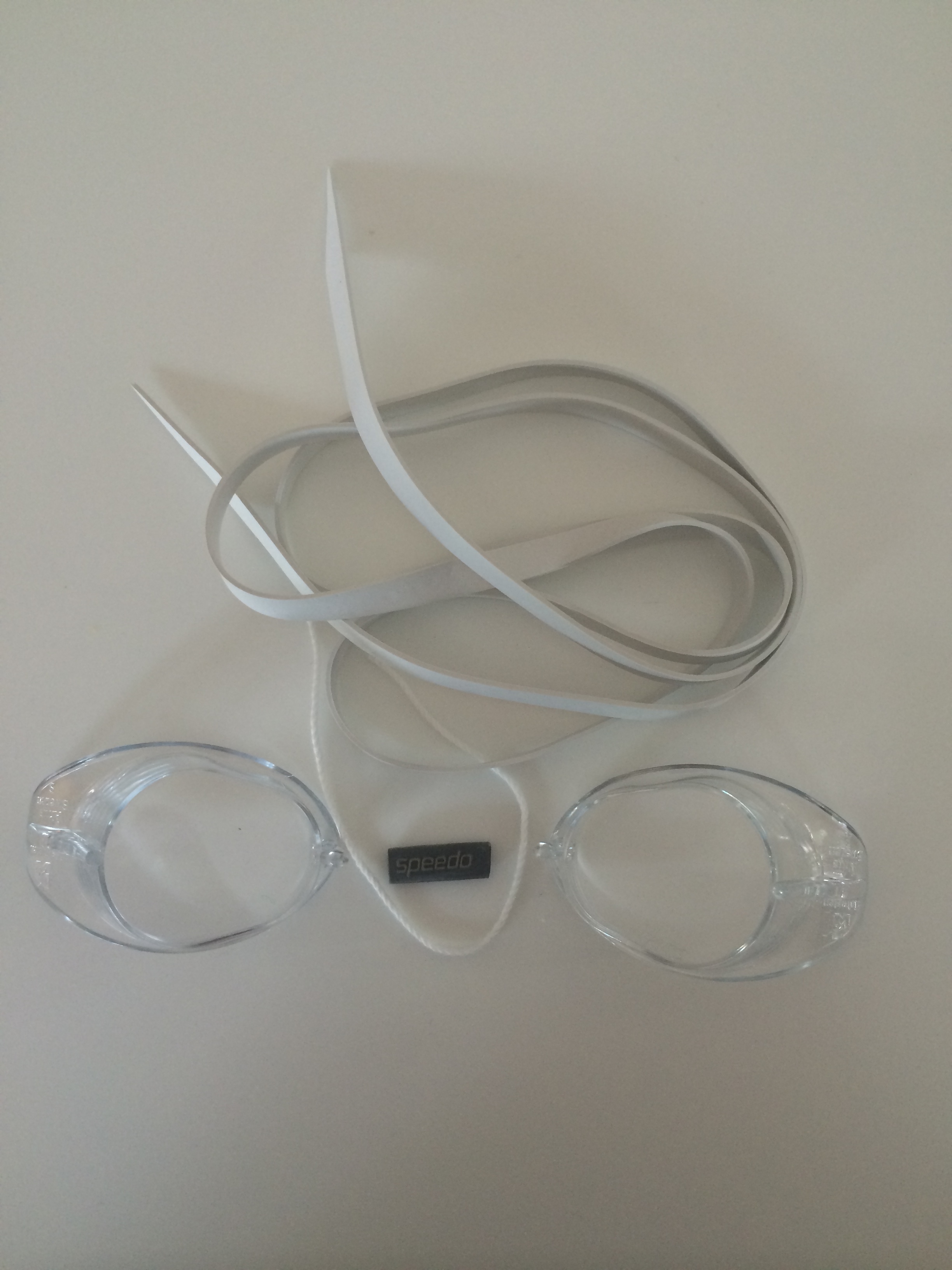
Speedo Swedish swimming goggles

I swim a lot. This sentence seems an incredible thing to be able to write given that, I didn’t learn to swim until I was 26 and I am scared of water. But, I control it. I swim only in pools that I know, that I’ve checked out for giant plugs into the underworld. I also swim, these days, almost exclusively outside. I don’t mean in the sea or in rivers, that would be too scary. But in outdoor pools.

And swimming outside necessitates mirrored goggles. At least, it does for someone like me who is never out of prescription sunglasses the rest of the time.

My last pair of goggles lasted about 20 years. Perhaps because there was a fifteen year gap of not swimming very much in the middle. But as they were starting to fray, I looked around for a replacement. Goggles are so individual and  you see most people, in the pool, between lengths, adjusting theirs and shaking out the water. I just thought this is what you had to do.

Then I saw Swedish goggles. These come in a kit. They are so cheap compared to normal goggles: I paid £10 for two pairs, one mirrored one plain, which is just what I need (mirrored is no good at night time/dusk, you need clear then). The reviews were glowing.

IMG_8486

I never think that same experience will apply to me. I read about people finding things amazing and ‘the best ever’ and I think “I bet that won’t be my experience”.

I hesitated before building the goggles because, for some reason, I thought it would be tricky. You get the goggles in pieces: a latex head band, two eye pieces, a nose bridge and a piece of string, per set of goggles. But it was easy. Sure, I got my partner to help me hold the lenses in place whilst I tied the string. And sure, I didn’t bother to tidy up the string over my nose so it looked slightly bonkers, until my friend Jess (an ex jeweller) offered to sort it out for me and made them look really cool. But it was easy.

The big thing about Swedish goggles, other than you make them yourself and fit them exactly to you, is that there is no padding. What can I tell you, they’re somehow really comfortable and… best goggles ever. They fit brilliantly, I never have to adjust them once I’m swimming and no fogging up so far. You also get great all round vision (you don’t realise how restricted your vision is with conventional goggles until you try these) and I love how minimal they are.

You will need to do an internet search for them. Mine cost £10 for two pairs, you can get them even cheaper. And if you need any help in putting them together you can look on You Tube. Just put Swedish Goggles Fitting into search.

The Suffolk Flower Farm

Yesterday I went to the Lavenham Farmer’s Market and had a completely wonderful time, as usual. I swear they must pipe oxytocin through the hall there.

As I walked in, I saw a woman walk out with a small posy of really lovely flowers. And I clocked them and thought “wow”. And as soon as I walked in I saw this amazing stand of flowers saying “grown not flown” with the most beautiful garden flowers in bunches, in pots. And, after I’d stared at them all for a while,  I bought a small posy of flowers for £5 (see pic above).

They are lovely and if you live in Newmarket, Sudbury, Cambridge, Bury St Edmunds or Haverhill you can have lovely locally-grown flowers delivered. The company – the Suffolk Flower Farm – also does special occasions and farmer’s markets where you can pick up smaller bunches.

The usefulness of a foam roller

Fourteen years ago, after receiving some money for Christmas, I decided to put it to Really Good Use and hired myself a personal trainer.

Up til then, I thought PTs were for rich or famous people and, being neither, I thought it was a deeply selfish thing. But, it was some of the best use I’d ever put money to. I majorly lucked out with my first trainer, Donovan. He was brilliant. I got into the best shape of my life and he introduced me to exercises and pieces of equipment I’d never heard of but which were brilliant. Then the selfish bastard left to live in Australia.

He’s back now and over the border in Essex, but, sadly, a bit too far for me to travel to otherwise, believe me, I would.

But Donovan introduced me to the benefits of exercising on a  Swiss ball (until it was banned in the gym, he’d get me standing – yes standing – on it doing my weights), the Bosu, he’d have me lifting weights I never thought a girl could lift. And he introduced me to the foam roller.

Just Google ‘foam roller’. They are sold everywhere. Spend between about £10 and £20. You don’t need to spend more but do make sure you don’t buy them too cheap or else the foam won’t be dense enough and what you’ll be paying for is less foam, more air. You can also Google ‘exercises using a foam roller’.

I use mine for a few things – you can lie on it and roll up and down (with the foam roller across your body, like in the crucifix position) and massage your back. This hurts.

You can also lie across it and roll it up and down the outside of your thighs. This hurts a lot. I do lots of my pilates exercises lying with it down the length of my back in what I call the lamp-post position. This makes things like doing toe-taps that bit more difficult as you are in an unstable position.

But. Even if you don’t do any of those, a foam roller is great because you can keep it in the corner of your office and every hour or so, you can take three minutes away from your hunched-over the keyboard position and lie yourself on it – in the lamp-post position – down the length of your back and with your head resting on it.

And do nothing. Just lie there staring at the ceiling and let your shoulders unfurl and if you lift your hands up so that your hands are by your ears and your elbows poking out and just let the weight of your arms drop them down, you get an amazing stretch over the front of your chest.

Postscript: My friend and editor Kate wrote this piece in the Guardian last month, about foam rollers, which is really useful and has pictures. Although be prepared to be slightly depressed looking at pictures of Kate – mother of two – looking really gorgeous (very probably with no make up) and her super trim figure. I must go into the office more often with trays of doughnuts for her.

Lavenham Farmer’s Market

When I lived in London, we used to go to the Islington Farmer’s Market, which was great. There was a man there who sold baby lettuce leaves by the bag, and his leaves were so tasty. They had real bite and flavour to them and were far removed from supermarket lettuce which melts on the tongue and tastes of not very much, so as to appeal to as many people as possible. You couldn’t move for Bugaboos (including our own) and it was all very north London, but it was fun and there was raw milk sold (something I really miss) and great bread (something I no longer have to miss now I make my own).

When we moved to Suffolk, it took us a while to find the Lavenham Farmer’s Market which is now my favourite farmer’s market of all time. It’s held once a month (the next one is this Sunday, 23rd, it’s held on the fourth Sunday of every month), not once a week like our London one. There is usually plenty of parking and there is always something unusual to find. It’s not huge, but it’s not small either. Each time I go I find something amazing and different and have the best chats with people, from those who grow their own heritage apples, to the honey man from The Beehouse Honey Co in Great Yeldham who told me all about his bees and how different ones had different personalities and we had a honey tasting, as sophisticated as any wine tasting.

IMG_5634

One month we were walking round when my eldest got a really itchy neck (she suffers from mild eczema) and I looked round and there was this stand selling natural products, called Honey bee Natural Beauty, which uses honey and beeswax from their own hives. It was very Neals Yard-esque and the products smelled amazing (you know how sometimes you find these natural products and they smell just like what they are, made up in someone’s kitchen? Well these aren’t like that. There’s an orange body lotion that smells well posh and proper and I am going to buy it next time). And I said to the man “Do you have anything for eczema?” and lo and behold, he produced something called “Vitamin A Cream for Eczema Prone Skin” which cost £9 and really helps (it doesn’t cure of course since no one knows what causes eczema, but in our battery of creams and lotions, this earns its place).

And I’ve met people there, from Slamseys Drinks, who sell amazing gin  with fantastic labels, like nothing you’d find anywhere else.

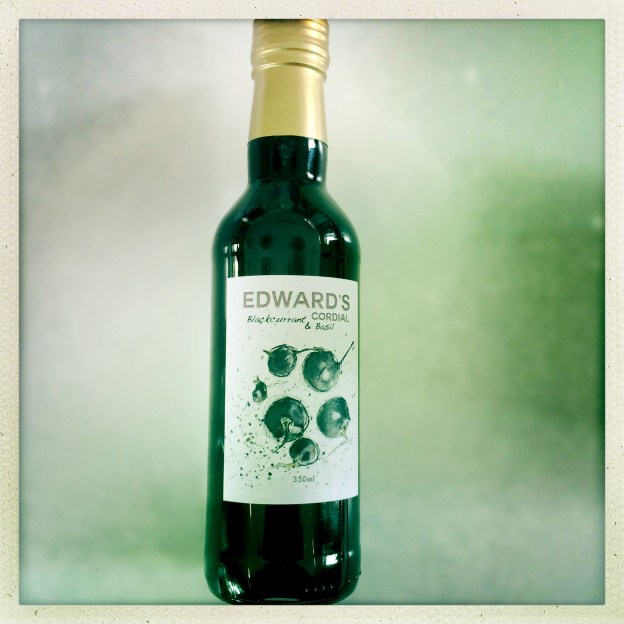
I always stock up on Edward’s Cordials (strawberry and mint is great for the summer and there’s a new flavour coming soon but I forgot what it is…).

If you’ve never been to Lavenham it’s well worth a look around. It’s bonkers. I think it has the highest number of listed buildings of anywhere in England, but I may have made that statistic up (oh the glorious freedom of blog posts, no need to check facts like in newspapers). Lavenham has some great art galleries and I go in there with my children and no-one gets sniffy (my children are amazingly appropriately behaved though, as I’ve taken them everywhere with me from a very young age). Although there is one shop that says “breakages must be paid for” so that shop doesn’t get my custom because who needs that shit?

Afterwards we sometimes go to Clare, which is another amazing little Suffolk village that has proper shops. We go to Cafe Clare there, (1 Well Lane) which is tiny and quaint and we always have great service and lovely food there. It’s not the Wolseley but a great place to get a cup of coffee and a sausage sandwich and they are always accommodating to our children (I’ve seen them let dogs in too if that is relevant to you).

You can then go for a walk at Clare County Park. If you go during the week, do check out the hardware store – Hudgies.

The Phoenix Comic

My friend John-Paul Flintoff, who is married to one of my fabulous editors Harriet, (I’m not saying this to show off who I know, but because I think it’s so important to give credit to people, and I didn’t want to mention JP without mentioning Harriet because I actually know her a whole lot better) recently told me about The Phoenix Comic.

It’s great, he said. There are no ads, he said. Great writing, he said. There was a special offer on – first four copies free – so I thought I’d give it a go in a ‘what have I got to lose’ way.

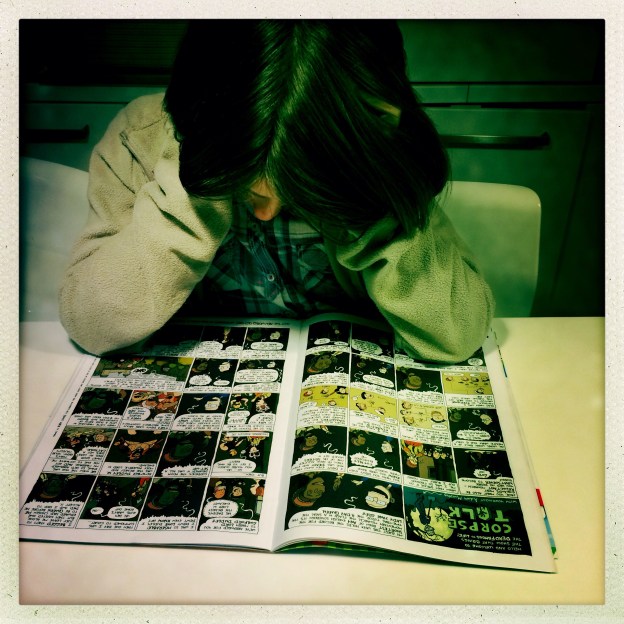
The comic arrives by post every Friday in a big, colourful envelope, addressed to the child whose name you put on the subscription form. At first my eldest (my youngest has just started reading) wasn’t that enthralled. I admit I was disappointed. However, when the time came for the free subscription to end, I asked her if she’d like me to cancel it.

“Oh NO” she yelled, “I love it!” (Corpse talk is her favourite bit.) Now, every Friday, I get my copy of The Week, she gets her copy of The Phoenix and we are both heads down for an hour. Because not all reading is about books.

The bank of Bankaroo.

I learned to handle cash at a very young age. The day after my seventh birthday, my parents opened a cafe on Bayswater Road and from then on, almost every weekend, and holidays were spent working there.  I had to learn fast to add up in my head, work out change, etc. Most importantly of all, I learned to handle actual money. Which children increasingly do not these days and what I’m about to write isn’t going to help in one way, but will in another.

I kept all of my cash at home in a black and gold money box. Gosh I still must have it somewherel anything that was bought was paid for in cash. Although I grew up with an excellent head for money, I must point out that I also went quite, quite bonkers as soon as I turned 18 and at one point, I had 22 credit/store cards in a concertina plastic wallet thing that would stretch down to the floor. My parents had never, ever dealt in plastic and still don’t, and I guess the excitement, the glamour, the forbidden-ness of credit cards completely got to me for a while and I had every card you can imagine. I also got into debt, which only my older, wiser, been-there-done-that, friend Joanna pulled me out of by marching me to the building society and making me take out my savings, making me pay all my cards off and making me cut them all up – bar one.

I realised my children didn’t have quite the same grasp on where money came from, when my eldest was small and she said to me one day (when I said I didn’t have the money for something)  “go to the supermarket and get some, as they give you cash back”. Having never seen me work for actual money handed over, her grasp on ‘work = money’ wasn’t quite the same as mine was. Plus there’s something about seeing your parents work, very hard, physically, for sometimes 18 hours a day, as my parents did to make you really understand about how money is earned. I think this is why I still feel guilty – even though I’ve worked and earned my own money, properly, since I was 18 years old – when I spend money.

I don’t give my children pocket money. Sure, I did, for a while but now I don’t. They have money that goes into various accounts on standing orders. But they don’t need (much) cash yet. But when they are given birthday or Christmas money I always give them the option of ‘save or spend’, all of it or some of it. It is, after all, their money. The eldest realised, very early on, that saving money meant she could buy something bigger further along the line. The youngest is still at that stage where she thinks going into a shop means you are contractually obliged to buy something. But even she is learning that one big thing may sometimes be better than 120  pieces of tat. Either way, it’s a lesson they have to learn.

That’s not the problem. The problem is this: we are so unused to handling cash now that it almost seems like pretend money. So whilst the eldest understands very much about money and what it means, our youngest is still too young to grasp that that fiver is real. She wants to keep it in her multicoloured sequinned purse but invariably, it gets lost. And even if it’s kept safe, that purse is never with them when they see something they like.

What to do.

This is when my friend Sandra, who runs a sling company (link here because she loves a plug, I bought my Moby wrap from her, which is one the best baby things I ever bought) told me about an app called Bankaroo.

Bankaroo is a virtual bank for children. It works like this. You start up accounts for them (by accounts I simply mean you put their name into the app, or a pretend name, it doesn’t matter, it’s simply for your records). Then you put in something like “five pounds from grandma for M’s birthday”. Then YOU, the parent, keep the money. When said child says “but I really want to buy that” you check their account, see how much money is ‘in there’, and then if they want to buy it you can either pay for it on your credit card or, if you have actual, you know, CASH, on you, hand it to them so they can pay for it and learn about change. You can then deduct the (virtual) money from their account so you can then put “M spent £2.50 on a crappy piece of plastic” and the total will go down accordingly.

It’s really simple but also genius as it helps children manage money, albeit with your help. Also if children do actually have the money and really, really want something (obviously suitable), I think they should be allowed the choice to buy it.


Colouring in for grown ups (oh okay, and children)

IMG_1992


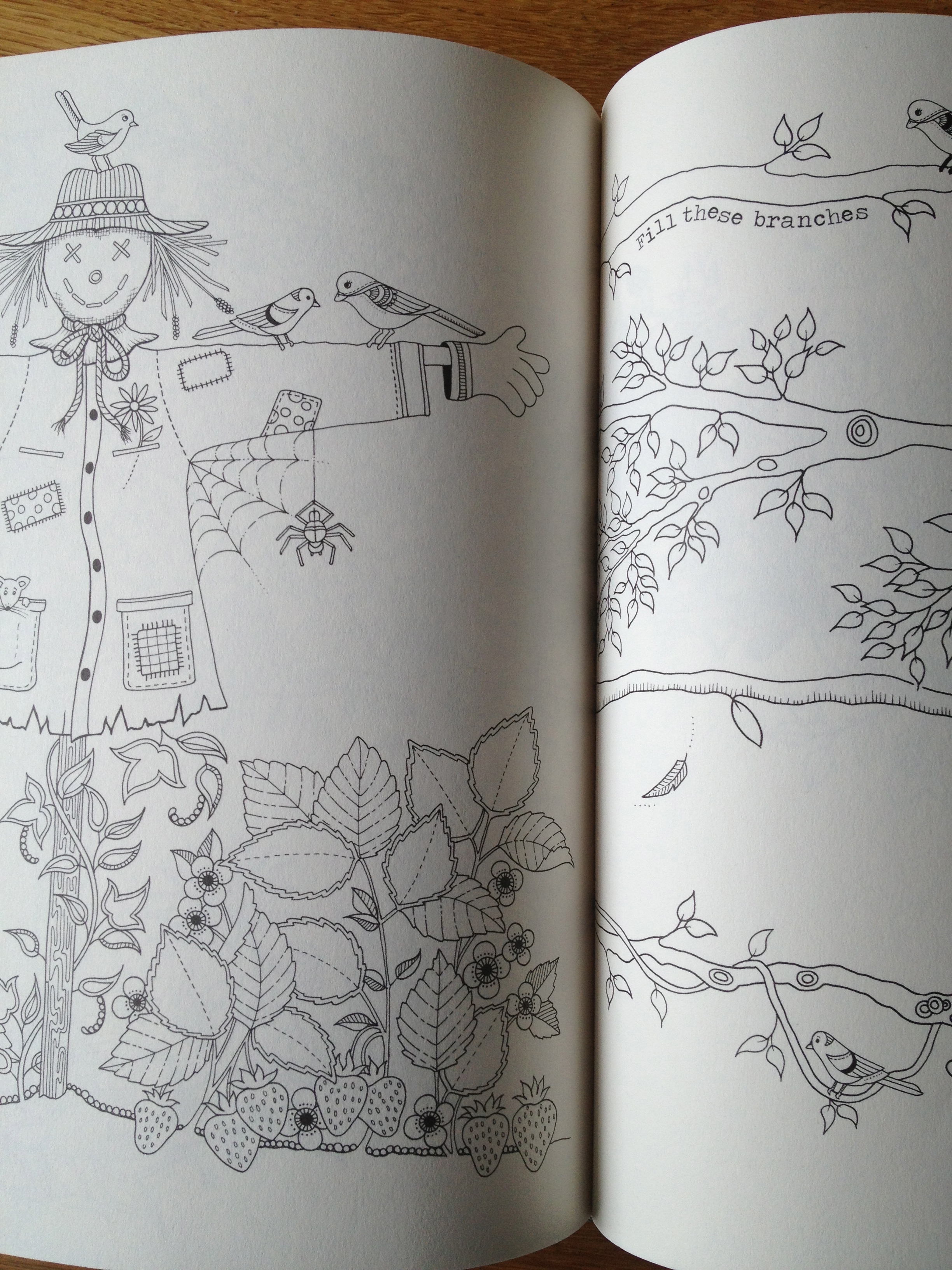
A few weeks ago, my friend and one of my editors, Kate linked to a piece on the Guardian about colouring in. On that page you can find ways to download samples form an incredible book called The Secret Garden. Not the secret garden many of us think about, by Hodgson Burnett, but a completely new colouring in book by Johanna Basford, full of intricate pen and ink drawings that you…colour in.

IMG_1994

For reasons that I never worked out, I was unable to download and print out the sample pages, which forced me to buy the book, and I’m glad I did. It’s beautiful. My  girls and I sat all afternoon and coloured in (for nearly FOUR HOURS).

IMG_1993

There is something incredibly therapeutic about colouring in and this peaceful camaraderie descended upon us, with only minimal bickering over who had the red. We chatted and chatted and laughed and laughed. The eldest and I coloured in with more precision than the youngest, but I have to admit I love the anarchy of younger children armed with a colouring pencil (you do really need pencils for this).

IMG_1995

In my column for the Guardian (where I look at family problems)  I’ve always advised going for a drive if you think your child needs to talk. There’s something about the lack of eye contact and the constraints a car presents, that can help chidren talk about what’s troubling them. To this I’d like to also add – colouring in with your child. Perhaps it’s the lack of eye contact again, perhaps colouring in focuses but also empties your mind so you can do a bit of stock taking. Who knows. It works. My two chatted away. Not that they had anything in particular to say, but it struck me that if they did, this was the ideal place to do it.

And then I remembered that the first sort of therapy I ever had, not long out of my teens, the therapy that changed my life and undid all the ‘knots’ in my brain, was art therapy.


Book lights

IMG_1918

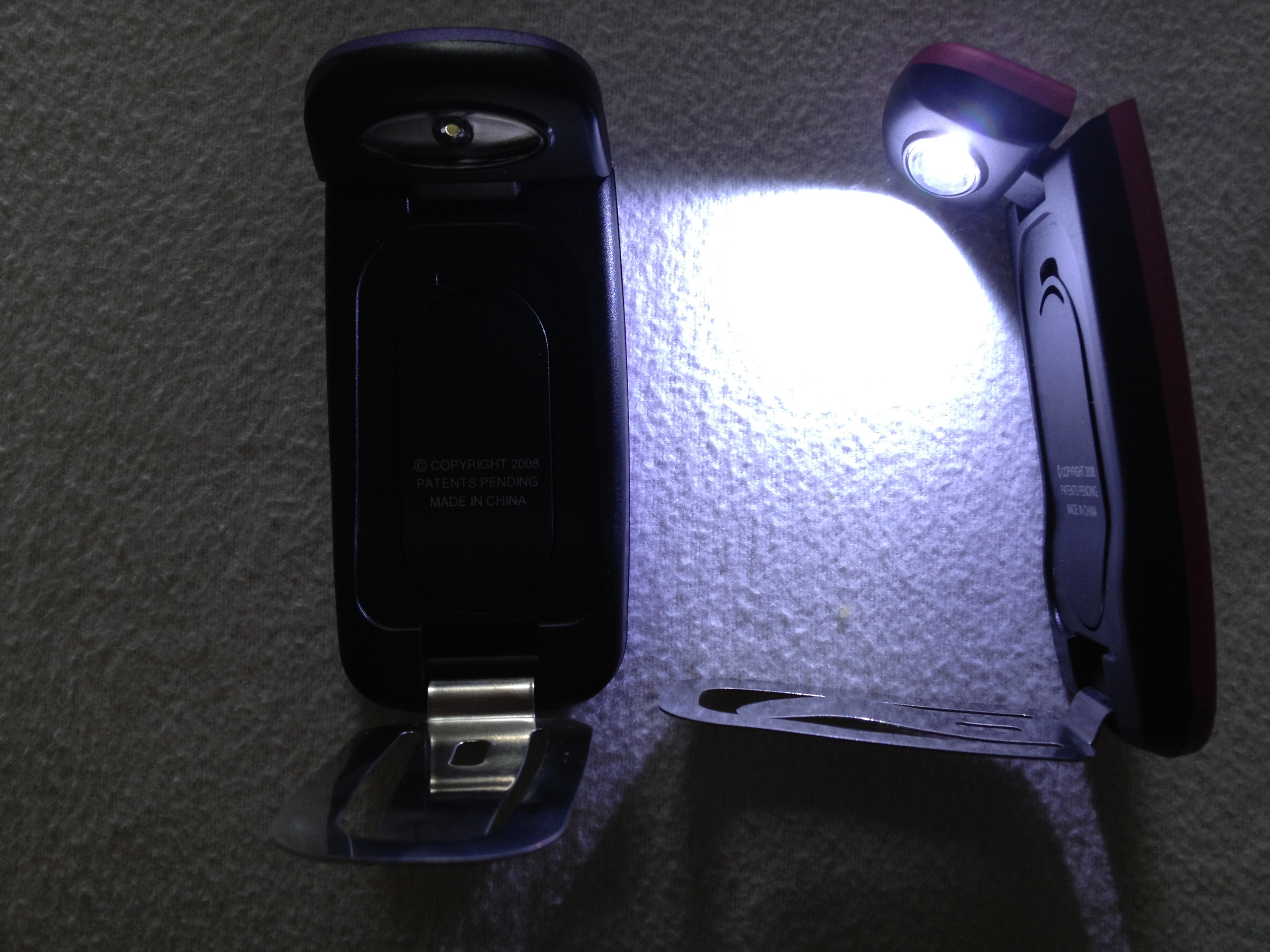
These Mighty Bright Ultrathin Lights are great for reading by. They’re small, come in fun colours, can double up as an emergency torch and my children – who share a room – love them because they can stay up in bed reading (or looking at the pictures) without disturbing the other child if one is ready for sleep and the other isn’t.

IMG_1916The lights fold flat and are really light and small (think tiny mobile phone size) but have a hinge to clip onto your book cover and a poseable light.

They cost about £9/£10 each. I got mine from the dreaded Amazon.

Solid coconut massage oil

It wasn’t long ago that I brought you a bargain basement skincare product. And here is another one. Waitrose has a solid coconut massage oil, ostensibly for babies. It’s a super value £2.89 and it’s great.

It’s totally solid in the jar, which means that, unless you have a super hot bathroom – and I don’t – you need to warm it up first, otherwise you’ll be scraping at it with your fingernails. I chuck it in the bath with me and it goes all liquidy. This also means that it’s warm when you apply it, which I think is very luxurious. I use it on my children and on myself and it leaves skin greasy – don’t try getting dressed in your best silk bias cut dress afterwards – but really soft.

Bread bags

You know that recent BBC class calculator that showed there were now, apparently, seven new classes? Well one of the questions was about who your friends are, as in, what they do. There weren’t enough boxes for me to tick because I’m proud that my social circle includes all sorts of people. I’m perfectly comfortable talking to members of parliament, the aristocracy, cleaners, sales people, chief executives. It’s not that I don’t care what people do, I care a lot, as people spend so much time at work and it matters. But I’m fortunate in that I was brought up being able to speak to everyone, as long as they are happy to talk to me and are polite.  I choose my friends according to what sort of person they are, not what they do.

My parents were also immigrants, you see. They did hard physical work at times because they didn’t have a huge amount of choice. That didn’t make them stupid or not worthy of conversation. Far from it, they are two of the most successful people I know. They also spoke two languages, albeit one with an accent. This already made them more accomplished than most of the English people I met. I worked in my mum and dad’s cafe from the age of seven until I was 18. I saw how people treat waiting staff. Not always good. After I became a journalist, my father opened an ice cream shop and when I used to help out, people were generally lovely. But a few would treat me appallingly. If we got talking, how we got talking I’m not sure, but if we did, and they found out what I did, their attitude to me would change. I found that short sighted.

Anyway, the point is that I get invited round to lots of different sorts of houses. And whilst I can hold a conversation with anyone, the area I used to stall over, is gifts.

It shouldn’t be a problem, but I would get into a tizz over what to bring really rich people who are friends but I don’t know really well. I just felt that, as they could buy themselves anything they wanted, what constitutes a gift, a treat? With friends that I’ve grown up with I’m more familiar with their tastes. Thoughtfulness goes a long way towards the currency of a gift.

I remember being invited to the house of a friend of mine once. He was hugely wealthy, had stables, horses, a chauffeur. When we became friends he gave me five phone numbers. His number in the country, his number in London, his number in the car, his driver’s number and his number in the stables. This was a bit before mobiles were really wide-spread so not as ridiculous as it sounds. Well, not quite. You get the picture. I knew he liked cigars, so I saved up all month to buy him two cigars. Two cigars. Before I took them out he said to me he asked me if I’d like to see his wine cellar. (Really, to choose the wine, this wasn’t foreplay.) As we descended the spiral staircase, I saw row upon row of wines. Really expensive wines like Pichon Lalande, 1982. And then, to my slight dismay, I saw boxes piled high, stuffed full of cigars. I shouldn’t have, as my offering was genuinely meant, but I felt embarrassed and I never gave him my paltry two cigars. This was stupid as he’d have been gracious, but part of me also thought ‘he has loads, I’ll keep these for myself’.

I learned right then that if in doubt, don’t spend money. You can never compete. Or, I can’t. Make something. I’d always known this as it’s in the very structure of my DNA, being Italian where no-one goes into a house without a small jar of something home made or grown. Be it some biscuits, a jar of passata, perhaps a dishcloth full of hazelnuts or some limongello. But I’d somehow forgotten. The first time I made something home made was for my friend K. This was the sort of girl who would take me to her house for the weekend, and blow £80 in a deli on ‘breakfast’.  I couldn’t compete with her wealth. So I made her a cake. As I handed it over she said (slightly teary eyed as I remember) “in all the years people have been coming to my house, no-one has ever made me anything”.

This is a rather roundabout way of telling you about bread bags. If, like me, you make bread for people then what do you give it to them in? Not a plastic bag, as you’d lose your lovely crust. A fancy dishcloth perhaps, but who has those? Plus if they’re really nice dishcloths I don’t want to hand them over. Look, my generosity only goes so far. These bags are great. They have tiny air holes in them so they let the bread breathe (and therefore they also let out any crumbs and flour that’s lurking around the crust). They’re inexpensive and they’re better and cheaper than the Lakeland ones  which were too big in the wrong way (long but not correspondingly wide). I got the 30cm x 40cm ones but they also come in different sizes and I paid about £2.88 for 25. (Lakeland ones are £3.29 for 12.) My Lakeland bags also kept breaking when I put the bread in. So far I’ve not had that problem with these.

Here is a close up where you can see the tiny holes. I do apologise for the pictures. They aren’t great. For some reason it was hard to capture what I wanted to. But it’s really the bread wot’s the star here, the bag is simply a method of transportation.

IMG_0727