Category Archives: Teatime

Hugh’s ten minute cookies

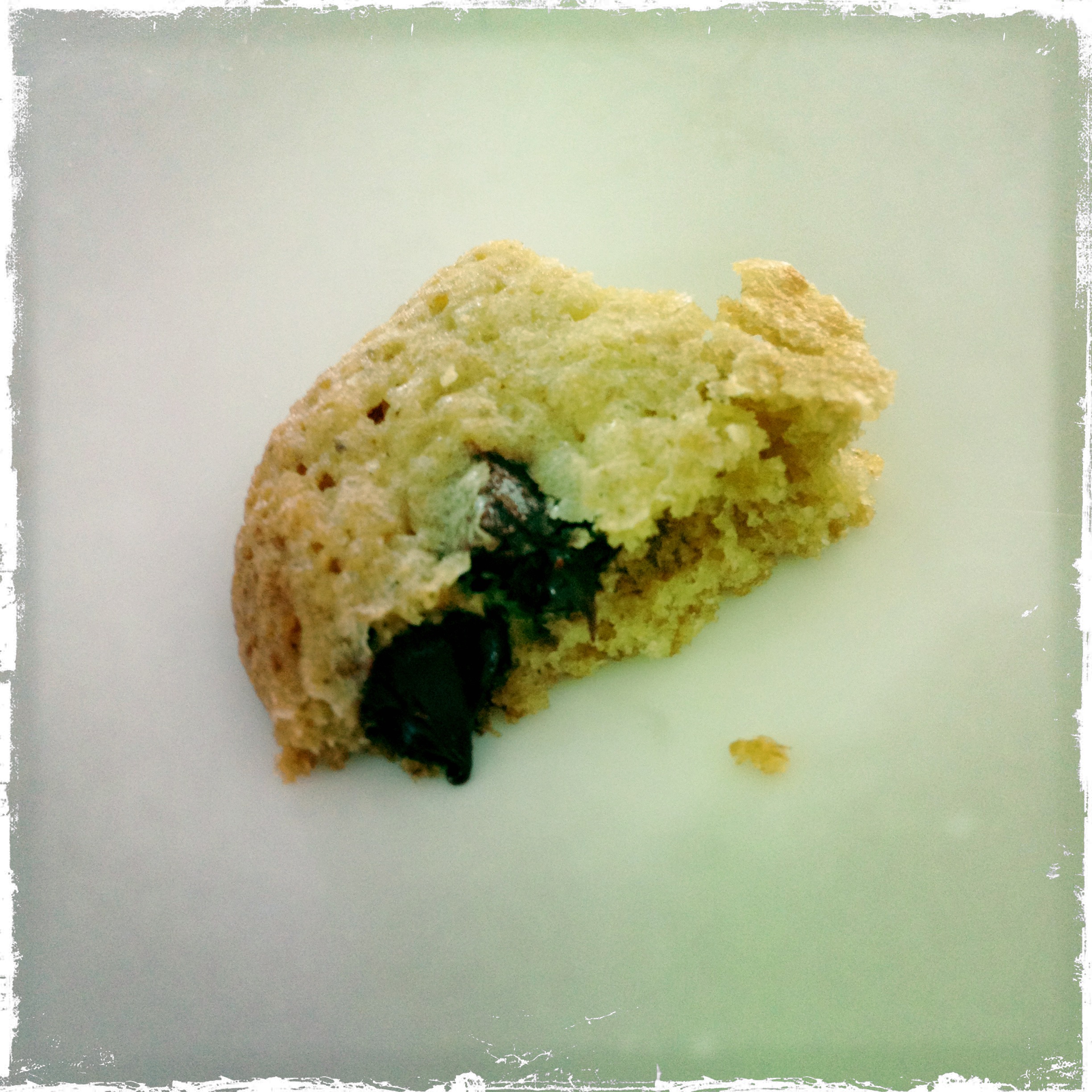
IMG_3314

I don’t know why I haven’t posted this recipe before. Its is the most made biscuit recipe in our house and the most loved. I prefer these biscuits with nuts added, too (macadamia, hazelnuts or almonds, lightly toasted, lend themselves particularly nicely, I think) but although my children go mad for nuts as a separate snack, they prefer these biscuits with just chocolate chunks added.

I do confess, here, to having packets of ready made chocolate chunks in the cupboard, because chopping chocolate is one of my least favourite things. But if you like really big chunks of chocolate, or are really precious about the sort of chocolate you use (as I am for presque everything else) then best to choppahoppa the chocolate yourself. However, I get a rather perverse pleasure from snipping open a packet of chocolate chunks and just chucking them in.

The added bonus these cookies have is that you don’t have to wait for the butter to soften to room temperature – you melt it – before you can start mixing, so these really are super quick to make. They’re still biscuits. Not broccoli, but at least you know they’ve not got hydrogenated fats in them or other crap.

I’ve adapted Hugh Fearnley-Whittingstall’s original recipe by upping the chocolate needed (he originally asked for 100g, but I like a chunk or a chip in at least every second bite) and I add at least half wholemeal plain flour. I’ve made these with all wholemeal flour and you really can’t notice, it just lends a certain, lovely, nuttiness. But in order not to get too worthy, the best approach is probably half and half, which is what the recipe asks for here.

So this is what you need:

125g unsalted butter

100g granulated or caster sugar *

75g soft, light, brown sugar *

1 egg

2 teaspoons of vanilla extract

150g of plain flour in total. I use 75g white and 75g wholemeal

(I have also made these with 50g white, 50g wholemeal and 50g ground oats and they were delicious)

half a teaspoons of baking powder

A pinch of sea salt

150g chocolate (I use half white, half plain)

[If so wish, 100g toasted macadamia/hazels/almonds]

Preheat the oven to 190C (I use fan on 175 I have to say)

Gently melt the butter. You really do want to be gentle and take it off just as soon as it’s melted. If gets too hot then let it cool slightly before using it. Otherwise the chocolate will melt before you even get the mixture into the oven.

Put the butter into a mixing bowl and to it, add the two types of sugar. Mix together. Now add the egg and teaspoons of vanilla essence. Now mix in the flour, baking powder and salt. When all well blended gently stir through the chocolate chips (and nuts if using).

Onto lined with baking paper biscuit trays, put a tablespoon of mixture per biscuit. I sometimes make these giant, and sometimes make them small. So see how you feel. Leave good space in between. I get about six onto my baking tray when I go large with these. I couldn’t possibly tell you how many these make exactly, since I vary the sizes and often a number of them get eaten before they’re completely cooled, but I’d say about 14-18. As a rough guide.

Bake for 7-9 minutes. If you like them crispy then bake for longer. I like mine chewy so take them out after seven and leave them to cool on the tray for a bit (or slide carefully – baking sheet and all – onto a cooling rack).

That’s it. Now all I need is a really nice cookie jar.

* I like to experiment with cutting down the amount of sugar in things. Sometimes you just can’t though because something magical goes on with certain proportions of sugar/butter/flour. But. I have made these with just 100g of sugar – 50g granulated/caster and 50g of soft brown – and they are delicious and, I think, plenty sweet enough. The consistency changes slightly though. Give it a go and see what you think.

note:  you don’t have to bake these all at once. The mixture will keep for a good few days in the fridge and you can put spoonfuls onto a baking tray and have fresh cookies on the table in minutes. That way you can have freshly baked over more days.

I add a substantial amount of nuts to this mixture for when I make them for grown ups. Roasted, chopped, almonds and hazelnuts work best. I also put the mixture in the fridge as this gives me thicker, squidgier biscuits which I like.

I now have a nice cookie jar.

Easy Berry Tart


The me I show to the world isn’t always the same as the private me. I know that, sometimes, people who think they know me, suppose my life is one big idyllic bubble. All baking and babies and countryside and long grass through which to trail my fingers.

And that is indeed part of my life, especially since our lawn mower breaks down often. But it’s also because I don’t always choose to share the more negative parts of my life publicly because I like to see the best in everything and I like to spread joy and comfort; not worry and misery.

I have this memory of being very young and  being in the playground at primary school. I sometimes found playtimes hard but pretended, largely, that I didn’t. Mostly they were okay but not my favourite time: too disorganised, too sprawly and I didn’t have a best friend til way, way later with whom to buddy up.

The school bully (someone actually very troubled, I discovered lately) only once picked on me so I was never really bullied. That wasn’t the problem. But she invariably picked on someone and I thought “Jesus this playtime is just a free for all, where are the adults to help us?” (My mother is Neapolitan and in Naples no child is allowed to misbehave and everyone parents everyone else’s child.)

And then I remembered that Kizzy was on that afternoon and I got this surge of happiness (it was to be 30 years before I realised it was actually a surge of a hormone called oxytocin and for ages I thought I was the only one who experienced these physical surges of happiness). And I realised, right there and then, that life was about a series of episodes; pockets of good things and bad things and if you could just concentrate on the good things, the bad things could diminish. Mostly. And that Kizzy moment has never left me.

This week a much loved colleague from my years at the Independent on Sunday, died. She was also a friend that I’d known for twenty years. Someone that I hadn’t spoken to in a while, because I took it for granted that she’d always be there to catch up with. As you do. I won’t say anything else about her or what happened to her, because it will probably just make you anxious and think the world is a big, scary, place. And it isn’t. It’s mostly really good.

Clare read this blog avidly, although she never commented. Even in her last message to me just last Saturday she said “I’ve really loved your blog”. Because I can’t be absolutely sure that you can’t read the internet when you’re dead (I mean, come on, who knows?). I’m giving her a shout out here. Clare was a hopeless romantic and we shared many cosy, chatty evenings at her house in Crouch End when she lived in London. This is just the sort of tart we’d have made because it would have been lovely, and shown caring and thought, but not distracted us too far  from the task in hand: putting the world to rights.

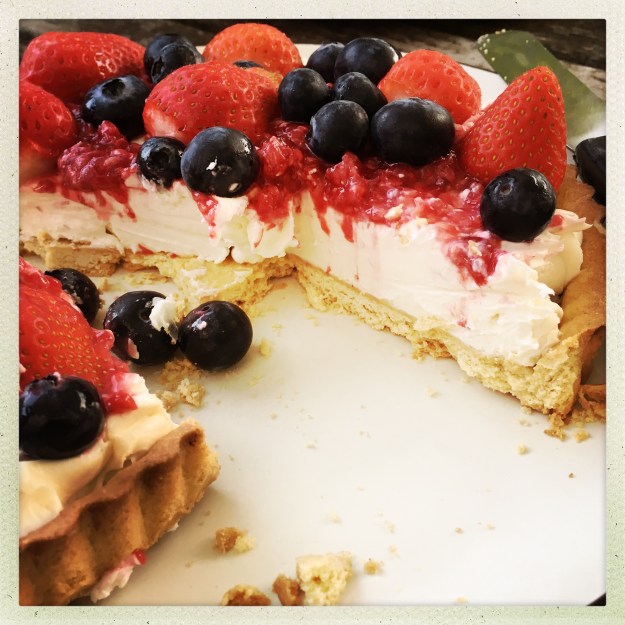
So here is an easy tart. Although usually, because I am a crashing, crashing snob about home made things, I would never entertain the thought of buying a home made pastry case, sometimes, it’s okay to. Buying the pastry case for this makes this so easy. And yet the result is glorious. I’ve put it here, today, because there are so many berries being picked right now and this is a lovely way to use them. It will make you feel good making it and even better eating it.

You need a ready made shortcrust pastry case, about…8 or 9 inches? They’re pretty standard size in the supermarkets.

500g mascarpone

3 tablespoons of lemon curd. Something artisan would be lovely

Half a teaspoon of vanilla essence

One tablespoon of icing sugar

300g berries, whatever you like

The syrupy topping (which isn’t essential):

Three tablespoons of caster sugar

The zest of half a lemon

Put your pastry case on a plate. Mix together the mascarpone, lemon curd, vanilla extract and the icing sugar until smooth and all homogenous. Spread it evenly over the pastry case. Chill for one hour. [Note: if you don’t have time and want to just assemble it all in one go, do, but you must then either leave the lemon syrup out of make sure it’s chilled, don’t pour it over hot!]

Meanwhile, make the syrupy topping which you do by putting the caster sugar and two tablespoons of water in a pan over a low heat. Let the sugar dissolve, increase the heat to boil for a few minutes (2-3). Remove from heat and add lemon zest. Cool completely.

When ready to serve put the berries on top (I find them nicer at room temperature), pour the syrup topping over the whole thing and serve.

IMG_6871


Blueberry traybake

Saturday night I went out, quite unchaperoned, to a dinner. It’s funny, when you’re part of a couple, how easy it becomes to turn invitations down or accept them, perennially as part of a couple. Even if one of you can go. on Saturday, we didn’t have a babysitter and it only dawned on me after we’d turned it down that actually, one of us could go. I bagsied me and asked if me being solo would throw out numbers. It wouldn’t so I went. Although it’s more common to turn up unescorted (when you’re part of a long-standing couple) in London, here in the country it can cause eye brows to be raised. I gave my friend Kate a lift and we were introduced as “not a couple” thus quite ruining the introduction I had mischievously planned.

I brought, as a gift for my lovely hostess, Mary, a bottle of wine and one of my giant After Eight mints. I love being able to make my own after eights, not least because it gets me round my Nestle boycott. My children love my after eight mint, they call it ‘mint cake’ and were most put out that I was taking one out of the house.

I had a superb evening. Mary is a great cook with a great kitchen garden, who had channeled the spirit of Ottolenghi for the entire meal. But as I was driving, I didn’t drink. I never drink and drive. I might, at most, have a ‘finger of wine’ at the very beginning of an evening but mostly I don’t even do that. I would hate to have an accident and wonder if that thimbleful of wine had caused it.

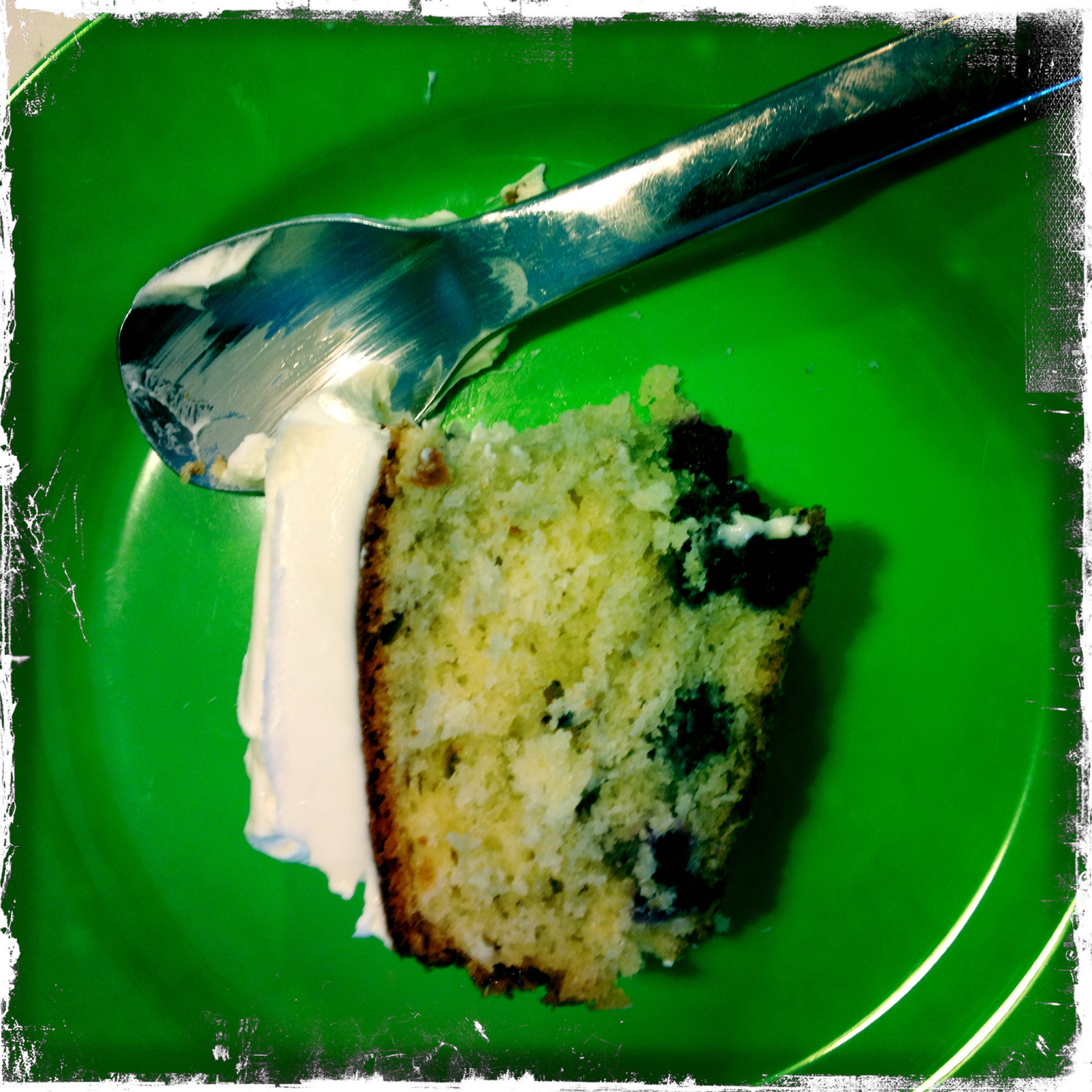
But I did get home at 2am and woke up five hours later feeling hungover, although I wasn’t – just tired. By 5pm I was absolutely craving cramming something majorly carb-heavy into my mouth so I found a tile-sized piece of this cake in the freezer, defrosted it in the microwave, whipped up an approximation of the original frosting, using mascarpone, yoghurt, lemon zest, vanilla extract and icing sugar and piled it high on top. I ate it like a snake eats a small mammal, pausing for mere seconds, with head tilted back, as I fed it down my throat. Glorious.

Of course I felt sick immediately afterwards.

This is a Bill Granger recipe from Waitrose magazine. It appeared last summer. I made it and it was so good. I love a cream cheese frosting. But my children aren’t super keen and this makes quite a lot so when I make it I freeze the excess (without the frosting) and it freezes really well. If you think you will be freezing it remember to only make half/part of the frosting. Anyway here is the recipe.

For the cake

180g unsalted butter, softened

210ml sour cream

half a teaspoon of bicarbonate of soda

330g caster sugar

2 teaspoons of lemon zest

1 teaspoon of vanilla extract

3 eggs

250g blueberries

375g plain flour

One and a half teaspoons of baking powder

For the frosting

250g cream cheese

100g unsalted butter

1 teaspoon of lemon zest

1 teaspoon of vanilla extract

250g icing sugar

Preheat the oven to 180C. Take a tin of about 23cm by 33cm and line in baking paper. Mix the sour cream with the bicarb and set aside for five mins.

Using an electric mixer beat the butter and sugar until light and creamy then add the lemon zest and vanilla. Then beat in the eggs, one at a time then add the sour cream mixture.

Put the blueberries in another bowl and toss with a bit of the flour. Mix the rest of the flour and baking powder into the cake mixture and fold in until just mixed. Now add the blueberries and gently stir through. Spoon into the tin and bake for 40-45 minutes. A tester should come out clean the top will be a rich golden brown.

Leave it to cool then prepare the frosting by beating all the ingredients together with a fork or electric mixture. Spread over the top of the cake and go in head first.

IMG_1269

Baking with fresh yeast. Milk loaf

When I was a child, my mother would cook regularly with fresh yeast. We would have pizza every Friday night, which she would  make in a large rectangular tin; leaving one small section free of tomato sauce for me, as I didn’t like it.

Then the local supermarket stopped stocking it and we bought it from this ‘exotic’ – at the time – little shop that was a Chinese health food shop and I’d have to go far into the back to find the small squares of fresh yeast.

These days it seems impossible to find commercially. Which surprises me given the resurgent interest in baking. Those who do buy fresh yeast either beg it from the bakeries of huge supermarkets or order it in in bulk.

I believe it was the latter that my friend Wendy did, as she took delivery of 2K of yeast. Wendy cooks and bakes ALOT and hangs out with professional bakers and really knows her shit where food is concerned (and antiques). Generous to a fault, she offered a large chunk of this purchase to me and thus it was that on Saturday, the postman delivered half a kilo of fresh yeast to my Suffolk mail box.

(n/b: Wendy tells me you can also get fresh yeast from local bakeries, but I have none near me.)

It had been decades since I touched fresh yeast. I’d forgotten how squidgy it is. But I immediately set about baking with it. When I first bought Dan Lepard’s The Homemade Loaf, the book that set me off on my sourdough journey, I was disappointed to see how many recipes called for fresh yeast. Dan helped me convert fresh yeast = dried yeast but the moment I have to substitute an ingredient for another I feel like I’ve failed (it’s okay, I’ve had years of therapy).

I have never cooked with fresh yeast so I started off with something simple, which is Dan’s Milk Loaf in the Handmade Loaf. It uses plain and strong bread flour, butter, milk, maple syrup and fresh yeast. It was so easy to make. Minimal kneading, then a final prove of an hour and a half. As it was very cold in my kitchen yesterday, I let it go a little longer. I’m so used to being upstairs working when my timer goes off for sourdough. And being able to play loose with timings, and just ignoring the timer, that when I came down to see the loaf, I was a bit shocked to see how much, and how fast, it had risen and for a moment worried that I had let it overprove. But no.

It came out gloriously. It looks like a pair of breasts (a friend thought this was why it was called milk loaf..) this is because you put it in in two ball shapes, although you could do it in whatever shape you want; and the crumb is superb. Wendy tells me this is not a traditional shape for a milk loaf, that it should be cooked in a cylindrical tin with ridges but I do not have one.

IMG_0613

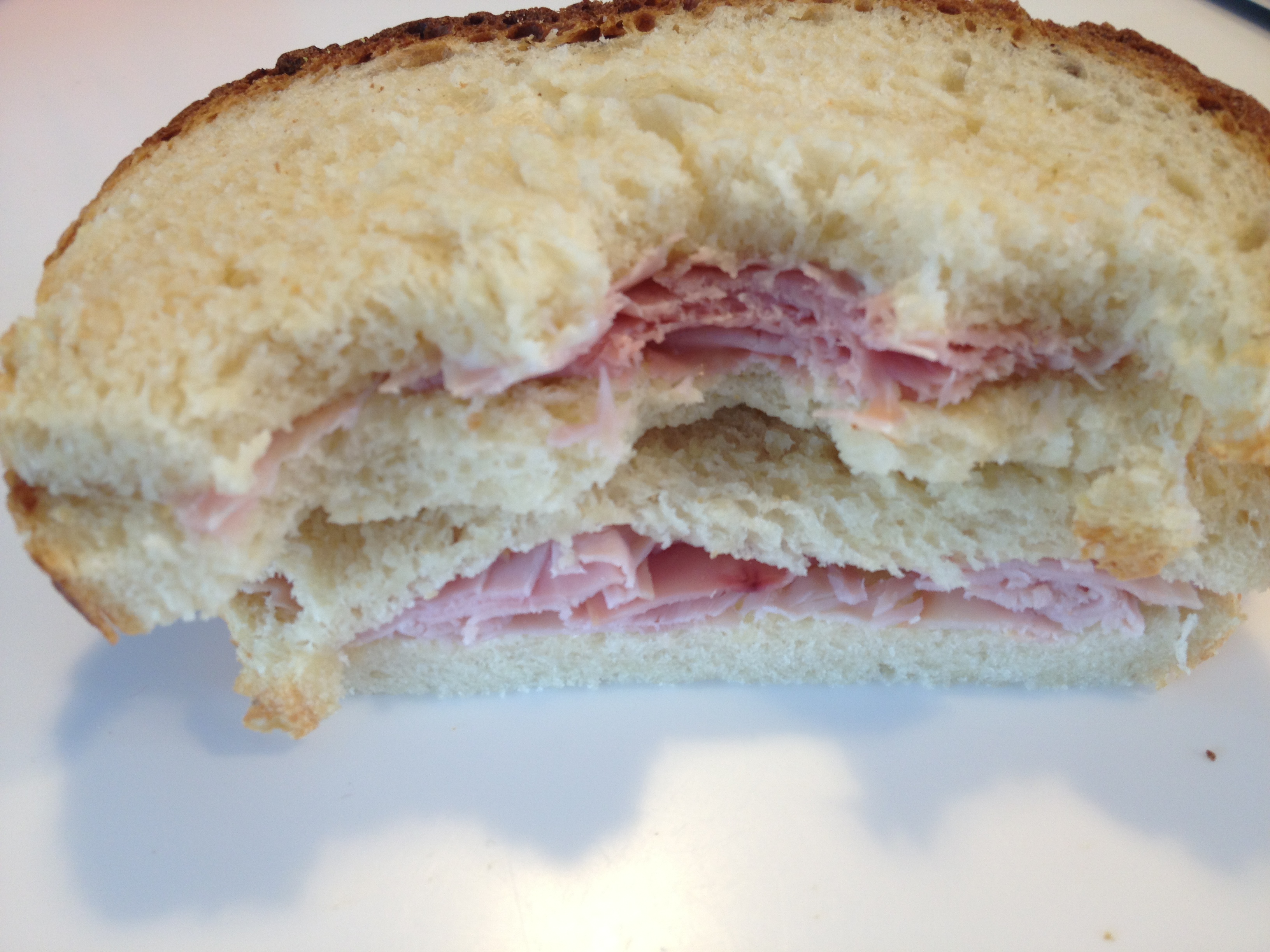
We all had the most delicious ham sandwiches made out of it. It’s an old fashioned taste and not like anything you could buy. I adore my sourdough, but it was so nice to be able to have a loaf on the table in time for lunch, having just thought about baking it in the morning.

IMG_0614

Because I understand how incredibly frustrating it is being given a recipe which ingredients you don’t have, here are Dan’s milk loaf recipes containing more readily available dried yeast. I might try his chocolate chip milk buns next…

I froze the rest of the fresh yeast, in 15g batches in little sealed bags. Weighing it out, tipping them into those little bags. My eldest helped so we had quite a production line going.

Update. I made them into rolls and divided up half and put chocolate chips in them. The rolls make great sandwiches for picnics, the chocolate rolls make a nice, not too sweet alternative to a pain au chocolat, dipped into caffe latte.

IMG_0646

IMG_0647

Day after notes: This bread stales up pretty quickly. It makes great toast/toasted sandwiches though, so no fear. Also we just had it several days old made into French toast and I can report that it was excellent.

A tale of two trifles

We don’t, really, have trifles in Italy. The nearest we come is cassata but although that can, technically, mean a layering of sponge, fruit, liqueur etc, it usually means an ice cream layered dessert. That said, the second trifle here is called Italian trifle, in our house, by my partner. I’m not sure why but it is.

So, here, I present two trifles, although neither are the classic trifle in that neither house any jelly at all. They both also contain booze so not really child-suitable (I should point out that it’s unlawful to give alcohol to a child under the age of five, unless under the direction of a doctor). Although I do have some friends whose children – over the age of five, ahem – absolutely devoured the Italian trifle off their mother’s plate and she had to wrestle the spoon back off them.

The first is a Nigel Slater recipe that he called the Ten Minute Trifle. I’m afraid I don’t have a photograph of it at present. It is glorious. I have since renamed it the Pregnancy Test Trifle since I credit it with being able to detect if you’re pregnant, even before you know you are.

Let me explain. In late 2002 we decided to try for a baby. Three days after ‘trying’ for a baby for the very first time, I made this trifle, as it was New Year’s Eve. I had made it many, many times before. I tasted it. And spat it out. “I’ve put far too much alcohol in here,” I said to my partner, with upper lip ruffled up in distaste. “I must have put double the amount of sherry into it.”

He tasted it. Declared it fine. But to me, it was inedible. It was another three weeks before I did a pregnancy test which declared that I was, indeed, pregnant. Another friend had this trifle and declared it inedible – too strong – and she then discovered she was pregnant.

Despite this. If you’re not pregnant this trifle is lovely. Not too strong at all. If it does taste too strong…well.

Nigel Slater’s Ten Minute Trifle

Note: this trifle contains raw egg and alcohol.

10-20 sponge fingers. You can play quite loose with the quantities as I use enough to fill the bottom of the bowl

255ml chilled marsala or sweet sherry

2 ripe bananas, sliced

1 tin of raspberries. I use the ones in juice

2 eggs, separated

50g caster sugar

225g mascarpone

vanilla extract

flaked almonds

Put the sponge fingers, broken up in half, thirds, whatever and put into a bowl. (Note this is fairly sloppy when you ‘cut’ into it so if such things matter to you you may want to make this in individual bowls/glasses, these glasses are particularly good for this.) Pour over the marsala, raspberries (with as much or as little of the tinned-juice as you need to soak the sponge fingers, discard the rest of the juice). Now put the bananas on top.

Cream the egg yolks with the sugar, add the mascarpone and beat until light and creamy. Add a dash of vanilla extract, about a teaspoon.

Whisk the egg whites until stiff and then fold them gently into the egg yolk/mascarpone mixture. Now tip it all over the fruit/sponge fingers and cover with toasted flaked almonds.

Leave it for a couple of hours before eating.

Italian trifle

This is very rich, very delicious and more-ish. I really like trifles (I know some people hate them) because you can make them in advance, as long as you have the fridge space. They are a great, often not madly expensive way of serving dessert to lots of people and if anything, they improve with 24hrs in the fridge. I’ve said before that I am master of organisation, but once people arrive through my front door and I’ve had a drink it’s every man for himself. I am a dreadful hostess. So a dessert, pre-made, that I can present with relish and show that I did, once, care about my guests, is useful.

100g sponge fingers. Absolutely use shop bought don’t even think about making them yourself

100g lemon curd

3 tablespoons of limongello or lemon vodka

500ml of double cream

125g caster sugar

100ml lemon juice. From our normal sized lemons this equals to the juice from one and a half lemons

Topping

250ml whipping cream

Zest of half an orange

Crystallized violets (optional but lovely here)

Shelled, chopped nuts. I use pistachio or toasted hazelnuts. But you can leave this bit out completely.

I make this in a 1litre pudding basin.

Break the sponge fingers in half and spread with the curd. Put them in individual glasses if you like, but this is an impressive dessert to serve in a big dish. And unlike the Pregnancy Test Trifle above, it holds its shape when cut.

Now sprinke the alcohol over the top.

In a medium sized sauce pan pour the 500ml of double cream and add the sugar. Bring to the boil over a medium heat then turn down and simmer for 2/3 minutes. Now remove from the heat and stir through the lemon juice. Pour this over the sponge fingers. In the bowl I use, this takes me almost to the top and I always have a moment of panic but as long as you have a centimetre or so of space, you’ll be fine for putting the cream on later. Push the sponge fingers down into the mixture as best you can.

Leave it out, to cool. When cool put it in the fridge. You can easily do this bit the day before, as I do. Be warned, this is already delicious and often I have a go at this pudding before the day. That’s okay though because you will have a carapace of whipped cream to hide your shame.

Either just before you serve this or when the mixture above has set you whip up the whipped cream. Spoon it over the trifle and scatter with the violet petals/nuts/zest. Either serve or put back in the fridge for enjoyment later.

Hot cross buns, and Easter baking

I have never made hot cross buns, but always wanted to. A few weeks ago, I spied a recipe in Waitrose magazine for Brandy-spiced hot cross buns (on the cover of the March issue if you fancy picking up a copy). The recipe is by someone called Lily Vanilli, I must confess I’ve never heard of her but will certainly look out for her things from now on as these turned out amazingly well. My partner gave a little whimper as he ate one, warm from the oven, split and buttered.

Lily Vanilli says to soak the sultanas overnight. I did, but if you don’t have time, leaving them for a few hours will I’m sure be fine.

No recipe on the Waitrose site so I can’t link to it.

I found it made 12 buns.

for the brandy spiced sultanas

225g sultanas (I ran out and used some raisins in there too, fine)

100ml of brandy (I didn’t have brandy so used half marsala and half orange vodka)

1 star anise

quarter of a teaspoon of ground cinnamon

quarter of a teaspoon of freshly grated nutmeg

Zest of one orange

2 tablespoons of plain flour

for the buns

600g white strong bread flour

50g caster sugar

7g sachet of easy blend yeast

Freshly grated nutmeg

1 teaspoon of salt

50g soft dried figs or prunes

50g soft dried apricots (see note below called Update March 2020)

250ml whole milk

80g unsalted butter

1 egg

for the crosses

50g strong white flour

60ml of water

a piping bag and a very fine, writing nozzle. I used one that was a bit too thick and ran out so some of my buns – shock horror – were uncrossed. Vanilli puts hearts on them but I’m Catholic and you know..

for the glaze

3 tablespoons of apricot jam, and you really do need 3 good tablespoons, nothing worse than a dull bun

1 teaspoon of brandy, don’t sweat it if you don’t have this

1 tablespoon of water

The very first thing to do is put the sultanas to soak. So put those ingredients: ie the sultanas, spices, zest etc, except the 2 tablespoons of flour, all together in a bowl and leave overnight or for a good few hours.

Then, when ready to start baking, strain the sultanas. Discard the liquid and the star anise; although personally I don’t see why you can’t DRINK IT the liquid. It’ll be very alcoholic though so you know, not before the school run or before the social worker calls.

Now scatter on the two tablespoons of flour and mix around. This soaks up any excess juice.

Put the milk and butter on and heat gently until the butter has melted, stir around. You need to get this to lukewarm, not hot so you may need to set it aside to cool a bit. Don’t let it get cold either. Ooh the pressure (it’s fine don’t worry).

Get a large bowl, put the strained sultanas in it and now add the flour, sugar, yeast, nutmeg, salt, figs and apricots. Mix it around, thinking of Easter eggs and having a lovely weekend.

When the milk is lukewarm, whisk in the egg and then add this milk, butter, egg mixture to your sultana, flour etc mixture. Mix it around until you get a dough.

Give it a little knead on an oiled board. Leave it for ten minutes. Give it a little knead, leave it for ten minutes, give it a little knead, leave it for ten minutes. The timings are important (Vanilli just kneads for ten minutes flat out, I don’t do this) as you’re dealing with commercial yeast. Now knead for one last time and leave it for about an hour.

IMG_0535

Here’s a pic of the dough just before I shaped it.

Now, either gently knead it again and shape it into buns and cook it (more on this in a mo) or shape it into buns and do as I do, put it in the fridge to prove overnight. I took it out for a few hours before hand to bring to room temperature, but only because the youngest woke me up at 4am. Otherwise I had every intention of just putting them straight in the oven.

If you don’t prove overnight in the fridge, shape them into buns and place onto a greased baking tray. I got 12 out of them, it figures that you can make these fuckers as big or as small as you like. And then leave until doubled in size. God they always say this don’t they, but who remembers what size they were in the first place? I always leave for longer than 45 mins as I live in the country and it’s cold here. So use your common sense. 45 mins, an hour, maybe longer. As I said, academic as I did them in the fridge overnight with two hours to get to room temperature.

When ready to cook, preheat oven to 220C, mix together the 50g of flour and the 60ml of water and pipe a cross onto the buns.

Cook for ten mins at 220 then lower to 200 for another 10 mins. Whilst they’re cooking, mix together the jam and water and brandy.

When out of oven, immediately brush the tops with the jam mixture to make a lovely glossy top.

IMG_0536

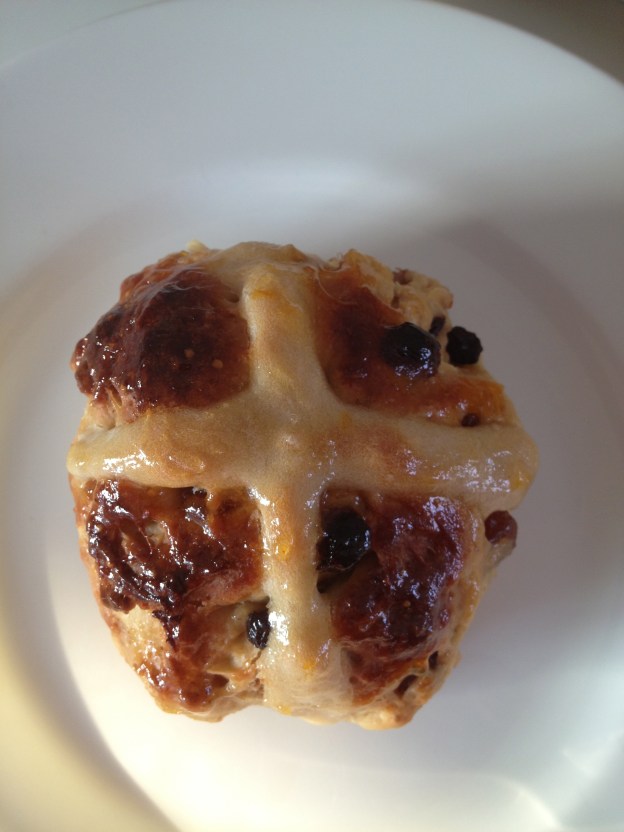
Here they are glistening in the morning sunshine. I really had no idea they would be so good. These are the best hot cross buns I’ve ever eaten. I hope you enjoy them! Happy Easter.

If you fancy something a bit more continental this Easter, try panettone tea cakes or colomba. Or even torrone!

Freezing note: These freeze really well. The only note I’d add is that the ‘cross’ part doesn’t survive freezing too well, it goes hard. So if you do plan to freeze these, don’t decorate the ones you plan to freeze. If you freeze excess ones and they have decoration crosses on them, then be aware of this. We ended up picking our crosses off (sorry God). The rest of the bun was still delicious!

Update March 2020

Two things I’ve found, one quite by accident, which I think makes these a bit better. One is that I soaked the sultanas as described, but, by mistake I also put the two tablespoons of flour in at the same time (you’re meant to put it in after you’ve strained the sultanas). This means you can’t drink the alcohol when you drain it but it did seem to make the sultanas extra plump and juicy! So give it a try.

The other thing is that I have reduced the dried fruit in the actual bun, from 70g (which was the original recipe) of each to just 50g of each (ie 100g in total of figs/apricots). I’ve also made these with prunes instead of dried figs (and amended the recipe) as I actually prefer them. But see how you go!

A cake to cheer you up and natural firelighters

A really rather superior cake.

I’ve been pretty flat thus far this month. In part because there is loads of bad news around, it’s end of year accounts time, tax is due, it’s not Christmas, all those things you put off until after Christmas can no longer be ignored, everyone is miserable, George Osborne is still chancellor and also because January just generally is the arse-end month of the calendar. The only good point in it is my mother’s birthday.

We usually book a little weekend away in Jan or Feb to cheer ourselves up. But not this year.

Anyway. Two things that cheer me up are real fires and cake and the two are connected today by: oranges.

Orange peel, left to dry a bit, makes excellent firelighters. I doubt they’d be an alternative to shop-bought, kerosene soaked firelighters, but they are a good addendum to them and also smell nice. I had two oranges that I’d studded with cloves for Christmas, you know the sort of thing. And they’d started to go off and dry up and I put them on a really roaring fire and the smell was amazing. As was the glow of the cloves..nut shells also burn well (because of the oils, same reason orange peel does). So save up all your pistachio shells to put on the fire.

Jesus, could that sentence sound more middle class.

Cake. I saw this recipe in the Waitrose magazine this month and earmarked it for the weekend (I don’t eat cake during the week). I made it last weekend and it’s a really excellent cake. The sponge is heavy with ground almonds which gives it a dense crumb but an amazing taste. I loathe icing sugar heavy icings – those that are nothing more than icing sugar and water or butter (why why why would anyone eat such things?) and have a glycaemic index of 112, and this is at least a bit better for you as it uses mostly Greek yoghurt and mascarpone.

I would link to the goddam recipe but Waitrose magazine hasn’t put it online yet the bastards.

for the cake

125g unsalted butter, softened
200g caster sugar
3 large eggs
100ml single cream
250g ground almonds
125g plain flour
1 teaspoon baking powder
half a teaspoon of salt
zest of one orange
3 tablespoons of seville orange marmalade

for the syrup

the juice of one orange
1 tablespoon of seville orange marmalade

for the frosting

150g mascarpone
125g Greek yoghurt
4 tablespoons of icing sugar
2 tablespoons of seville orange marmalade
the zest and juice of half an orange

You need two 20cm cake tins lined in baking parchment.
Oven to 180C.

Using an electric mixer (I used the whisk attachments) beat the butter and  sugar for five long, boring minutes until it’s light and fluffy or at least, til 5 mins have passed.

Beat in the eggs, one at a time, then the cream, then the almonds. Once mixed together, I took it off the whisk and did the rest by hand: folded in the flour, baking powder and salt, then the orange zest and marmalade.

Divide between the tins and bake for 20-25 mins until a skewer comes out clean. You know the drill.

The recipe says to wait til the cakes are cooled to pour on the syrup. I didn’t really. I left them for a bit then made the syrup and poured on whilst the cakes weren’t cool. Be warned however: keep the cakes in the tins whilst you pour the syrup on as there’s a lot of syrup and you want to contain everything.

So, to make the syrup you combine the two ingredients and warm gently in a saucepan  until the marmalade has dissolved, then prick the two cakes and pour over evenly.

Now leave the cakes until they are completely cooled. Disrobe them from their parchment and now make the icing which you do thus:

Beat all the frosting ingredients together, reserving a sprinkle of orange zest which you’ll use for decoration. Sandwich the cakes together with it, then put some icing on the top. Sprinkle with the zest.

Delicious.

Although I haven’t tried it, I think this cake might respond well to being made with rice flour.

Doughnuts, but not deep fried

Hello! Doughnuts that are delicious. But not deep fried.

A new year ritual in southern Italy, is to make zeppole, or doughnuts. They are unbelievably delicious and my aunt would make them (whatever time of year I went, because I would nag her) and lay them out on dishcloths (to soak up any excess oil) – one cloth on the bottom, one on the top. As such she built up a sort of doughnut grid system after a while. I was immensely skilful because I would take them out strategically – whilst she was frying the next batch – so that the cloth didn’t sink to reveal any tell tale dips.

By the time she discovered there were gaps, it was too late. I was gone, out into the street to play ‘fazzoletto’. Innocent, greedy, slim days, when all excess calories were worked off playing outside til long after the stars were out.

My aunt would coat hers in cinnamon sugar. I’m not sure how I feel about cinnamon. It makes me feel claustrophic sometimes, all cloying and needy.

Anyway. Years ago, I bought a mini doughnut tray from Lakeland. Don’t go looking for it now though as they discontinued it some time ago; probably because it realised that, although the tray was perfectly good, the recipe that came with it produced pretty crap little cakes. They didn’t taste like doughnuts at all, just very average tasting, round little sponge cakes that weren’t even very brown.

Nevertheless, I kept the tin, and the recipe. And today, whilst my children and I were swinging in the pod chair in the garden, I had the idea of making some more.

Except this time, I thought, I’ll cook ’em and then shallow fry them for a minute or two. And what do you know. They are brilliant. I think they’d make great little accompaniments to a home made ice cream or served with chocolate ganache you can dip them into. Although, for me, nothing beats a simple doughnut simply rolled in vanilla sugar.

If you want to try these, you can get a similar-looking tray from here. (Update note: I now have two of these Judge tins and they are better than the original one I bought from Lakeland!)

This is how you make them. They are ridiculously easy and quick, so warm the oven up the moment you decide to make them.

For 12 mini doughnuts you need:

75g  plain flour
half a teaspoon of baking powder
quarter of a teaspoon of salt
55g caster sugar
60ml of milk (I used semi skimmed)
1 beaten egg
1 teaspoon of olive oil
half a teaspoon of vanilla extract

Put the oven on at 160C.

Grease the mini doughnut tray. Little fingers love doing this. Let them get on with it as it’s annoying.

Mix all the ingredients together, thoroughly, then pour into the doughnut tray. The mixture will come about three quarters of the way up.

Put in the oven. Cook for fifteen minutes. Take out the incredibly unpromising, anaemic looking doughnuts. (Test they are cooked: if you press them they should spring back.)

Heat up a frying pan with some sunflower oil.  You need only enough to coat the bottom, like a puddle’s depth. I have a cast iron frying pan (which I seasoned from scratch, because I am HARDCORE) so this retains the heat beautifully. Then  you just fry the doughnuts, about 1-2mins per side. Put on kitchen paper and as soon as you can, throw them around some vanilla sugar.

If you eat these warm, and you should as there is nothing nicer, they will probably give you rampant indigestion.

Cantuccini

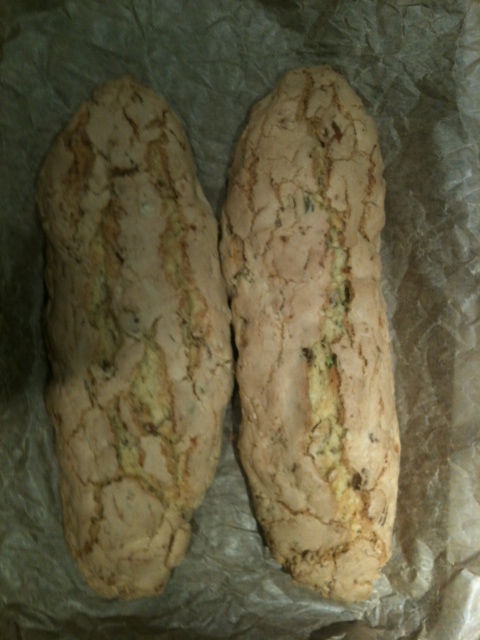
Here they are baked and on their sides showing off all their lovely ingredients.

My cousin Mary died recently. For her funeral reception, to celebrate the two very distinct sides of her heritage – Italian and English – I made cantuccini and a Bakewell tart.

If you think you know cantuccini biscuits as some dry little slab of a biscuit, offered as a consolation prize with your cappuccino, think again. These are crisp but moist and delicious. Even though it was a funeral, I got asked for the recipe and even though my father isn’t known for compliments he declared these “first class”. Here, in memory of Mary, who took me out on my first ‘solo’ trip to the newsagent to buy chocolate, and was the first person I remember ever telling me I was pretty, is the recipe. God bless you Mary, I’ll never forget you.

75g butter – it should be very soft
150g icing sugar, no other will do
1 egg, preferably from your own chicken
1 teaspoon of vanilla extract
1 tablespoon of brandy
225g plain flour
half a teaspoon of bicarbonate of soda
1 teaspoon of fennel seeds, I implore you not to leave these out
100g almonds and pistachios, roughly chopped *
the zest of half a lemon
the zest of half an orange

Preheat your oven to 180C.

Line a baking sheet with baking parchment. Scrunch it up first and then smooth it out so it lies flat. Cream together the butter and icing sugar. At first this will seem like an impossible task, but believe and it will happen. It’s also a great arm work out. You need to keep going until it’s fluffy and thick and looks like…well, what it is. Icing sugar and butter mixed together. Don’t give up  until you get to that bit, this is the only hard-work part of the recipe.

Then add the egg, mix up a bit, then the vanilla extract, mix up a bit then the brandy, mix up a bit.

Then add the flour and the bicarb, the fennel seeds, nuts and zests. Mix together. You should have a very soft dough. With your hands, man-handle the dough into two log shapes with tapered ends, place on baking paper lined tray and finesse the shape whilst in situ ((I flatten the top a little). These do rise a little so place as far apart as your tray will allow. Don’t worry if it’s only a few cms, but don’t have them touching when they go in as they will fuse together (even that isn’t the end of the world, but it’s not ideal).

Cook for 20-25 mins. The tops should be golden but not super brown.

Just out of the oven. This is the colour they should be.

Slide the whole sheet onto a cooling rack and after about 20mins you can transfer the whole sheet onto a chopping board and slice them into, well, slices. I then transfer them back onto the cooling rack on their sides, so they can cool completely.

I find these so easy to make. They keep well and they’re a lovely biscuit to have in. I hope you enjoy them. They also make great presents wrapped in cellophane bags.

* When I make my own almond milk I use the almond ‘paste’ left over in these biscuits – I use about 80g of the almond paste and then 50g or so of chopped pistachios. Lovely.

Colomba – one of the most delicious things I’ve ever made

Colomba, soft, orangey, classy.

Colomba means dove in Italian and it’s a traditional Easter cake. It’s much like panettone – traditional Italian Christmas cake – except it doesn’t have sultanas.

Both colomba and panettone use a biga – or sponge starter. I’ve never attempted panettone because it’s not meant to be easy. Not difficult per se, but the recipe is long and there are various stages during which you really need to concentrate. Plus you need to hang panettone upside down when it’s done (until it ‘sets’). I was almost tempted last year when I found out that Patrick at Bakery Bits had started selling the waxed paper cases you need for panettone but then my mamma’s friend bought an exceptional one back from Italy so I never bothered to make my own.

Then Patrick posted a recipe for colomba and started selling Aroma Veneziana which is rich with citrus and almond oils with a hint of vanilla. He also sells the colomba cases (I found the 750g ample big enough for the recipe below. You can make the cake in a traditional cake tin but the dove shape is traditional). So I decided to try it.

God it was delicious. One of the best things I’ve ever made. So good that I couldn’t believe I’d actually made it myself. (I’m aware Easter has passed now, but this shouldn’t put you off trying it.)

I made a few changes to Patrick’s recipe which I’ve detailed below. I actually made two colomba cakes – retardeding the proof time on my first attempt because I ran out of time (I put it in the fridge at the stage marked * below, because from start to finish this cake takes quite a long time, you really need to start it in the morning) and cooked it for 40 mins. Refrigerating it didn’t seem to affect it at all, if anything I think it was tastier. It was supremely moist – a tiny bit underdone and doughy at the very centre, but unnoticeable to all but me.  I cooked the second one for longer – probably 50 mins and it was more authentic ‘colomba’ but slightly dryer. My oven is ferocious so I cooked at more like 180/190C. Patrick’s tip of putting silver foil on top is one to be followed, as the egg white/sugar coating burns easily. In fact I covered the whole of the colomba for the middle portion of the cooking time.

Anyway, this is what you need to do.

First stage: the sponge

15g caster sugar
100g warm water
3 egg yolks (reserve two egg whites, freeze the others if you don’t know what to do with them immediately)
11g instant dried yeast
70g strong white bread flour

Mix together the sugar and water with the egg yolks; separately, mix together the yeast and flour and add this to the egg/sugar/water mixture. You get a thick batter. cover with cling film and leave for a good 30-40mins until it’s really bubbly and frothy (note: my kitchen is about 20 degrees, if yours is warmer/cooler you’ll nee to adjust the time accordingly).

Second stage: first  dough


The frothing, elastic sponge, as above.
75g warm water
45g very soft unsalted butter
6g dried yeast
210g strong white bread flour

Whisk the water into the sponge, then mix in the butter. Separately mix the flour and yeast together and add these to the sponge. You should have a thick, stick, moist batter. Cover with cling film and leave for about two hours, until doubled in volume.

Third stage: second dough


The first dough,  as above.
145g caster sugar
15g honey
3 egg yolks
grated zest of two oranges
2 teaspoons of Aroma Veneziana (this is my favourite big, I adore the smell and it gives you a hint of the good things to come).
115g very soft unsalted butter
250g strong white bread flour
5g sea salt, finely ground
150g chopped mixed peel

Take your first dough and now mix in the sugar, honey and egg yolks. It’ll look a bit unpromising and ‘separate’ – don’t panic. Add the Aroma Veneziana, the orange zest and butter, then the flour and salt. Now, Patrick didn’t add the mixed peel til later (see his original recipe, link above), but I added mine here too. Mix all together.

Now here, Patrick says to knead until you have a soft, smooth, elastic dough. My dough was sticky and a bit unmanageable so I rested it for ten minutes, then gave it a light knead, rested it for ten minutes, then gave it a light knead, rested it for ten minutes, then gave it a light knead. I did this on a lightly oiled chopping board.

Then I picked up the original recipe which says to put it in a oiled bowl and cover with cling film * and leave to rise ‘dramatically’, Patrick says until it’s about three times the original volume which takes about 3-4 hours.

(For the first colomba this * is where I refrigerated it and the next morning, took it out and let it sit all morning until it got to room temperature and then started to rise ‘dramatically’.)

When that’s done, Patrick cuts his dough in half and puts it in the case (after rolling it), one half making the ‘wings’ and one half the head to tail bit (so they overlap). I didn’t do this, I cut three pieces to fit head to tail, and two for the wings, rolled it out to flatten it put it in the case and pinched the dough together.  


I found the case was quite floppy once the dough was in it, so I sat it on a baking tray and when the time came put the whole lot in the oven.


At this stage you let it sit and rise again for about 2-3 hours, until doubled in volume, covered with a damp tea towel. Mine easily took more like three hours. 

Fourth stage: the delicious topping


2 egg whites
25g caster sugar
25g ground almonds


crushed sugar cubes
flaked almonds

Just before baking you make a paste of the topping ingredients: 2 egg whites, 25g caster sugar, 25g ground almonds and put the whole lot on top of the colomba, spread out with a pastry brush/back of spoon to make sure every bit is covered. Please don’t miss this bit – it’s the topping which really makes it. Scatter broken up sugar cubes and flaked almonds on top – I used three sugar cubes and that was plenty.


Cook for 40 mins at 200C and check if it’s done by putting a skewer in. If it’s burning put silver foil on top. Even if it looks really done – do check with the skewer, if it comes out really gunky it’s not done yet. 


I can’t even begin to tell you how great this is. Patrick says it keeps for four days in a tin, but I made my two a week ago and although one is gone, the other is still superb. But if you do have any left you can always toast it/butter it. We eat it in the morning dipped in caffe latte.


This recipe seems long – it is. But take your time and try it. It’s pretty fool proof considering the result!


Let me know how you get on…and don’t save it just for Easter!