How I make porridge

People are quite often scared to cook pasta for me, on account of me being Italian. I think they think I spend my whole time at home making pasta from scratch and that my kitchen is covered with spaghetti drying from the ceiling.

I never really understood this intimidation, until I started getting into porridge. For such a simple food, there seem to be an awful lot of rules about how you should make it. Porridge features not at all in the Italian diet, so I didn’t have any claim to it.

All I knew is that whenever you read about how to make porridge it would say forceful things such as “all you need is water and salt, anything else isn’t porridge”.

But I don’t like porridge made with water and salt and it’s taken me years to admit this. Furthermore, feeling that that’s the only way to eat porridge isn’t really helpful because porridge is really good for you, so it’s worth working out how YOU like to eat it. After all, I know some people who eat pasta with ketchup and do I judge?

You guess.

Anyway, this is how I make, and eat, porridge.

For one portion. I put the saucepan directly on my digital scales and weigh everything.

30g porridge oats

100g of milk

150g water

a pinch of salt

half a teaspoon of cinnamon (I didn’t think I liked cinnamon but it really works)

Some berries

Maple syrup

Nut butter of your choice

Weigh the porridge, water and milk straight into a saucepan, then add the cinnamon and salt and put on the stove. It seems quite a lot of liquid but this is the key (I’ve found) to making a lovely creamy porridge.

Simmer and stir for quite a long time, 5-10 mins. You can leave it periodically and come back to it and I find it meditative and I like to think about the day ahead whilst doing it. Also whilst doing it I can’t POSSIBLY do anything else so I say to my partner “the children need breakfast, I can’t POSSIBLY do it because I’m stirring my porridge”.

Once the milk and water has been largely, but not totally, absorbed – you will still have a fairly wet porridge – take it off the heat and leave it for a minute whilst you plate up your berries and nut butter. I nearly always have blueberries. In the winter I buy frozen ones and stick them in the porridge for that last minute standing time.

I also add to the plate a large – very large – tablespoon of nut butter, usually cashew or almond and always Meridian as it’s the best by far AND I LOVE IT. This is because, contrary to popular opinion, porridge on its own does not, and never has, filled me up til lunch time. If I eat porridge with no protein in it (i.e. the nut butter) I am as hungry as a pregnant woman in the first trimester by 10am. Sometimes 9am. But adding a huge dollop of nut butter not only adds useful nutrients and good fats, but helps fill me up.

On top of the porridge, berries and nut butter I add a teaspoon of maple syrup. A teaspoon of maple syrup has 30 calories which is nothing really, but it really adds to the yummyness of the porridge.

This is how I make porridge.

Iced coffee

This was inspired by an ice cream recipe which didn’t so much go wrong, but which I didn’t like.

I have a book called The Perfect Scoop by David Lebovitz. A great book absolutely crammed full of great and inspiring recipes for ice cream, sorbets and the like. I bought it after I tried Lebovitz’s Torrone Ice cream which is one of the best ice creams ever.

In the book, Lebovitz has a recipe for Vietnamese Coffee Ice cream. I made it and it wasn’t really my thing. Too ‘icy’, and not creamy enough for the sort of ice cream I like. What could I do with it I wondered? Then I remembered how my father used to make iced coffee in my parents’ cafe and I thought “a-ha” I’ll use it as a base for iced coffee. And so this is what I did. (I’ve slightly adapted the recipe here by altering the proportions.)

When you’ve made the ice cream, store it in the freezer and then when the mood for iced coffee takes you, just add a scoop of the ice cream to some milk and whizz it up in a blender. I use my Dualit milk frother on the ‘cold milk’ setting and it works perfectly (put the milk and ice cream in the machine at the same time, sometimes I do have to run it twice to make sure the mixture is smooth).

IMG_6319

You need about a scoop of ice cream per small glass of milk, although experiment and see what suits you and if you prefer a more creamy or stronger coffee taste. My children go mad for this drink; obviously I have to ration it out as all that caffeine…

It’s a great drink for this lovely hot weather and, once you’ve made the ice cream, the whole thing is ready in minutes. Serve with ice cubes if you wish, but I don’t find there’s any need.

Iced coffee ice cream:

397g Waitrose Condensed Milk (for those, like me, who boycott Nestle, it’s great to know that Waitrose now makes its own condensed milk and it’s cheaper than Nestle’s)

250 – 300 ml of espresso or very strong coffee

80ml single cream

A pinch of ground coffee

You basically mix everything together, chill it and then put it in your ice cream maker.

Or, if you plan to make lots of iced coffee over the next few days, just store it at this stage, in the fridge and use half a cup every time you want to make an iced coffee, topping it up with milk (and an ice cube or two if you want it really ice cold) to suit your taste (so more iced coffee mix to less milk if you like it very strong/sweet, more milk if less so).

I love to top this up with almond milk. This doesn’t, of course, give you a dairy free iced coffee as the cream and condensed milk are dairy, but it does lower the dairy hit and gives a lovely nutty taste.

Iced buns for a Wednesday

There are many other things that I should be doing. I am in the middle of a piece about Death, I interview somebody in an hour, I have a study that looks like a store cupboard nobody cares about, and everybody chucks their stuff into. I should be researching, planning and tidying to enable a more structured work routine.

But all I want to do is write about buns. Iced buns. I don’t even, particularly, like iced buns. I never wake up and think “I really fancy an iced bun”. But they are a perfect, unassuming little cake. Very English (to my Italian mind). And humble. My partner, who is English going back to the beginning of time, said that “iced buns were what you bought your children when they really wanted a doughnut”. I have no idea if this is true

This is how you make them. It’s a recipe from a Jamie Oliver magazine from a few years back, the method of which I’ve adapted slightly. The recipe says it makes 12, but you could easily make 24 small ones (and even then, not that small). These were, actually, iced ‘fingers’ but I prefer the word bun. I made 12 and they were as oversized as the eyes on a Bratz doll. Next time I’d make them smaller.

14g dried yeast

150ml milk, tepid

500g strong white bread flour

50g caster sugar

2 teaspoons of salt

40g very soft butter, unsalted

2 eggs

140ml of water straight out of the tap

For the icing: 300g icing sugar, 2-3 tablespoons of water

Stir the yeast into the milk and set aside. You don’t need to wait for it to froth up or anything.

Mix together the flour, sugar and salt together. Now stir in the yeast/milk mixture and the rest of the ingredients, mixing it all together.

You’ll have a very wet dough that looks almost unmanageable. Leave it in a bowl for 10 minutes.

Oil a work surface or board (wooden boards don’t work so well for bread kneading, I use a Top Gourmet one which is made of recycled cardboard and it’s brilliant for all my bread making) and tip the dough out. You may need to scrape it up with a scraper to begin with but don’t be tempted to add flour and don’t panic. You can do this. It’s buns you’re making, just think of that.

Knead it very lightly for about 10 seconds, then cover and leave for ten minutes.

Do this twice more. By the end you should have a smooth dough that is slightly more manageable. Now leave it, covered in an oiled bowl, for about an hour and a half. It should have doubled/risen quite a bit.

At the end of this time, knead it lightly one more time and cut bits off it and roll into either circles (I used flour for this last bit) or sausage shapes. If you want to be really precise, weigh the whole dough, work out how many buns you want, then divide one by the other so you end up with buns the exact same size.

Place whatever size/shape bun you’ve made onto a parchment lined tray. The buns shouldn’t be touching yet – they reach out to each other as they rise.

Cover and leave in a warm place for 30 minutes. I left them at room temperature – 20c – for 90 minutes (not on purpose, I got held up) and when I came back they’d blown up to enormous proportions. All was fine, I had very big, very light, very fluffy buns. But it was touch and go until I got them in the oven. I’d say give them an hour at an average room temperature.

Into a preheated oven of 200C, place the buns for 10 minutes or so. You want them to be lightly golden. When done, take them out and cool completely. They’ll be all squashed up against each other and you’ll have to tear them apart to reveal their inner fluffy softness.

Now  mix up the sugar and water to make the icing and spread it on top. The icing won’t be pouring consistency – it’s much thicker than that. So you need to spread it on with a knife but as it dries it smooths out so don’t worry about it not looking lovely and slick when it first goes on.

Don’t store these in an airtight container. The buns need to breathe or the icing will slide off. So you may want to freeze half (un-iced in which case make half the quantity of icing) as these make rather a lot. But they are fun to give away. Everyone seems to like an iced bun.

These are great for school fetes for that reason – children and adults like them – and they are not overly expensive to make. I think, and my eldest agrees, that these taste even better the next day. They didn’t last into a third though.


Chollah bread

Where I grew up, in Bayswater London W2, there used to be a bakery called Grodzinski and we would buy our bread there. I’d be fascinated – what child wouldn’t be – by the slicer, that they fed your whole loaves into if you asked for it to be sliced.

Sometimes, we would buy chollah bread. I loved its eggy sweetness and my favourite filling for it would be mortadella. Some years later, when I was telling my partner, he pointed out that perhaps using pork in a traditional Jewish bread wasn’t the BEST thing I could have done. (Sorry.)

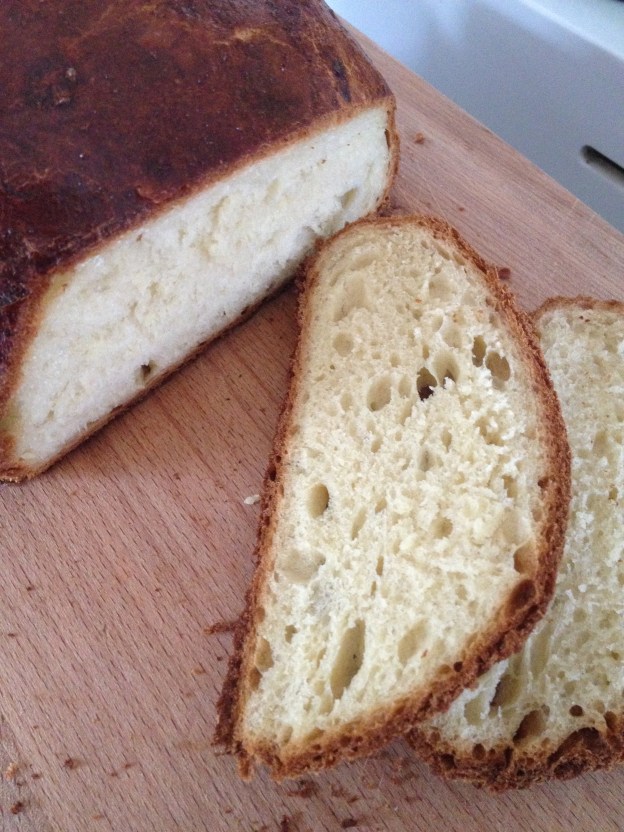
Anyway. A few years ago, I attempted to recreate this wonder bread at home and I was amazed at how well it worked. This is an amalgamation of recipes that I found and it works for me, I’m not sure how authentic it is (be interested to know). It makes one good loaf. I don’t attempt to knot it or shape it into anything fancy. A Jewish friend of mine who regularly bakes says that, in her opinion, the dough is either dry enough to shape, but that results in a dry bread, or too wet to shape, but this results in a tastier bread. This was also my experience. So I always go for a higher hydration loaf in a simple boule shape. Be warned: it’s the sort of bread you can’t stop eating. Any that you miraculously have left over and goes stale (you won’t have any) you can make into French toast.

420g white flour – plain gives a better texture but you can also use strong white

7g of dried yeast

60g caster sugar

240ml of water, warm

a teaspoon of salt

1 egg

60ml of olive oil or oil of choice (you could also use melted butter)

You need an extra egg to glaze with, or milk. And poppy/sesame seeds if you like to sprinkle atop.

Mix a heaped teaspoon of the measured out sugar, with the yeast, into the warm water. Mix it up well and leave it to froth up. This takes about 15 or so minutes in my kitchen.

Mix the remaining sugar with the flour and salt into a large bowl and mix with a fork. When the yeast/water/sugar mixture has become nice and bubbled up, add this to the flour mixture and mix together using a fork until you get a sticky dough. Now add the egg and oil and mix it all together. Leave it for ten minutes.

Now tip it out onto an oiled surface and knead it very gently. Cover with a bowl and leave it for ten minutes. Repeat this twice more. The dough should be fairly smooth by now. When you have kneaded it gently for the third and final time, put it into an oiled bowl and cover with a cloth in for two or so hours.

Heat the oven to 200C, take your dough out knead gently and shape into the form you want it to be (as I said, a boule is really the only thing I can do with it) and place it on the baking tray you’ll want to bake it on. Leave for a final 20-30 minutes to rest.

Before it goes into the oven, brush it gently with beaten egg/milk and sprinkle with seeds if you so wish. Bake it for 20-30 minutes and leave to rest until completely cold before cutting it. (Yeah right.)

Pear and Hazelnut cake

I am a fiend for cutting recipes out of magazines and filing them in big Muji PP document files, which I then mark things like ‘Puddings’ or ‘Everyday’ or ‘Christmas’. People who come to visit look at my bookshelves and I know they think I’m bonkers. I AM bonkers. But, it does mean I have custom made books.

And it was in such a book, called ‘Cakes’ that I found a recipe I’d cut out years ago. Most unassuming it was and by the lovely Nigel Slater. It involved pears. I’m usually a bit suspicious of people who say, when I ask them what sort of cake they’d like me to make them, “something with fruit in it”. I think a cake is a cake and if you want fruit, eat fruit. But there are exceptions, of course, and this is one of them.

And it is an exceptional cake. I must have eaten half of it all by myself which is really rare for me. I customised it by using:

a) ready toasted and chopped hazelnuts which seemed like such a luxury it made me feel quite heady. Because my packet came in 100g, I then scattered 20g of the chopped hazels onto the crumble topping and…

b) the cake calls for 165g of flour and I substituted half of that wholemeal, adding a quarter teaspoon of baking powder as the wholemeal flour I have is plain.

c) I also used about 40g of wholemeal in the crumble topping. The cake didn’t suffer for it at all. By that I mean it didn’t become overwhelmingly worthy. But I do like to avoid 100% white flour cakes if possible. The thought of adding wholemeal flour may scare, but as long as you don’t overdo it and do it in appropriate cakes – i.e. NOT ones like Victoria sponge – then it just adds a lovely dimension to your baking and a good flavour.

This is lovely warm, with cream. It reheats easily with a ten second blast per slice in the microwave. I don’t know why it’s so addictive exactly but it is. A superior cake. Eat it and cry gently.


Baked blackberry and lemon curd cheesecake

I was going to write about iced coffee today, but the weather is so grey and miserable this appealed more.

This came from those recipe cards Waitrose has hanging up, usually near the exit. I don’t know who writes the recipes for Waitrose, but they are an unsung hero – some of my very best bakes have come from unauthored recipes from Waitrose. This is a lovely, lovely recipe that makes a great cake: not too fancy, but fancy enough to make it no ordinary cheesecake. It’s also pretty easy to make because a lot of it is assembly, not technique. Try it this weekend after Sunday lunch and let me know how you get on with it.

The recipe is here, but I adapt it slightly and this is how I cook it:

200g pack essential Waitrose All Butter Biscuits, crushed (OBVIOUSLY you can use different ones but I have found these work well)
60g butter, melted
300g soft cheese
300ml Isigny Creme Fraiche
150g caster sugar
1 tsp of vanilla extract
2 eggs
225g -ish of blackberries
Lemon curd (I really, really recommend Duchy Originals) – as much as you need to coat the biscuit base with a thin layer, I’d say about six tablespoons.
Icing sugar for dusting (I always forget to do this).

First you crush the biscuits anyway you see fit. I do them with a rolling pin, rolled over a sealed plastic bag. Melt the butter, introduce the two and spread this across a parchment base-lined 23cm spring form tin. Chill in the fridge for an hour or two, less is fine.

To make the filling, heat up the oven to 190C. Mix together the soft cheese, creme fraiche, caster sugar and vanilla extract – either by hand or in a food mixer with a whisk attachment. Add the eggs and beat well until everything is incorporated. Set aside for a momentino.

Get out the tin with the biscuit base, dollop lemon curd across the base, you want it pretty much covered by a thin layer. Now put the blackberries over the top. I used frozen ones that had been picked from our garden last year, and it was nice to see them again.

Now drop the cheese mixture over the top, level out, and cook for  40–45 minutes. It’ll be brown around the edges and set in the middle. (The photo above makes it look like it’s REALLY brown, that’s cos of the effects of the film I use, it’s not that brown.) Take it out, leave it to cool and then leave it in the fridge for a few hours. Overnight if possible because this is even better the next day.Because of this it makes a great dessert to serve when you have people coming round as it’s one less thing to worry about on the day. It will easily keep for a few days in the fridge.

Sourdough rolls, or panini

Having a bread roll always seems a bit luxurious. Whereas a slice from a loaf is all about sharing, a panino (panino is the singular, panini the plural) is all about you: it’s all yours; from beginning to end.

I only started making rolls last year, when I got a couche cloth for my birthday (I felt lucky). They are so easy to make and I want to encourage you to give them a try, and here’s why:

You can keep the rolls proving in the fridge for days. A batch of dough made using 500g of flour yields about 12-16 rolls, depending, obviously, on how big you make them. This lasts us, on  average, three days. The longer they’re left, the tastier they become.

Thus, you can cook up just how much you need. This is really useful if you struggle to get through a whole loaf in one day. With the rolls, once you have a batch in the fridge, you can have freshly baked bread in less than 20 minutes (cook straight from the fridge) and you can cook up just one or two, or the whole lot depending on how many you want to feed that day/moment.

The longer-proved rolls do deflate when you slash them however, so don’t try – just nip at them deeply with a very sharp pair of scissor (you can see the effect in the pic above), they still rise beautifully in the oven, but you want to be quick and definite with the cutting so don’t faff around with a grignette.

They’re really, really tasty.

With rolls that have only been proving overnight, I do slash at them with a grignette, usually making four little slashes all the way around. This helps keep the round ‘boule’ shape. If you don’t mind about this, two or three slashes with a sharp bread knife is slightly easier, but the dough will expand to give you a more oval shaped roll.

I bake mine for anything from 14-20 minutes, divided up half at 250C and half of that time at 200C, but obviously a bit more or less depending on size of rolls or finish of crust that you want. (I still use ice cubes though.)

If you like to give bread as a present there is something really nice about giving a ‘bag ‘o’ rolls’. I mean even the phrase is great. Buy some brown bags (I get mine from the dreaded Amazon, sorry), because I do love a brown paper bag.

They are easy to shape and it’s also a really good way to practise shaping because if you get one a bit wrong, you have another 11 or so to practise on. Do shape them all up at the final prove stage, don’t be tempted to keep the dough to shape up for later. I can’t find the shaping video I watched now (it was by the people at King Arthur Flour), despite looking for it. But if you put ‘shaping bread rolls’ into You Tube you’ll get a few vids which will give you an idea.

You can bake them longer for a crustier crust, for less time to make a softer one for children/old people with no teeth. Whilst I love a deep, dark crust on a big loaf of sourdough, because the ratio of crust to middle is low, with a roll, I prefer a softer bite.

Have a go, and have fun with it. Just use your regular recipe for sourdough but shape them into rolls. This also means you can make the fabled ‘sourdough burger bun’ (basically a sourdough roll into which a burger has been put) which people queue for in London’s Hackney.

For the rolls with a lesser proving time you will need a planchette, but with the rolls that have been proved for a longer time, they are less frisky, drier, and you can, if you’re quick and confident, lift them off the couche cloth and onto a hot baking tray by hand. But given that a planchette is vital for baguette baking, treat yourself.

Egg and bacon pies

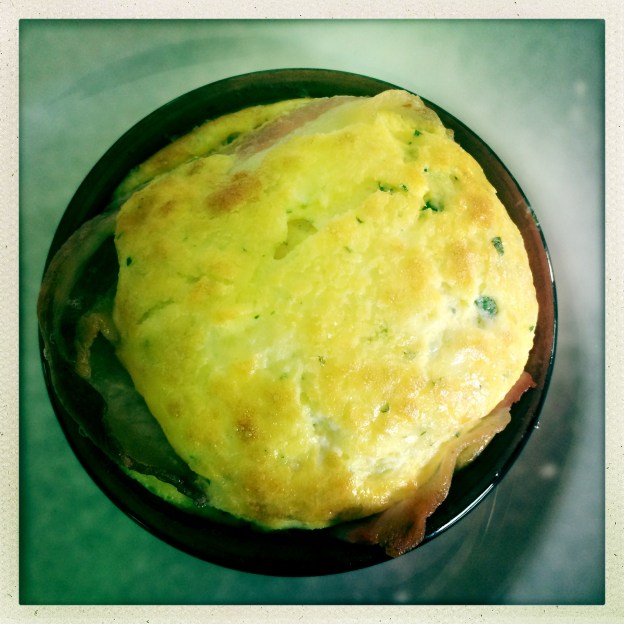
This little recipe was from one of Donna Hay’s books – Fast, Fresh, Simple. It makes for a great Saturday lunch but involves no pastry (sorry) – perfect for when when you want something hot, tasty and quick but would prefer to avoid falling into the predictability of sandwiches.

Obviously my children hated this and just ate the buttered sourdough I provided as a prop, and the bacon. But hey-ho. We loved it.

The recipe is here. But for convenience this is what you need for four people:

6 rashers of thin cut bacon

6 eggs

240g creme fraiche (I used a jar of it that was slightly less than that)

2 tablespoons of flat leaf parsley (I use frozen Waitrose herbs they are great for this sort of thing).

Oven preheated to 180C. You need four small oven proof dishes/tins of about 10cm across. We used these little ceramic ones we got some free pate or desserts in years ago. We seem to have accumulated hundreds of these dishes, hardly any of which are the same size. Butter said dishes and place on a baking tray.

Put the rashers around the dishes, one and a half in each, so they make a rim. Whisk together the eggs, creme fraiche and parsley and decant equally into each dish. Bake for 20-25 minutes until cooked but firm to the touch. They puff up like little souffles.


Apricot, amaretto and almond cake

It’s Monday morning as I write this. I was promised sunshine and warm weather and yet, as I sit here in my Uniqlo padded jacket and thermal socks, it is grey outside and I feel depressed.

This is why I am writing about cake. Cake is a happy, safe word, with its promises of tea, friends, chat and warmth.

I made this at the weekend, for a birthday treat for a loved one. It’s a recipe I’ve had for many years (from Waitrose magazine). Most unprepossessing, and even a little bit gauche to look at maybe, but what drew me in was the introduction (I love an introduction in a recipe) which said, briefly but fulsomely:

“This is one of the best cakes in my repertoire, it has a very intense apricot flavour”

(I don’t know who wrote it so apologies.)

That confident appraisal, “one of the best cakes in my repertoire”? Well it rather throws down the cakey gauntlet, doesn’t it?

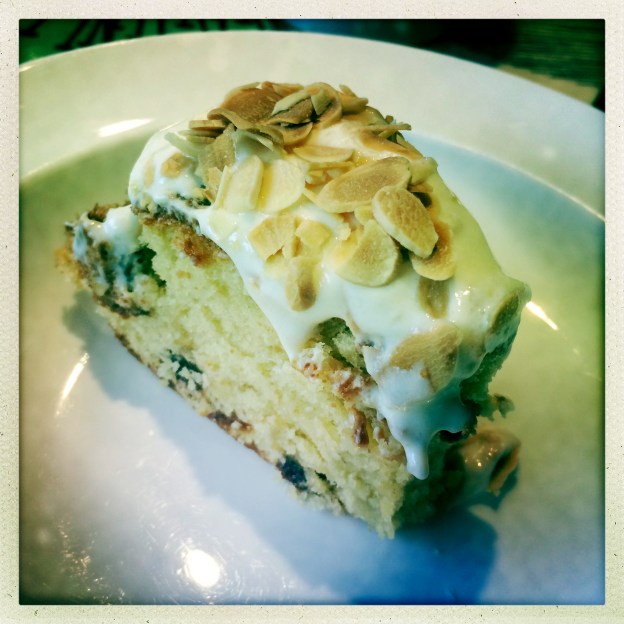
This is a magnificent cake. Not, of course, if you don’t like almonds or apricots. And each time I make it, it’s slightly different. One time it was so moist at to be barely sliceable – but still delicious – yesterday when I made it, it rose more than ever before, and didn’t sink in the middle (it usually does, a dip which acts as a useful pool for the yoghurty, creamy topping) and was definitely a spongey cake. Anyway, try it and see. It really does have a wonderful flavour, and on a depressing, grey, Monday when the weekend is all behind you still, that’s what you need.

You’ll need, for the cake:

115g unsalted butter, softened

325g caster sugar

50g marzipan, cut into little pieces

1 teaspoon of vanilla extract

50ml amaretto, plus an extra as a sip as it’s delicious

3 eggs

165g plain flour

25g raising flour

a quarter of a teaspoon of salt

a quarter of a teaspoon of bicarbonate of soda

75g ground almonds

125ml sour cream

125g read to eat dried apricots, chopped


You’ll need, for the topping:

225g thick Greek yoghurt

4 tablespoons of whipped up double cream

125g soft set apricot jam

50g toasted almond flakes

a little icing sugar for dusting.


This is what you do:

Preheat the oven to 170C. I use this time to toast the flaked almonds for 5 minutes or so. Watch them carefully so they don’t burn. I use a spring-form 23cm cake tin which I parchment line the bottom of.

Cream the butter and sugar until fluffy, either by hand or in a mixer. Then add the marzipan bits and blend well. Now add the eggs, beating well with each addition. Now add the vanilla and amaretto. MIx together the flours, salt and bicarb and the ground almonds. Now add these dry ingredients to the mixture, alternating with the sour cream. Finally, fold in the chopped apricots and bake in the oven for 1hour to 1 hour 20 minutes. A cake tester should come out clean, but the cake shouldn’t be too cooked, if you follow.

Let it cool completely, then run a knife around the edge and take out.

Now mix the topping ingredients together: the yoghurt and the whipped cream first, then marble through the apricot jam. Spoon on top of the cake. Some times, if the cake hasn’t sunk much, then I feel like I’m left with too much topping. In such cases, it’s best not to put all the topping on, but reserve it for spooning it up when you slice up and serve the cake.

Sprinkle the flaked almonds on top, dust with icing sugar and slice and eat.

Store in the fridge when not being eaten.

The Suffolk Flower Farm

Yesterday I went to the Lavenham Farmer’s Market and had a completely wonderful time, as usual. I swear they must pipe oxytocin through the hall there.

As I walked in, I saw a woman walk out with a small posy of really lovely flowers. And I clocked them and thought “wow”. And as soon as I walked in I saw this amazing stand of flowers saying “grown not flown” with the most beautiful garden flowers in bunches, in pots. And, after I’d stared at them all for a while,  I bought a small posy of flowers for £5 (see pic above).

They are lovely and if you live in Newmarket, Sudbury, Cambridge, Bury St Edmunds or Haverhill you can have lovely locally-grown flowers delivered. The company – the Suffolk Flower Farm – also does special occasions and farmer’s markets where you can pick up smaller bunches.