Category Archives: Cakes

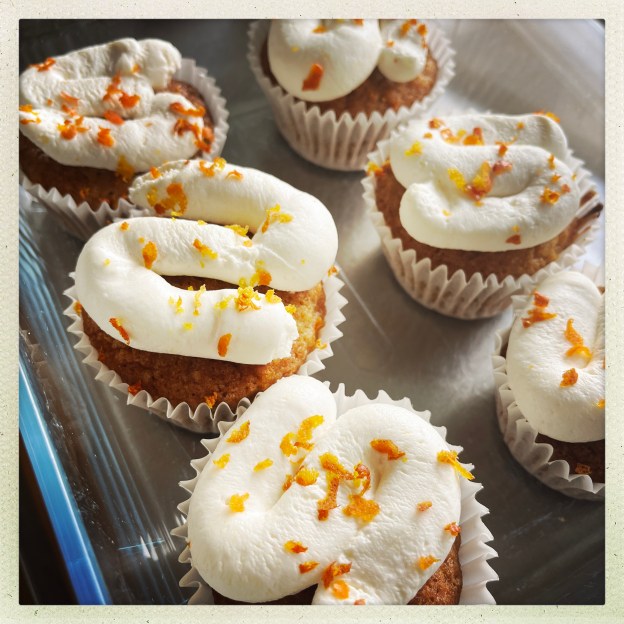
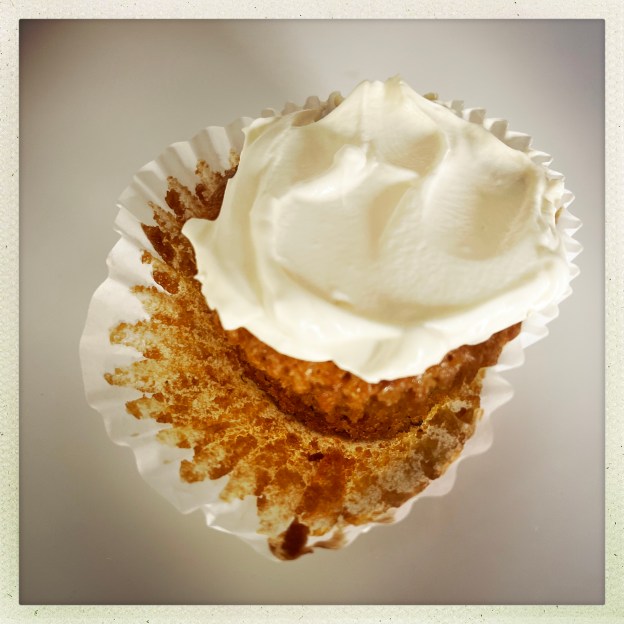
Carrot and Cardamom cupcakes

These are delicious, fresh and light and adapted from a Waitrose recipe which you can find here.

I changed the frosting as I can’t bear an overly sweet one and the addition of the Fiori di Sicilia is, if I say so myself, inspired…

Unfortunately they don’t travel well and need to be kept in the fridge – if you can let them chambré at room temperature for a bit before eating. I guess you could make this into one giant cake but not sure why you’d want to…

Ingredients for the cakes

12 cardamom pods
175g light brown sugar
200g self raising flour
Half a teaspoon of baking powder
Quarter a teaspoon of fine sea salt
2 eggs
150ml of olive oil
200g of carrots, coarsely grated (I hate grating things)
Two oranges, preferably organic as you are using the zest. You’ll only need the zest of one for the actual cakes. So if you’re short you really don’t need two but the zest, grated, as a decoration – see later – does look nice.

Ingredients for the icing/frosting

250g mascarpone
85g Greek yoghurt
55g icing sugar
Optional but wonderful: a good few drops of Fiori di Sicilia essence. You can also add this into the cake mixture if you prefer.

Oven to 180C.

You’ll need a 12-hole muffin tin lined with muffin papers. Open the cardamom seeds, discard the shells and grind up the little seeds as best you can. It’s good if you’re in a bad mood here as you can really bash away with a pestle and mortar.

Whisk together the sugar, flour, baking powder, salt and the ground up cardamom when ready.

In a separate, larger bowl whisk together the eggs and olive oil then pour over the dry ingredients with the grated carrot and zest of one orange. Gently mix until combined well and then pour equally into the muffin cases.

Bake for about 20 mins until a skewer comes out clean and they bounce back when gently pressed (careful not to burn a finger). When done take out and let cool completely (I take them out of the tin, still in their cases of course, about ten minutes out of the oven).

You can make the frosting whilst they are cooking and put it in the fridge for later. Here you just mix the mascarpone, icing sugar and yoghurt together with a few drops of the Fiori di Sicilia. You should have a fairly thick mixture. If it’s not thick enough for you (and sometimes it isn’t due to the water content of the dairy) then add a bit more icing sugar.

When the cakes are cooled you can ice the frosting on – it looks really good if you can be bothered to do this but I admit sometimes I just can’t be so I just spoon/spatula it on thicky and then, if you had another spare orange, grate zest on top. Voilà.

A deceptively plain but tasty cake. Spiced chai bundt cake.

This is a Donna Hay recipe, from a few of her books, most notably Modern Baking which is an, I think, under-celebrated baking bible. I’ve made this cake for many years and it’s a firm favourite in our house and needs few ingredients – we keep a stash of chai tea on hand especially for it and the rest are store-cupboard/fridge staples. It’s also a good way of using up too much milk.

Ingredients

1 tablespoon of loose chai tea (if you can only find tea bags just open them up, one tablespoon is about two tea bags’ worth)
Two tablespoons of boiling water
375g of self raising flour
330g of caster sugar
two teaspoons of mixed spice
4 eggs
375ml of milk
250g of butter, melted
two teaspoons of vanilla extract.

What you do

Preheat oven to 180C. I use a 9′ savarin/bundt tin for this – specifically this one. Butter the tin and dust with flour and shake off the excess.

Put the loose tea in the boiling water and let it steep for 5/10 minutes, whilst you melt the butter and let it cool.

Note: you’ll need all the tea mixture for the cake, ie the tea leaves and the water.

Now you can go ahead and put all the ingredients, including the tea mixture, into a freestanding mixer and whisk it until combined, or if you want to do it the old fashioned way then you can do butter and sugar – cream together, then add the vanilla extract, eggs, flour, mixed spice, tea mixture and milk.

Pour the batter into the cake mould and bake for about 35 minutes. Mine usually takes 40 but you can check after 30. Do check it’s done with a skewer inserted – it should come out clean. Leave it in the tin for about ten minutes, I loosen mine around the edge and the middle ring bit with a knife and then turn out.

It’s a really lovely, moist cake that keeps for a good few days and is so much nicer than you think it might be.

Chocolate Chestnut Rum Roulade

I’ve made this every Christmas for over twenty years. Last year, I went to look up the recipe on line (it was a Waitrose recipe from Iceland) and it had gone. It was a ‘404’. I panicked. Despite an extensive internet search nothing came up for it.

More panic. This is my pièce de resistance every Christmas, and my children love it so much they have, on occasion, requested it for birthdays.

But luckily – amazingly – I had made a note of it in my Travelling Cookbook which I started up years and years ago to commit my favourite recipes to paper. But if that goes…so finally I’m going to commit it to technology for me, and all, to enjoy.

I won’t say this is difficult. It’s not. But it’s not always perfect and it is a roulade and involves rolling, like a Swiss roll. It’s not super easy but just go with it and don’t worry. It’s delicious and look, no flour.

Ingredients

For the roulade

170g 70% chocolate, broken into pieces
170g caster sugar
Five eggs separated
1 teaspoon of vanilla extract
Three tablespoons of hot water (see note later)
Icing sugar for dusting

For the filling

Three tablespoons of icing sugar
115g unsweetened chestnut purée
Four tablespoons of sour cream
100g cooked, peeled chestnuts chopped
Two tablespoons of rum (or liqueur of choice but then it’s not rum roulade!)
285ml of double cream

Method

Now, those are the ingredients above. I admit what I now do is buy some vacuum packed chestnuts, whizz some up and use the rest chopped. Because otherwise I tended to get left with lots of left over chestnut purée. But you do what works.

Preheat oven to 180C. Lightly oil a shallow baking tray of approx 34cm by 24cm and then line with baking paper and very lightly, again, oil. TBH you’re probably fine with just the baking parchment/paper but this recipe is from like 25 years ago so just reproducing what they said at the time..

Now melt the chocolate in a bowl, on top of some simmering water and as ever, do not let the bowl touch the surface of the water.

In a separate, large bowl, beat the caster sugar with the egg yolks until thick and pale and creamy. Add the vanilla extract to that.

Once the chocolate has melted and cooled a little, stir in the hot water until smooth then gradually add into the egg/caster sugar mix. Now again, I’m not sure what the hot water does. I’m quite skilled and fearless with adding hot water to chocolate but chocolate can and will seize if the water you’re adding is too hot or cold, so you might want to leave it out. Gently stir the chocolate until smooth and then gradually stir this into the egg and sugar mix.

Now again separately, whisk the egg whites until they hold soft peaks. Quickly and gently fold them into the chocolate mixture and pour the whole lot onto the lined tray, spread evening and put in the oven for fifteen minutes.

Remove and immediately cover with a sheet of baking parchment and a clean tea towel and leave until cold. Don’t leave it too long though or it will crack when rolling it.

Whilst that’s happening, mix the icing sugar into the chestnut purée, followed by the sour cream and chopped chestnuts. Pour the rum/liqueur and double cream and whisk until peaks, then partially fold the rum/cream into the chestnut cream so you have a marbled mixture. You could technically do this in advance and keep it in the fridge but it’s a perfectly good thing to do whilst the roulade is cooling.

Now the originally recipe asks for you to spread out a large sheet of baking parchment on a clean work surface, liberally dust with icing sugar and then gently turn out the roulade onto it, peeling off the baking parchment.

I don’t do this. To me this is adding too much faff and precariousness. So what I do is I take the sponge off the baking sheet – already on baking parchment – and I use that as the base. If you want, trim the roulade of any rough edges but I don’t – it’s all good. Spread the marbled cream on the roulade and then carefully roll up the roulade from the long end. It may crack – do not panic. What I do is I then sort of mould it/hold it together with cling film (just on top using your hands to do this you don’t take the roulade off the plate to do it it just helps keep it together if that’s what it needs) and put it in the fridge until it’s time to serve it. Then I peel off the cling film and then I sprinkle with icing sugar and decorate it. I’ve made this so many times and sometimes it cracks, sometimes it doesn’t and there seems to be little rhyme or reason. It’s always delicious and it reminds us that, even cracked, things are still beautiful.


Chocolate chestnut cake (a perfect alternative to Christmas cake)

I discovered this recipe in Delicious magazine (the original is here), a couple of years ago. I’m a total sucker for chocolates and chestnuts which is why I paired with Lumi to make Chocolate Chestnut Truffles. (Please note I don’t make any money from these truffles and never have.)

Anyway I made this and it has become a bit of a classic in our house and I like to make it in the run up to Christmas, when you want to give yourself over to festivities but aren’t ready for the full Christmas pudding/Christmas cake yet. Not that I ever make either – I do like them but in small doses. At Christmas in our house I make Chocolate Chestnut Rum Roulade (which I really need to add to this blog before the recipe slips away).

The original recipe calls for a very small cake tin – 16cm. I toy every time I make this with buying a special tin but feel so reckless doing this as I have so many cake tins already. However, the smallest diameter one I have is 20cm so that’s what I make it in and it’s absolutely fine. But if you want a taller, more towering cake then you may want to invest. The cooking time doesn’t seem to change, for me, in the wider tin.

You need:

60g sultanas, put them to soak in 60ml of port, sweet vermouth or whatever nice liqueur you have. I think Cointreau is nice but this year I soaked mine in Plum Liqueur forgetting, foolishly, that I had some Panettone flavoured spirit which is divine (from Selfridges). Give them a really long soak.
100g butter cut into little pieces, it can be from the fridge
300g vacuum packed chestnuts
130g crème fraîche (original recipe calls for 130ml but I just put in 130g as I measure everything into a bowl, atop the scales)
30g plain flour
half a teaspoon of cinnamon
half a teaspoon of ginger

200g of 70% chocolate, chopped into small pieces
3 eggs, separated yolk and white into separate bowls
60g caster sugar

Later, for the ganache

100g 70% chocolate, again chopped
160ml double cream


A tin of 16-20cm (see intro) lined with baking parchment, at the very least on its base, and oven preheated to 160C.

What to do:

First things first: put the sultanas to soak in the liqueur of your choice. I tend to do this in the morning of the day I want to cook, but you can also do it the night before. When you do use the sultanas you’ll need to drain them of the liqueur and if I time it right, I use the liqueur in the cranberry sauce I make (I just stir it in once the cranberries are done, but you could also do it before they cook). If this doesn’t work for you you could whip some cream up with the left over liqueur, to serve with this cake.

In a food processor, blitz together the crème fraîche and the chestnuts.

In a separate bowl mix together the flour, spices and a pinch of salt.

Now you want to melt the chocolate and butter together over a saucepan of simmering water. Make sure the bowl doesn’t touch the water, and you want to take it off before all the chocolate is melted – just carry on stirring – or the chocolate may seize up. I do this part – the chocolate and butter melting – on a fairly large bain marie and I end up using the top part of the bain marie to mix everything together when the time comes. But otherwise, don’t worry: just get a big bowl and decant your chestnut and crème fraîche from the blender into that and this will be your bowl where everything, eventually, meets.

Once the chocolate has melted, put it aside to cool for a bit – about ten minutes. Then mix it into the chestnut and crème fraîche mixture; one at a time stir the egg yolks into this mixture, until everything is fully mixed and then add the flour/spice/salt mixture.

Whisk together the egg whites until stiff, then take a little of the beaten egg whites and mix it into your cake mixture to loosen it. Then taking a large-ish metal spoon as it makes it easier, gently fold the egg whites into the cake mixture. Don’t forget the sultanas, if you haven’t drained them do so now and add them into the cake mixture. It will be a fairly thick mixture, level it out and bake it for 30-35 mins. I admit mine took a bit longer, more like 40mins but the numbers have worn out on my oven dial so it’s possible it was too low. It’s done when a few crumbs of mixture are still clinging to a testing skewer.

Leave to cool for ten minutes in the tin, then turn out. The bottom of the cake will become the top of the cake. You can easily do this bit the day before but, day before or not make sure the cake is thoroughly cooled before you ice it.

To ice the cake, put the chocolate and cream in a bowl again on top of a pan of simmering water. Again: do not let the bowl touch the water underneath. Stir until the chocolate is nearly all, but not quite, melted then take off the heat and keep stirring.

Let the ganache cool for about ten minutes then slather on the cake using a spatula. You can then adorn it quite opulently if you like or leave it plain. It is quite a plain looking cake but there’s no shame in that. The original suggests things like sugared almonds, marron glacés, sugar sprinkles…you get the idea. In the photo here I used caramelised white chocolate and praline covered pistachios which are beautifully green on the outside. I got them from Melt and I loved the colour contrast (not to mention the festive green). They are insanely expensive so I’m only giving you this as an idea, not suggesting you spend all that money on buying a cake topping decoration.

Store in the fridge but bring out for about half an hour to chambré before serving. Truly delicious. And rich.


Romana’s cake, aka traditional Italian cake for everyday occasions

Growing up with a Mamma who was an excellent cook, we had largely home made everything. But the cakes and biscuits we did have were nothing fancy, because they were things my mother learnt in her own mother’s kitchen. Looking back at my own cookery books, from my own adolescence, I was struck by how basic the recipes were.

I had a Katie Stewart cookbook which I thought was the height of sophistication but looking back at it now, the ingredient list was small and simple. Everything has evolved to be so much more sophisticated, and complicated now. That’s not a bad thing.

In February I went to visit my north Italian family in Parma. Romana, my cousin, had made this cake. It was plain and simple but we loved it, especially my youngest who ate it for breakfast and for tea.

It’s very usual to have such a cake as this and it be presented at various times during the day, until there’s nothing left. It’s part of its life journey that it should go slightly stale towards the end, so you can refresh it by giving it a hot dunk in morning caffe latte or tea-time lemon tea. I asked Romana for the recipe and here it is, I’ve put its most basic incarnation here plus a few small additions (in brackets) which make it a bit extra special. But don’t veer too far from the original. This cake is not fancy, doesn’t want to be and therein lies its beauty.

Oven to 180C you need a tin of about 9″/23cm, base lied with baking parchment.

300g of 00 or plain flour (I sometimes use 200g white flour and 100g wholemeal)
180ml of whole milk (semi skimmed will do)
150g caster sugar
2 eggs
100ml of olive oil (you can use extra virgin if you are so inclined, I’ve also used 50ml of lemon infused/50ml of normal olive oil)
3 teaspoons of baking powder
100g chocolate chips. This cake really benefits from those store board tiny chocolate chips but I have so much chocolate that I just chop up that)
(A really fabulous addition is to use Bakery Bits’ Fiori di Sicilia essential oil, this elevates it massively as well as smelling amazing and making the cake taste SO Italian.)

Mix the caster sugar with the oil, add the eggs, then the flour, then the milk and baking powder. Finally mix in the chocolate chips and the Fiori di Sicilia if using. Put in the tin and bake for about 40 mins. Check after 30.

This is great for taking to work/school in lunch boxes as it’s a very well behaved cake when travelling.

Also if anyone is interested in the approx macros for this whole cake they are:
Total weight: 931g
Protein: 60.2g
Fag: 157.7g
Carbs: 430.2g

Fibre: 29.5g
Sugars: 189.6

Update August 2025.

I now make this in my mini loaf cake tin to make..mini loaves and they are so cute and take about 20-25 mins.

Cheesey, pleasey buns. Excellent with soup

Despite loving home-made soup, I often feel it’s not ‘enough’ for a meal. Sure, crusty sourdough is more than acceptable. But when you want to up the calorie or yum factor, these are the things to make. An enriched brioche dough made into buns, which yield and ooze with cheese. You can make these rolls separate, as stand alone buns on a tray, but I like making them together in a round tin so you have to split them after baking. You can make them the day before you need them, or start them early in the day if you want them for the evening. But either way think of these a good half a day before you want to eat them.

These were originally in Delicious magazine.

Oven when you get to that bit: 180C.

For the buns you will need:

250g plain flour
Half a teaspoon of salt
One teaspoon of fast-action dry yeast
15g sugar
125ml whole milk
Two large eggs
50g unsalted butter, at room temperature and diced.
A bit of extra butter for later, melted

The filling:

100g ricotta
50g mozzarella cut into little pieces
25g parmesan grated, plus extra to sprinkle atop
One tablespoon of ground black pepper

I use my Kenwood stand mixer for this. You could of course also do it by hand.
Put the flour, salt, sugar and yeast in a bowl (the stand mixer bowl if that’s what you’re using), make a little well in the centre and then add your milk and one of the eggs. (Don’t add the butter just yet.)

Using the dough hook (or a fork and then your hands but if you do this the recipe recommends you mix the butter into the flour first, before adding the egg and milk) mix everything together until a smooth and elastic dough forms. I know mine is done in my stand mixer because it all groups around the hook. This takes about ten minutes. If you do it by hand it make take more or less time, depending on how angry you are and how ferociously you knead.

Now, if using a stand mixer, add the butter a few pieces at a time and continue kneading/mixing until everything is incorporated. I find it goes really greasy and there are a few moments of panic but everything does come together eventually.

Form a dough, put it in a bowl, cover and refrigerate overnight or for a few hours.

A couple of hours before you want to eat them, take out the dough and make the filling by mixing together all the ingredients in a bowl. Then divide up the dough into six pieces, roll each piece out into a rough circle. You will need to put an equal amount of filling into each them pinch the roll shut and put each bun seam side down in the tin (which you have lined with parchment paper). Because I can end up with unequal amounts of filling, I usually portion it up separately so I know I have enough filling for each and one bun doesn’t end up with too much/too little dough.

When you’ve done these to all the buns, cover with a tea towel and leave for about 90 mins (will depend on how hot or cold your kitchen is) until about doubled in size (this is always so hard to tell but do your best). About ten mins before you think they are done, preheat your oven to 180C.

Beat the remaining egg, brush the buns with it and then bake for about 20 mins, until golden. When out of the oven brush with a little melted butter and sprinkle with parmesan just to up the fat content here…ha ha..Allow to cool ideally before eating. Any that are left over can be kept in the fridge and softened in a suitable microwave setting for about 10-15 seconds to 40 seconds (know your microwave!)


Plum and Olive Oil Cake with Lemon Cream

This is a slightly adapted recipe from The Waitrose magazine and it is wonderful. Soft, moist, delicious, simple. Just the perfect cake to have in.

You need a round tin measuring 20cm/8″ lined with baking parchment – you can line just the bottom.

Oven to 190C, cooking time 1hr

Ingredients

150 plain or spelt flour

75g ground almonds

Two teaspoons of baking powder

Zest of an unwaxed lemon

Pinch of salt

Three eggs

200g caster sugar

180g natural yoghurt (I used Greek organic)

100ml of very good (or as good as you can) extra virgin olive oil

400g ish of plums stoned and cut into pieces

(I’m sorry, there’s no reason for these gaps in between the ingredients, I have no idea why WordPress does this, if anyone knows do let me know!)

Lemon Cream

225ml double cream
Two tablespoons of lemon curd

Preheat the oven to 190C. Mix together the flour, ground almonds and baking powder and then add the lemon zest and the salt.

Whisk together – preferably using an electric whisk or your arms will fall off – the eggs and sugar until pale and thickened. About 5-7 minutes. Then slowly whisk the yoghurt and olive oil until all combined.

Now slowly fold in the dry ingredients. I used the whisk to do this but switched off if you see what I mean.

I placed the plums on the base of the cake tin and poured the mixture over the top. Mine was done in an hour, but after 20 mins I covered the top with foil. Yours might need a tad longer – check with a skewer or dry piece of spaghetti, it should come out clean.

You can serve this nicely warm, about 30 mins out of the oven. Or you can let it go cold. In warm weather, store in the fridge and to take the chill off give it 10-15 mins in the microwave. Serve with the cream which you have whisked together with the lemon curd – it all comes together very nicely, very fast.

Courgette and Yuzu cakes

My friend Lucy told me about this original recipe, from the Waitrose site.

I’ve adapted it, to include ground almonds, olive oil, and also tweaked with the icing. If you want to see the original recipe it’s here, otherwise here’s how I make it now.

Because I also like my treats to be contained, I make these in muffin cases and the recipe makes 16.

For those who have done the Zoe Trial, these score 59 per cake (“enjoy regularly” and I do!). They make very moist cakes that keep really well for about a week in the fridge and I think get even better as they age! These have become a real favourite int he house. Just make sure you eat them when they are really cool, or leave them for a day before eating.

200ml extra virgin olive oil

200g caster sugar

4 eggs

2 tablespoons of yuzu juice

125g self raising flour (I have also used white spelt and then a teaspoon of baking powder)

125g ground almonds

1 teaspoon of bicarbonate

250g courgettes – grated and put in a sieve for a bit then squeezed to get moisture out (there won’t be a lot)

pinch of salt

Icing

One and a half tablespoons of icing sugar

250g cream cheese

1 tablespoon of yuzu juice

Method

Oven to 180C. Put muffin cases in a muffin tray (I have a 12 hole one and then a 6 hole one, or you could make these in stages).

Beat together the 200ml of extra virgin oil and the 200g of caster sugar for about two minutes with an electric mixer (whisk attachment). You want it to have thickened. Then add the four eggs, one at a time, the two tablespoons of yuzu juice, the 125g self raising flour (or spelt and baking powder), 125g ground almonds, 1 tsp of bicarb and a pinch of salt, then finally the courgettes.

Spoon carefully into the muffin cases and cook for about 25 minutes. It’s quite hard to see if they are cooked as these are a moist cake, but press down and there should be som resistance. If not cook for a few minutes more.

When completely cool, mix together the cream cheese and icing sugar (just with a fork or spoon it should take seconds) and yuzu juice and top each cup cake with icing.

Store in the fridge and enjoy one a day! I don’t have any pics yet as I am both greedy and lazy but will remedy this soon.

Sourdough doughnuts

I first made these in the summer of lockdown 2020, when we would ‘go’ for a picnic each Wednesday, which involved us getting into the car, basically driving into the turning circle on our drive and then getting out and having a picnic.

Listen: you make your fun where you can. My friend T gave me this recipe which I have tweaked a bit. It makes a lot – about eight. And they don’t really keep, they’re not the same even two hours after making them. You can use only half the dough at a time and make the rest the next day. (Note: I have pushed these to a 144 hour prove at 4C and they are delicious, so you can absolutely make the dough, cut into doughnuts and keep in the fridge and make in batches, the 144 prove doughnuts were amazing – they puffed up to life-saving-rubber-ring size and tasted amazing.)


Warning: you need to start these the day before you need them.

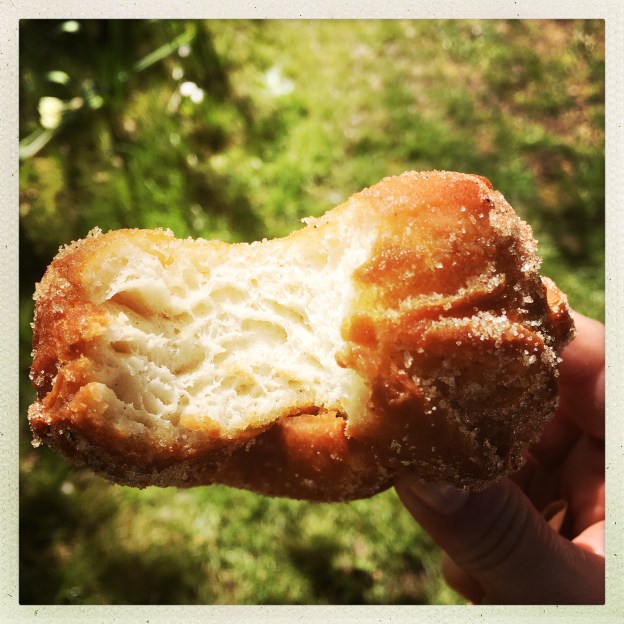
This doughnut had a 144 hour prove.

These are the ingredients:

240 ml whole milk warmed to 50C (I use a thermapen for all my kitchen thermometer needs)

1 large egg at room temperature

Four tablespoons of melted butter, cooled slightly

225g sourdough starter, also at room temperature. This should have been recently refreshed – about 5-6 hours ago at room temperature, the day before if kept in the fridge

500g plain flour

110g granulated sugar

1 teaspoon of salt

1 teaspoon of cinnamon

You’ll also need quite a lot of oil for frying (try not to think about it, I am not a fan of deep frying but you need to for this) and some caster sugar mixed with cinnamon for coating later.

Once the milk has reached 50C mix it together with the butter, starter and egg. You can do this by hand or in a mixer with the whisk attachment. Then add the sugar and the flour.

Now with this bit you can either mix it all up and knead on an oiled board, leave for ten minutes, knead for ten seconds, leave for ten minutes, knead for ten seconds, leave for ten seconds until you have a smooth elastic dough (so repeat one more time if needed). Or you can do it all with a dough hook attachment in a mixer for about 15 mins until it all clumps together.

Once this bit has been reached you get a big bowl, oil it and put the dough in, cover it and refrigerate it overnight/until the next day when it’s needed.

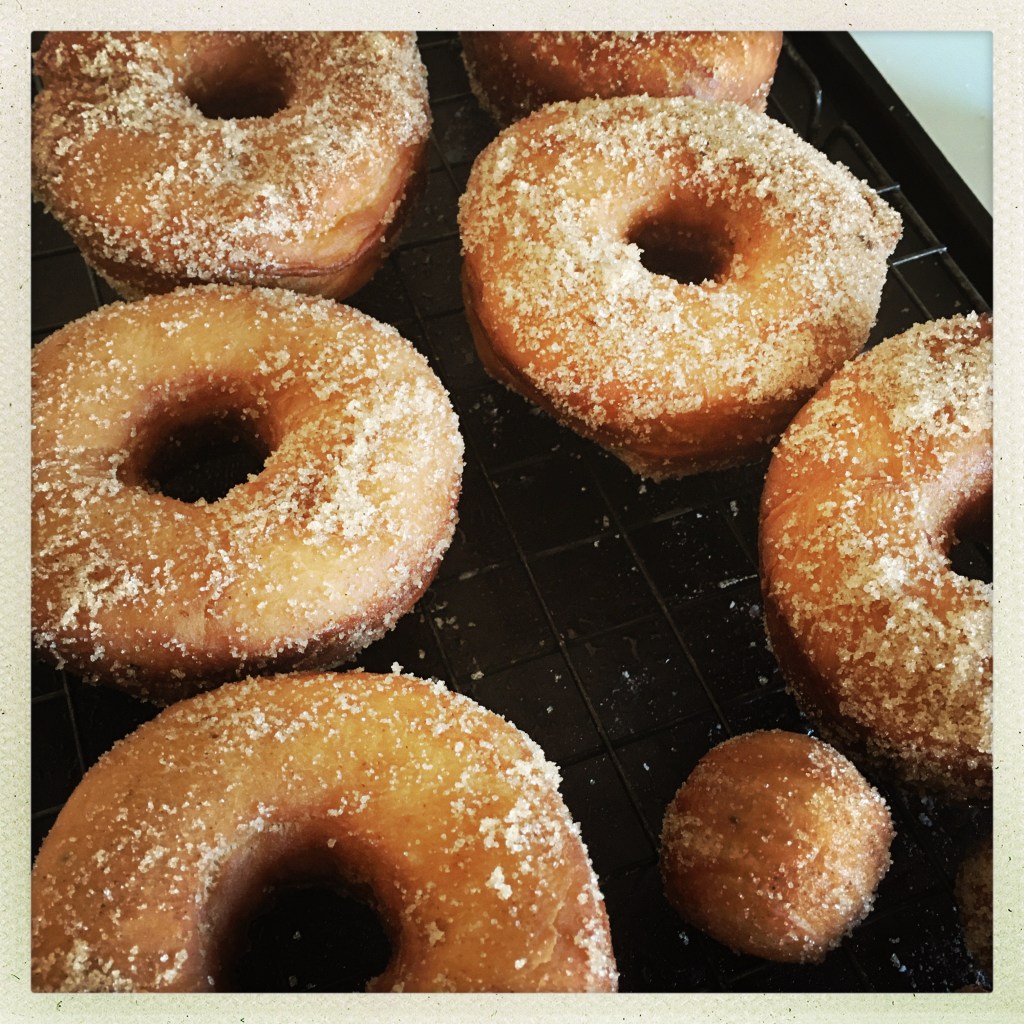
About 2-3 hours before you want to eat your doughnuts, take the mixture out, roll it out on an oiled surface until it’s about 3cm thick. I use a round cookie cutter to cut the doughnuts out, using a small one to make the ‘hole’. See what sort of size you want them to be, mine are about 10cm with the hole in the middle about 2.5cm. You can also do them as round doughnuts but I like ring ones best. The first time I made these I tore the edges slightly and was really upset that they wouldn’t be all perfect but actually, those little tears made (see main picture) something gloriously layered and even tastier! I’ve tried to recreate it ever since and can’t..

Put them on an oiled tray, or one lined with baking parchment and cover with cling film which you can also lightly oil if you are nervous (tbh I cover mine with a tea towel). Leave to rise for about 1-2 hours – depends on how warm your kitchen is. You know the dough is ready when your finger gently pressed makes an indentation but also don’t sweat it.

Fry a pan of oil up (use something light and not highly flavoured: I use a blend of olive oil and sunflower oil). Now here it depends a) how brave you are b) how wasteful you want to be with the oil c) how many you have made and intend to cook d) how many you want to cook at once. I tend to use about a litre of oil in a medium sized sauce pan and cook two at a time. DO NOT OVERFILL and of course be sensible, this is oil you are heating up. When it reaches 175C (use your thermometer) you’re ready to go, using a slotted spoon lower down however many doughnuts you intend to cook. Like I said I do two at a time. They take about 2-3 mins per side, flip with the slotted spoon; the colour is the guide here: you’re looking for a true golden brown. Take out using your slotted spoon and immediately flop the doughnut into caster sugar and cinnamon in a bowl.

Then place on a drying rack. When all are done you’re about to experience something wonderful so take a moment to enjoy it.

And try not to eat more than one.

And try not to eat more than one.

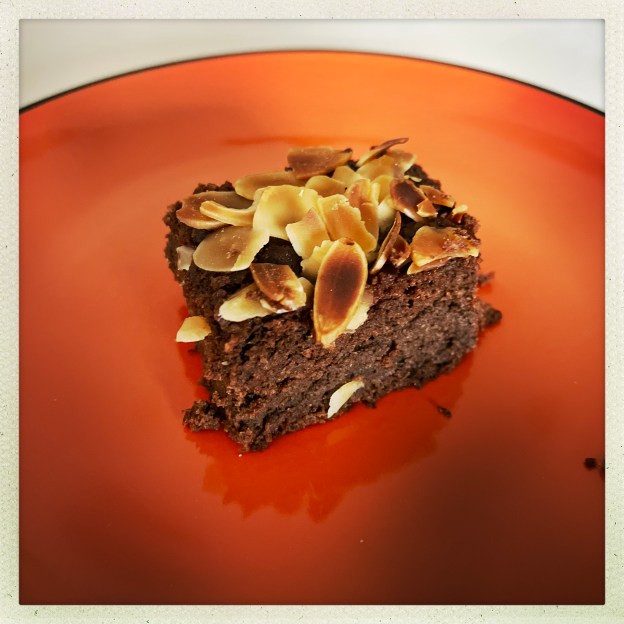
Nigella’s chocolate olive oil cake

This is simple and beautiful. It can be flourless but somehow seems so much better than so many of the flourless chocolate cakes that turn up at gatherings. It’s so easy to throw together. The original recipe is here, but I’ve cut down the sugar and may cut it down further but be careful as sugar plays a role in cake making beyond mere sweetening.

Use a mild olive oil, I have at times used a too fruity one and whilst adding a depth of flavour, it’s distracting.

Once you’ve made this once you’ll realise it’s so easy you can make it in a commercial break, no chocolate to melt or chop. Largely store cupboard ingredients. My children love it.

You need

150ml mild olive oil

50g cocoa powder

125ml boiling water

Two teaspoons of vanilla extract

150g ground almonds (you could also substitute half almond half hazelnut, you can also use flour but unless you are allergic to nuts I implore you not to do this)

Half a teaspoon of bicarbonate of soda

A pinch of salt

175g caster sugar

3 eggs

What you do

Oven to 170C

A 23cm spring form tin, base lined with baking parchment.

Pour the boiling water slowly into the cocoa and stir until no lumps remain, add the vanilla extract.

In a separate bowl, mix together the almonds, bicarb and salt. And then you’re going to beat/whisk together the eggs, olive oil and caster sugar, either by hand (go you) with a whisk/wooden spoon or with an electric contraption (hand held or free standing).

Nigella says to use the paddle attachment, I always use the whisk because I can never find the paddle attachment. Beat electronically for three minutes until it’s syrupy and fluffy and pale yellowy. By hand: until your hand falls off.

To the eggs/oil/sugar mixture slowly add the cocoa mixture (turn down the speed if you are doing this with a gadget). When all incorporated add the ground almonds/bicarb/salt. Scrap down, make sure all mixed then pour into the tin.

Bake for 25-45 mins. Nigella says 40-45, mine is done in 25. You want it to be a bit quivering on top in the middle (Nigella describes it as looking a bit damp) but defo set at the edges. A skewer should come out pretty clean.