Category Archives: Celebration

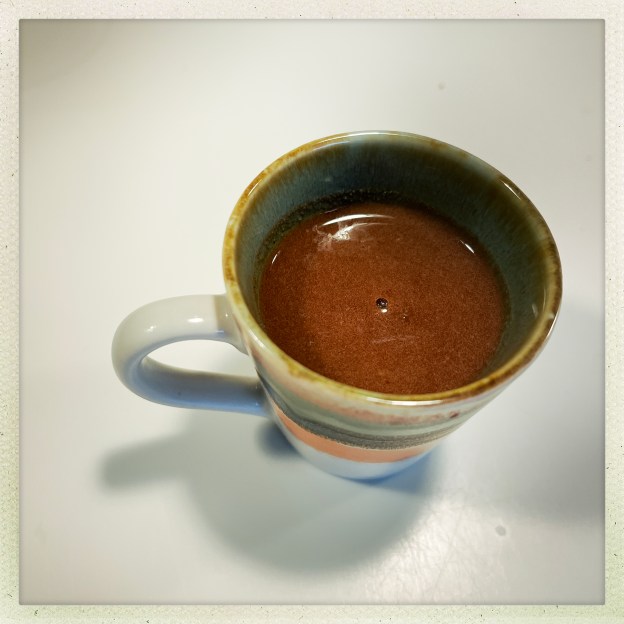
No/low alcoholic chocolate mulled wine (a thing of beauty)

Some years ago I posted about a recipe I’d found for chocolate mulled wine, and indeed I made this for some years. But I stopped drinking about five years ago and life changed and I’d not made it since.

But last week, in preparation for some friends coming round to make wreaths, I decided I’d try to make it again but this time as a no-alcohol version, this was the original plan. This was in part inspired by another girlie-get together a couple of months previously, around the fire pit, where my friend Tracy had brought round some Captain Morgan no-alcohol rum which proved a big hit. I still had some left so I decided to use that as the basis for this no/low alcohol version.

I’m very much not a throw things in a pot kinda girl. I like a recipe and instructions. Sure I sometimes – often – then vary a recipe but I always like a framework to work to. So I was super pleased with how this worked out. I realised, as I started to make it, that I didn’t have the 750ml of liquid the original recipe called for. So I started to panic a bit, looked in the fridge, found some ginger beer, realised that still wasn’t enough to get it to 750ml, panicked some more and added some red wine (hence the low-alcohol title of this post). However you could easily just make this with all no-alcohol rum, or half that and half ginger beer, or what I did. What I did is reproduced below but bear in mind you can, as I did, vary what you use. Add a bit of booze if you like or not.

Chocolate in mulled wine? Don’t knock it til you try it. Don’t be tempted to use anything other than 100% cocoa here. I used Firetree which is the best 100% but you could also use any 100%, most of it is awful on its own but here it could shine. The Fiori di Sicilia essences were, if I say so myself, inspired in this as it adds a wonderfully citrusy note to everything.

Bottled up wouldn’t this make a fabulous present for someone? Shake it up and heat it up before serving. My husband said it was one of the most delicious things he’d ever tasted.

Feeling REALLY pleased with myself over this.

Ingredients:

750ml some sort of liquid, see above. I used 500ml of no-alcohol rum, 150ml of red wine and 100ml of ginger beer. I used this Captain Morgan rum and this gingerbeer.
1 cinnamon stick
1 teaspoon of chilli flakes
1tsp ground mixed spice
5 whole cloves
100g dark muscovado sugar
(you can also use just normal caster/granulated)
80g 100% cocoa chocolate of your choice (I used Firetree), broken into pieces.
A good few drops of Fiori di Sicilia. Of course you can make this without this ingredient but I use it a lot in my cooking and I really think it’s worth buying, you can use it in so many things and it lasts for ages.

Put everything together in a sauce pan and heat through gently until the chocolate has melted. Then either serve immediately or cool, put in the fridge and heat up as required. This will happily see you through Christmas!
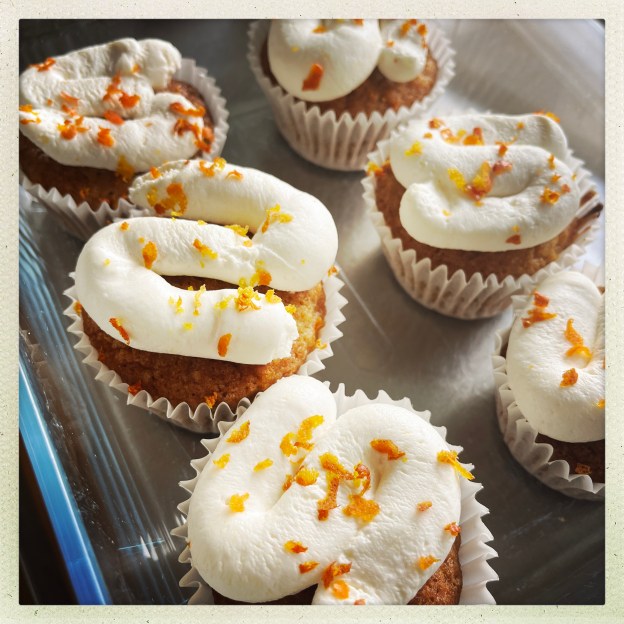
Carrot and Cardamom cupcakes

These are delicious, fresh and light and adapted from a Waitrose recipe which you can find here.

I changed the frosting as I can’t bear an overly sweet one and the addition of the Fiori di Sicilia is, if I say so myself, inspired…

Unfortunately they don’t travel well and need to be kept in the fridge – if you can let them chambré at room temperature for a bit before eating. I guess you could make this into one giant cake but not sure why you’d want to…

Ingredients for the cakes

12 cardamom pods
175g light brown sugar
200g self raising flour
Half a teaspoon of baking powder
Quarter a teaspoon of fine sea salt
2 eggs
150ml of olive oil
200g of carrots, coarsely grated (I hate grating things)
Two oranges, preferably organic as you are using the zest. You’ll only need the zest of one for the actual cakes. So if you’re short you really don’t need two but the zest, grated, as a decoration – see later – does look nice.

Ingredients for the icing/frosting

250g mascarpone
85g Greek yoghurt
55g icing sugar
Optional but wonderful: a good few drops of Fiori di Sicilia essence. You can also add this into the cake mixture if you prefer.

Oven to 180C.

You’ll need a 12-hole muffin tin lined with muffin papers. Open the cardamom seeds, discard the shells and grind up the little seeds as best you can. It’s good if you’re in a bad mood here as you can really bash away with a pestle and mortar.

Whisk together the sugar, flour, baking powder, salt and the ground up cardamom when ready.

In a separate, larger bowl whisk together the eggs and olive oil then pour over the dry ingredients with the grated carrot and zest of one orange. Gently mix until combined well and then pour equally into the muffin cases.

Bake for about 20 mins until a skewer comes out clean and they bounce back when gently pressed (careful not to burn a finger). When done take out and let cool completely (I take them out of the tin, still in their cases of course, about ten minutes out of the oven).

You can make the frosting whilst they are cooking and put it in the fridge for later. Here you just mix the mascarpone, icing sugar and yoghurt together with a few drops of the Fiori di Sicilia. You should have a fairly thick mixture. If it’s not thick enough for you (and sometimes it isn’t due to the water content of the dairy) then add a bit more icing sugar.

When the cakes are cooled you can ice the frosting on – it looks really good if you can be bothered to do this but I admit sometimes I just can’t be so I just spoon/spatula it on thicky and then, if you had another spare orange, grate zest on top. Voilà.

Chocolate, ginger and nut pavé

This is another old timer, heavy lifter of a recipe that I’ve had for ages and never committed to ether. Why? I’m not sure. But it’s such a useful thing to have/make/give at this time of year. I’ve never given it to anyone that hasn’t been anything less than delighted, asked for the recipe and asked me to make it again for them. As long as, of course, that they like all the ingredients.

There’s a possibility that you have all the ingredients at this (Christmas) time of year so you could rustle it up if you need an extra nice thing.

What you need

200g dark chocolate, broken into pieces. I recommend 70%
50g unsalted butter
60g double cream
50g of either crystallised ginger or stem ginger drained of its syrup
100g of nuts of choice: pistachio work well here cos of the colour, as do pine nuts* (pine nuts is what the original recipe called for) or almonds/hazelnuts. If you use the latter I would toast them gently first and let them cool before adding.
*if you use pine nuts use 50g, and 50g of other nuts because what are you, loaded?
25g icing sugar
Cocoa for dusting


What you need to do


You’ll need a tin of approximately 26cm x 8cm. I use the base of a 2lb loaf tin as I like my pave to be a rectangle but you use whatever shape you like just bear in mind the above dimensions. Line it with v. lightly greased baking parchment.

Atop a simmering pan of water put the chocolate, butter and cream making sure that the bowl doesn’t touch the water (or it might seize). Take off heat let cool for a minute or so and then stir in all the other ingredients.

Easy isn’t it?

Then put it in the fridge to set. When ready to eat/serve/give you just turn it out, trim the edges to make it really neat if you want (you can also nibble here to test!) and dust with cocoa powder.

I give mine wrapped in string and parchment.

Wish I had a picture but don’t currently you’ll have to trust me this is lovely.


Chocolate Chestnut Rum Roulade

I’ve made this every Christmas for over twenty years. Last year, I went to look up the recipe on line (it was a Waitrose recipe from Iceland) and it had gone. It was a ‘404’. I panicked. Despite an extensive internet search nothing came up for it.

More panic. This is my pièce de resistance every Christmas, and my children love it so much they have, on occasion, requested it for birthdays.

But luckily – amazingly – I had made a note of it in my Travelling Cookbook which I started up years and years ago to commit my favourite recipes to paper. But if that goes…so finally I’m going to commit it to technology for me, and all, to enjoy.

I won’t say this is difficult. It’s not. But it’s not always perfect and it is a roulade and involves rolling, like a Swiss roll. It’s not super easy but just go with it and don’t worry. It’s delicious and look, no flour.

Ingredients

For the roulade

170g 70% chocolate, broken into pieces
170g caster sugar
Five eggs separated
1 teaspoon of vanilla extract
Three tablespoons of hot water (see note later)
Icing sugar for dusting

For the filling

Three tablespoons of icing sugar
115g unsweetened chestnut purée
Four tablespoons of sour cream
100g cooked, peeled chestnuts chopped
Two tablespoons of rum (or liqueur of choice but then it’s not rum roulade!)
285ml of double cream

Method

Now, those are the ingredients above. I admit what I now do is buy some vacuum packed chestnuts, whizz some up and use the rest chopped. Because otherwise I tended to get left with lots of left over chestnut purée. But you do what works.

Preheat oven to 180C. Lightly oil a shallow baking tray of approx 34cm by 24cm and then line with baking paper and very lightly, again, oil. TBH you’re probably fine with just the baking parchment/paper but this recipe is from like 25 years ago so just reproducing what they said at the time..

Now melt the chocolate in a bowl, on top of some simmering water and as ever, do not let the bowl touch the surface of the water.

In a separate, large bowl, beat the caster sugar with the egg yolks until thick and pale and creamy. Add the vanilla extract to that.

Once the chocolate has melted and cooled a little, stir in the hot water until smooth then gradually add into the egg/caster sugar mix. Now again, I’m not sure what the hot water does. I’m quite skilled and fearless with adding hot water to chocolate but chocolate can and will seize if the water you’re adding is too hot or cold, so you might want to leave it out. Gently stir the chocolate until smooth and then gradually stir this into the egg and sugar mix.

Now again separately, whisk the egg whites until they hold soft peaks. Quickly and gently fold them into the chocolate mixture and pour the whole lot onto the lined tray, spread evening and put in the oven for fifteen minutes.

Remove and immediately cover with a sheet of baking parchment and a clean tea towel and leave until cold. Don’t leave it too long though or it will crack when rolling it.

Whilst that’s happening, mix the icing sugar into the chestnut purée, followed by the sour cream and chopped chestnuts. Pour the rum/liqueur and double cream and whisk until peaks, then partially fold the rum/cream into the chestnut cream so you have a marbled mixture. You could technically do this in advance and keep it in the fridge but it’s a perfectly good thing to do whilst the roulade is cooling.

Now the originally recipe asks for you to spread out a large sheet of baking parchment on a clean work surface, liberally dust with icing sugar and then gently turn out the roulade onto it, peeling off the baking parchment.

I don’t do this. To me this is adding too much faff and precariousness. So what I do is I take the sponge off the baking sheet – already on baking parchment – and I use that as the base. If you want, trim the roulade of any rough edges but I don’t – it’s all good. Spread the marbled cream on the roulade and then carefully roll up the roulade from the long end. It may crack – do not panic. What I do is I then sort of mould it/hold it together with cling film (just on top using your hands to do this you don’t take the roulade off the plate to do it it just helps keep it together if that’s what it needs) and put it in the fridge until it’s time to serve it. Then I peel off the cling film and then I sprinkle with icing sugar and decorate it. I’ve made this so many times and sometimes it cracks, sometimes it doesn’t and there seems to be little rhyme or reason. It’s always delicious and it reminds us that, even cracked, things are still beautiful.


Chocolate chestnut cake (a perfect alternative to Christmas cake)

I discovered this recipe in Delicious magazine (the original is here), a couple of years ago. I’m a total sucker for chocolates and chestnuts which is why I paired with Lumi to make Chocolate Chestnut Truffles. (Please note I don’t make any money from these truffles and never have.)

Anyway I made this and it has become a bit of a classic in our house and I like to make it in the run up to Christmas, when you want to give yourself over to festivities but aren’t ready for the full Christmas pudding/Christmas cake yet. Not that I ever make either – I do like them but in small doses. At Christmas in our house I make Chocolate Chestnut Rum Roulade (which I really need to add to this blog before the recipe slips away).

The original recipe calls for a very small cake tin – 16cm. I toy every time I make this with buying a special tin but feel so reckless doing this as I have so many cake tins already. However, the smallest diameter one I have is 20cm so that’s what I make it in and it’s absolutely fine. But if you want a taller, more towering cake then you may want to invest. The cooking time doesn’t seem to change, for me, in the wider tin.

You need:

60g sultanas, put them to soak in 60ml of port, sweet vermouth or whatever nice liqueur you have. I think Cointreau is nice but this year I soaked mine in Plum Liqueur forgetting, foolishly, that I had some Panettone flavoured spirit which is divine (from Selfridges). Give them a really long soak.
100g butter cut into little pieces, it can be from the fridge
300g vacuum packed chestnuts
130g crème fraîche (original recipe calls for 130ml but I just put in 130g as I measure everything into a bowl, atop the scales)
30g plain flour
half a teaspoon of cinnamon
half a teaspoon of ginger

200g of 70% chocolate, chopped into small pieces
3 eggs, separated yolk and white into separate bowls
60g caster sugar

Later, for the ganache

100g 70% chocolate, again chopped
160ml double cream


A tin of 16-20cm (see intro) lined with baking parchment, at the very least on its base, and oven preheated to 160C.

What to do:

First things first: put the sultanas to soak in the liqueur of your choice. I tend to do this in the morning of the day I want to cook, but you can also do it the night before. When you do use the sultanas you’ll need to drain them of the liqueur and if I time it right, I use the liqueur in the cranberry sauce I make (I just stir it in once the cranberries are done, but you could also do it before they cook). If this doesn’t work for you you could whip some cream up with the left over liqueur, to serve with this cake.

In a food processor, blitz together the crème fraîche and the chestnuts.

In a separate bowl mix together the flour, spices and a pinch of salt.

Now you want to melt the chocolate and butter together over a saucepan of simmering water. Make sure the bowl doesn’t touch the water, and you want to take it off before all the chocolate is melted – just carry on stirring – or the chocolate may seize up. I do this part – the chocolate and butter melting – on a fairly large bain marie and I end up using the top part of the bain marie to mix everything together when the time comes. But otherwise, don’t worry: just get a big bowl and decant your chestnut and crème fraîche from the blender into that and this will be your bowl where everything, eventually, meets.

Once the chocolate has melted, put it aside to cool for a bit – about ten minutes. Then mix it into the chestnut and crème fraîche mixture; one at a time stir the egg yolks into this mixture, until everything is fully mixed and then add the flour/spice/salt mixture.

Whisk together the egg whites until stiff, then take a little of the beaten egg whites and mix it into your cake mixture to loosen it. Then taking a large-ish metal spoon as it makes it easier, gently fold the egg whites into the cake mixture. Don’t forget the sultanas, if you haven’t drained them do so now and add them into the cake mixture. It will be a fairly thick mixture, level it out and bake it for 30-35 mins. I admit mine took a bit longer, more like 40mins but the numbers have worn out on my oven dial so it’s possible it was too low. It’s done when a few crumbs of mixture are still clinging to a testing skewer.

Leave to cool for ten minutes in the tin, then turn out. The bottom of the cake will become the top of the cake. You can easily do this bit the day before but, day before or not make sure the cake is thoroughly cooled before you ice it.

To ice the cake, put the chocolate and cream in a bowl again on top of a pan of simmering water. Again: do not let the bowl touch the water underneath. Stir until the chocolate is nearly all, but not quite, melted then take off the heat and keep stirring.

Let the ganache cool for about ten minutes then slather on the cake using a spatula. You can then adorn it quite opulently if you like or leave it plain. It is quite a plain looking cake but there’s no shame in that. The original suggests things like sugared almonds, marron glacés, sugar sprinkles…you get the idea. In the photo here I used caramelised white chocolate and praline covered pistachios which are beautifully green on the outside. I got them from Melt and I loved the colour contrast (not to mention the festive green). They are insanely expensive so I’m only giving you this as an idea, not suggesting you spend all that money on buying a cake topping decoration.

Store in the fridge but bring out for about half an hour to chambré before serving. Truly delicious. And rich.


Yorkshire Eclairs

These were a beautiful accident.

We had guests coming, and I had planned to make normal eclairs, stuffed full of white chocolate cream. But as I went to get the mixture out of my Kenwood mixer, I noticed the whisk attachment, which I’d had for about twenty years, had splintered and broken. There were really sharp filaments of metal sticking out, and I couldn’t risk the possibility that some had got into the mixture (and you can’t really sieve eclair mixture). So I had to start all over again.

However, my Magimix food processor whisk wasn’t strong enough to give me that really ribbony eclair texture, so I knew the dough would be too soft to pipe. But I wasn’t about to waste a whole other mixture so I thought sod it, I’m going to pour it into my Yorkshire Pudding tins – which are like shallow four circle shapes per tin – that’ll contain the mixture. And it worked beautifully. You could treat these like a normal eclair, by splitting them and coating the top with chocolate and injecting the insides with cream. But I didn’t want the faff after such a relatively stressful baking morning. So I just placed the cream on top, put some berries on and as an homage to the usual chocolate topping I poured on some Bare Bones Chocolate Syrup (seasonal produce) but you don’t need this latter.

Just to bring everything up to date here are the recipes for the eclairs and the white chocolate cream.

Eclairs (makes eight in my Yorkshire tins)

125ml water
50g butter
75g plain flour
3 medium eggs (at room temperature, this is important)
pinch of salt

Preheat oven to 180C.

Put the water in a sauce pan with the butter and salt and heat until the butter has melted. With the heat still on, beat in with a wooden spoon, the flour. Mix around vigorously until it forms a dough and doesn’t stick to the sides of the pan.

You can let the mixture cool here, you’re meant to, I never do.

Put the dough in a stand alone mixer with the whisk attachment on, then add the first egg. When fully incorporated add the other egg and then the third. Strictly speaking you only add enough egg til it comes together to form a thick, ribbon-y dough, that is to say that when you lift the whisk out of the mixture it leaves trails of visible ribbons behind for a few seconds. But I just add three eggs in and if you’re making Yorkshire eclairs the consistency of the dough should be thick, but it doesn’t matter if it’s not super thick because you’re not piping it.

When the dough has some substance to it, pour it into your Yorkshire tins (you do not need to grease them in anyway). Bake for about 25-35 mins. Longer will give you a dryer, crisper eclair if that’s what you want. For this recipe, ie in this shape, I like them a bit fluffier and softer so I check after 25 mins.

When cool, dollop on the white chocolate cream and top with berries and you are good to go. Once assembled eat immediately.

The eclairs can be kept in a tin for a day or two but they will soften. I rather like them like this but you may not.

White chocolate cream

Ideally make this just before you do the eclairs (even the day before) so it can set in the fridge.

You need 300ml of double cream and about 100-125g of white chocolate.

Heat half the cream in a saucepan, break up the chocolate, as small as you can, and then pour the heated cream over the top of the chocolate and stir until melted. (You can of course just put both together in a bowl and melt over hot water but I find that’s more of a faff.) When it’s all melted, put this chocolate/cream mixture in the fridge until it’s cool. When it is, mix in the other half of the double cream and whisk until stiff. It’s now ready to serve when you are.

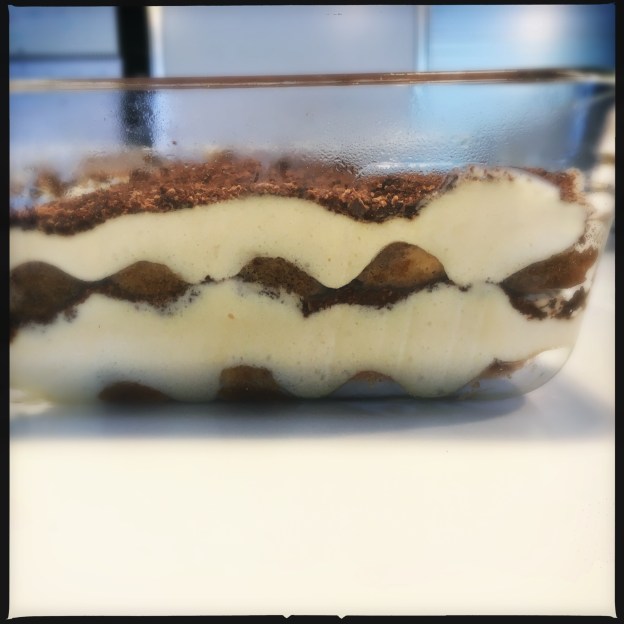
Un tiramisu che ti tirasu

A few years ago, when we fancied making a tiramisu (it means pick me up, or pull me up), I looked at loads of recipes. I was quite shocked (I’m a bit of a purist when it comes to Italian cooking) at the variations. I mean, Nigella, whom I love, had one, in How To Eat, using no coffee or chocolate and meringues instead of sponge fingers. It caused me to  to slam the pages of the book shut in mock horror.

It is the coffee, and the chocolate that is supposed to act as a ‘tiramisu’. Anything else, to my mind, ti spinge giu (pushes you down).

I have hundreds of cookery books, and a world of recipes at my fingers tips, as do you, on the internet. But nothing was really saying Italian tiramisu to me. Then I thought of looking in my Italian cooking bible: The Silver Spoon.

In these days of celebrity cookbooks, stuffed full of photographs, the recipes in this book are easy to overlook: simple, very few pictures and the list of ingredients for each recipe is short. But don’t overlook them because not only is this a fantastic cookery book, the recipes are accomplished – some of them go back fifty years. As you may expect, some of the recipes are as good as they’re ever going to get.

And the tiramisu recipe is no exception. It is one of the few with a photo which I admit helped…I made it and it is the only way we make tiramisu now. It’s simple, anyone can do it (my bambine frequently do) and once made sits in the fridge for a good few days, yielding to your spoon just when you need a…pick me up.

It has no alcohol – so if you feel the need for some after dinner, serve that separately – which means children can easily eat this. Although beware of eating it too late as there’s quite a caffeine punch.

My friend Tamsin doesn’t like coffee, so she doesn’t include it in her tiramisu. Of course I have told her it’s not really a tiramisu, but more of a creamy pudding. Don’t even think of using cocoa powder (other than, maybe, on the very top but I don’t) instead of grated chocolate. The chocolate shavings make this stand out and allow for some bite in what is a wallowy pudding which offers little resistance: you could easily eat aged 98, when all your teeth have fallen out.

And use icing sugar, not caster, which can result in a runny mess.

Here is the original recipe but the adaptions I now make are in italics.

2 egg whites, 4 egg yolks (freeze the 2 extra egg whites)
because I end up with a plethora of egg white I now use all of the four eggs and it just makes for a slightly softer, fluffier tiramisu.

150 icing sugar

400-500g mascarpone (mine comes in 250g tubs so I just use two)

because the mascarpone I buy comes in 250g tubs I now use 500g of mascarpone to no ill effect

200g sponge fingers I use as many as I need to cover the base of my container and the second layer.

175ml espresso coffee

200g plain chocolate, grated I often use less and lately have started using really good hot chocolate mix instead of grated chocolate. Really good hot chocolate is just chocolate flaked..see update note below

NOTE: grating chocolate is one of my least favourite jobs but I do it for this. 200g is what the original recipe asks for, but I’ve made this dozens of times now and I never use this much anymore and in fact I use less than half of it and it’s plenty. My advice is go for 100g of it, because also, grating 200g of chocolate is a total yawn. Jan 2021 update: I’ve discovered that really good hot chocolate comes in flakes and now I use this….

What to do:

I make this in a rectangular Pyrex, which also has a handy lid so I can save it for a few days. Mine is about 17cm x 25cm and it makes two layers. But of course you can make it in a different shape so you get more layers, or even make it circular or in individual portions, just break the sponge fingers up to fill the spaces.

It would, I think, easily serve eight people depending on the size of portion.

First you whisk the egg whites until stiff, set them aside for a moment whilst, in a separate bowl you beat the egg yolks with the icing sugar, then you fold/whisk the mascarpone into the egg yolks and sugar and finally, into this you gently fold in the egg whites. This is your creamy bit.

Lay the sponge fingers onto the base of your dish and brush or pour the coffee on top. Because I know mine makes two layers, I pour half the coffee on now. Then spoon on a layer of the cream and sprinkle with the grated chocolate. Repeat this, ending with a layer of mascarpone/sprinkling of chocolate. I usually end up with more chocolate than I need for this, for some reason, so if so just keep it in a jam jar for next time.

It is better the next day, but can be eaten within a few hours of making it and chilling it to allow the ingredients to meet each other, and mingle.

La crostata rustica (plum galette)

La crostata (it means ‘crusted’) is oft made in my family in Italy.

It’s usually a thing of some precision, the pastry laid out, put in a tart or pie tin, filled with fruit or, sometimes, jam, and then criss crossed with thin, fluted strips of pastry.

This crostata is different in that it makes a virtue of its pulled together-ness and the pastry is, anyway, too fragile to handle much (this is because of the lard, which also gives it its deliciousness..). It has become my new favourite tart.

You can use any suitable soft fruit for this – peaches, berries, plums. I used plums as that’s what the original recipe called for. It’s really easy but, as I’ve said, beware because the pastry is very tricky to handle but that’s okay cos it’s all about a rustic look!

This is adapted from a Donna Hay recipe.

The pastry

225g plain flour

55g caster sugar

the rind from half a lemon

60g butter, fridge cold and chopped

40g lard, fridge cold and chopped

2 teaspoons of apple cider vinegar

60ml ice cold water – but you may not use all of it

1 teaspoon of vanilla extract

The filling

500g of suitable tart fruit, sliced if necessary.

75g caster sugar

1 teaspoon of vanilla extract

10g cold, chopped butter

1 beaten egg

some demerara sugar

(some juniper berries if you like and you remember)

40g ground almond

Method

Put the flour, sugar and lemon rind in a bowl and mix together lightly – you can do this by hand or in a food processor (I used the latter, work lightly). Add the butter and lard and mix to resemble the famous ‘fine breadcrumbs’. Now add the vinegar and vanilla and just enough water to bring it all together. If using a food processor, pulse and stop before the pastry has come together but looks clumpy. Bundle together and put in the fridge to rest for fifteen minutes or more (until you are ready to work with it, you can do it overnight).

When ready, roll out onto baking parchment, either into a round shape or, as I do, an oblong. I must confess to half rolling, half pressing the pastry to shape with ice-cold fingers (cold hands, cold heart). You want to get it to about 3-4mm thickness. When you’ve rolled it out so it’s at it’s final dimensions, put it back in the fridge for ten minutes.

Preheat oven to 200C.

In the meantime mix together the (sliced) fruit, sugar and vanilla.

(Note: you can make the fruit bit in advance and keep it in the fridge, but bear in mind the sugar will leach water from the fruit and you don’t want to put this (the juice) onto the pastry, so if you do make it in advance, just pour off any excess juice and serve separately over the tart, there isn’t much.)

Slide the baking parchment onto a baking tray, so the pastry base sits on the tray it will cook on.

Spread the ground almonds on the base – leaving a rim of about an inch. Now plop the fruit on top, spread it out as far as you’ve put the ground almonds, dot the butter on and fold the sides over. I find the pastry really hard to handle at this stage: do your best. Don’t worry if it looks very home made, it all adds to the charm. Brush the pastry edge with the beaten egg and sprinkle with the sugar.

Place in the oven for 15 mins, then reduce temperature down to 175C for 30-40 mins until the pastry is nice and golden and the fruit is bubbling. (Check after 30, I have two ovens and both vary hugely, one was perfect after 40 mins one was more than done after 30.) Let cool for ten minutes. I served it with this ice cream and let me tell you, it was a magical moment.


Halloween spider’s web cake

We do Halloween in our own way in this house, which is not very much. We don’t do trick or treating because that kinda contradicts everything we say the rest of the year (“knock on strangers’ doors! Eat lots of sweets! Ghosts and ghouls do exist!”).

But we aren’t total killjoys, either. We do stuff and have our own traditions and one of them is that I make this cake.

It’s basically a red velvet chocolate cake – or that’s how it started – but I don’t add red colouring so mine isn’t red, it’s just a light chocolate cake with cream cheese/sugar/butter filling and covered with a chocolate ganache, then iced with white chocolate. It’s actually fairly easy and really tasty and if you have one, a plastic spider on top looks good.

This recipe is adapted from a recipe in Waitrose magazine. The changes I’ve made are: no salted butter, no red food colouring, more cocoa, I used kefir instead of buttermilk (don’t worry if this means nothing to you!) and I cut the sugar down. But you can’t tell. It’s still very much a proper cake.

The cake

200g butter at room temperature

350g plain flour

1 tsp of baking powder

1 tsp bicarbonate of soda

4 tablespoons of good cocoa powder

quarter of a teaspoon of sea salt

300g caster sugar

3 eggs

1.5 tsp vanilla extract

284ml buttermilk/kefir

Cream cheese filling

120g butter

120g cream cheese

100g icing sugar

Chocolate icing

300ml double cream

250g 70% cocoa chocolate, chopped

1.5 tablespoons of liquid glucose (you can buy it in tubes in the baking aisle)

50g white chocolate (I use Green and Black’s – absolutely the best white chocolate there is that doesn’t cost loads)

You’ll also need an icing bag and fine nozzle

What to do

Oven to 170C.  Line a 23cm spring-form cake tin with parchment or treat yourself and buy some cake tin liners. Put all the dry ingredients in a bowl, but not the sugar. Put the sugar and butter in a separate bowl and either beat by hand or put in a food mixer with whisk attachment and beat until smooth. Now add the eggs (continue with the food processor if you have started with it, but by hand is also, of course, fine) one at a time, beating well with each addition.

Now add the dry ingredients, alternating with the buttermilk/kefir until all combined. That’s it, your cake is done. Scrape into a tin then bake for about an hour.

It needs to cool completely. When it is cool, slice it into three. You’ll probably have two flat layers – the bits of the cake that were the middle and the bottom – and a slightly domed layer – the natural top of the cake. You can, if you want, straighten the slightly domed layer out by cutting it, or you can just use it as the middle layer of your cake. Either way, you want a very flat layer for the top, please.

Place what will be the bottom layer on a cooling rack on top of a baking tray (this is important for later) and spread half the filling on, place other layer on top and finish with a flat layer. Put it in the fridge for about 30 mins (longer if you want).

When you are ready to do the topping: place the double cream, dark chocolate and liquid glucose in a bowl atop some simmering water until all smooth and melted. At roughly the same time, melt the white chocolate in the same way and prepare to put into an icing bag with a thin nozzle icing head-piping-thing.

Now, spread the chocolate layer over the top with a spatula knife – this is where the baking tray comes in useful. It takes some practise but you will get some chocolate on the sides as you really need to cover the whole thing. Flatten the top. Now you pipe a spiral of white chocolate around the cake – start a bit off centre. When you’ve covered the whole cake, take a cocktail stick or skewer and make lines from the centre out, to make that ripple effect. Put back in fridge to chill and take out and serve at room temperature.

It’s good. Happy Halloween!

White chocolate and berry cheesecake

I’m mindful, at this time of year, of having lots of people to cater for at once, and also the value of being able to Do Things In Advance.

I made this at the weekend, for a lunch party at a friend’s house where I was asked to bring pudding. The value of this is that it feeds lots – easily 12*. It not only can, but has to be made in advance. It looks good, but can also be brought out after a meal, to sit on the table for many hours without spoiling and be picked at (‘I’ll just tidy it up’) as guests get drunker and drunker.

I didn’t have a tin big enough, so I made this in one large rectangular Mermaid tin and a smaller tart tin. But this cheesecake is so good that I think it’s worth buying the right size tin for it as I will be making it again.

A few notes:

I put in 300g of frozen mixed berries as that’s the packet I had, and didn’t see the point of keeping back a handful of berries.

Yes you do put the berries in frozen.

Do build the crust up to a good height at the sides, although this mixture didn’t (for me) rise up, there is a lot of it and if your sides aren’t high enough, you’ll be at a dam-bust situation.

It may be an idea to put the tin on a baking sheet to catch any drips – I didn’t have any but see my point just above.

It definitely took an hour in my oven, maybe a few minutes more.

That’s it. This is a good one to keep up your sleeve for party season and the other great thing about it is that * you can cut the slices as thin or thick as you want, so it could feasibly feed may, many more than the predicted dozen.

Here is the recipe.