Category Archives: Teatime

Sourdough bagels

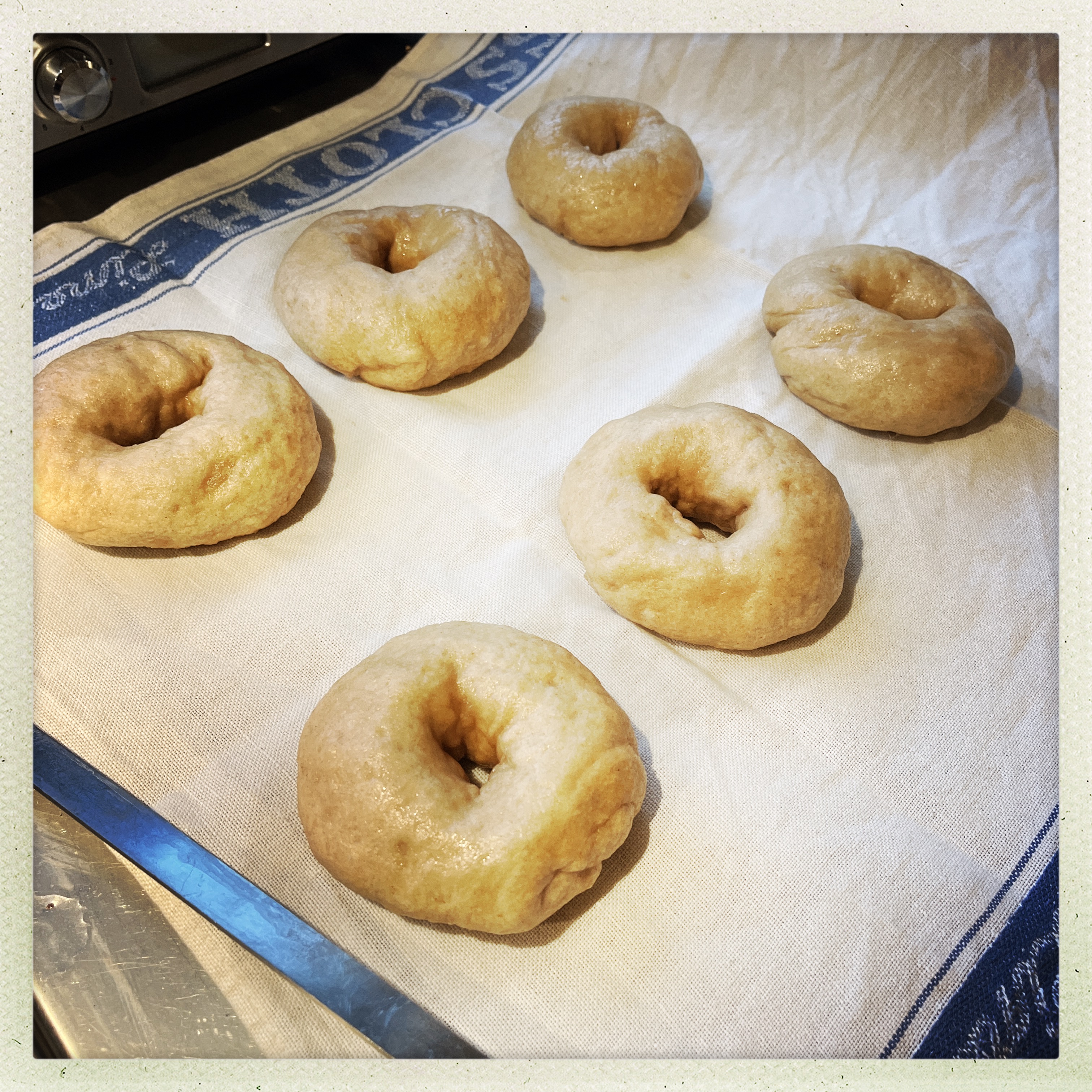
I’ve long made bagels and they are a thing of beauty and deliciousness. I have made sourdough ones but not with any regularity. But recently I started making them again. They take a bit more time, in that they need to be left to rise in their own sweet time, far more than yeasted bagels. I rushed them last week and they were dense – still delicious but not so airy and light.

I tend to shape these into little round rolls first and then puncture a hole with a wood spoon handle. I tend to make these with a smaller hole than my yeasted bagels. Who knows why.

Unlike yeasted bagels these can also be left to prove for 48 hours in the fridge (maybe even longer but I’ve never left them that long), so if there aren’t that many of us, I tend to cook a batch up in two lots so we have fresh bagels for two days running. I can’t do that with yeasted bagels as they really have to be cooked the day after making (after an overnight prove in the fridge, ie they don’t ‘last’ that long in the proving stage).

If you want to make them totally vegan then don’t egg wash them.

You can of course use 500g of just white flour, or mix in a bit of wholemeal. I’m always looking for a more gut-friendly diversity so I add Vanessa Kimbell’s Diversity XXX flour. TBH these days I add 10-15% of it into almost all my bakes but here I use 20% (100g of 500g is 20% isn’t it? I failed maths..)

I think this recipe is, at least in part, from Edd Kimber but I adapted it a while ago. (I love Edd.)

What you need:

185g active sourdough starter
250g warm water
1 tbsp of sugar or barley malt syrup
1 tsp of fine sea salt
400g strong white bread flour
100g Diversity XXX flour

I mix everything together in my Kenwood Chef food mixer with the dough hook. I leave it on low for ten minutes. Then I turn the dough out onto an oiled surface, cover it with a bowl and leave it for an hour. After an hour I give it a gentle knead for ten seconds, leave it for an hour and then knead it again for ten seconds. If your house is very cold you might want to do this one more time. I kinda go on dough-feel (and no I’m not very good at it either).

When you’re ready to shape the bagels, when the dough feels lighter and a little more yielding, then cut it into 6/8/10 depending on how many you want to make (this makes eight regular sized bagels for me). I roll into little balls using my hands, then make a hole with the handle of a wooden spoon, stretching the hole out a little.

Place on a parchment lined tray.

I now leave this out, covered with a tea towel, for about another hour before putting them in the fridge overnight. I also think they benefit from coming up to room temperature after taking them out of the fridge but I never have time to do this so I put them straight away into the boil process.

Boiling and baking

Bring a pan of water to the boil. Some people put things in the water to make them more of a bagel (I don’t know what but stuff that makes it apparently taste more bagel-y) I can never be bothered. When the water is boiling I plop two in there – if you can get more in without them hurtling into each other than do. I give them a minute or two until they float and puff up a little, and turn them with a slotted spoon, another minute or two, then take them out and rest them on a tea towel. When all are done put them back on the parchment lined tray, brush with beaten egg if you want and scatter with seeds if you want and cook at 220C for 14/15 minutes. Check after 12.

These are really very good.
A super healthy clafoutis

So, first up this is from Tim Spector’s excellent The Food for Life Cookbook which you should buy.

I have a very restrictive and healthy diet (no dairy or soya, minimal animal products, nightshades and sugar). Regular cakes, biscuits n ting are a thing of the past. I do taste chocolate as that’s my job, but in tiny amounts. So Tim’s book (as well as some of the Deliciously Ella books: the first one was awful but they’ve got really good since) is a Godsend for me. I still make yummy things for my family and friends but I rarely have anything for me to eat that’s desserty. Don’t feel sorry for me! I look great, have lost a ton of weight, feel pretty good most of the time and can, and still do, eat pasta and bread because my nutritionist – Pr Valter Longo – is Italian!

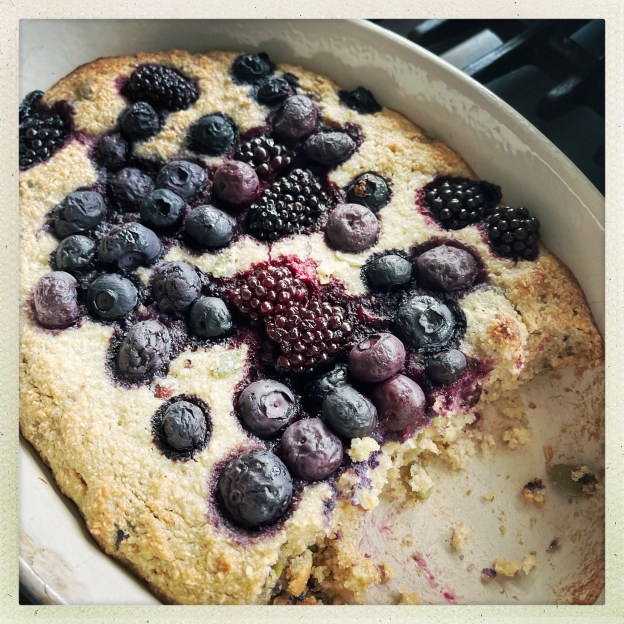
I didn’t have much hope for this but I made it for some girlfriends and I really loved it and my friend Katie went mad for it, but I thought I could improve it (sorry Tim) and so this is my adapted version.

55g light brown sugar
3 tablespoons of extra virgin olive oil
1 egg
200g kefir (I use coconut kefir)
100g oat bran
100g ground almonds
35g toasted hazelnuts (or nuts of your choice, or more seeds), chopped
35g pumpkin seeds
half a teaspoon of baking powder
Pinch of salt
160g frozen berries or fresh ones (I particularly like cherries when they are in season)
Zest of one lemon

Oven to 200C, oil an oval baking dish (the sort you might make a crumble in, Tims says 23cm round one).

Basically put everything together, mix well, spoon into the dish, whack in the oven for 25 mins. Best eaten warm, it also makes a rather nice breakfast. Serve with whatever you want/can eat. I have mine with coconut yoghurt.

Sourdough (English) muffins


I’ll get straight to the point. These take time to make but most of that time is resting the dough in some shape or form. You have to cook them slow and low. But they are delicious and they freeze really well. I got the recipe from Facebook, from one of the many sites I follow about sourdough. The original says to use active starter, mine was a few days (in the fridge) old and it did it no harm. But I’ve adapted it slightly. You’ll need to start these the day before you want them. The bulk ferment (the bit where it stays out at room temperature for 10-12 hrs or as long as as possible) takes a long time so best to start these in the morning of the day before you want to eat them. Note you cook these on the hob, not the oven.

Ingredients


250g whole milk
115g water
55g butter (unsalted)
20g honey (or sugar, if using sugar add it with the flour)

75g starter
500g bread flour (I used 50g of Hodmedod’s Sourdough School’s Diversity XXX blend and the rest white but you can also use half wholemeal and half white depends how wholesome you want them to be)
A gently heaped teaspoon of fine grain sea salt

Method

Put the milk, water, butter and honey together in a sauce pan and gently heat til all melted then let it cool for ten minutes. If you’re using sugar then add it to the flour mixture next.

In a large bowl – for this is what you’ll eventually mix everything in, add the starter (sugar if you are using) and then add the milk/honey/water/buttery mixture and mix everything together, now add in the flour and salt. You’ll get a rough dough. Cover it and leave it to rest for 30 mins.

Now over two hours, every thirty minutes, you give it a gentle knead/fold and stretch. When this is done put in a clean bowl (oil with some olive oil) and cover it with a tea towel or a plate if you have one big enough. You leave it out for a looong time for the bulk ferment, or as long as you can. The original recipe says 10-12 hours. But if your kitchen is raging hot then probably half this. I think I left mine out for about 7 hours. Then transfer to the fridge for a day or two. I left mine in for two days.

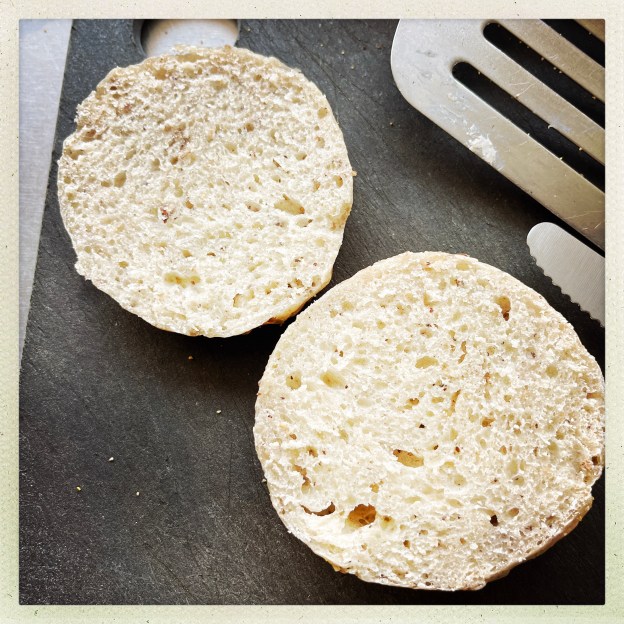
When you’re ready to make them turn out the dough on a clean surface/board that’s been oiled or lightly floured and roll out to about 1.5cm thick. You don’t want it too thick. Get a biscuit cutter that’s the size you want the muffins to be – mine was about 6-7cm – and cut out as many as you can, transferring them to a baking tray which has either been lined with baking parchment or dusted with polenta. Re shape the dough and roll out again until you’ve used it all up. You’ll have one left that you’ll probably shape by hand. This will be the sacrificial muffin.


Leave out like this, covered with a tea towel, for about an hour. Heat up a cast iron frying pan – big as you got – but make sure you have a lid for it. You can also use a Le Creuset but make sure the heat is low. You can’t rush these babies.

When the pan has warmed up put in the sacrificial one to try out the heat of the pan and how long they take. It’s really worth doing this. Of course I thought I knew best so I ruined four finding out the hard way that my heat was too high.

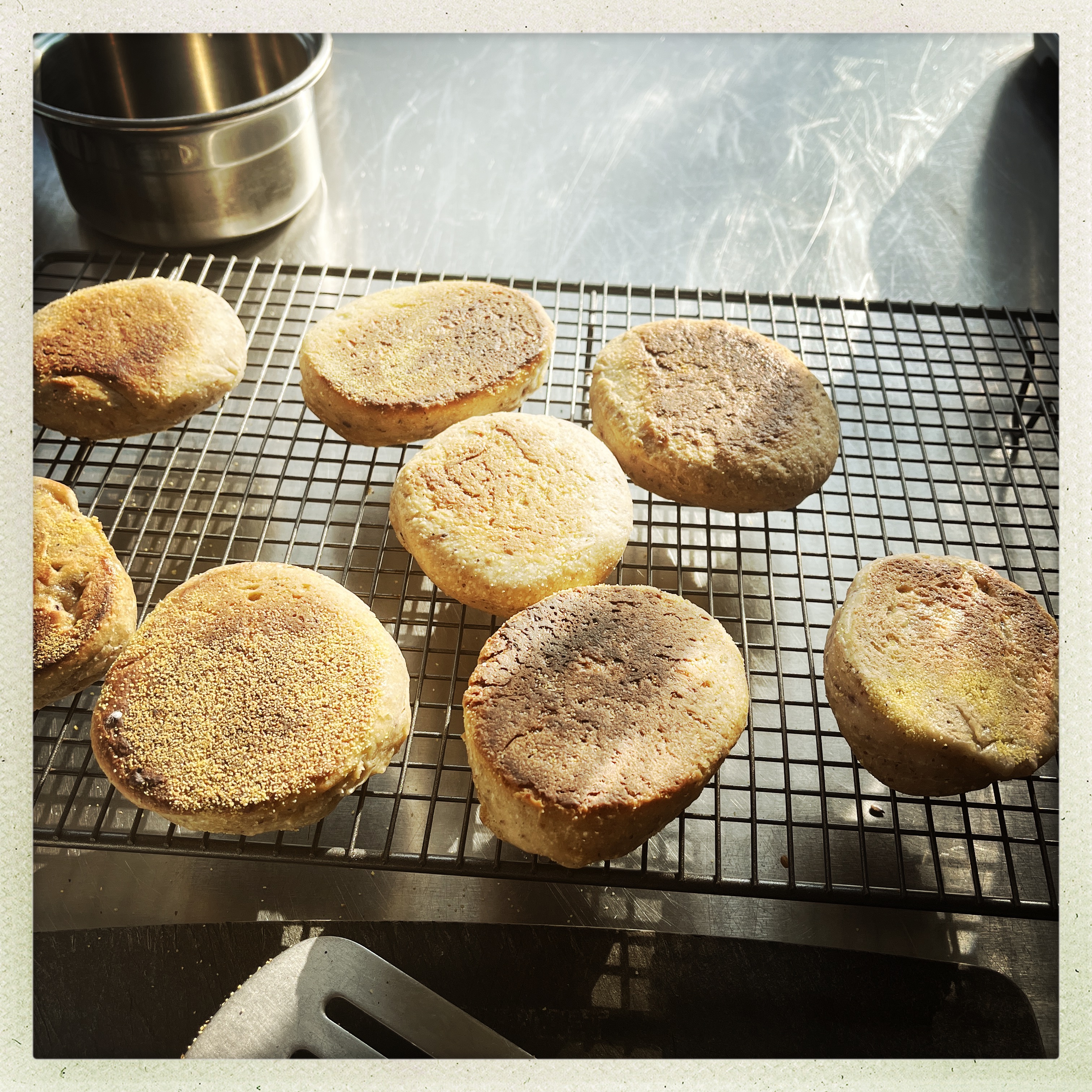
Eventually I worked out mine took about eight minutes each side, on the lowest gas setting. You want them to be gently brown, when done turn over and do the other side for eight minutes. Keep an eye on them, it’s easy for them to burn but be raw in th middle (this is also why you don’t want them to be too thick to start with). Note they do puff up a bit when cooking.

Cook in batches, put on a cooling rack and then eat. With bacon and egg, sausage, cheese and chilli jam, hummus and carrot, whatever you like. They are SO tasty and freeze beautifully. Of course you can also toast them but I had mine fresh.

A deceptively plain but tasty cake. Spiced chai bundt cake.

This is a Donna Hay recipe, from a few of her books, most notably Modern Baking which is an, I think, under-celebrated baking bible. I’ve made this cake for many years and it’s a firm favourite in our house and needs few ingredients – we keep a stash of chai tea on hand especially for it and the rest are store-cupboard/fridge staples. It’s also a good way of using up too much milk.

Ingredients

1 tablespoon of loose chai tea (if you can only find tea bags just open them up, one tablespoon is about two tea bags’ worth)
Two tablespoons of boiling water
375g of self raising flour
330g of caster sugar
two teaspoons of mixed spice
4 eggs
375ml of milk
250g of butter, melted
two teaspoons of vanilla extract.

What you do

Preheat oven to 180C. I use a 9′ savarin/bundt tin for this – specifically this one. Butter the tin and dust with flour and shake off the excess.

Put the loose tea in the boiling water and let it steep for 5/10 minutes, whilst you melt the butter and let it cool.

Note: you’ll need all the tea mixture for the cake, ie the tea leaves and the water.

Now you can go ahead and put all the ingredients, including the tea mixture, into a freestanding mixer and whisk it until combined, or if you want to do it the old fashioned way then you can do butter and sugar – cream together, then add the vanilla extract, eggs, flour, mixed spice, tea mixture and milk.

Pour the batter into the cake mould and bake for about 35 minutes. Mine usually takes 40 but you can check after 30. Do check it’s done with a skewer inserted – it should come out clean. Leave it in the tin for about ten minutes, I loosen mine around the edge and the middle ring bit with a knife and then turn out.

It’s a really lovely, moist cake that keeps for a good few days and is so much nicer than you think it might be.

The best flapjacks you will ever make (a bold claim)

Many years ago, I co-founded a parenting website called I Want My Mum (so named because I said this a lot when I was pregnant and after I had my first born). It was a small but wonderful little site and many of us are still friends today. Aside from mothering tips we also shared recipes.

From somewhere I got this recipe for flapjacks and they were amazing. I shared it on the board and then lost it and then over the years wondered how I’d ever find it when anyone ever talked about flapjacks…. But a wonderful woman called Sarah Green saved it and started making them.

Recently I asked on Facebook if anyone (I’m friends with lots of ex-IWMMers) just happened to have it. “No,” a few said “but Sarah Green makes the best flapjacks”. Sarah was at choir but when she came back she said “the recipe I use is the one YOU posted all those years ago.” The fact she had kept the recipe (and was so generous, she could so easily have just said it was her recipe, after all it wasn’t actually mine, I got it from somewhere) made me unfeasibly happy.

So to avoid having to hunt for it again, here is the original recipe with Sarah’s additions.

250 unsalted butter
Grated ring of one unwaxed orange
325g golden syrup
325g rolled oats (Sarah sometimes replaces 50g of oats for 50g of oat bran which is a great idea)
75g light muscovado sugar

Preheat oven to 180C/350F/Gas mark 4. You need a tin of about 28cm x 20cm which you line with baking parchment.

Put the butter, orange rind, golden syrup and brown sugar in a pan set over a low heat and stir until the butter has melted and everything is coated. The add the oats to the pan and mix it together. Tip the whole lot into the tin and spread evenly.

Bake for 15-20 mins. Don’t overcook or you’ll lose the lovely chewy texture. You know it’s done when it’s just beginning to go golden brown around the edges but don’t panic cos the mixture will be really soft still.

Leave in the tin to cool completely and it will set. Don’t be tempted to take it out before it’s cool. When it is, take the whole thing out of the tin, holding the edges of the baking parchment and cut into slices as desired.

I will make these again and post a picture but in the meantime enjoy them!

Romana’s cake, aka traditional Italian cake for everyday occasions

Growing up with a Mamma who was an excellent cook, we had largely home made everything. But the cakes and biscuits we did have were nothing fancy, because they were things my mother learnt in her own mother’s kitchen. Looking back at my own cookery books, from my own adolescence, I was struck by how basic the recipes were.

I had a Katie Stewart cookbook which I thought was the height of sophistication but looking back at it now, the ingredient list was small and simple. Everything has evolved to be so much more sophisticated, and complicated now. That’s not a bad thing.

In February I went to visit my north Italian family in Parma. Romana, my cousin, had made this cake. It was plain and simple but we loved it, especially my youngest who ate it for breakfast and for tea.

It’s very usual to have such a cake as this and it be presented at various times during the day, until there’s nothing left. It’s part of its life journey that it should go slightly stale towards the end, so you can refresh it by giving it a hot dunk in morning caffe latte or tea-time lemon tea. I asked Romana for the recipe and here it is, I’ve put its most basic incarnation here plus a few small additions (in brackets) which make it a bit extra special. But don’t veer too far from the original. This cake is not fancy, doesn’t want to be and therein lies its beauty.

Oven to 180C you need a tin of about 9″/23cm, base lied with baking parchment.

300g of 00 or plain flour (I sometimes use 200g white flour and 100g wholemeal)
180ml of whole milk (semi skimmed will do)
150g caster sugar
2 eggs
100ml of olive oil (you can use extra virgin if you are so inclined, I’ve also used 50ml of lemon infused/50ml of normal olive oil)
3 teaspoons of baking powder
100g chocolate chips. This cake really benefits from those store board tiny chocolate chips but I have so much chocolate that I just chop up that)
(A really fabulous addition is to use Bakery Bits’ Fiori di Sicilia essential oil, this elevates it massively as well as smelling amazing and making the cake taste SO Italian.)

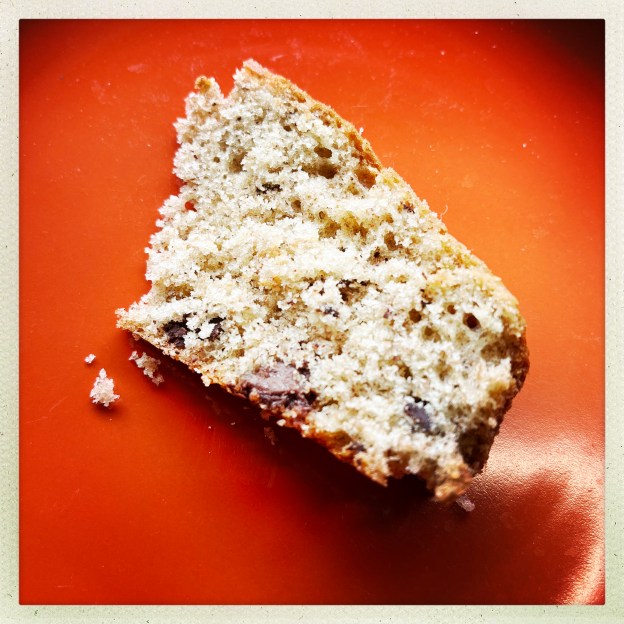
Mix the caster sugar with the oil, add the eggs, then the flour, then the milk and baking powder. Finally mix in the chocolate chips and the Fiori di Sicilia if using. Put in the tin and bake for about 40 mins. Check after 30.

This is great for taking to work/school in lunch boxes as it’s a very well behaved cake when travelling.

Also if anyone is interested in the approx macros for this whole cake they are:
Total weight: 931g
Protein: 60.2g
Fag: 157.7g
Carbs: 430.2g

Fibre: 29.5g
Sugars: 189.6

Update August 2025.

I now make this in my mini loaf cake tin to make..mini loaves and they are so cute and take about 20-25 mins.

Yorkshire Eclairs

These were a beautiful accident.

We had guests coming, and I had planned to make normal eclairs, stuffed full of white chocolate cream. But as I went to get the mixture out of my Kenwood mixer, I noticed the whisk attachment, which I’d had for about twenty years, had splintered and broken. There were really sharp filaments of metal sticking out, and I couldn’t risk the possibility that some had got into the mixture (and you can’t really sieve eclair mixture). So I had to start all over again.

However, my Magimix food processor whisk wasn’t strong enough to give me that really ribbony eclair texture, so I knew the dough would be too soft to pipe. But I wasn’t about to waste a whole other mixture so I thought sod it, I’m going to pour it into my Yorkshire Pudding tins – which are like shallow four circle shapes per tin – that’ll contain the mixture. And it worked beautifully. You could treat these like a normal eclair, by splitting them and coating the top with chocolate and injecting the insides with cream. But I didn’t want the faff after such a relatively stressful baking morning. So I just placed the cream on top, put some berries on and as an homage to the usual chocolate topping I poured on some Bare Bones Chocolate Syrup (seasonal produce) but you don’t need this latter.

Just to bring everything up to date here are the recipes for the eclairs and the white chocolate cream.

Eclairs (makes eight in my Yorkshire tins)

125ml water
50g butter
75g plain flour
3 medium eggs (at room temperature, this is important)
pinch of salt

Preheat oven to 180C.

Put the water in a sauce pan with the butter and salt and heat until the butter has melted. With the heat still on, beat in with a wooden spoon, the flour. Mix around vigorously until it forms a dough and doesn’t stick to the sides of the pan.

You can let the mixture cool here, you’re meant to, I never do.

Put the dough in a stand alone mixer with the whisk attachment on, then add the first egg. When fully incorporated add the other egg and then the third. Strictly speaking you only add enough egg til it comes together to form a thick, ribbon-y dough, that is to say that when you lift the whisk out of the mixture it leaves trails of visible ribbons behind for a few seconds. But I just add three eggs in and if you’re making Yorkshire eclairs the consistency of the dough should be thick, but it doesn’t matter if it’s not super thick because you’re not piping it.

When the dough has some substance to it, pour it into your Yorkshire tins (you do not need to grease them in anyway). Bake for about 25-35 mins. Longer will give you a dryer, crisper eclair if that’s what you want. For this recipe, ie in this shape, I like them a bit fluffier and softer so I check after 25 mins.

When cool, dollop on the white chocolate cream and top with berries and you are good to go. Once assembled eat immediately.

The eclairs can be kept in a tin for a day or two but they will soften. I rather like them like this but you may not.

White chocolate cream

Ideally make this just before you do the eclairs (even the day before) so it can set in the fridge.

You need 300ml of double cream and about 100-125g of white chocolate.

Heat half the cream in a saucepan, break up the chocolate, as small as you can, and then pour the heated cream over the top of the chocolate and stir until melted. (You can of course just put both together in a bowl and melt over hot water but I find that’s more of a faff.) When it’s all melted, put this chocolate/cream mixture in the fridge until it’s cool. When it is, mix in the other half of the double cream and whisk until stiff. It’s now ready to serve when you are.

Pretzel Rolls

The food writer Nicola Miller introduced me to what I think is the best bacon roll, from 5 Angel Hill in Bury St Edmunds. Their soft pretzel rolls, filled with salty bacon slices can see me going pretty much all day. Few breakfasts do this.

So when I saw this recipe for soft pretzel rolls in BBC Good Food magazine a while ago, by Edd Kimber (who I think is a genius and the only person I pay for on Substack) I had to make them.

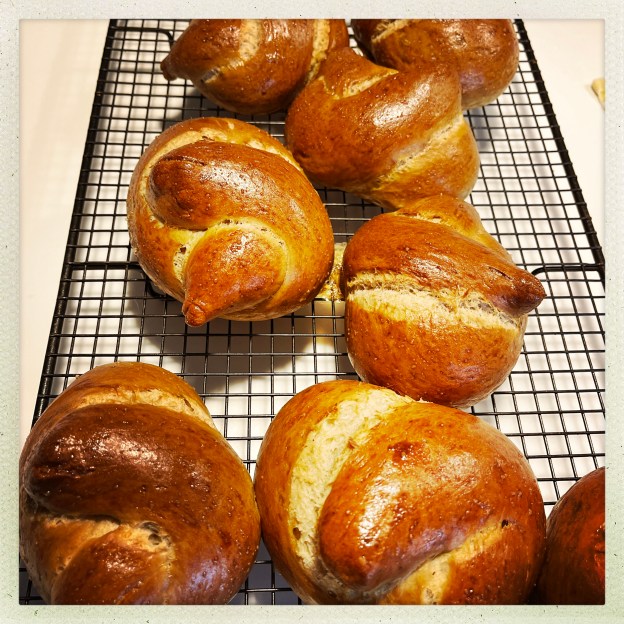
I gave up hope of making them so they looked like pretzels, mine just look like in the picture. They make great rolls for sandwiches, sweet – but not too sweet – and soft. And of course with bacon for breakfast, and maybe an egg. I also really like them on their own.

The baked bicarb bit is a pain but you only need to do it once to yield a jar of baked bicarb which lasts for a good few batches, and it is worth it (I’ve done it without and they are fine but the baked bicarb does add something). I’ve reproduced the recipe here, eversoslightly tweaked, largely to help me as the way it’s laid on in BBC Good Food I always found confusing.

For the pretzel rolls (makes eight)

500g strong white bread flour

7g dried yeast (I use Dove’s Farm)

25g dark brown muscovado sugar

300ml of luke warm water

50g unsalted butter
(I sometimes put 50g of fridge-cold butter into a jug of 300ml of just boiled water and wait til the butter melts, thus cooling the water, and then wait until the water is at the sort of temperature that when you dip your finger in it feels neither hot or cold)

1 teaspoon of salt

For when ready to bake

2tbsp baked bicarb (see later)

An egg for egg wash

Sea salt for sprinkling if you want.

I put all the ingredients for the pretzel rolls (not the ‘for when ready to bake’ bits) into a food mixer with dough attachment and mix for ten minutes. Then I take out the dough hook and leave at room temperature for an hour (less if it’s really hot).

When ready, take the dough out and divide into eight. You roll each piece out into a long sausage and then shape into a U then cross the ends up and over. If you get stuck just YouTube How to shape a pretzel but don’t get fixated on making large holes or gaps. You can also just shape these into little normal buns. Place on parchment covered tray.

Then you can either set these aside for – as the original says – 20 mins (covered with a cloth) or do as I do which is put them in a fridge which is at 4C (on a parchment covered tray, covered with a tea towel). I bake them the next day. Note these won’t keep for ever in the fridge so if you want them the next day, make them late afternoon/evening.

When you are ready to cook, preheat the oven to 200C and bring a large pan of water to the boil put in the two tablespoons of baked bicarb (I will tell you how to do this at the end). Take your tray of pretzel rolls out of the fridge. Depending on how big your saucepan is you put in, say, two pretzel rolls and a time and boil for 20 seconds each side (flip over using the slotted spoon). Take out the pretzel rolls with a slotted spoon and place back on the parchment covered baking tray.

When all are done like this you brush the rolls with beaten egg, sprinkle with sea salt if you so desire and bake them at the 200C for 20 mins. They will be a rich golden brown. As soon as you are able to place them on a cooling rack, off the parchment (otherwise they can go soggy). Wait as long as you can to start enjoying them.

Once cooled these also freeze beautifully, I defrost them in the microwave on the defrost function for about 2 minutes.

Baked bicarbonate

Preheat oven to 120C. Foil line a baking tray and pour a whole tub of bicarbonate of soda (the sort of size you get in the supermarket) . Spread out so it’s all even and bake for one hour. When cool put in a specially marked container so you have it for next time.

Bagels 2.0

I first started making bagels over 13 years ago. I still make them very regularly. Home made bagels are not difficult, completely different to shop bought versions and whilst I won’t say they are ‘healthy’ they are very much better if you make them yourself.

The original recipe still stands but I’ve tweaked it ever so slightly and this is what I do now, making it in a stand mixer.

Ingredients:

450g strong white bread flour

1.5 tablespoons of caster sugar

1.5 teaspoons of salt

230-240 ml of water, at body temperature preferably (but just not ice cold).

1.5 teaspoons of dried yeast

egg wash for later and seeds if you want them.

Method


If you want to eat these the next day, start making them about 5pm. They overprove easily, even at 4C in the fridge, so you don’t want them hanging round too long. If you want to eat them that day, start making these about 3 hours before you want to eat them.

Put everything in a stand mixer with a dough hook. Mix steadily for ten minutes. Take out the dough hook (on very lazy days I don’t even do that, I drape a tea towel over the mixer) and cover.

Leave for one hour at a room temperature. After an hour the mixture should have risen. Obviously if you live somewhere very hot or very cold adjust accordingly. The dough should be puffed up and a bit yielding to the touch.

Now cut the dough up, using a bread knife, into eight pieces (more if you want to make smaller bagels). You can now either roll each piece into a long sausage and then join the ends (overlap slightly, as per pic below, although in that they are already baked) or gently knead into a ball (put dough in palm of your hand, cup your other hand over and gently make circles, it’ll ball-up), then make a hole with your finger, or a wooden spoon and make the hole a bit bigger. Place on a baking parchment lined tray. Cover with a clean tea towel.

You can also roll them into a sausage shape and overlap the edges if you prefer.


Now either put in the fridge at 4C if you want to bake these the next day – in which case you can go straight to the boiling of them once you’ve taken them out of the fridge. Or rest for about an hour til they’ve puffed up.

Whenever you are ready to cook:

Preheat oven to 220C.


Bring a wide-mouthed pan of water to the boil. I boil two at a time. Slide in two bagels, upside down to begin with (it doesn’t really matter but this is the way I do them), boil for 45s, tip over with a slotted spoon, boil for another 45s. Take out with the slotted spoon and place them to drain for a few minutes on the tea towel, whilst you do the others.

Once ready to bake put them back on the parchment lined tray you had them on, brush with beaten egg (can be a whole egg or just a yolk if that’s what you have), sprinkle with seeds if you want.


Bake for about 12 minutes (depending on your oven of course).


Voila. They also freeze (once baked) beautifully – better than letting them go stale and then toasted them – and you can defrost them gently in a microwave and they seem like freshly baked.

Courgette and Yuzu cakes

My friend Lucy told me about this original recipe, from the Waitrose site.

I’ve adapted it, to include ground almonds, olive oil, and also tweaked with the icing. If you want to see the original recipe it’s here, otherwise here’s how I make it now.

Because I also like my treats to be contained, I make these in muffin cases and the recipe makes 16.

For those who have done the Zoe Trial, these score 59 per cake (“enjoy regularly” and I do!). They make very moist cakes that keep really well for about a week in the fridge and I think get even better as they age! These have become a real favourite int he house. Just make sure you eat them when they are really cool, or leave them for a day before eating.

200ml extra virgin olive oil

200g caster sugar

4 eggs

2 tablespoons of yuzu juice

125g self raising flour (I have also used white spelt and then a teaspoon of baking powder)

125g ground almonds

1 teaspoon of bicarbonate

250g courgettes – grated and put in a sieve for a bit then squeezed to get moisture out (there won’t be a lot)

pinch of salt

Icing

One and a half tablespoons of icing sugar

250g cream cheese

1 tablespoon of yuzu juice

Method

Oven to 180C. Put muffin cases in a muffin tray (I have a 12 hole one and then a 6 hole one, or you could make these in stages).

Beat together the 200ml of extra virgin oil and the 200g of caster sugar for about two minutes with an electric mixer (whisk attachment). You want it to have thickened. Then add the four eggs, one at a time, the two tablespoons of yuzu juice, the 125g self raising flour (or spelt and baking powder), 125g ground almonds, 1 tsp of bicarb and a pinch of salt, then finally the courgettes.

Spoon carefully into the muffin cases and cook for about 25 minutes. It’s quite hard to see if they are cooked as these are a moist cake, but press down and there should be som resistance. If not cook for a few minutes more.

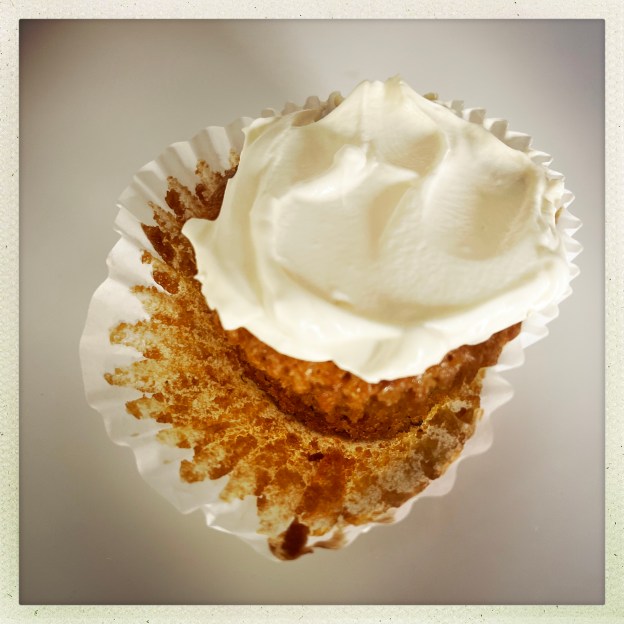
When completely cool, mix together the cream cheese and icing sugar (just with a fork or spoon it should take seconds) and yuzu juice and top each cup cake with icing.

Store in the fridge and enjoy one a day! I don’t have any pics yet as I am both greedy and lazy but will remedy this soon.