Best buys for a family summer

IMG_2784Sitting on the beach yesterday, I realised just what a grumpy bastard I am. I think it may be a legacy of working in my parents’ cafe from the age of seven, where I was forced to interact with members of the public (who could be delightful or incredibly awful and I found the whole experience mostly stressful, just never knowing if a psychopath was going to walk in). Or it may be because I am a curious mixture of highly sociable or hermit. But I find situations where I am surrounded by lots of random people hard going. Especially if I am trapped in a sitting situation.

So any sort of theatre, cinema, play experience is not as enjoyable for me as it might be for others. And the beach. I’d enjoy the beach – I adore the seaside – if I could be suspended in some sort of pod, unseen but all seeing. With a supply of water, a toilet and some food. My partner said I should get a beach hut but a) I don’t have a spare £100K and b) that wouldn’t do it as beach huts are on the promenade usually and you get people walking by and looking in. Just the thought of it makes me want to dig myself a cave.

I love the beach in winter, where you can’t really sit but you have to walk and there is no-one about. My idea of heaven is the beach at Orfordness where you are surrounded by unexploded bombs and access is strictly limited.

It is surely no surprise that I chose a career as a writer.  I can’t think of a more antisocial, keeping people at arm’s length job.

This UV tent is as close to a pod as I can get. No-one looks inside. I can experience the wilds of the sea whilst feeling entirely cocooned. I can keep an eye on my children (luckily my partner is not like me and actually plays with them on the beach and *sharp intake of breath* goes into the sea). As long as all my things are in the tent, and I have a good view of my children, I am blissfully happy. It’s a best buy. It costs £65 on the site I link to in my original blog post, but if you do a search for ‘The Shelta UV Protector’ you can find it at other places too. I got mine from Little Explorers but it doesn’t seem to do it anymore, at the time of writing Amazon did it from Safetots for £40.

If you haven’t yet got your Sun San sandals then what is wrong with you? Get some. We spent all day on the beach in ours yesterday and my children paddled in the sea and by the time we got home they looked like new. If you are a regular follower of this blog however, you’d have got yours in April before they largely sold out…

Rather than fighting your children to get sun lotion put on them, don’t forget about UV suits. You can get these almost anywhere (put UV sunsuits into Google). Ours are a mixture of Ozone by Sposh (more on this make in a minute) and John Lewis own make (whose designs this year are really annoying, either pink and ‘girly’ or skulls and supposedly aimed at boys, last year I got a really cool red and grey one for my eldest). Do buy a good make though as the fabric should be properly UV50 SPF. But with a UV suit (I recommend a one piece over a two piece)  most of your child is covered and they can swim and play without you fretting that they need a top up of sun lotion every five minutes.

Now, hats. Many years ago, I picked up three floppy sun hats by Sposh Ozone at Romaine’s Junior Style Sales. What you get at these sales is very hit and miss of course, and I can’t say I saw those hats again at subsequent sales. But at that time, I picked up three hats for a £1 each. They proved to be some of the best things I ever bought for my children. These hats are floppy, have fitted from when my eldest was two to still fitting her perfectly now at aged nine, they give UV protection, wash well, fold up quite small and seem to stay on in all but really high winds. I was never able to find them again until recently when a friend saw a picture of my two girls and asked where their hats were from so I searched again and found them here. (This is the same site I link to for the UV tent, because the place I got mine from – Little Explorers  – doesn’t do the UV Shelter anymore. This site, Sunproof, also does UV suits if you can’t be bothered to look far, but you can get UV suits from most places so shop around.)

At a really good price of a penny under a fiver, postage included (they come in the red that I’ve linked to but also blue). Most other places sell them for £14 odd.

I just stocked up on four more. I really recommend these hats, they are brilliant and look great. I realise that the size we have is large which says fits from 7-14. But we have them and they are interchangeable for my four year old and my nine year old (they are cotton Lycra so slightly stretchy). But buy whatever size you think suits you.

Great children’s ruck sack


If your child walks or cycles to school, or even if they don’t but you find they have about five different bits of luggage to carry to school, this is an excellent ruck sack. It has lots of useful pockets (I love a dedicated pocket), it’s well made, has reflective stripes.. but perhaps most importantly, it’s endorsed by the Backcare Charity.

This is the small size, but I’ve found it plenty big enough for a nine year old. But, if you don’t think that will be big enough, there’s also a large size.

£25 from John Lewis.

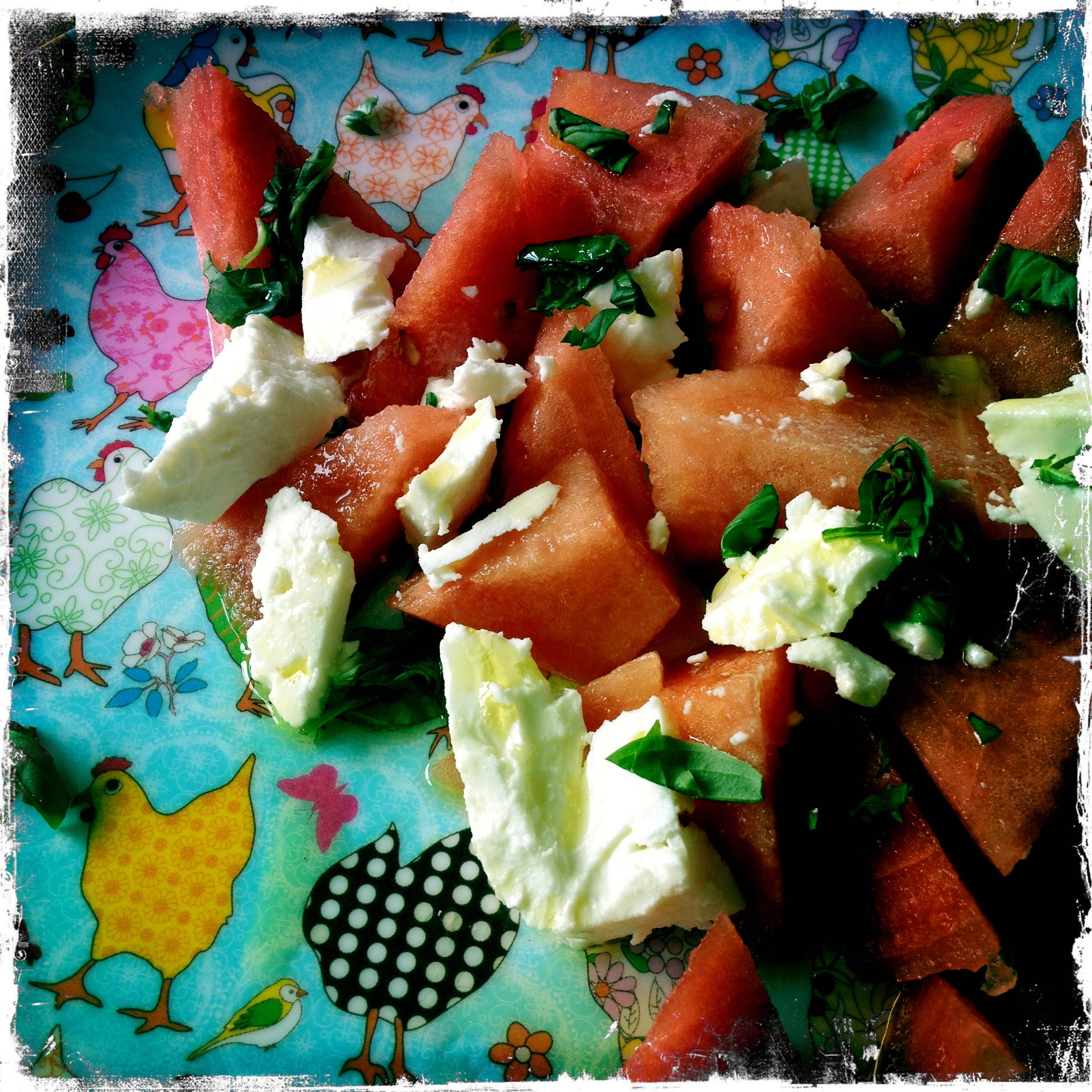
Watermelon and feta salad. The perfect lunch for a hot day.

IMG_2276

Eating watermelon makes me think immediately of southern Italy, where I spent so much of my childhood. It’s so evocative, it almost makes me want to weep.

Childhood life in Italy was so different to life in London. In London we lived in a two bedroomed flat in a mansion block in west London. Opportunities for roaming the streets were few and far between. In Italy, almost from the moment we stepped foot onto the dusty soil of my mother’s home village in provincia di Avellino, we were free. My mother had her mother, cousins, sisters etc to talk to, we had streets to explore and railings to climb and old houses to dare ourselves to enter. I spent most of my childhood summers wearing a pink and white towelling bikini, playing out with friends, until I was called in to lunch, or dinner, or ‘per la merenda’ (a mid afternoon snack). We frequently ate watermelon, spitting the black pips as far as we could, sitting in the shade of the porch, whilst the grown ups had their afternoon siesta.

This recipe is by Ottolenghi from his Plenty book. It doesn’t seem like much but it is plenty (ha ha). Ottolenghi says you should “eat this on the beach, or at least outdoors, on a hot day, with the sun’s rays unobstructed’. It’s a perfect summer lunch and basically, an assembly job.

You take some chilled watermelon which you’ve cut into wedges, some feta which you’ve cubed, some basil leaves which you’ve torn asunder and a small red onion which you’ve sliced thinly if you like (if not, leave it out). You put the melon and feta on a plate, sprinkle over the basil and onion if using and drizzle some olive oil over the top. That’s it. But don’t dismiss it because of its simplicity, it’s got lots going on.

Torrone (nougat) ice cream

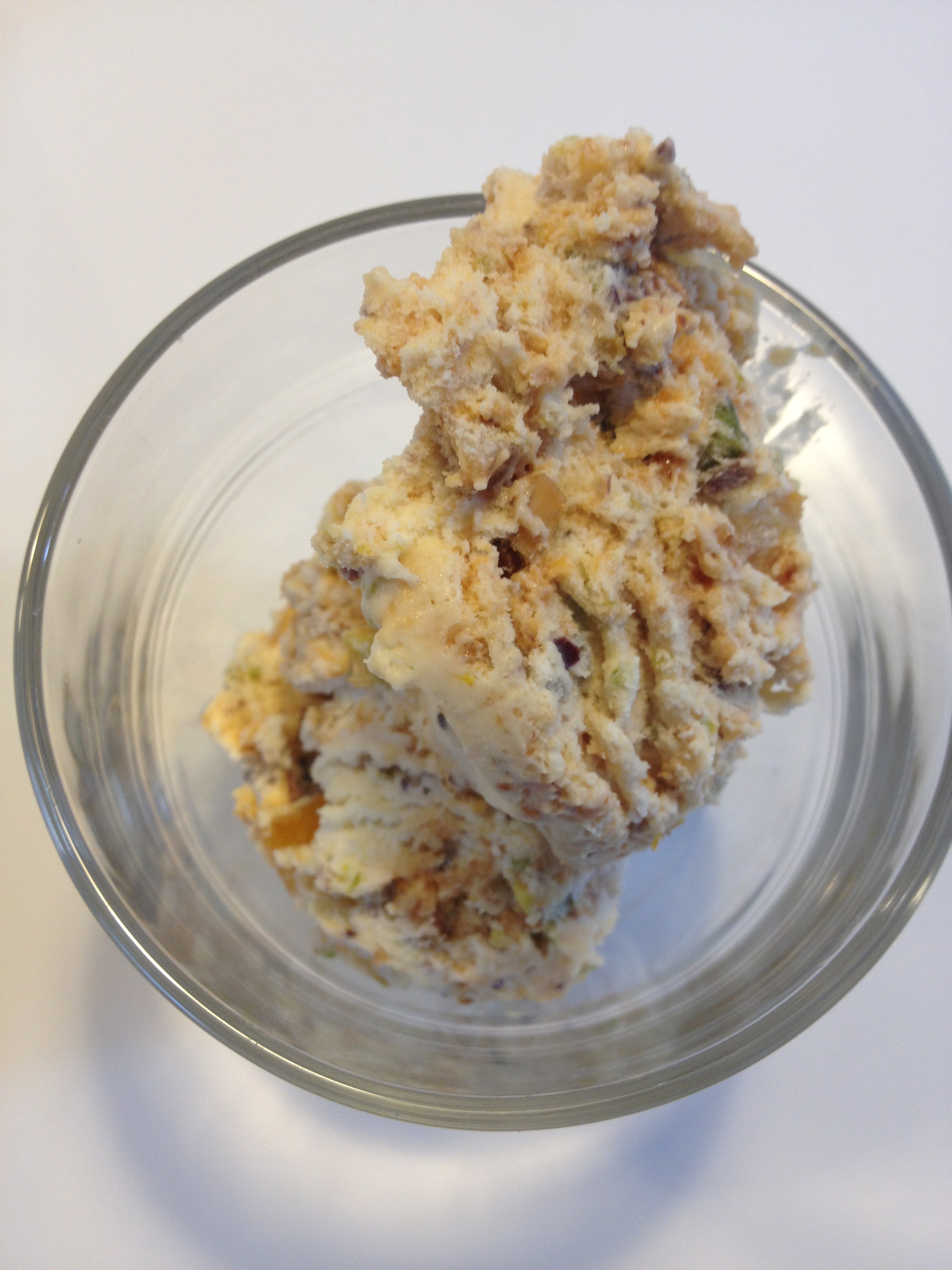
IMG_2345 I found this recipe, hidden amongst various others in the Guardian last week. (Scroll down, it’s the fifth one: frozen nougat, torrone = nougat.)

The great news is that you don’t need an ice cream maker to do it as this recipe doesn’t call for one. Rejoice! I’d long wanted to make torrone ice cream as I love ice creams with bits in it. I think this is in large part because my mother once made ice cream with lots of bits in it when I was a child, and it remains a taste I chase. (You can read more about it here in this piece I wrote for the Economist’s Intelligent Life.)

It is not the easiest ice cream to make. But I made it whilst in sole charge of a buoyant four year old and it was fine. I did move my mixer next to the stove, as I wouldn’t want to be carrying boiling sugar and honey across the kitchen.

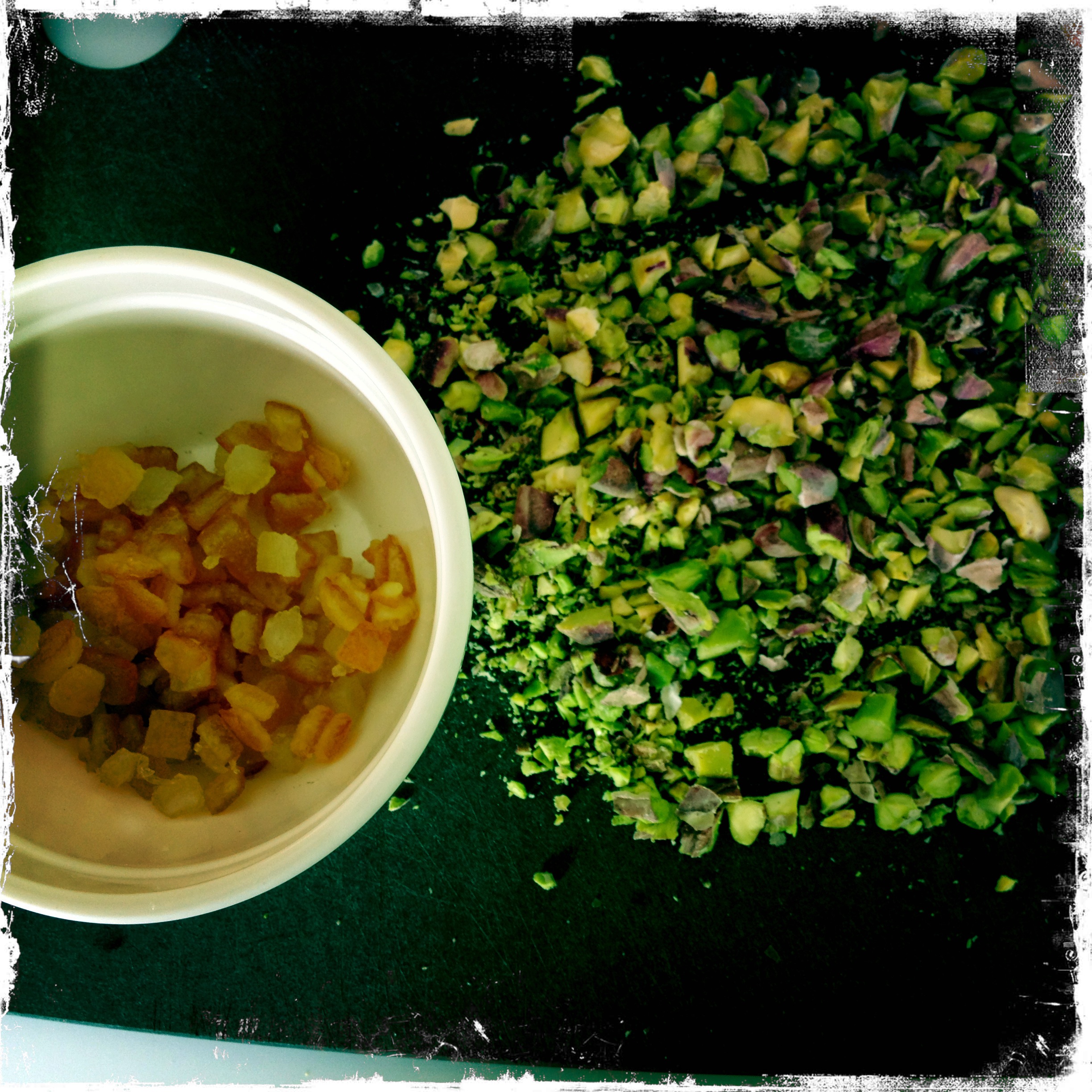
A few notes about the recipe: I used flaked almonds (which is what David Lebovitz, whose recipe this is, probably meant by sliced almonds). Toast them first, if they’re not already. I did mine in a dry frying pan for a few minutes.IMG_2332The praline bit takes hardly any time at all: be warned.  And you can easily make this in way in advance.

I blitzed half the praline in a food processor and chopped the other half by hand. Experiment to see what you prefer.

Don’t be temped to leave out any of the ingredients, please. Each is carefully considered to compliment the others: this is a highly accomplished recipe. IMG_2339Follow the recipe carefully for the same reason. Make sure you whisk the meringue until quite, quite cold, for example, before folding the cream in.

I found it hard to fold the whipped cream into the Italian meringue (Italian meringue is when you pour a very hot sugar solution into whipped egg whites whilst simultaneously whisking) so I did my best then whisked the whole lot together gently, it didn’t suffer.

This ice cream only uses egg whites. Hurrah! Another use for all those egg whites that I accumulate.

I can’t impress upon you how good this ice cream is. It’s one of the best things I’ve ever tasted. I wouldn’t, personally, have it in a cone. You really need to serve it in the plainest of dishes so that nothing distracts from the taste which is complex, sophisticated and high-pitched-singing- inducing delicious.

Couche cloth proving

IMG_2285

A couche cloth is a specialist piece of heavy linen cloth, made especially for the final proving of sourdough bread (couche = ‘laying down to sleep’). I’d wanted one for ages but for some reason never got myself one. Isn’t it weird how there are certain things that are perfectly affordable and yet they are regarded as luxuries and we never buy them for ourselves? The couche cloth came under this category for me, even though it only cost a tenner and I’ve easily wasted ten pounds on loads of other crap.

You can of course use a dish cloth in a bowl for proving sourdough, and lots of people do. But, for me, it’s not really the same as it’s clumsy and the dough can stick to a dishcloth, no matter how dusted with flour. I have umpteen bannetons now – hence why the couche cloth seemed like a luxury. But I sometimes wanted to make sourdough baguettes and rolls, just some different shapes occasionally, and I couldn’t do those in the bannetons, because the shape of the banneton determines the shape of the final loaf. And most bannetons are round or baton shaped. Here is a pic of my sourdough rolls, after they’d been proved in the cloth, and on the flipping board about to be flipped onto the baking tray, to go into the oven.

IMG_2311

Then one day, I was talking to my mother and she told me about how she and my grandmother  used to make bread when she was a girl, and she was telling me all about how they used to lay the shaped dough down in a piece of linen cloth and pinch the cloth up so that the dough held its shape. And I recognised that of course, she was talking about a couche cloth.

Well. Now I knew it was part of my heritage, I knew I had to get one. And with a couche cloth you need a flipping board or planchette. So I put both on my birthday list and I got both. They were bought from the fabulous Bakery Bits.

I got my couche cloth by the metre, going for the 60cm by 1m length, which, weirdly, ends up cheaper (£10.14) than the pre-cut cloth of the same size (£14.40).

I immediately realised that I’d got my couche cloth too big, but that’s no biggie as I cut it in half. The thing with couche cloth proving is that you then either need to keep the dough out for proving or put it in the fridge. And if you put it in the fridge you need to make sure you have a tray big enough to hold your shaped dough AND that, then, your fridge and your oven are big enough to hold the bread when you prove and then cook it. No point making a 3ft long baguette if you then can’t get it into the fridge to prove and then the oven to cook it.

Here are two great videos, that Joanna from Zeb Bakes put me onto, ostensibly to help me with shaping my baguettes (more about baguettes another time). This one shows you a couche cloth in use and this one shows you the flipping board in action.

I dust couche cloths with rice flour. I find it much better than the usually recommended rye flour – my loaves never stick – and also it gives a lovely contrast on the crust of my cooked loaves. And when I’m done, I brush the cloth with a grouting brush which I keep just for that job (being a grouting brush it has stiff bristles). Then I hang them out in the glorious sunshine to dry.

Colouring in for grown ups (oh okay, and children)

IMG_1992


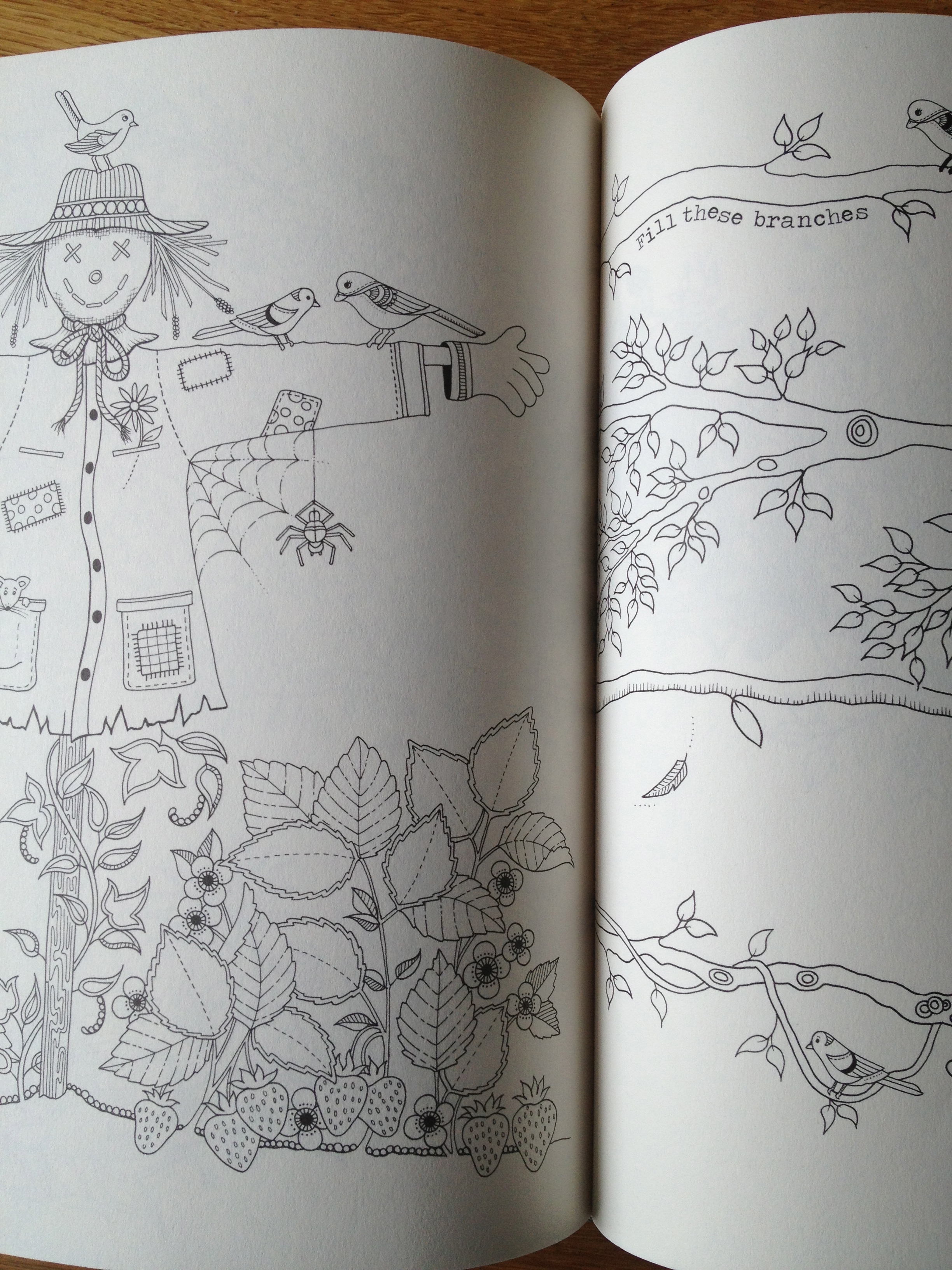
A few weeks ago, my friend and one of my editors, Kate linked to a piece on the Guardian about colouring in. On that page you can find ways to download samples form an incredible book called The Secret Garden. Not the secret garden many of us think about, by Hodgson Burnett, but a completely new colouring in book by Johanna Basford, full of intricate pen and ink drawings that you…colour in.

IMG_1994

For reasons that I never worked out, I was unable to download and print out the sample pages, which forced me to buy the book, and I’m glad I did. It’s beautiful. My  girls and I sat all afternoon and coloured in (for nearly FOUR HOURS).

IMG_1993

There is something incredibly therapeutic about colouring in and this peaceful camaraderie descended upon us, with only minimal bickering over who had the red. We chatted and chatted and laughed and laughed. The eldest and I coloured in with more precision than the youngest, but I have to admit I love the anarchy of younger children armed with a colouring pencil (you do really need pencils for this).

IMG_1995

In my column for the Guardian (where I look at family problems)  I’ve always advised going for a drive if you think your child needs to talk. There’s something about the lack of eye contact and the constraints a car presents, that can help chidren talk about what’s troubling them. To this I’d like to also add – colouring in with your child. Perhaps it’s the lack of eye contact again, perhaps colouring in focuses but also empties your mind so you can do a bit of stock taking. Who knows. It works. My two chatted away. Not that they had anything in particular to say, but it struck me that if they did, this was the ideal place to do it.

And then I remembered that the first sort of therapy I ever had, not long out of my teens, the therapy that changed my life and undid all the ‘knots’ in my brain, was art therapy.


The beautiful art of getting things wrong. Or, what happens when you use plain flour instead of strong when making bread.

Saturday morning. 6am. I’ve been up for 45 mins because the bird song wakes me up. This is fine. I like the early mornings when everything is new and quiet.

I’m making bread. Later, we will have visitors and will need to feed eight. I’ve made sourdough several hundred times over the last four years. It is only later that I realise that, without the usual distraction of partner and children, my concentration has failed me and I put plain flour into the loaf instead of strong white.

What will happen? No-one seems able to tell me. I ask on Twitter and Facebook. No-one knows. I feel irritated, not because I think this is a mistake of giant proportions, but because my starter won’t be ready to use again for several hours.  I guess that because plain flour – apparently – has less gluten, it will have less of a scaffold for the air bubbles to climb. Ergo the bread will be less raised, less ‘holey’. Worse things happen in Tesco.

I make the bread exactly as I always do, lots of little, light, kneads with increasing rests. I put it in the fridge and the next morning, Sunday, I take it out. Slash it and bake it.

This is what happens when you use plain flour instead of bread flour. Not nothing. Something. You get a beautiful bread that has more holes in it than one of Michael Gove’s speeches, and tastes wonderful.

IMG_1937

Book lights

IMG_1918

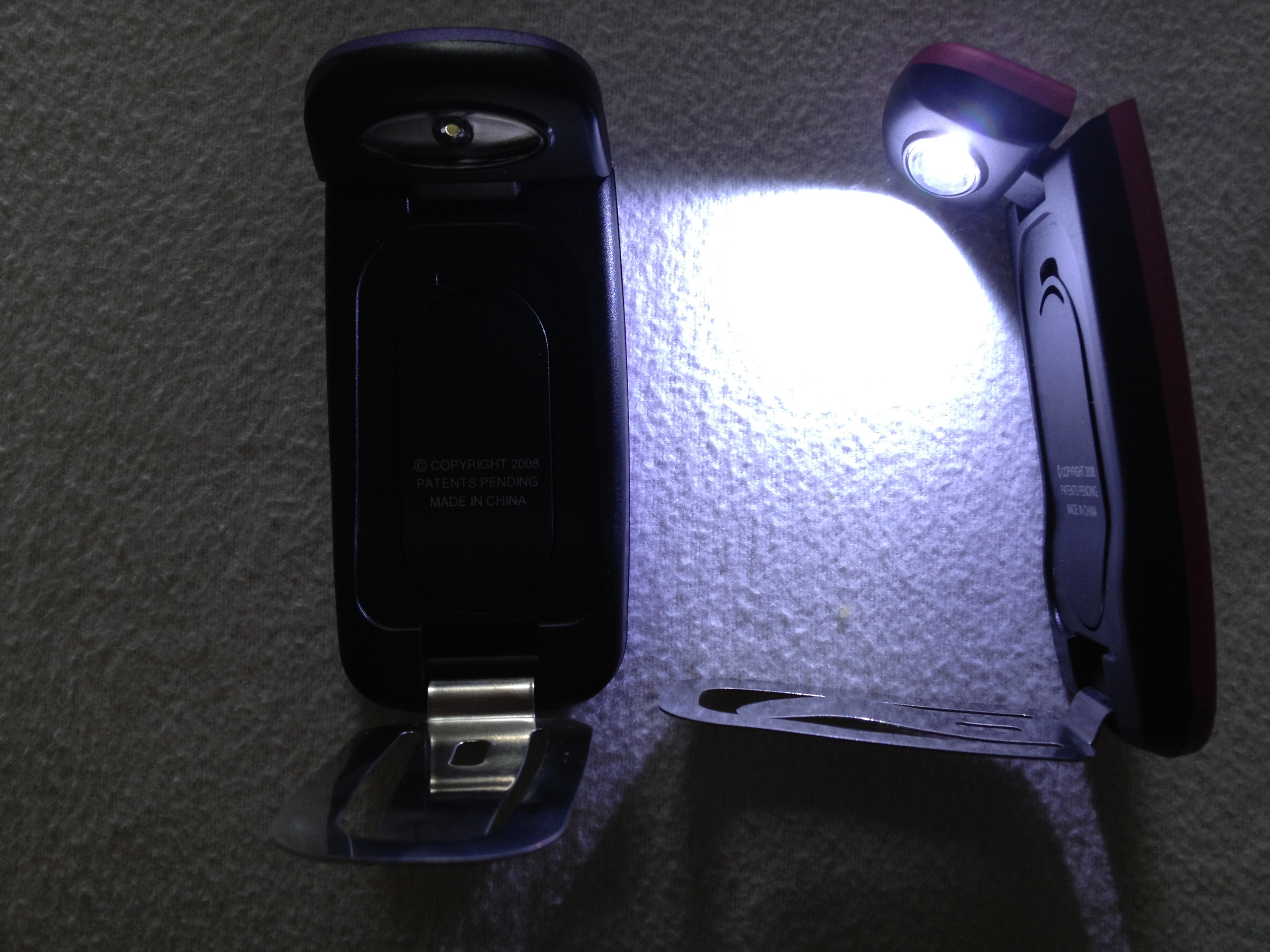
These Mighty Bright Ultrathin Lights are great for reading by. They’re small, come in fun colours, can double up as an emergency torch and my children – who share a room – love them because they can stay up in bed reading (or looking at the pictures) without disturbing the other child if one is ready for sleep and the other isn’t.

IMG_1916The lights fold flat and are really light and small (think tiny mobile phone size) but have a hinge to clip onto your book cover and a poseable light.

They cost about £9/£10 each. I got mine from the dreaded Amazon.

Over proving

Can you hear the quiet?

This is the special bit between handing in a big piece and waiting to hear if you have to make huge changes with less than three hours until it has to go to press.  Or, if the whole thing will pass smoothly by, slipping into production with just a few waves of tweaking by me.

And as such, there is very little I can do right now but wait, and listen to the birdsong in my garden and wonder when the sun will appear from behind the thick kapok of cloud.

This part of writing is like the period between O and A’levels, such as they were in my day. I’d done my O’levels, I was waiting for my results, but my A’levels hadn’t started yet so there wasn’t anything else I should be doing but lie, tummy down, on the big window sill at home and stare up the road dreaming of what my future would look like.

So I’m going to do a gentle post today, whilst I sit and wait. And it’s about over proving.

Here are two pictures of the same loaf. I left it out of the fridge, by accident, so it had a 14hr prove at about 20degrees. I note in Paul Hollywood’s book How to Bake, he tells you to leave the sourdough out for what sounds like too long – something like 22hrs – at a warm room temperature, with the dough wrapped in plastic. But his method is all different to the Dan Lepard one I use anyway (has anyone used the Hollywood method for making sourdough? Be keen to hear how it went, I just can’t fathom how the bread wouldn’t over prove, being out for so long).

IMG_1793 IMG_1794

The first picture was the first slice. I feared the loaf had been over proved, but it looked okay at first. Great even (the taste was good), and I thought I’d caught it all in time. But look further into the loaf, at the second picture and you’ll see that great cave of air at the top, which is a sign of a sourdough that has been over proved.

Because I had divided up the loaf into two loaves, I had put the other one in the fridge. Four days at 4C, later I cooked it and this is what it looked like:

IMG_1829

See the difference? It had good airholes, but nothing like the ones in the first picture.

I’ve discovered the really perfect way, for me, to make sourdough is to put it in the fridge for a period of time, so the flavour can develop without the dough exhausting itself, and then taking it out for a good few hours so the crumb can develop large air holes. But it takes planning and time.

ps: I didn’t need to make any changes at all. 🙂

A tre colori of sorts

This recipe originally comes from a marvellous book called Salads by Peter Gordon.  I first made it about two years ago and my mouth fell open in wonder when I tasted it, which was handy as I could fork more of it in. I’ve changed it, the proportions, but also the tomatoes. Gordon originally asked for cherry tomatoes that you cook in olive oil on a high heat for a few minutes, until the skins burst, then cool them. But I use Hugh Fearnley Whittingstall’s honey roasted cherry tomatoes in this.

You can play around with quantities, and to a certain extent ingredients (you can leave the chilli out, I do frequently so my children will eat it).  It’s far and away the best ‘tricolore’ (tre colori in Italian) I’ve ever eaten. If you can’t be bothered to honey roast the cherry tomatoes first, and I’ll admit is is a faff, then just do them PG’s way. But you’d be missing a trick.

This serves 2/3:

1 quantity of honey roasted cherry tomatoes, which you can of course have made the day before (but bring up to room temperature, please). Enough for how many of you there are eating.

A  packet of really good corn chips. I use Kettle Chips plain ones. Don’t kid yourself, you’ll eat them all.

250g mozzarella, you need the one in the liquid, not the harder block. Obviously more if you’re feeling really hungry but this is surprisingly filling due to the good fats in it.

for the dressing:

a handful of basil leaves, cut into strips

1 tablespoon of avocado oil. Now avocado oil is expensive and not entirely necessary but it makes a lovely salad dressing so it won’t go to waste. Use extra virgin olive oil if you haven’t got the avocado oil.

pinch of salt

for the guacamole:

2 ripe avocados

2 tablespoons of avocado oil

2 tablespoons of fresh lime

Some chilli flakes (the original calls for a thinly sliced mild red chilli)

A handful of coriander, chopped

2 spring onions, sliced thinly

Either make the tomatoes on the day you eat this, or the day before and fridge them. But either way you want the tomatoes to be at room temperature when you eat them.

Put the shredded basil leaves in a jar or glass with half the avocado oil and a big pinch of salt. Shake well and leave it in the sun for ten minutes if possible. Don’t worry if this bit isn’t possible.

Make the guacamole by cutting the avocados in half and scopping out the flesh. Put the other ingredients, and the avo, in a bowl and mash together. Taste and add seasoning if you think it needs it (it will probably need a bit of salt).

Then all you do is plate it up. A dollop of the tomatoes, tear up the mozzarella, spoon the guacamole on the plate. Drizzle the dressing over it and place corn chips around the side.

If you don’t mew and coo when eating this something had gone wrong.