Honey roasted cherry tomatoes. A thing of glory.

IMG_0763


One of the things you should know about me and this blog, is that whenever I’m on a particular deadline, something hard and difficult, I write a blog post. So when people ask me, as they do “how do you find the time to blog?” it’s because I am nearly always avoiding doing something else and that something else is nearly always writing An Actual Piece.  All the professional writers I know have vast, varied, and sophisticated procrastination techniques. For me, if it’s not writing on this blog, it’s ironing or cooking or baking.

I turn to a write a blog post when I’m just about to start writing that actual piece. The last bastion of procrastination, when I’ve ironed everything that shows even a weak crease, baked up all the flour in the house into something cakey and menu planned the dinners until Christmas. So in that respect it’s like a warm up: a gentle stretching of a muscle that’s about to be really hammered in the main event. I like to think it serves a useful purpose.

My partner doesn’t quite see it like that. Living with a writer isn’t easy. It’s all “I’m on DEADLINE I’M ON A DEADLINE. DON’T DISTURB ME DON’T TALK TO ME I’M IN MY MENTAL SPACE” and then we faff and fuck about until suddenly, miraculously, the words spill out, via our fingers, onto the screen.

(n/b: the worse thing you can say to a writer is: just get on with it. This is like saying to your male sexual partner: just get an erection.)

Until that moment comes. Here I am talking about tomatoes. This recipe is from Hugh Fearnley-Whittingstall’s River Cottage Veg Every Day. You may have the book. And you may have missed this unassuming, but actually vastly useful recipe. These make a great lunch: on toast, under a poached egg, or in a recipe that I will post next week (when I’m on my next deadline) which is a spin on what is really a very boring salad called tricolore. We try to make these when the oven is already on, and even if you don’t eat them immediately, they keep brilliantly for a few days in the fridge and just take minutes to warm up.

IMG_8499

I’m sure you don’t need me to tell you to augment or reduce the recipe according to your needs.

500g cherry tomatoes (must be cherry toms, save those big bastards for something else)

2 garlic cloves

1 tablespoon of honey

3 tablespoons of olive oil

Sea salt and black pepper

Preheat the oven to 190C.

Halve the tomatoes and place them cut side up. When I do loads, I don’t place every single one cut side up unless I really do want to procrastinate. Choose your tin according to your tomato yield: you want the tomatoes to be close up and personal, not spread far and wide.

IMG_1290

Crush the garlic with a pinch of salt, then beat it together with the honey, oil and pepper if using. Because I have thick set honey, I have to melt the honey first as otherwise this just gloops together. Spoon the  mixture over the tomatoes and roast for about 30 minutes. I find it frequently needs longer as you want them toms to be goldeny brown, and bubbling. I sometimes finish them off under the grill too.

Eat immediately or keep in the fridge. Note that if you use tomatoes that aren’t that sweet, this will really improve them. However, if you start with really sweet tomatoes already then these are GLORIOUS. They also  make a great addition to a full fry up. Now then, I really must get on.
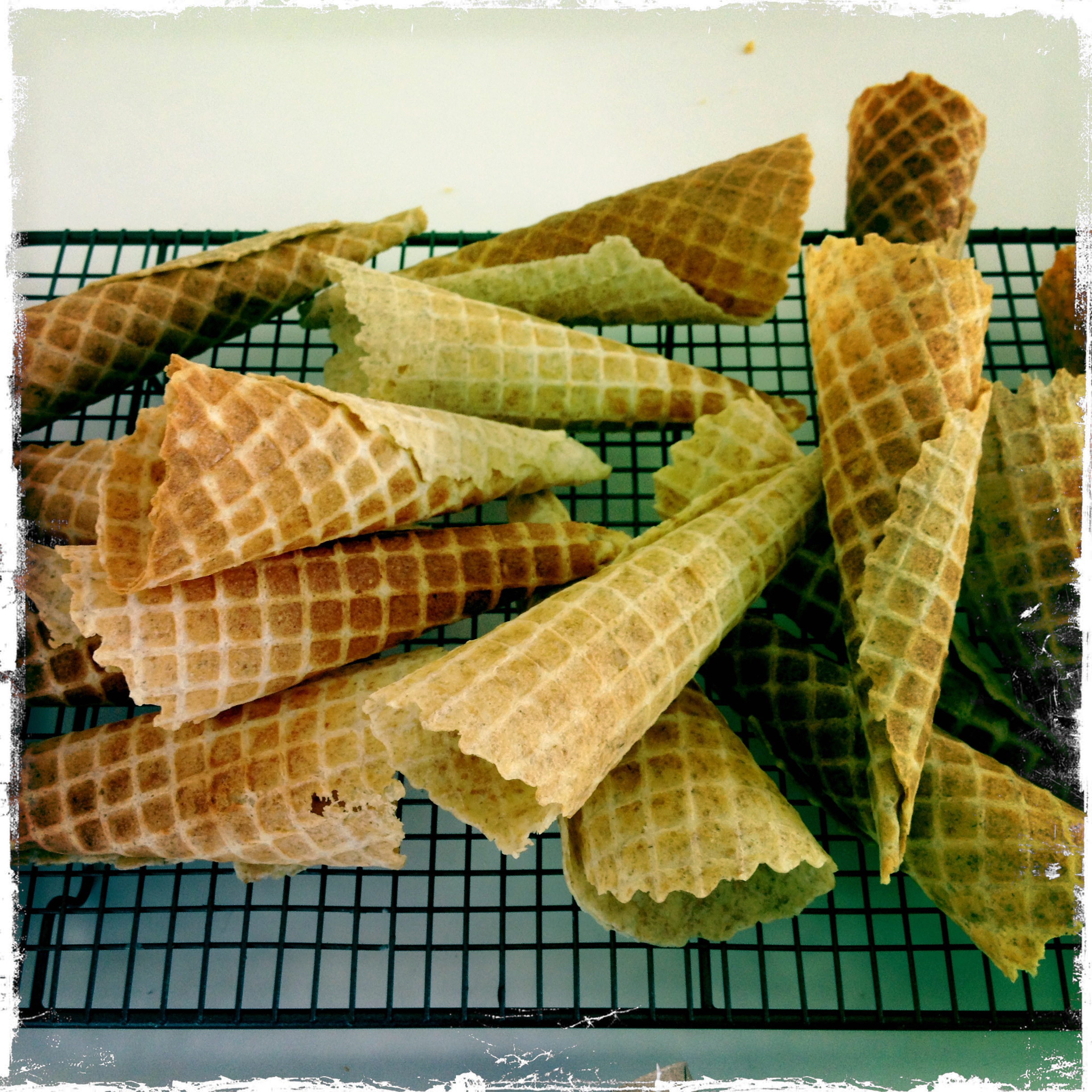


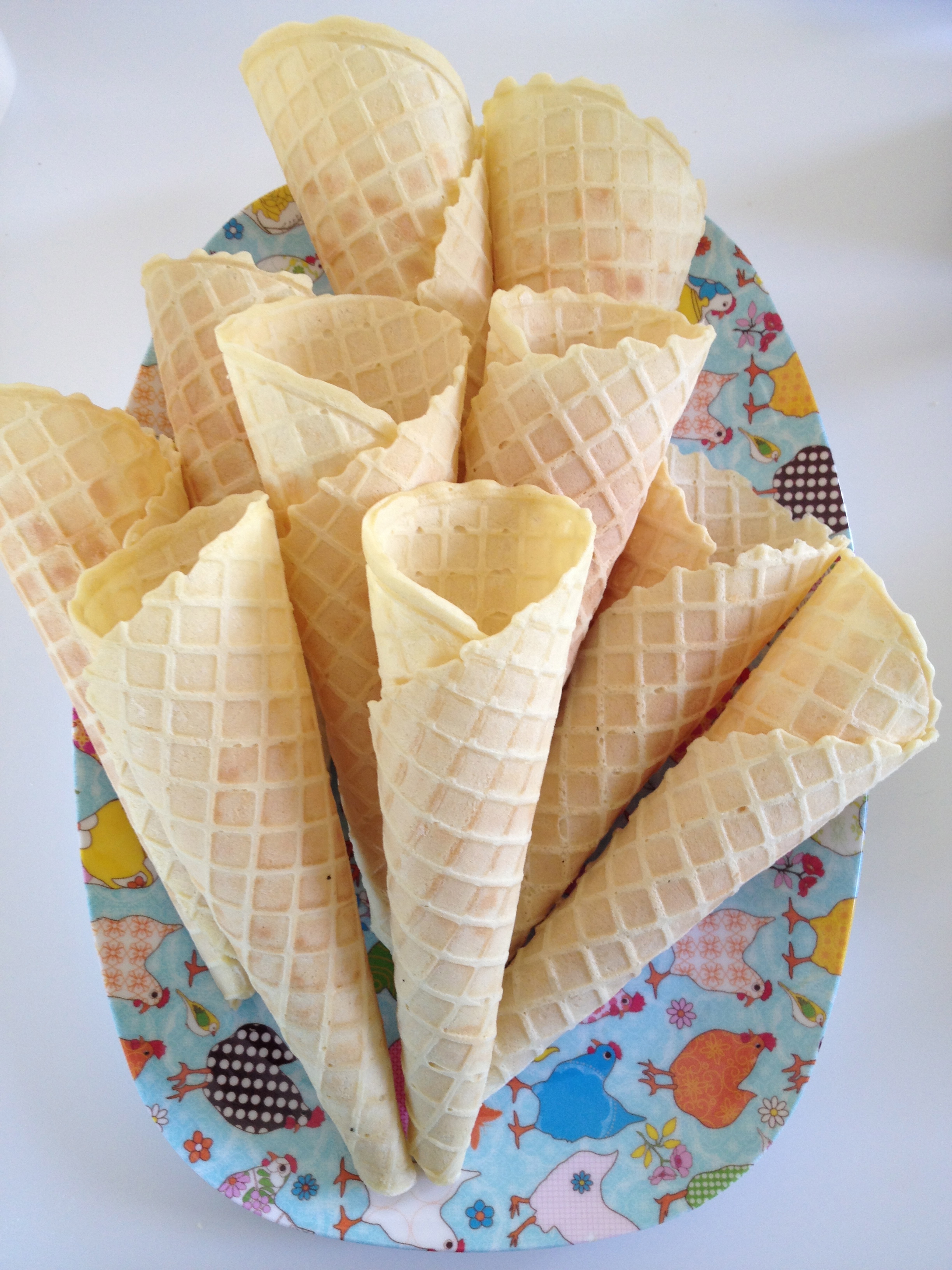
Making your own ice cream cones

IMG_1100

Writing about this most happy of subjects: ice cream, is an attempt to shake off a very bad case of what I guess are called Monday blues.

Although I feel ridiculous writing about ice cream in this weather. I’m in Suffolk and it’s grey and cold. I’m back in 4 ply cashmere, last night we lit a fire, I have loads of stuff to do that I’m optimistically lumped together in an ‘in tray’ formation  (the most useful thing I ever ever read was “we all die with a full in tray so don’t try to clear it”) and I feel as creative as a piece of plain, economy photocopy paper.

So, ice cream cones. What, you may be thinking, is the figging point of making your own? Well, you may live somewhere where you can easily buy those nice sugar cones. I don’t. And last year my local supermarket, Waitrose, seemed to have a run on decent ice cream cones and for weeks and weeks all you could get were a) awful wafer cones or b) awful wafer cones in the shape of a teddy’s head. This is very serious when you are an ice cream maker’s daughter. You cannot serve good gelato in such a receptacle.

Also, I am slightly obsessed with what goes into stuff and if I can make things at home and control the ingredients, then I will. And there is always a deadline to be avoided..I’m involved in a very grown up, serious piece at the moment and when things get a bit de trop for me, I retreat into the whimsy of baking and making. Not least because I have an almost pathological need to achieve. Something. Anything. Even if it’s ‘just’ stepping back and looking at a pile of ice cream cones which I’ve just made, whilst upstairs, there are 1,000 words that remain quite, quite unwritten.

I had, somewhere in the back of the cupboard, an old pizzelle iron/maker. Pizzelle are small waffle biscuits with a fancy pattern on them. You can also roll them up into a mini cone shape. Pizzelle irons are not easy to find in the UK which is a shame.  So, because I thought it would be really frustrating for you, me banging on about how to make your own ice cream cones using something you can’t buy here, I bought a waffle cone maker from Lakeland. I know, so kind of me. [Disclaimer: I get press discount at Lakeland and have done for nearly 16 years.]

So, first and briefly, the machine. It’s £29.99 which isn’t cheap and only you can gauge whether it’s really worth buying it. We eat a ridiculous amount of ice cream in this house so for us, yes it was. It isn’t anything fancy and I can’t tell you if it’s the BEST ice cream cone maker on the market because it’s not a big market.

I can tell you this though: ignore the instructions that come with it as they are crap. If you use the plastic cone shaper that they send you, you will end up crying as it makes for a giant-aperture cone. Just chuck it in the bin. You can roll them by hand, it just takes a bit of practice. Also ignore the recipe that comes with it makes an insane amount.

IMG_0872

How to make plain ice cream cones, the definitive recipe after weeks of testing:

This makes about 20 cones.

75g very soft butter

125g caster sugar

300ml of water/milk. I use 250ml water, 50ml of milk. (I’ve also used unsweetened almond milk and it’s worked just fine.)

250g plain flour (for variations such as wheat free, see below)

1 egg

1 teaspoon of vanilla extract

a pinch of salt

Cream the butter and sugar together. Then add the egg and vanilla extract. Mix together. Add the flour and salt and finally add the water/milk in a steady stream, mixing as you go. Beat well. You need to have a fairly thick but runny batter. If it’s too thick you’ll end up with cones that don’t cook, too thin and they’ll break easily once cooled. So don’t be afraid to experiment. It’s doubtful you’ll need less liquid that I stipulate however. I’m aware I’m sounding very bossy in this post.

Put the waffle maker onto maximum. Don’t even bother with the lower temperatures: waste of time.

I use about two soup spoons of batter. Close the waffle iron down. It takes 3-4 minutes (more like 4 but check after 3) until done. They are done when they are golden in places and dry looking. You will need to experiment a bit with what works for you.

When done, lift out with a spatula. You now have approximately ten seconds to shape your cone or it will set hard. If you’ve cooked it right, you will be able to shape it into a cone just using your hands. I lay mine flat on a chopping board and roll. Not too tightly rolled, or you’ll end up with hardly any room to put the dollop of ice cream. Not too large or you’ll need 2,000 calories worth of gelato to fill it up. It does take practice. Hold it in shape with your hand for a minute, and pinch the end (otherwise ice cream will drip through when you put it in). The cone be hot but you sort of get used to it. Or I did. That’s it, set to properly cool on a wire rack. It does take a bit of time to make them but I find it quite meditative.

They store in the infamous ‘airtight container’. They keep for a week or two, probably longer but they never last that long here.

Variations:

IMG_0903

Chocolate cones:

As above but replace 30g of flour with cocoa powder and up the sugar to 135g. I found these took only 3 mins.

Wholemeal cones:

Yes really! These are really tasty actually. Same as above but do half plain flour and half wholemeal. And healthier too.

Wheat/gluten free

Substitute the normal flour for rice flour. You can also make them chocolate wheat free versions by using 135g sugar instead of 125g, then adding 30g cocoa powder and using only  220g of rice flour.

IMG_9790

Gluten/dairy free

Substitute the normal flour for rice flour, the butter for coconut oil (slightly less: 70g) and the milk for almond milk. These taste totally delicious, and make a very crisps cone; they need slightly longer cooking (3-3 and a half minutes) because of the coconut oil. And, I think because the mixture is thicker, they spread out less and make smaller cones. I really like these.

Remember, generally:  the more liquid you add, the thinner you can get the cones. This is great if you want a very fine cone but it will break more easily.

Home made cones are a bit more fragile than shop bought ones, so handle them carefully.

Blueberry traybake

Saturday night I went out, quite unchaperoned, to a dinner. It’s funny, when you’re part of a couple, how easy it becomes to turn invitations down or accept them, perennially as part of a couple. Even if one of you can go. on Saturday, we didn’t have a babysitter and it only dawned on me after we’d turned it down that actually, one of us could go. I bagsied me and asked if me being solo would throw out numbers. It wouldn’t so I went. Although it’s more common to turn up unescorted (when you’re part of a long-standing couple) in London, here in the country it can cause eye brows to be raised. I gave my friend Kate a lift and we were introduced as “not a couple” thus quite ruining the introduction I had mischievously planned.

I brought, as a gift for my lovely hostess, Mary, a bottle of wine and one of my giant After Eight mints. I love being able to make my own after eights, not least because it gets me round my Nestle boycott. My children love my after eight mint, they call it ‘mint cake’ and were most put out that I was taking one out of the house.

I had a superb evening. Mary is a great cook with a great kitchen garden, who had channeled the spirit of Ottolenghi for the entire meal. But as I was driving, I didn’t drink. I never drink and drive. I might, at most, have a ‘finger of wine’ at the very beginning of an evening but mostly I don’t even do that. I would hate to have an accident and wonder if that thimbleful of wine had caused it.

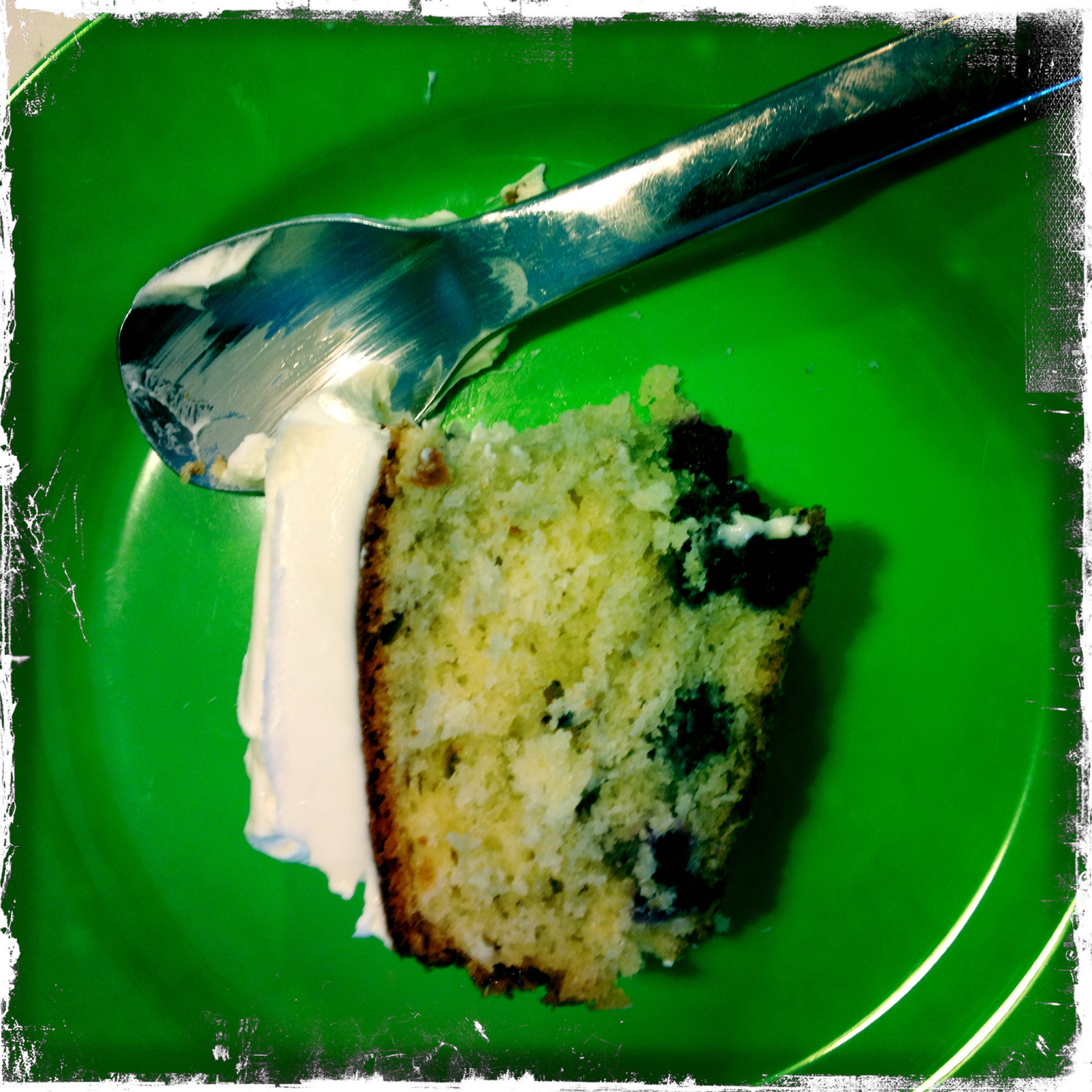
But I did get home at 2am and woke up five hours later feeling hungover, although I wasn’t – just tired. By 5pm I was absolutely craving cramming something majorly carb-heavy into my mouth so I found a tile-sized piece of this cake in the freezer, defrosted it in the microwave, whipped up an approximation of the original frosting, using mascarpone, yoghurt, lemon zest, vanilla extract and icing sugar and piled it high on top. I ate it like a snake eats a small mammal, pausing for mere seconds, with head tilted back, as I fed it down my throat. Glorious.

Of course I felt sick immediately afterwards.

This is a Bill Granger recipe from Waitrose magazine. It appeared last summer. I made it and it was so good. I love a cream cheese frosting. But my children aren’t super keen and this makes quite a lot so when I make it I freeze the excess (without the frosting) and it freezes really well. If you think you will be freezing it remember to only make half/part of the frosting. Anyway here is the recipe.

For the cake

180g unsalted butter, softened

210ml sour cream

half a teaspoon of bicarbonate of soda

330g caster sugar

2 teaspoons of lemon zest

1 teaspoon of vanilla extract

3 eggs

250g blueberries

375g plain flour

One and a half teaspoons of baking powder

For the frosting

250g cream cheese

100g unsalted butter

1 teaspoon of lemon zest

1 teaspoon of vanilla extract

250g icing sugar

Preheat the oven to 180C. Take a tin of about 23cm by 33cm and line in baking paper. Mix the sour cream with the bicarb and set aside for five mins.

Using an electric mixer beat the butter and sugar until light and creamy then add the lemon zest and vanilla. Then beat in the eggs, one at a time then add the sour cream mixture.

Put the blueberries in another bowl and toss with a bit of the flour. Mix the rest of the flour and baking powder into the cake mixture and fold in until just mixed. Now add the blueberries and gently stir through. Spoon into the tin and bake for 40-45 minutes. A tester should come out clean the top will be a rich golden brown.

Leave it to cool then prepare the frosting by beating all the ingredients together with a fork or electric mixture. Spread over the top of the cake and go in head first.

IMG_1269

Industrial sourdough. A guest post by Ben McPherson.

Here’s the thing: I’m lazy, and wanted an easy way to achieve perfect results.

Annalisa sent me sourdough starter two months ago. She also sent me instructions about what to do with it. I fed it and watered it and it grew.

Starter - day one

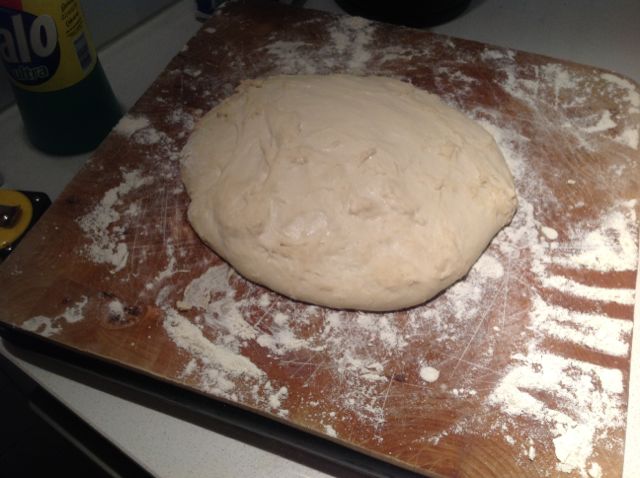
On the day I made my first bread I followed Annalisa’s instructions to the letter: knead after ten minutes, ten minutes, ten minutes, 30 minutes, 60 minutes, 60 minutes and finally 120 minutes.

Floured board - don't do this

The flour on the board was a rookie mistake: I should have used oil. Annalisa put me right on that, sternly but kindly.

Not beautiful, but delicious

Still, the bread worked. Yes, I undercooked it, and yes, the shape was all wrong, but although it wasn’t beautiful it tasted delicious.

Seven kneads, though? Seven? Far too much work, I decided.

Easy loaf in tin

I tried a friend’s easy sourdough recipe, which calls for no kneading. You take your starter, mix in 700ml water and 500g flour, along with a little salt, and let it stand in a bowl in the fridge over night.

Then you add another 500g flour, mix it all up, and spoon the runny dough into two bread tins. You return the tins to the fridge for a few hours. No kneading. Simple.

Easy loaf in oven

The result wasn’t bad. The bread rose well in the tin and the taste was actually pretty good, but the bubbles were small, and the sides of the tin had prevented the crust from darkening properly.

Poor crust on sides

Worse, though: it just wasn’t sour enough, which was the point as far as I was concerned. I’d have been happy if I’d bought it from a shop, but not if I’d bought it as sourdough bread.

I wanted an artisan bread, but with less work kneading than Annalisa insisted on. I had a kitchen machine. So, could I industrialise the process?

The short answer is: sort of. It took a lot of trial-and-error, but it did work.

K-beater

You put the starter into the bowl in the mixer. You put on the whisk attachment and start the machine running slowly. Then you add the water, and then spoon in the flour very slowly until the whole thing forms a smooth dough. If you’re me, you forget the salt. You switch off the machine and wait ten minutes.

Now you change the attachment to the K-beater. You do your three first kneads on maximum power for ten seconds each time. By now you have something that looks like a proper bread dough. After each knead, you scrape excess dough off the K-beater with a knife.

Then, and only then, do you change to the dough hook. After thirty minutes you run the machine on maximum power for ten seconds, and you do the same for the next three kneads, after an hour, and hour, and two hours. Each time you have to scrape the dough off the hook.

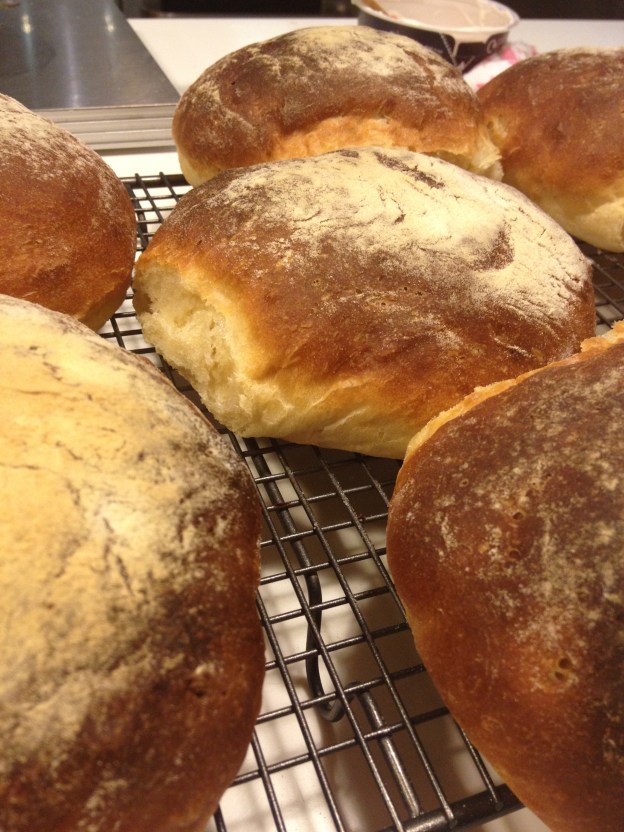
Then you put the dough into your banneton, and from that point on the process is identical to the hand-knead process. It makes a good sourdough, which improves the longer you extend the final prove.

Good industrial bread

There’s only one problem. My industrial method is far harder work than the hand-kneading. It’s messy; it covers everything in a hard sheet of sourdough which is very difficult to clean, and you have to use three attachments. It’s a complete waste of time.

In fact, once you’ve got used to making sourdough by hand it’s easy. You get a sense of how the dough should feel in your hand, and when you need to add a little more water, or a little more flour. You knead for ten seconds a time. That’s it. Suddenly it slots into your life, becomes a pleasure not a chore.

Slices

But laziness has taught me some useful lessons. The best is this: if you mistreat your starter, which I often do, by not feeding it every day, it produces a more acidic taste, which I really like.

And salt – I know they say you need it to get a decent prove, and a decent crust, but you really don’t. After completely forgetting to add salt a couple of times, I can’t detect any difference in texture between unsalted and “properly” salted sourdough. I now add a  fraction of what you’re supposed to use, and the bread is excellent.

I cheat on ice – I just throw a small glass of water into the oven to produce the necessary steam – and I don’t own a proper banetton so I improvise with a cloth, a wire fruit bowl and lots of flour.

But I slash. Always.

Slash

Ben McPherson is a TV producer and writer.

Strawberry ice cream

Ice cream is very important to me.  Its icy, creamy tentacles spread wide and deep through my family history. My father was an ice cream maker for a while, from when he turned seventy (seventy!) until about seven years ago. But we sold, and made, ice cream long before that.

For years now, I’ve made my own ice cream. And if you’re interested in some recipes I have one for the best chocolate ice cream in the world; mint choc chip ice cream; a rich vanilla ice cream; a lighter vanilla ice cream that uses whole (not just yolks) egg and soon I’ll put one up for possibly my favourite: almond praline. You can read about ice cream makers here and I now also make my own cones (see that cone in the picture? I made that). I know! Madness, but there you go.

The recipe for strawberry ice cream below, makes enough for about four people, possibly two helpings each. It’s hard to say as these days I double the recipe (super easy to do and you should double it too if you’re making it for a gathering as OBVIOUSLY you don’t have to eat it all at once) and that makes LOADS. And as here in England the weather has just exploded and the grass looks greener and all the flowers are bursting into vibrant life and the trees are popping their buds, it seems only right to celebrate with some gelato.

2 large egg yolks, freeze the whites for madeleines

75g granulated sugar

80ml milk, I always use semi skimmed, but don’t go lower than that, so full fat or semi skimmed

250g fresh strawberries, hulled. If you need to wash them first dry them carefully as water is the enemy of ice cream (you’ll get a ‘colder’ ice cream with water crystals if you’re not careful)

120ml double cream

As I’ve said before. You need milk and cream to make ice cream so don’t be tempted to leave one out.

Beat the egg yolks together with the sugar until pale-ish. Add the milk and place the lot in  a saucepan and stir well over a low to medium heat until it thickens. Do not allow to boil but be patient as this bit can take 5-10 mins and you will need the heat to be more than a candle’s worth to get it going. You’re not going for thick like a custard, but it needs to thicken. It will thicken even more as it cools. But don’t boil it as it may split.

Now put the strawberries and the custard mixture into a blender and blitz until really smooth and there are no bits left. Whisk the cream in a separate bowl until thick, slowly fold the cream into the custard mixture or vice versa, whatever works for you. Chill until cold. The colder it is the less work the ice cream maker will have to do. When cold put into ice cream maker.

That’s it. It’s ready to eat when it’s out of the ice cream maker but obviously it will be very soft, so if you like it to be harder then put it in a container, in the freezer, until such time as you intend to eat it.

Ribollita

Ribollita means ‘reboiled’. That’s not an attractive title is it? But the name belies just how wonderful this soup is: incredibly tasty, healthy, sustaining, satisfying. I urge you to try it. It’s what you’d call ‘hearty peasant food’ but to us, it’s dinner, or lunch. It’s a great way to use up old, hearty bread, a bit past its best.

We do use this to use up the older sourdough and it makes a large vat. I think it’d easily serve six.

2 tablespoons of olive oil

20g butter

1 red onion, slice finely

4 stalks of celery, chopped and de-‘stringed’ (don’t worry if you can’t be bothered to do this but we do)

3 chopped carrots

500g Swiss chard or cavolo nero. What you need to do here, with your hands, is separate out the stems and cut them into half a fingers length if they’re big, strip the leaves off and put to one side so you end up with two piles: the leaves and the stems. I can just imagine my nonna doing this whilst chatting to her women friends, putting the world to right

4 cloves of garlic, crushed or chopped. I HATE garlic crushers

A small bunch of flat leaf parsley, chopped up small

400g can of good, plum peeled tomatoes.

400g borlotti beans

some old sourdough/hearty bread (I leave this out sometimes but it’s a great way of using up old bread, do NOT be tempted to put in crap white supermarket sliced for goodness sake)

So you heat the butter up in the saucepan with the oil, until the butter has just melted. If you add the veg to really hot oil, it will brown and you don’t want that, you want to soften it. Add the onion, celery and carrots and the chard stalks and give it about 20 mins. Cover it, don’t cover it, it doesn’t really matter. Then add the garlic, and parsley and cook for another five mins. Now stir in the tomatoes, there shouldn’t be much juice if these are quality tomatoes but add whatever there is. Break them up a bit and cook for about 10 mins. Now add the beans and pour enough water to cover the whole thing. Simmer for half an hour, 40 mins. Then add the leaves of the chard or cavolo nero and cook for another ten or so minutes. Add a bit more water if it looks too thick but I never have had to.

Season, add the bread and serve drizzled with olive oil if you want, but I never do.

Solid coconut massage oil

It wasn’t long ago that I brought you a bargain basement skincare product. And here is another one. Waitrose has a solid coconut massage oil, ostensibly for babies. It’s a super value £2.89 and it’s great.

It’s totally solid in the jar, which means that, unless you have a super hot bathroom – and I don’t – you need to warm it up first, otherwise you’ll be scraping at it with your fingernails. I chuck it in the bath with me and it goes all liquidy. This also means that it’s warm when you apply it, which I think is very luxurious. I use it on my children and on myself and it leaves skin greasy – don’t try getting dressed in your best silk bias cut dress afterwards – but really soft.

The most AMAZING soft bread baps

My nine year old first made these with a bit of help from her dad. We needed something for burgers so my partner looked in my Dan Lepard Short and Sweet book. I was no doubt upstairs working, but when I came down to have one I could not believe how good they were. The memory of them stayed with me for weeks. The taste was amazing and they were substantial without being heavy.

I made them again recently to house a frankfurter. I have such a weakness for frankfurters and they are of course, mostly crap. I even went to a posh restaurant recently and ordered a hot dog. I can report that it tasted no different to the ones I buy in the supermarket (I do try to buy the best quality ones but, come on, they are hardly a health food).

Note that following the recipe just as it is, these make BIG baps. They were actually a little too big for me so I cut them in half. We froze half of them and late one evening, after we’d got in after a long drive home, we fished them out. They resurrected beautifully. My partner zapped them up in the microwave and they felt fresh and warm. I had one with just butter. I can’t even begin to tell you how good the flavour is, suffice to say that my mouth is watering at the memory.

Once you’ve tasted these, you will feel so cheated every time you eat a cotton woolly bap from the supermarket. And as they’re pretty easy to make, no excuse for not doing them, and freezing some for some very deserving burgers or sausages one Saturday lunchtime. Or hot dogs.

I’d make them smaller next time, so I’d end up with more, smaller baps, and no reason why you couldn’t make them in ‘finger roll’ shapes should you wish to, for sausages shapes. Or hot dogs.

I have a pretty ferocious oven and mine were done after about 15 mins. But do look at the original recipe here and check yours after fifteen and take them to the full 25 mins if you think they need them. Other than that, I had no problems.

Bread bags

You know that recent BBC class calculator that showed there were now, apparently, seven new classes? Well one of the questions was about who your friends are, as in, what they do. There weren’t enough boxes for me to tick because I’m proud that my social circle includes all sorts of people. I’m perfectly comfortable talking to members of parliament, the aristocracy, cleaners, sales people, chief executives. It’s not that I don’t care what people do, I care a lot, as people spend so much time at work and it matters. But I’m fortunate in that I was brought up being able to speak to everyone, as long as they are happy to talk to me and are polite.  I choose my friends according to what sort of person they are, not what they do.

My parents were also immigrants, you see. They did hard physical work at times because they didn’t have a huge amount of choice. That didn’t make them stupid or not worthy of conversation. Far from it, they are two of the most successful people I know. They also spoke two languages, albeit one with an accent. This already made them more accomplished than most of the English people I met. I worked in my mum and dad’s cafe from the age of seven until I was 18. I saw how people treat waiting staff. Not always good. After I became a journalist, my father opened an ice cream shop and when I used to help out, people were generally lovely. But a few would treat me appallingly. If we got talking, how we got talking I’m not sure, but if we did, and they found out what I did, their attitude to me would change. I found that short sighted.

Anyway, the point is that I get invited round to lots of different sorts of houses. And whilst I can hold a conversation with anyone, the area I used to stall over, is gifts.

It shouldn’t be a problem, but I would get into a tizz over what to bring really rich people who are friends but I don’t know really well. I just felt that, as they could buy themselves anything they wanted, what constitutes a gift, a treat? With friends that I’ve grown up with I’m more familiar with their tastes. Thoughtfulness goes a long way towards the currency of a gift.

I remember being invited to the house of a friend of mine once. He was hugely wealthy, had stables, horses, a chauffeur. When we became friends he gave me five phone numbers. His number in the country, his number in London, his number in the car, his driver’s number and his number in the stables. This was a bit before mobiles were really wide-spread so not as ridiculous as it sounds. Well, not quite. You get the picture. I knew he liked cigars, so I saved up all month to buy him two cigars. Two cigars. Before I took them out he asked me if I’d like to see his wine cellar. (Really, to choose the wine, this wasn’t foreplay.) As we descended the spiral staircase, I saw row upon row of wines. Really expensive wines like Pichon Lalande, 1982. And then, to my slight dismay, I saw boxes piled high, stuffed full of cigars. I shouldn’t have, as my offering was genuinely meant, but I felt embarrassed and I never gave him my paltry two cigars. This was stupid as he’d have been gracious, but part of me also thought ‘he has loads, I’ll keep these for myself’.

I learned right then that if in doubt, don’t spend money. You can never compete. Or, I can’t. Make something. I’d always known this as it’s in the very structure of my DNA, being Italian where no-one goes into a house without a small jar of something home made or grown. Be it some biscuits, a jar of passata, perhaps a dishcloth full of hazelnuts or some limongello. But I’d somehow forgotten. The first time I made something home made was for my friend K. This was the sort of girl who would take me to her house for the weekend, and blow £80 in a deli on ‘breakfast’.  I couldn’t compete with her wealth. So I made her a cake. As I handed it over she said (slightly teary eyed as I remember) “in all the years people have been coming to my house, no-one has ever made me anything”.

This is a rather roundabout way of telling you about bread bags. If, like me, you make bread for people then what do you give it to them in? Not a plastic bag, as you’d lose your lovely crust. A fancy dishcloth perhaps, but who has those? Plus if they’re really nice dishcloths I don’t want to hand them over. Look, my generosity only goes so far. These bags are great. They have tiny air holes in them so they let the bread breathe (and therefore they also let out any crumbs and flour that’s lurking around the crust). They’re inexpensive and they’re better and cheaper than the Lakeland ones  which were too big in the wrong way (long but not correspondingly wide). I got the 30cm x 40cm ones but they also come in different sizes and I paid about £2.88 for 25. (Lakeland ones are £3.29 for 12.) My Lakeland bags also kept breaking when I put the bread in. So far I’ve not had that problem with these.

2026 UPDATE. I believe these bags are no longer available. I now get mine, in bulk, from Enviropack.

You can get all sorts of sizes. But they do come in bulk, if you want fewer then Amazon still do some, put in ‘disposable bread bags’.

Here is a close up where you can see the tiny holes. I do apologise for the pictures. They aren’t great. For some reason it was hard to capture what I wanted to. But it’s really the bread wot’s the star here, the bag is simply a method of transportation.

IMG_0727

Isla bikes

Six years ago, I wrote about children learning to cycle. Whilst researching the piece, I spoke to someone from the CTC.

He told me about a new company that was starting up, run by someone called Isla. I rang her and we had a chat and I mentioned the company in my piece. It was so nice to actually speak to someone who ran her own company and not a PR representative of a huge cycle manufacturing chain.

My eldest was then about three and I was looking for a bike for her, so decided to buy a balance bike. I’d seen loads of the wooden versions around London but they really annoyed me for some reason and, at the time, Isla’s Rothan was much cheaper than the other metal versions around (I think she vastly underpriced her bikes in the early months).

Image 2

The reason Isla bikes are so good, but also what makes them not the cheapest you can buy, is that they are made with components that are specially made for children’s bikes, not scaled down versions of adult bikes.  Hence brakes are easy to apply: they’re not stiff, but have a lovely, easy, action. I think this is really important for little folk with their tiny hands. IBs also hold their value incredibly well. Look on eBay and you’ll see what I mean.  And they look great. Our bike man said that my daughter’s Isla bikes were the best quality children’s bikes he’d ever seen. You can read more about what makes them so good here.

You can of course buy cheaper children’s bikes and if that’s what you want to do, go right ahead. I learned to ride on a bike far too small for me, up and down the corridor at my aunt’s house in Italy. The moment I got my own bike (I was TWELVE), I was able to ride it straight away.

Both of my girls have always had Isla bikes (it helps with the value for money thing if you can pass them down the sibling chain), from the Rothan, through the Cnoc and the Beinn. Because my children have unfeasibly long legs, I always ring up for advice before purchasing and you should too if your children have very long or short arms, of if you’re not sure of sizing. And although my eldest learned to ride on the balance bike, Rothan, she still decided she needed stabilisers on her pedal bike when she graduated to one.

Today Isla bikes launches in the US. So all of my readers in the US can also buy one.

*Disclaimer. I bought all of our bikes at full price for years, but the last two years Isla has, exceptionally, given me a discount on my children’s bikes (I think I’ve bought two with a discount) as she credits me with helping her launch her business. Of course she would have done it all by herself.