Tag Archives: picnics

Sourdough (English) muffins


I’ll get straight to the point. These take time to make but most of that time is resting the dough in some shape or form. You have to cook them slow and low. But they are delicious and they freeze really well. I got the recipe from Facebook, from one of the many sites I follow about sourdough. The original says to use active starter, mine was a few days (in the fridge) old and it did it no harm. But I’ve adapted it slightly. You’ll need to start these the day before you want them. The bulk ferment (the bit where it stays out at room temperature for 10-12 hrs or as long as as possible) takes a long time so best to start these in the morning of the day before you want to eat them. Note you cook these on the hob, not the oven.

Ingredients


250g whole milk
115g water
55g butter (unsalted)
20g honey (or sugar, if using sugar add it with the flour)

75g starter
500g bread flour (I used 50g of Hodmedod’s Sourdough School’s Diversity XXX blend and the rest white but you can also use half wholemeal and half white depends how wholesome you want them to be)
A gently heaped teaspoon of fine grain sea salt

Method

Put the milk, water, butter and honey together in a sauce pan and gently heat til all melted then let it cool for ten minutes. If you’re using sugar then add it to the flour mixture next.

In a large bowl – for this is what you’ll eventually mix everything in, add the starter (sugar if you are using) and then add the milk/honey/water/buttery mixture and mix everything together, now add in the flour and salt. You’ll get a rough dough. Cover it and leave it to rest for 30 mins.

Now over two hours, every thirty minutes, you give it a gentle knead/fold and stretch. When this is done put in a clean bowl (oil with some olive oil) and cover it with a tea towel or a plate if you have one big enough. You leave it out for a looong time for the bulk ferment, or as long as you can. The original recipe says 10-12 hours. But if your kitchen is raging hot then probably half this. I think I left mine out for about 7 hours. Then transfer to the fridge for a day or two. I left mine in for two days.

When you’re ready to make them turn out the dough on a clean surface/board that’s been oiled or lightly floured and roll out to about 1.5cm thick. You don’t want it too thick. Get a biscuit cutter that’s the size you want the muffins to be – mine was about 6-7cm – and cut out as many as you can, transferring them to a baking tray which has either been lined with baking parchment or dusted with polenta. Re shape the dough and roll out again until you’ve used it all up. You’ll have one left that you’ll probably shape by hand. This will be the sacrificial muffin.


Leave out like this, covered with a tea towel, for about an hour. Heat up a cast iron frying pan – big as you got – but make sure you have a lid for it. You can also use a Le Creuset but make sure the heat is low. You can’t rush these babies.

When the pan has warmed up put in the sacrificial one to try out the heat of the pan and how long they take. It’s really worth doing this. Of course I thought I knew best so I ruined four finding out the hard way that my heat was too high.

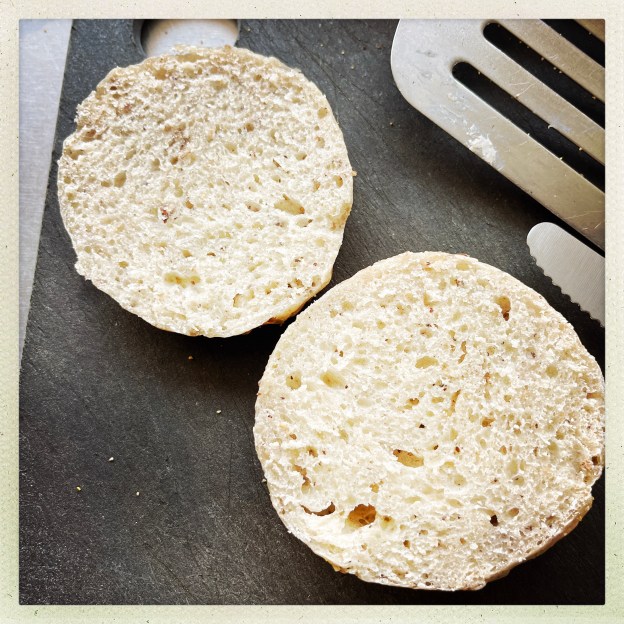
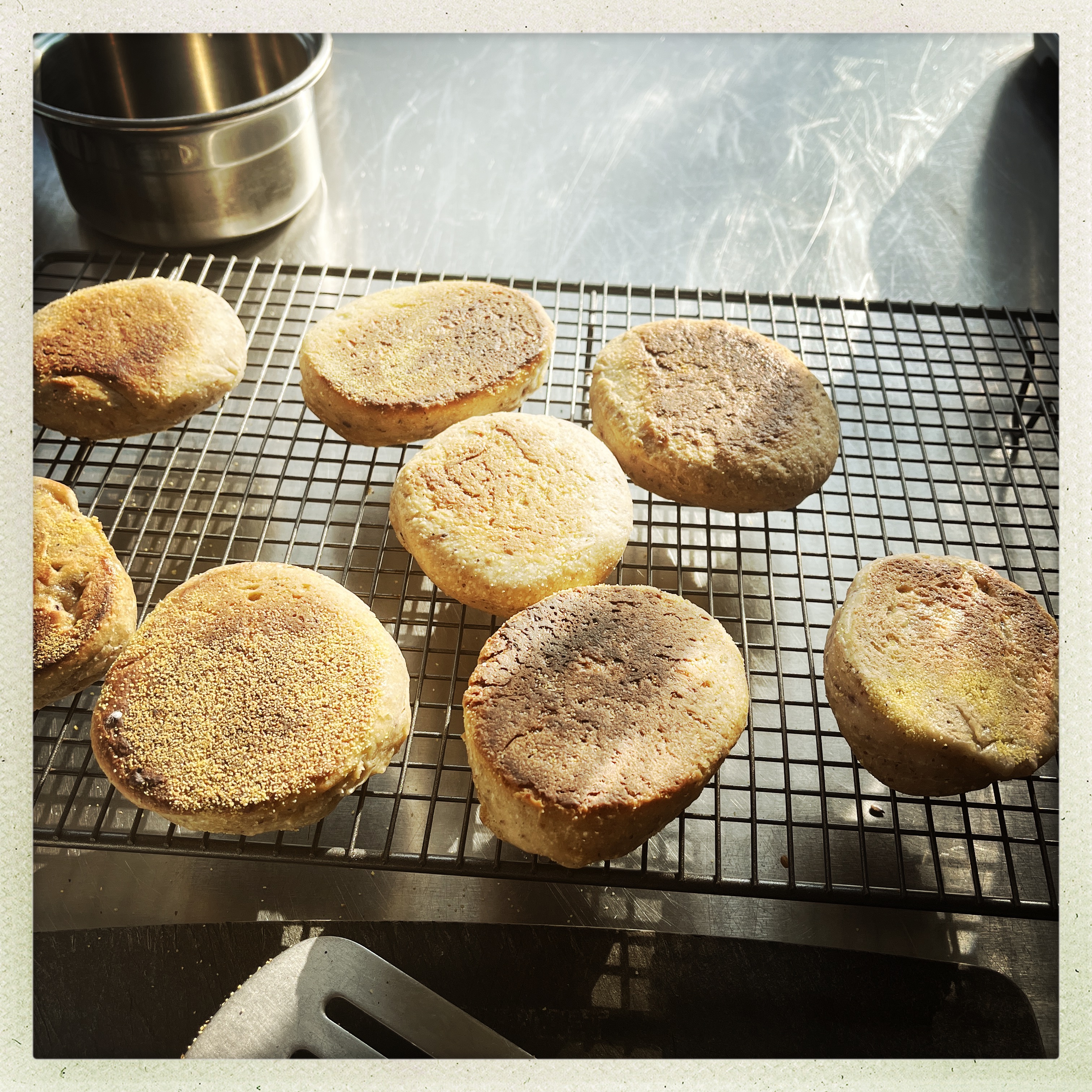
Eventually I worked out mine took about eight minutes each side, on the lowest gas setting. You want them to be gently brown, when done turn over and do the other side for eight minutes. Keep an eye on them, it’s easy for them to burn but be raw in th middle (this is also why you don’t want them to be too thick to start with). Note they do puff up a bit when cooking.

Cook in batches, put on a cooling rack and then eat. With bacon and egg, sausage, cheese and chilli jam, hummus and carrot, whatever you like. They are SO tasty and freeze beautifully. Of course you can also toast them but I had mine fresh.
Pomegranate and rose lemonade

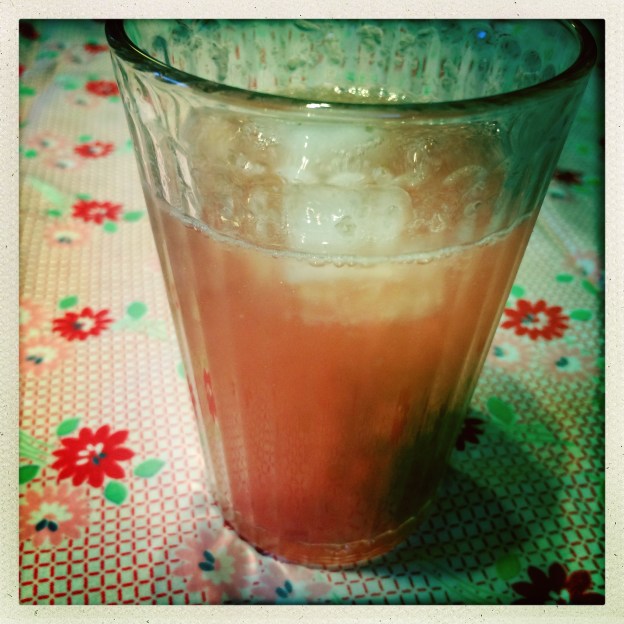
I tried making lemonade a few years ago. It was a faff and nobody really liked it. But recently I tried this, from the Waitrose magazine and it was not only really easy, everyone likes it, it’s luridly (but naturally) pink, and you make a basic syrup which you then dilute. So it makes tons. Perfect for a summer party. It’s not overly sweet, either and I’m sure it works out that it has less sugar in than shop-bought. You can also make this with your children. Supervise the sugar boiling bit of course, but that bit only lasts a minute.

Ingredients

150g caster sugar + 100ml of water

200ml pomegranate juice – make sure you by juice and not the drink which will already have sugar in it

The juice of about 5 lemons – you need 200ml of juice

Pared zest of one lemon

1 teaspoon of rose water

Ice cue and sparkling water to serve. You can dilute with still water too, if you like, but sparkling is more fun, if worse for your teeth and bones…

Method

Put the caster sugar with 100ml of cold water into a medium sized saucepan and heat it gently until the sugar has dissolved. You can stir. Once the sugar has dissolved, bring it to the boil for one minute, then turn it off the heat. Do take care around boiling water/sugar as it’s very hot.

Add the lemon and pomegranate juice and pared lemon zest and leave to cool. Once cool add the rose water and then pour into a clean (supposed to be sterilised, but straight out of the dishwasher will do) bottle/container and store in the fridge. You can keep the pared zest in if you like (I do) but bear in mind the longer it stays in, the more lemony/sour it gets.

To serve, pour 60ml of the syrup into a glass, top up with sparkling/still water, ice cubes and drink!

Bagels – not sourdough

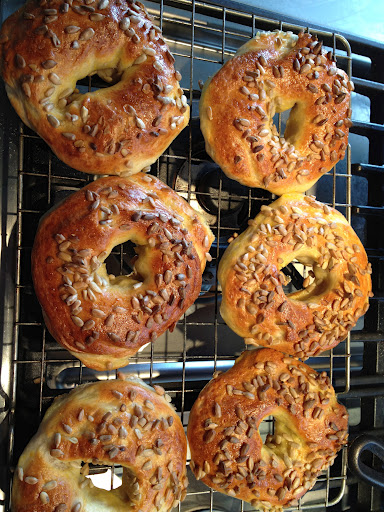
These bagels are not just not sourdough, they’re made in a breadmaker. Nevertheless, here they are, all blousey and almost industrial compared to my artisan sourdough.

But look: they’re delicious. Nothing at all like bought bagels which may look surgically enhanced but are as interesting as dust to eat (although if you remember that fantastic sketch from Little Britain, dust is a valuable diet food…). The only memorable bagel I ever had out was at the Geffrye museum cafe, I had it with smoked salmon and a very fine cappuccino. A memorable little lunch that shows food doesn’t have to be fancy to be remembered.

So, my bagels. I’ve been making them for years and the recipe is from some bread machine book I had but adapted slightly (in what way I can’t remember now but anyway it works which is what matters). They don’t look pretty – ignore that and just enjoy the taste.

These are excellent for children – they just love them. In which case I make them smaller and end up with 12-16.

For eight large bagels you need:

2 teaspoons of dried yeast
450g strong white bread flour
1 1/2 teaspoons of salt – I grind up Maldon sea salt
1 1/2 tablespoons of sugar – I use caster
230ml water, whatever temperature it comes out of the cold tap.

egg or malt wash – see later

baking tray
clean tea towels
saucepan and slotted spoon

I put it into my bread machine, which is a Panasonic bread machine and the only sort I recommend. Your bread machine may ask for the ingredients to go in in a different order but mine asks for the yeast first. You then select the dough cycle. Mine is 2hrs 20mins long. Be careful not to put it on a short dough cycle (mine also has one for pizza which is 45 mins long) as it won’t work.

In the meantime, get a baking tray

When the dough is ready, you divide it up into how many bagels you want. This mixture makes eight regular sized bagels, but I have made more mini ones. I roll each piece of dough between my palms to make a ball. I rest them for a few minutes (in reality you can start on the first one by the time you’ve done the last one if you follow), then roll them into sausage shapes and loop the ends around. This isn’t a regular bagel shape – none of that perfect roundness – but honestly once baked you won’t care. It’s the best way, I’ve found, of keeping the hole intact.

As you shape them, place each one on a lightly oiled baking tray or one with baking parchment on it – make sure they’re not touching or you’ll have a hard job separating them and they might collapse as you manhandle them. When they’re all shaped, leave them to rise, covered with a dry, clean [why do they always say this, does anyone use a dirty one?] tea-towel ** for about 10-30 mins (30mins if your kitchen is cold, 10mins if it’s warm or you put them in a warm place). There’s a lot of yeast in them so don’t overprove.

**Note here: you can – and I regularly do – also put them, at this stage, into a refrigerator overnight for their rise, and then go straight to boiling them. I think this gives them a nicer flavour and chewier texture and it also means you can have freshly baked bagels for breakfast.

Whilst they’re resting and puffing up, put a big saucepan of water onto boil and preheat the oven to 220C/Gas 7. I use a casserole dish pan which is shallow, but wide. You don’t need the water to be deep deep, as the bagels will float, but if you have a wide aperture then you can get more in at once.

When they’re done and the water is on a rolling boil, put the bagels in to the pan. Unless your pan is a huge paella pan, you will have to do them in batches – that’s fine. You boil them for about 30 secs each side (so turn them over with the slotty spoon). Watch them puff up more. Take them out one at a time with the slotted spoon and place on a clean tea towel to drain them and do the next batch til they’re all done.

Either get a clean baking tray and oil it lightly, or wipe off the last one you used and re-oil it. OR if you’re like me and have one of those reusable baking sheets that you used to prove the bagels on, you just now put them back on them. But either way, place the boiled bagels onto the tray. It’s fine if they touch, because once cooked they’re more stable than at the proof stage, so you can tear them apart. But if you can do them so they don’t touch all the better. Mine are always crammed together as that’s the only way you can get them cooked all in one go and at this stage – i.e. proved and boiled – you don’t really want them hanging round waiting to be baked for longer than necessary.

Once the bagels are on the tray, you’re on the home run. Either make an egg wash of beaten egg, or use this fabulous dried malt extract which I mix up with some water and brush on. You can then either cook the bagels plain or scatter on some sesame seeds, pumpkin seeds, sunflower, linseeds etc.

Cook for 12-15 mins (this is in my oven, yours may differ). They’ll be a lovely dark golden brown when they’re done.
These keep for a day or two but are best eaten on the day of being made and toasted thereafter. They freeze really well – just freeze when cooked to have lovely fresh bagels another day!

The shaping is getting better..