Category Archives: Healthy

Peanut butter and date protein bars (with a bit of chocolate on top)

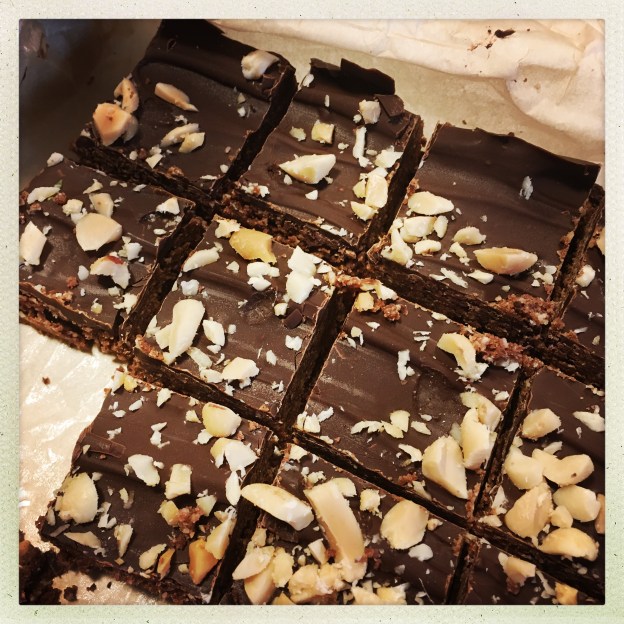
These came about after a desire to find something in the supermarket that was, basically, just dates and a nut butter. Because that is something I crave post-workout. I also wanted something which was as delicious as the protein bars that my ex-trainer used to get me which used to be so tasty I daren’t look at the ingredients, but they were also so filling that, with a glass of water (you should always drink a glass of water with protein bars) they’d often see me onto the next meal.

Then one day, I saw that Donna Hay published a recipe for something called peanut butter choco-coconut protein bars and I adapted them. I now make these regularly and eat them post work out, or if I haven’t got time for a meal (which is rare but does sometimes happen) or if I just fancy a little treat during the week when I try to really watch what I eat (one has to be realistic and these hit the I need a treat button without making me feel like I’ve fallen into the abyss of unhealthy eating). They also don’t make me crash, blood sugar wise and I would now, honestly, have these over pretty much any chocolate bar.

You can experiment with the amount of protein powder you put in – I did and I put more in than Hay originally suggested. But if you do that, I recommend you do so in 10g increments.

This is what you need:

260g fresh Medjool dates. You can use others but these really do make the best bars. If you use dried dates, rehydrate them in boiling water for half an hour before use, then drain them.

25g raw cacao powder

100g salted peanuts and 40g of unsalted, raw, cashews (or use half and half, depends on how big you want the salted peanut hit to be). You can of course use 140g of any nut you want, roasted or raw. A few extra nuts if you want to chop and sprinkle on top

Two tablespoons of peanut butter (or any nut butter)

50g desiccated coconut

35g unflavoured protein powder (I use an organic whey protein powder)

1 teaspoon of vanilla extract

45g cacao nibs

150g dark chocolate, melted

What you need

You can make this in a round cake tin – about 8/9″ would be ideal. I make it in my square cake tin which is 20cm. You might prefer the bars thicker but I like them like this. 20cm square is about as big as you want to go, any bigger and you’ll struggle to have enough chocolate to coat all the top – it just covers it as it is, but is still plenty, if you see what I mean.

Whatever tin you use, line with baking parchment.

Place everything except the cacao nibs and the dark chocolate (which you need to melt, for the topping) in a food processor and blitz til it’s all amalgamated – about one or two minutes. Right at the end, add the cacao nibs and blitz a couple more times.

Press this mixture into your prepared cake tin. Put it in the fridge for at least 30 mins.

Then you melt the chocolate either in the microwave or in a bain marie arrangement, and spread over the top. Add some chopped peanuts (or whatever nuts you are using) on the top if you like. Sometimes I do, sometimes I don’t. As I said, in my 20cm square tin it’s just enough to cover. You don’t really want to up the chocolate, as then it becomes all about the chocolate and turns this from an interesting, not totally nutritionally devoid treat into something else…

Refrigerate until you need them, which will be soon. Cut into whatever shape you like. I do long thin bars, little squares or if I want to pack it in my bag for a meal replacement (which I would only do in emergencies) or a good snack later, I cut it into a bar shape and take it in my bag wrapped in foil and then eat it feeling really smug and happy.

They keep for at least a week in my house and have never been around longer than that.


Cacao, banana and walnut bars: good for breakfast or post work out.

To my mind, no-one does ‘healthy but delicious snacks’ better than Donna Hay. I’m really not interested in mixing together linseeds and dates and other such stuff if the result is something you might have found in a health food shop circa 1974.

What I love about Hay and her recipes, is that there are no really contrived ingredients, no-one is pretending they are a substitute for broccoli, but if you want something a bit better than a sugar-laden cereal bar, she comes up with the goods.

I adapted these because I just didn’t agree with the number of dates she originally put in (200g) and although I think I have a sweet tooth, it’s evidently not that sweet.

Anyway. I cut these into squares. They freeze brilliantly. They are tasty and nutritious and the sugar hit from the dates and bananas is balanced by the cashews.  I eat them when I want something a bit chocolatey and quick and they have also served as an emergency lunch – with a green smoothie – when I’ve had no time and had to go straight to an interview. I know this makes me sound really virtuous and you know what? I am during the week. At the weekend I can eat whatever I damn well please.

You need

225g cashews, raw (although might try them anon roasted)

120g dessicated coconut

300g ripe bananas (about three)

150g fresh dates, pitted

2 teaspoons of vanilla extract

35g raw cacao powder

half a teaspoon of bicarbonate of soda

2 tablespoons of cacao nibs

50g chopped walnuts

Method

Oven to 180C. Line a square 20cm tin with baking parchment.

Place everything, save for the walnuts and the cacao nibs, into a food processor and blitz the buggery out of it – Hay recommends 5 minutes I can’t remember how long I did it for. At the end, add half the cacao nibs and pulse a few times.

Shove the mixture into the tin, pressing down with your hands or the back of a spoon and sprinkle on top the remaining cacao nibs and chopped walnuts.

Cook for 25 minutes or thereabouts. Cool, the refrigerate and cut into required shape. Keeps for about a week in the fridge but as I said, I keep half, freeze half and they froze beautifully.

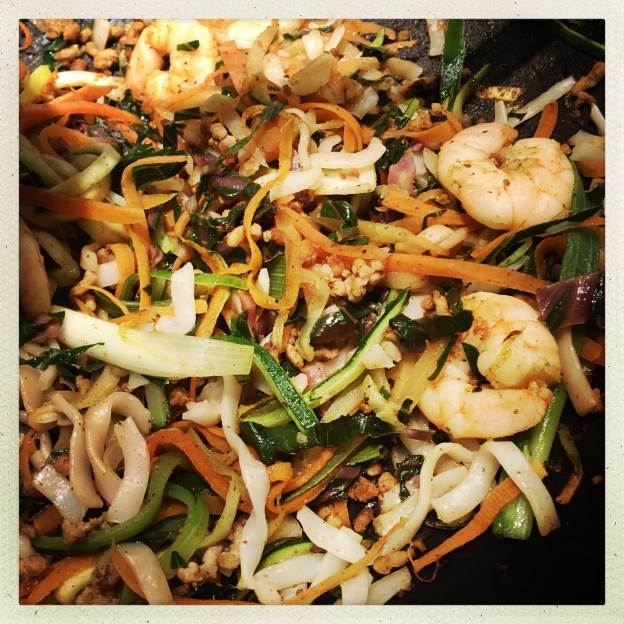
Pork and prawn noodle stirfry with lots of veg

This dish is a rare thing in our house, something which is healthy and which everyone likes. Granted, my youngest picks out the prawns, but otherwise we all eat this and it’s insane the amount of veg we seem to consume without complaining.

You can make this with any sort of noodle – cooked separately and added at the latter stages. If you use soba – which I do, sometimes – cook them carefully and rinse in cold water before adding, as otherwise they stick together. I do have ‘straight to wok’ noodles in the cupboard for this dish as it makes the whole thing ludicruously easy. Other than the chopping – which you could do in advance.

It’s adapted from a Delicious magazine recipe. I add more veg and omit the chillies.

You’ll need

Two teaspoons of olive oil

300g of free range, good pork mince

Three quarters of a teaspoon of Chinese five spice powder

Two and a half teaspoons of curry powder

180g (I confess here I just tend to add whatever the packet contains) prawns – if raw cook them for a bit longer, until pink. If already cooked add at the end as stipulated.

About 150g carrots which I julienne, but you can slice thinly

(a red chilli if you want to use it)

300g or thereabouts of ready cooked or straight to wok noodles

250g pak choi or other green veg – I find very thinly sliced button hole kale is really good here

2 courgettes, julienned or thinly sliced

Four spring onions, sliced thinly

One and a half tablespoons of soy sauce

This is what you do

Have everything ready for one and don’t make the mistake I did first time round…

Heat the oil in a wok on high, cook the pork mince for about 2-3 minutes, until browned. Now turn the heat down and add the spices, stir fry and cook for a couple more minutes.

Now add the veg in the order it takes to cook. So I add the green veg first, cook for a couple of minutes with the prawns if raw, then the carrots, courgettes and finally the prawns if they are already cooked. (Add the chilli here if you are using it, it should be thinly sliced.) Stir fry everything for a minute or two.

Then add the ready cooked noodles with two tablespons of water and the spring onions and just before you serve  – which is immediately – you add the soy sauce.

This feeds four big eaters, slightly more if you are more restrained about it.


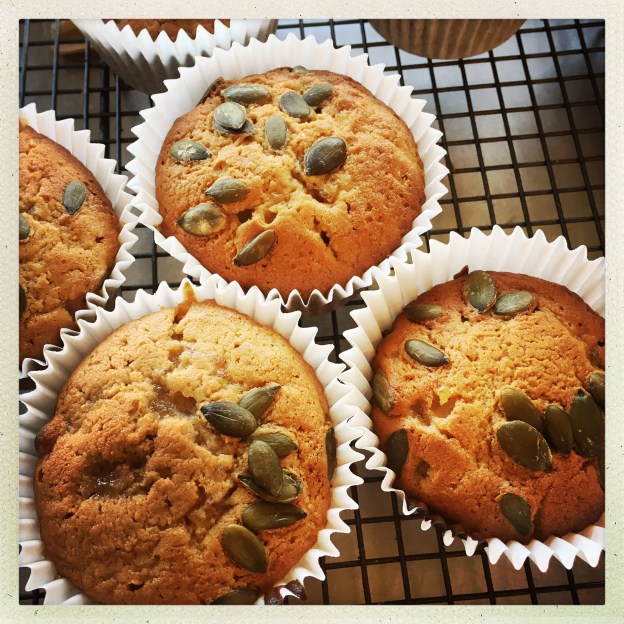
Chestnut marmalade muffins (gluten, wheat, dairy free but don’t let any of that put you off)

These are adapted from a Hugh Fearnley-Whittingstall recipe (from his book Light & Easy). The original calls for 75g coconut oil, which I just find too much, and 75g runny honey, which I’ve eased back on just ever so slightly. His recipe also says cook for 25 mins, but mine are done at 17.

It calls for chestnut flour – which isn’t cheap, nor madly readily available. But is delicious and so filling. Don’t be tempted to buy it in bulk, it doesn’t keep for very long.

And you really need an electric whisker unless your arms are super strong. If they are, all respect to you.

These are just so delicious though, and gluten-free if that’s important to you. I love anything to do with chestnuts as it reminds me of my Pa.

Note these make ten. I’ve been making these for a few years now and every time, with my 12-bun tray, it catches me out.

125g chestnut flour

A pinch of salt

2 teaspoons of baking powder

125g marmalade

2 large eggs

70g runny honey

half a teaspoon of vanilla extract

50g coconut oil, melted and cooled.

Pumpkin seeds to sprinkle.


Preheat the oven to 170. Line a muffin tin with…muffin cases

Combine the flour, salt and baking powder and set aside.

In a food mixer with whisk attachment, put the eggs, honey and vanilla and whisk for, frankly, ages. But about eight minutes. Until the mixture is like a thick mousse and the beaters leave trails when you lift them out.

Now gently and slowly, with the mixer running, spoon in the flour mixture and when all is incorporated whisk again for a few minutes. The mixture will go down to a batter-type one. When done, trickle in the melted coconut oil with a tablespoon of water and whisk for half a minute more. Take off from the mixer and just with a spoon fold in the marmalade.

Spoon the batter into the TEN muffin cases. They won’t come up all the way, that’s how it should be, about 2/3 full. Sprinkle on the pumpkin seeds and bake for  about 20 mins – check after 15. They should be golden and bounce back when you touch them. Depends on your oven of course.

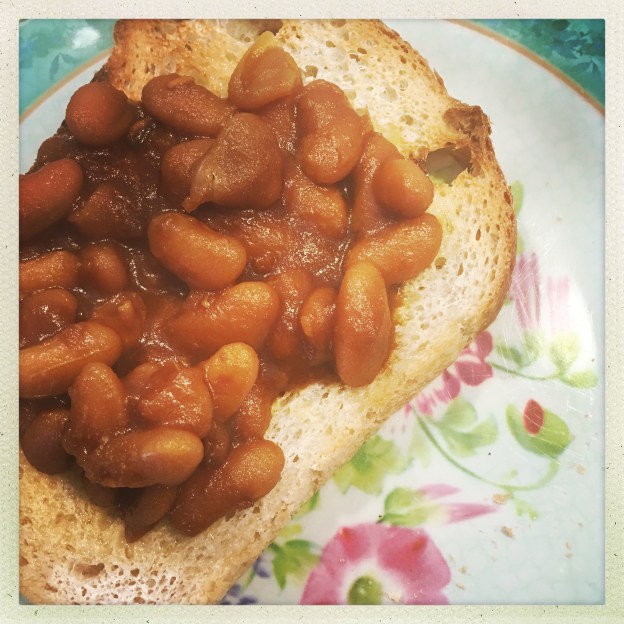
Home made baked beans

I’m not overly a fan of baked beans, but I do love these. Please note the first recipe is for dried beans, which are much cheaper using slow/pressure cooker. Below that is a recipe for ready-cooked beans. You can use haricot or cannellini or small white beans.

This is what you need

1 onion, sliced

1 tablespoon of olive oil

2 cloves of garlic, finely chopped or crushed

500g small white beans, rinsed and picked over (I’m not sure what for, mine were all fine).

1 litre of water

125ml strong black coffee (I used a big tablespoon of instant espresso powder which I keep for making coffee cakes, dissolved in 125ml of hot water)

250ml passata

55g-110g dark brown sugar (100g is what the recipe calls for but we all find it a bit sweet now so do experiment. I’ve made it with half this and will probably reduce further)

1 tablespoon of English mustard

1 tablespoon of black treacle

half a teaspoon of Tabasco sauce

1 and a half teaspoons of salt

2 tablespoons of white or cider vinegar (for the very end, I have left it out and tbh it was fine)

What you do

If you have a pressure/slow cooker which allows you to saute, put this function on, heat up the oil then add the onion and cook until soft – about five mins. If yours doesn’t have this function do this bit on the stove top in a frying pan/saucepan.

When soft, add the garlic and cook for a minute.

Now, either add the rest of the ingredients, minus the vinegar to the pot of your pressure/slow cooker, or now tip the onions/garlic into your pressure/slow cooker and then add the rest of the ingredients (minus the vinegar).

Select pressure cook 80kPa, natural steam release and cook for 35-40 mins or select slow cooker mode for 10-12 hours on low.

When time is up, add the vinegar and you need to reduce the sauce right down until it’s syrupy – either in the pressure/slow cooker if you have a reduce function or decant into a large sauce pan and do it the traditional way. Mine took 20 mins.

Update January 2021. I have since made these with a squirt of Liquid Smoke from Sous Chef which was amazing. I’ve upped the time to 35-40 mins as I really don’t think 30-35 was enough time!

Making using ready cooked beans

It’s not easy to find dried beans where I live so I now make this recipe using these beans. They are not cheap but it’s what I use and it makes a vat of baked beans and the beans are very fine.

Jar of 700g of ready cooked white beans (I use these), use all the liquer in the jar as well. You can of course use beans in tins too!

1 onion, sliced

1 tablespoon of olive oil

2 cloves of garlic, finely chopped or crushed

100ml strong black coffee (I used a big tablespoon of instant espresso powder which I keep for making coffee cakes, dissolved in 125ml of hot water)

250ml passata

80g dark brown sugar (you can alter to taste this is what I use)

1 tablespoon of English mustard

1 tablespoon of black treacle

half a teaspoon of Tabasco sauce

1 and a half teaspoons of salt

1.5 tablespoon of white or cider vinegar (you put this in at the very end, but I often forget it and it’s really fine!)

Use a slow cooker or a regular big pot on the hob. Gently soften the onion in the olive oil, then add the garlic, then tip everything else in – not the vinegar – including all the thick liquid that comes with your beans.  Give everything a good stir and either put in the slow cooker on low for 2 hrs or so or on a low hob. I’m sure they’d be fine after an hour, too. Reduce if you like it really thick but I find this is perfect. 

Here’s a 2024 picture, served with home made seeded sourdough. 


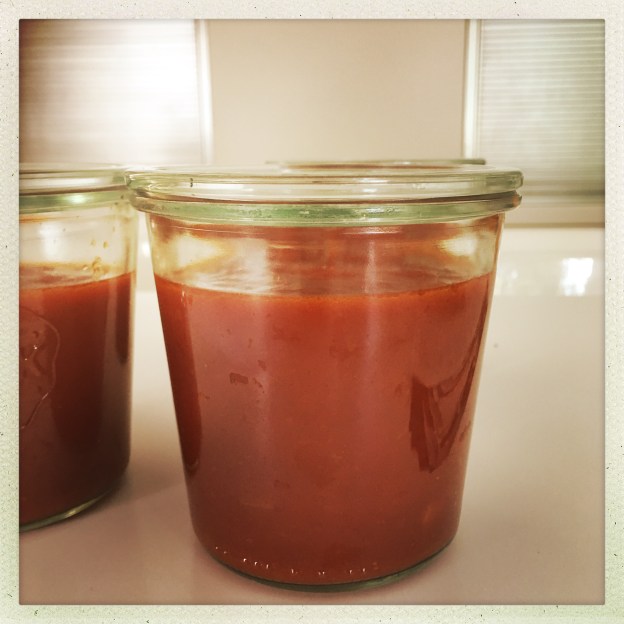
The very best tomato sauce for pasta.

In Italy, August is the month of  ‘i pomodori’. Where they make pasta sauce for the whole coming year. The tomatoes are boiled, ‘passati’ (literally ‘passed’ through a sieve), reboiled and bottled. There is a lovely video here which shows you.

Because it’s quite a job, it tends to be done with everyone pitching in. It’s very low-tech (or used to be). Because the raw materials are the sweetest tomatoes the salsa you get (or passata) is incredible.

I never hoped to reproduce that in the UK, but my mother makes a very keen contender in her kitchen, in central London. She has even made it in my kitchen. I have tried to replicate it, I have watched her do it. I have bought the exact same ingredients as her, but it’s never the same.

If I have frozen salsa, and I serve it up on some pasta at a later date, my children can tell, immediately, if it’s ‘Nonna’s salsa’ or mine. They say her secret ingredient is salt, and love. And it’s true I tend to under salt things. For this I didn’t and went large with the salt.

It was a secret shame of mine, that I couldn’t make salsa as good as hers or any of my Italian relatives. Not because there is any shame in it really, but because, well, I cook a lot and you’d think this simple thing would not be beyond me. I tried cooking with plum peeled tinned tomatoes, chopped tomatoes,  fresh tomatoes, roasted tomatoes (this does work very well but is another layer of work), passata, all of the above and added tomato puree to it…but nothing came close. It all tasted too ‘new’ and didn’t have that complex taste, it always had a ridge of acidity, and none of the thickness of my family’s salsa.

“You needa to cooka it for a long time,” my Ma says – to take the acid out of the tomatoes. But whenever I tried I burnt it.

This year, I decided I really needed to step up. My mum and all the female relatives who hold the secret to good salsa are all…getting on.

So this is what I did. It’s so simple I am embarrassed I never tried it before and you will be disappointed there is no real secret recipe. Well there is. The secret is it’s really simple.

Warning, you really need a slow cooker and I think this goes some way to compensate for the fact that you are not using super red, sweet tomatoes from southern Italy. I have this one and it is a wonderful bit of kit which I use regularly and thoroughly recommend.

You take:

A jar of passata, I use Cirio’s Passata Rustica, 680g

One onion

A big pinch of sea salt

A clove or two of garlic if you like, chopped

Some very good olive oil (the better the better) – don’t skimp, this gives the sauce flavour

That’s it. Don’t add water or anything else. You finely chop the onion and fry it in the olive oil. I do this in my slow cooker as it has a saute function. When soft, you add the garlic if using and cook for a minute or so. It is at this point I add the salt but you can add it at any point, even at the very end, but give it a good stir through.

If you can’t saute in your slow cooker, and have been doing this on the stove top in a pan, you now add the onion, garlic and any remaining oil to your slow cooker. Then the passata.

Put down the lid and you cook it in the slow cooker, on low, for hours. At least six but 12 if you can. Then you take it out, cool it, use it all at once or store it in glass jars in the fridge (it keeps for a good few days) or freezer.

You can easily double/triple etc this recipe so you can make a batch up every few weeks and store it in the freezer so you are always good to go. And you will always have super-wonderful home made salsa for your pasta or pizza or whatever.

You can add herbs later but honestly, you just don’t need to. Yesterday I did as above, but cut up some sausages and stuck them in (lightly sauted first but you don’t need to) – you could also put meatballs in. I cooked it overnight for 12 hours and it was superb on pasta for lunch.


Leek and butter bean soup with crispy kale and bacon.

This is a lovely soup. What I also love about it is that you can leave the bacon off and it instantly becomes veggie/vegan. It’s stuffed full of probiotic-friendly leeks. It’s from the BBC Good Food magazine.

You need

4 tsp olive oil

500g leeks sliced

4 thyme sprigs, leaves picked

2 x 400g cans butter beans

500ml vegetable stock (or chicken if you like)

2 tsp wholegrain mustard

half a small packet of flat leaf parsley

3 rashers of streaky bacon

40g chopped kale, stems removed

25g hazelnuts, roughly chopped

You do

Heat 1 tablespoon of oil in a large saucepan, add the leeks, thyme and seasoning and  cover and cook over a low heat for 15 mins until soft, adding a splash of water if need be – don’t let the leeks stick.

Add the butter beans with the liquid from the cans, the stock and mustard. Bring to the boil and simmer for 3-4 mins until hot. Blend with a stick blender in the pan (or put in a blender). Stir through parsley, check seasoning.

Put bacon in a large frying pan, medium heat. Cook until crispy, set aside to cool. Add the remaining 1 tsp oil to the pan and tip in the kale and hazelnuts. Cook for a few minutes, stirring under the kale is wilted and crisping at the edge and the nuts toasted. Cut the bacon into small pieces and stir into the kale/nuts.

Reheat the soup, adding a bit of water if too thick (or have both operations going on at once) and sprinkle the bacon/nuts/kale on top.

Apricot and cinnamon breakfast muffins.

Of course, you can eat these beyond breakfast time. I made them because I was told I am borderline anaemic the other day, and apricots are a good source of iron. Not as good as a rare-cooked steak served with green leafy veg and washed down with a Guinness and an orange juice, but possibly easier to carry in your bag. These are very filling, not particularly sweet and keep me going if I can’t be bothered to eat lunch. Well, until about 4pm. I love how chewy the top apricot goes.

This recipe is from the free little newspaper Waitrose provides each week.

It makes 12 and you need to allow a little time for soaking the apricots.

You need:

250g dried apricots, I prefer the organic variety here as they have less stuff on them, it does mean they are quite dark though and not all zesty bright.

1 large orange, juice and zest

275g self raising flour (I used some wholemeal too)

2tsp baking powder

2tsp cinnamon

75g porridge oats, plus a bit extra for sprinkling

150g caster sugar

285ml buttermilk or kefir milk if you make it

2 medium eggs

50g butter, melted

3 tablespoons of apricot preserve

You also need a muffin tin lined with muffin cases.

Method

Reserve 12 of the apricots. Roughly chop the rest and put them to soak in the orange juice and zest. I do this the night before, but 30 mins is fine.

Preheat the oven to 200C. Mix together the flour, baking powder, cinnamon, oats and sugar. In a separate large bowl mix together the buttermilk, eggs and butter and add the soaked apricots sand orange zest/juice. Now add the dry ingredients and mix until must blended.

Divide amongst the paper cases – you’ll find the mixture is quite up to the top but don’t worry as it doesn’t rise much (despite the self raising flour AND baking powder). If you like use those fancy tulip-shaped muffin cases that look like someone artfully folded some baking paper, the ones that cost about £20 for ten (exaggeration).

Place a whole apricot atop each muffin and sprinkle with some porridge oats (this makes the muffins look good!). Cook in the oven for 18-20 mins. When still warm, mix the apricot jam with a tiny bit of boiling water and brush over the top for a lovely glaze. I wish I could tell you my children loved these. They didn’t. But my partner did!


Polenta ‘pizza’ with cherry tomatoes and some sort of cheesy topping.

This is not, of course, pizza. But it is delicious.

Polenta featured large in my father’s home cuisine – northern Italy. But it didn’t feature in my mum’s – southern Italy. And because my mum was the cook when we were growing up, I feel I can safely say we never had polenta. I would hear about it, but I could not get my head around what it was. Sometimes it was a powder, then it was solid, then like mash.

When I got older I tried making polenta and it was a disaster. Since then things have improved and it features in my home cuisine and I always find it comforting.

This recipe is from Delicious magazine. I like that the making of the polenta doesn’t involve loads of butter and parmesan – sometimes you want that, but not all the time. Of course you can vary the topping to have what you want on it. Because my children aren’t so keen on dolcelatte I bought some brie with truffles in it as a treat.

Anyway this is just delicious. It easily fed four of us and I had the left overs for lunch the next day (heat up for a few minutes in a dry frying pan, if you can cover it to catch the steam) and it was wonderful.

2 courgettes, sliced thinly (I used a potato peeler)

200g or so of cherry tomatoes, halve them

Olive oil for drizzling

600ml of milk

400 ml of chicken stock, either your own or made from a cube

250g instant polenta

50g cheddar, grated (or use some other cheese it’s okay)

80ml of passata

80g of dolcelatte or brie, thinly sliced

a handful of basil leaves to scatter

Method

Heat the oven to 200C. Spread the courgettes and tomatoes over a large baking tin, drizzle with the oil, season with salt and peper and roast for 10 minutes. This bit is important as you won’t be cooking the finished pizza for long enough to get the courgettes and tomatoes sufficiently roasted. When done set aside but leave the oven on.

Meanwhile, put the milk and stock in a large sauce pan and bring to the boil. Put the polenta in a jug and when the liquid boils, pour the polenta in a stream and stir continuously with a wooden spoon or large whisk. You want the mixture to thicken and bubble on the surface, like larva. Now turn down the heat and stir in the cheddar and season well.

Pour the polenta mixture onto a baking sheet (I find some baking parchment helps but is not essential), spread out thinly to a circular or rectangular shape. Spread the passata over – it will be very thin. Top with the roasted courgettes/tomatoes and the thin slices of cheese. Bake for 15-20 minutes until golden. Scatter basil leaves atop.

You can serve this with a salad but I like it on its own, with one fork, and my feet up on the sofa.

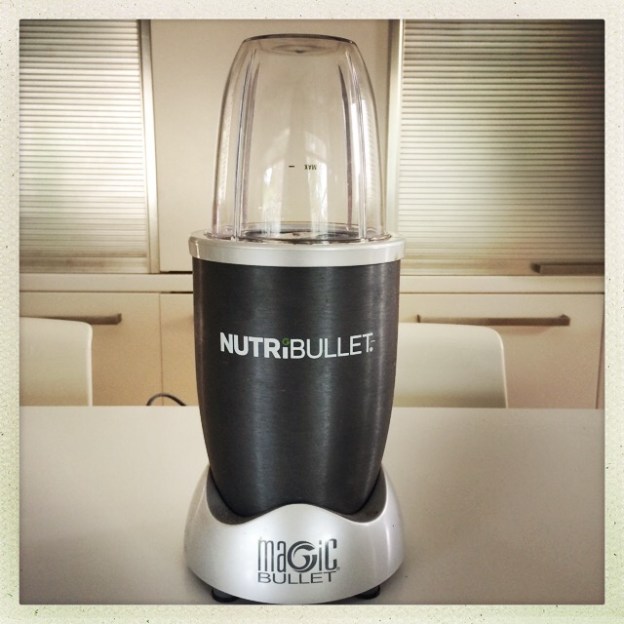
The Nutribullet

Ours is not a house short on gadgets. This is due to many things. We cook and bake a lot. My partner and I were fully formed adults when we joined households and we both cook and bake a lot, as I just said, and we had our own homes. So when we threw our lot in together, we discovered we now had four sieves, 12 pans that all did the same thing, 25 wooden spoons etc.

We have a juicer, a blender, a grinder (two actually), two ice cream machines, a food processor, a food mixer, a dehydrator, a stick blender with enough attachments to build a robot man…you get the idea. And we/I use all of them. Regularly.

So did I need a Nutribullet?

Strictly speaking no. There’s lots of talk about how it busts open the cells in your food. Sounds fabulous! But that’s what your teeth do and also, that’s what any good blender will do.

And make no mistake, the Nutribullet is a blender. That’s it.

But this is why it’s good and this is why I’ve used mine every day since I got it at Christmas.

The foot print is tiny (14cm) compared to that of any other blender that I know of. So it sits on the work surface and you’ll use it.

It’s unbelievably simple to clean. You just rinse the blade part under hot water and put it on the draining board and stick the cup part in the dishwasher if you have one, if not that is so easy to clean, too. If you do this immediately after you’ve made your smoothie you don’t need to do anything else. I have a toothbrush I use to clean any bits that get stuck under the blades, occasionally, but that’s it. No seals to take off like on my other blender (a 1000W machine).

And those really are the two reasons why it’s great. It’s easy to use and easy to clean. What more do you want? It comes with another blade – a grinder – which I use to make things like oat flour (just chuck in porridge oats or oatmeal). The Nutribullet comes in two versions, a 600W one, which is what I have, and a 900W one which costs 50% more.

You get two blades and various container ‘cups’  (the large one is the one I use most) in the smaller version, three blades and various other gizmos in the larger version. I’m sure you can decide which one, if either, is right for you. It costs about £100 for the 600W version, £150 for the other one.

I got mine (with my press discount of 20% which I’ve had for 20 years) from Lakeland which offers a life time guarantee on everything (or at least it used to but this now seems to have disappeared from its website so I’ve asked them to clarify) *.

I use it every day to make smoothies of varying degrees of “Gwyneth-ness” and my children have one every morning (God we are so GOOD). If you need some smoothie inspiration see my drop down menu on the right for ‘smoothies’.

*And Lakeland did:

“Thank you for getting in touch to ask about our guarantee.

We’ve recently changed the wording on our guarantee but it’s still the same Lakeland ethos.

Our guarantee states ‘We’re only happy when you’re happy’. So if you’re not delighted with your purchase or our service, please tell us so that we can put it right.

So, if at any time, you feel the product hasn’t given you value for money or develops a fault we’ll be happy to help.”