Category Archives: Presents

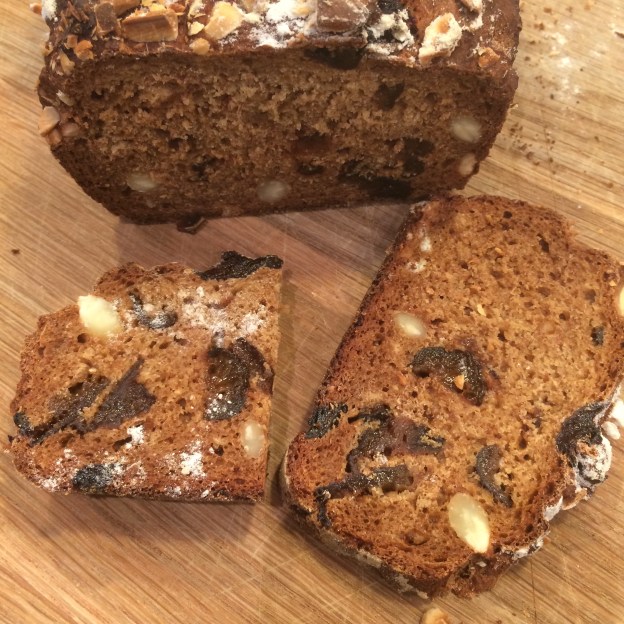
Prune and almond loaf

This is a magnificent bread recipe, adapted from the equally magnificent Donna Hay magazine that was out this summer.

It’s fantastic when you need something bready, fast, and it is SO delicious. No yeast or proving is necessary. And come on it’s got nuts and prunes in! Good for you..

I’m not going to pretend some of the ingredients are ‘store cupboard’ but aside from the buttermilk, nothing will go off quickly so if you get them in you’ll have something to rustle up over the Christmas period if you (gasp) run out of food, or even if you need to bring something to someone’s house as a little present.

This loaf, with some nice cheeses and a cheese humidor, would make an excellent gift for a cheese-loving friend. But it’s also good with pate.

Ingredients

125g plain flour (not bread flour)

125g wholemeal plain flour (not bread flour)

1.5 teaspoons of bicarbonate of soda

half a teaspoon of salt

100g whole blanched almonds (not the end of the world if you have them with their skins on) – you could also, if you wanted to, use other nuts such as walnuts or hazelnuts.

85g pitted prunes, chopped up

40g maple syrup – this really adds something to it so try not to substitute it for something else

190g buttermilk (you can use kefir if you make it, instead)

65ml of sweet sherry (one of my readers has said she uses very strong Earl Grey tea for this)

Method

Preheat the oven to 200C. Lightly grease and flour a 2lb loaf tin. (I use this one.) Place the flours, bicarb, salt, almonds* and prunes into a bowl and mix up. Make a well in the middle and add the maple syrup, buttermilk and sherry. You will have a very sticky dough, slop it into the tin, whack it in the oven for about 35-40mins and that’s it. Leave to cool for five mins, turn it out, let it cool and then eat it with joy.

(*The astute amongst you may notice there are nuts on top of my loaf. This is what the original recipe stipulated – that you reserve half the nuts and scatter them atop the dough before it goes into the oven. I’m not sure I would do this again as some of the nuts got a bit too brown, but see how you feel/what sort of effect you want.)


One giant Twix (tart). Gluten, dairy, sugar and fat full

I like this tart for bringing to people as a present. I’ve yet to meet a grown up, or child, no matter how posh or spoiled and used to presents, who doesn’t love this (unless of course you hate Twixes). But it also makes a good dessert when you really can’t decide what to make to please everyone. And just a small slice is really enough.

I can’t overstate this. It is pancreas-bustingly sweet. A bit too sweet for me if truth be told, it sets my teeth on edge. I want to play around with the recipe next time to try to resolve this. That said, a small slice (or even cube) is a treat. But, like the Wagon Wheels I made last year which set off a sort of crazy reaction, proceed with caution

The caramel making is a faff, I won’t lie. A thermometer is a must (I can hear you sighing). I have very similar to  these, which is brilliant. You can use it to probe meat with, take the temperature of a child, use it to make confectionery – it’s great because you just have a probe sticking into the hot caramel, with the actual body of the thermometer somewhere out of the way. I stick mine above where I’m working, to the extractor fan hood (it has a magnetic back). Obviously you do need to remember to clean the probe between child and caramel.

Anyway, this recipe was from Delicious magazine some time ago. I made a fundamental change to the timing of the caramel/temperature, because the first time I made it, taking it up to 115C meant the bottom of the caramel burned, so you had burnt/darker bits. It didn’t affect the taste, but it was annoying. I now stop the last bit of the caramel making at 111C – precision is all in caramel making – and it’s fine: chewy, golden and just before it starts to burn. I also changed the way you make the chocolate ganache.

This is what you need:

For the base

225g shortcake biscuits

75g unsalted butter, melted

For the caramel

125ml double cream

90ml condensed milk

125ml golden syrup

110g caster sugar

30g unsalted butter, cut into small pieces

For the chocolate topping

200g good quality milk chocolate (I use Green and Black’s Cooking chocolate at 37% cocoa solids)

75ml double cream

Small knob of butter


What you do:

Heat the oven to 170C. Put the biscuits and melted butter in a food processor, then pulse until all amalgamated. Line a loose bottomed tart tin, mine was 35cm x 12cm the biscuit crumbs. You can lightly oil the tin first, if you are of a nervous disposition.

Press the crumbs down and up the sides,  chill for ten minutes then cook it for 15 mins. Let it cool, then put back in the fridge. You’re done with the oven now, so switch it off.

To make the caramel, put the 125ml of double cream in a sauce pan with the condensed milk and heat up very slowly. I do this at the same time I’m making the caramel, cos I’m ‘ard and can multi task. If you do it separately it’s important it’s kept warm-ish as otherwise, if you introduce it to the caramel – such as you will later – cold, it might split.

Now put the golden syrup and caster sugar in a separate pan with 30ml of cold water, trying hard not to think of the glycaemic index of these two ingredients combined. Heat it gently until the sugar melts, stick the thermometer in, bring to the boil and then bring down to a simmer until the thermometer reads 120C. This may take a while (5-10mins). When making caramel, the temperature rises, then seems to stall, then rises again, then leaps. Be careful here, a caramel solution at 120C is very, very hot. Don’t have small children wondering round. Don’t leave it unattended.

When it reaches 120C, take it off the heat and stir in the chopped butter, then add the still warm cream/condensed milk mixture. Stir stir stir, (take out the tart base from the fridge in its tin), and put the caramel mixture back on the heat and bring back to the boil – this will take a while – until the mixture is at 111C. When it reaches this temperature, pour the caramel into the biscuit crumb lined tray and leave to cool completely. When it’s cool, put in the fridge.

Then, make the chocolate ganache: put a bowl atop a saucepan of simmering water. In this bowl put the milk chocolate, the 75ml of double cream and the knob of butter. Stir until everything has melted. This is the chocolate ganache. You now pour this over the caramel filled tart and as it cools, make wavy patterns, just, you know because.

Leave to set. Keep in fridge. Eat slowly and in small portions. No-one wants diabetes for Christmas.

The Suffolk Flower Farm

Yesterday I went to the Lavenham Farmer’s Market and had a completely wonderful time, as usual. I swear they must pipe oxytocin through the hall there.

As I walked in, I saw a woman walk out with a small posy of really lovely flowers. And I clocked them and thought “wow”. And as soon as I walked in I saw this amazing stand of flowers saying “grown not flown” with the most beautiful garden flowers in bunches, in pots. And, after I’d stared at them all for a while,  I bought a small posy of flowers for £5 (see pic above).

They are lovely and if you live in Newmarket, Sudbury, Cambridge, Bury St Edmunds or Haverhill you can have lovely locally-grown flowers delivered. The company – the Suffolk Flower Farm – also does special occasions and farmer’s markets where you can pick up smaller bunches.

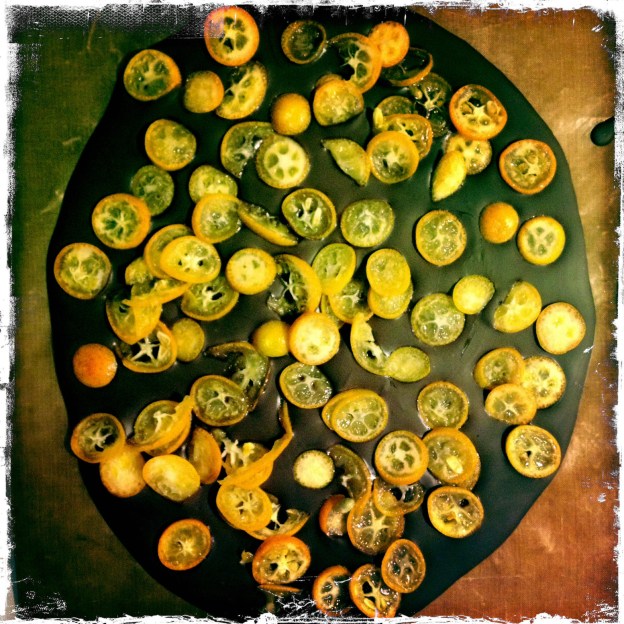
A last minute Christmas present idea: Kumquat chocolate slab


This is a really easy, delicious thing to make. Yes you do need a) chocolate and b) kumquats in the house to make this exact one, but the idea is that with a bit of imagination, you have a really easy, original gift to make for someone at the last minute. Perhaps you’ve been invited round to someone’s house and want to take a little gift.

I used kumquats, because that’s what I saw in Martha Stewart Living. This decision also resulted in perhaps my most middle class quest of the year: going in search of them (Sainsbury’s had them). It was worth it because kumquats lend themselves really beautifully to this idea and weren’t madly expensive. A packet that would have made this twice over cost £1.50. Plus they look festive, colourful and this was absolutely delicious: like a grown up, not too sickly, Terry’s Chocolate Orange.

But if you don’t have kumquats, or don’t like them you can put anything on top of the chocolate: slices of stem ginger, roasted hazelnuts, sliced pistachios, what ever takes your fancy, you get the idea.

For this I used a mixture of Green and Black’s milk chocolate and Waitrose Continental 70% cocoa chocolate, because I wanted it to be quite creamy. You want the slab to ‘snap’ when you serve it so don’t go too milky chocolatey, even if you want to serve it to children. To make it really grown up and ‘snappy’, make it out of all 70% cocoa chocolate. I used about 250g of chocolate in total to make this slab, which fed sixteen at after lunch coffee.

Melt in a bowl, over boiling water, then pour onto baking parchment on a baking tray. Scatter over your topping of choice. Put in fridge to set. If giving as a present – and not serving at your own dinner party – then break it up and put it in cellophane bag or if you have food-grade cellophane wrap (naturally, ahem, I do) then you can wrap the whole thing in one piece.

That’s it. So easy and looks so impressive.

Stollen

IMG_4263

Stollen was, like panettone and panforte, one of those things that appeared at Christmas that really wasn’t very nice. Of course, that was back in the days before I realised you could make, almost, anything yourself (I’ve still not been brave enough to try panettone, because to make it properly takes three days and involves hanging it upside down).

My friend Lisa Durbin, posted some pictures of the stollen she was making and they looked so delicious, I asked and she passed on her recipe. And yesterday, really quite late in the day, I decided to give it a go.

I have a few notes to add, which is that the marzipan stipulated seemed a bit mean to me to begin with, so for one of the loaves I doubled the amount from 50g for each loaf to 100g. As I was doing this, my partner walked into the kitchen and he reminded me that, actually, with marzipan in cooking more is not necessarily a good thing. So, suitably chastened, I went back to Lisa’s recommendation of 50g for each loaf for the others. I haven’t tasted the turbo marzipan one yet but the one with ‘just’ 50g held out his theory and Lisa’s recipe.

After making this stollen, ahem, a couple of times, I’ve settled on 75g per stollen as perfect for me.

I found 45mins too long in my oven. I cooked mine for 25 mins.

This stollen really doesn’t keep. If you don’t freeze it EAT IT on day of purchase. It won’t be so good again after that.

Image 3

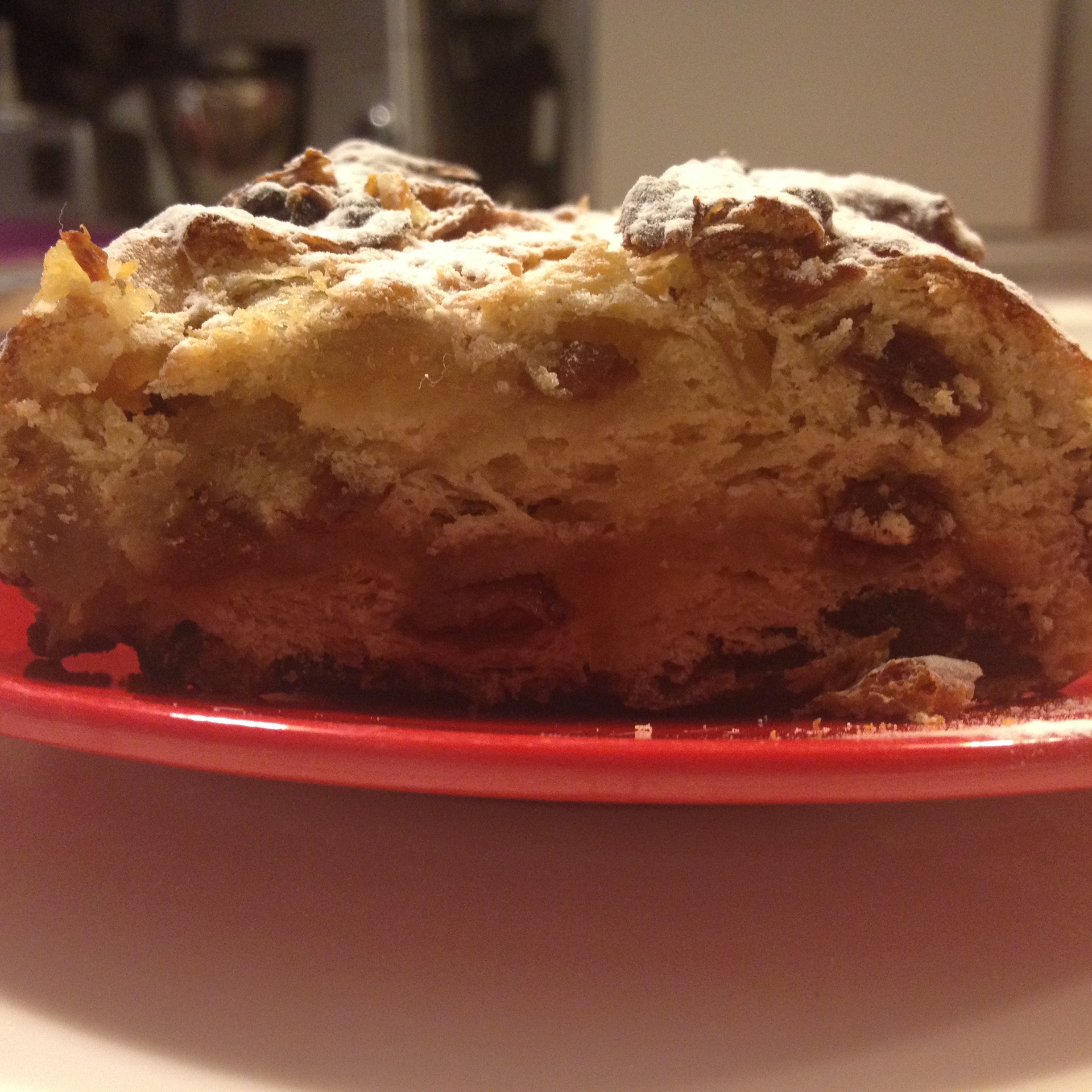
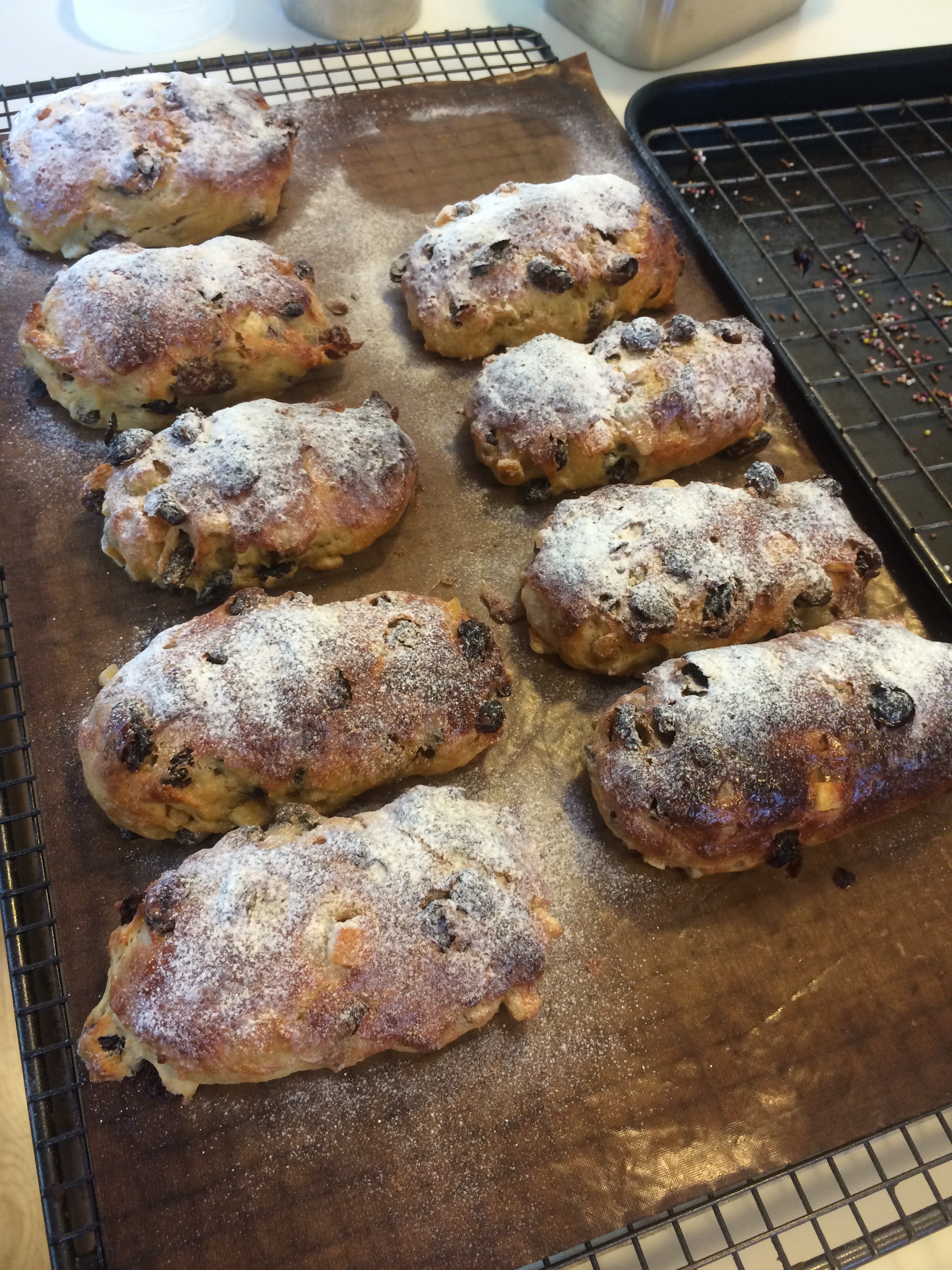
I also didn’t roll mine out on a floured surface, instead rolling out between two sheets of Magic Carpet type stuff (reusable baking parchment). It’s up to you if you make your  loaves more stout and thick or long and thin. Experiment.  As per picture above, you’ll see mine are quite flat.

I ate half of one, about 20mins out of the oven, whilst watching Masters of Sex. So the two things are now, indelibly, etched in my mind. At that temperature, just warm, the stollen are frangible and seriously delicious. If you can eat it at this temperature, at least once, do so.

Image 2

Otherwise they are really not difficult to make (although if I give you one as a present then, yes, of course they are really difficult) and you get four loaves so it’s a good result vs effort. You could easily freeze some Lisa tells me (before you add the icing sugar) for another day. Or just eat them all in a stollen frenzy. You can also leave them for the final prove (the one that takes 45 mins in Lisa’s recipe) overnight in the oven, waking up to freshly cooked stollen (well, for YOU to wake up to freshly baked stollen, someone else had to get up first to bake it, but the idea is there, yes?)

ImageChristmas 2014. I made these mini this year, just cutting bits of the dough off, and rolling it with my fingers around some marzipan. Worked really well and I got about 20 mini loaves out of it. I cooked the mini ones for 15 minutes.

IMG_0388(You’ll note one is missing, it’s very important to test the merchandise before selling.)


Best panettone and chocolate mulled wine

I wasn’t much of a fan of panettone, growing up, despite my father coming from a region where the panettone is famous. All those raisins and candied fruit. I much preferred pandoro (‘bread of gold’) which was, to me, like panettone but without any of the bits in and you’d dust it with glorious vanilla sugar as soon as it was out of the box.

It didn’t help that the panettone you can usually buy in this country – at least until it seemed fairly recently – was pretty grim. Heavy and dry. Mine used to stay on the top of the fridge, in their cardboard box, going stale until such time as I had an idea to resuscitate them in a panettone bread and butter pudding.

This seems sacrilegious now. A few years ago, my parents got given a proper panettone. They gave it to me and I almost put it on the top of the fridge, in time honoured fashion. But something made me open it. I’m going to use words like ‘billowy’ now, so prepare yourselves because this panettone was indeed billowy. Soft, fresh….billowy. It tasted delicious and, as I remember, we ate it in one sitting. I subsequently discovered it was a very expensive panettone and it showed.

At Christmas, I usually make my Colomba in the shape of panettone. It’s not the same thing (proper panettone needs to be hung up side down when made and takes three days from start to finish) but it’s good enough. Last Christmas however, I heard, through one of my editors, Kate, at the Guardian about a panettone taste test she was doing. On her recommendation I bought the Nudo one. It was superb. Not cheap though at £15 a kilo (I’ve realised you need to spend about that much for a panettone to be any good). This year, in a fit of organisation, I went to order one on 1st November. Sold out. This annoyed me beyond explanation.

So I went to the number two one last year, Valentina and bought two. I decided to open it last weekend. Partly because I didn’t want to be disappointed if it wasn’t very good, partly because I am greedy and partly because I have decided to spread out the joys of Christmas fayre this year starting in, cough cough, late November. Anyway. It’s fantastic: everything you want a panettone to be. Really fresh, really light, tasty, glorious. You could easily eat one in a single sitting. The service was amazing and I thoroughly recommend you buy one. My children loved it too, and the sell by date is April 2014. Not that it will get that far.

It’s £12.95 for 750g and you can buy it mail order (the p&p is a bit steep at £5.95 so double up with some friends if you can) or if you can, visit one of the stores, there are five, but not sure all sell the panettone so check before going.

[Just to avoid any doubt, I paid full price for the panettone, no freebies.]

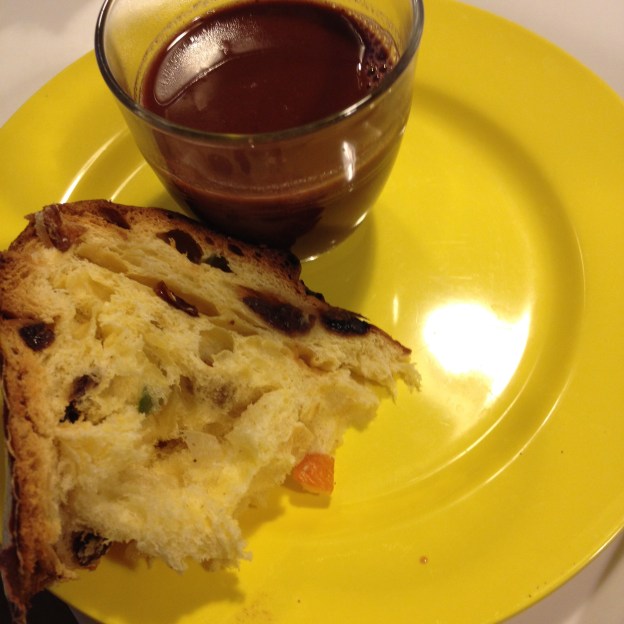
The pic above is my first slice, served with a glass of my chocolate mulled wine. Which, if you haven’t tried yet, I thoroughly recommend you, also, do.

Bread bakers’ hand scrub

IMG_3081

I often see hand-scrub for gardeners. And yet, I’ve never done any gardening which simple soap and water has not been able to see off.

Bread baking however, is another matter. I make bread about five times a week. Because I use the Dan Lepard method of making sourdough, which involves lots of rests and light kneading, and because sourdough is a high hydration dough, which means it can be a bit sticky, I end up washing my hands a lot. I often go out and realise that I’ve still got dried on bits of dough around my cuticles. I think bakers need handscrubs far more than gardeners, and yet I’ve never seen a bakers’ hand scrub and if there were one, I bet it would smell nauseatingly of fake cinnamon or vanilla. Both wonderful smells but if you want to fill your nostrils with such, you’re better off baking a cake.

This is a great little scrub which you can make with natural ingredients. Don’t make too much in one go, as it’s best fresh (although it keeps for a really long time). It takes off any dried on bits of dough (or anything) really well, and leaves your skin soft, moisturised and clean. If you want to, you can add a few drops of essential oil of your choice.

Also makes a nice present if you’re so inclined.

IMG_3076

You need a clean jar, granulated sugar, olive oil (despite the pic, just use regular not extra virgin), salt and a lemon.

You use one part sugar to one part salt to one part olive oil. So let’s say you use a cup measurement, that would be one cup of sugar to one cup of salt to one cup of olive oil. So two parts dry stuff to one part wet. Then the juice of one lemon. Mix all together, add a few drops of essential oils if you want and that’s it. It will separate out after standing for a while, that’s okay, you dig your hand through the oil and make sure you pick up some of the scrubby salt/sugar. Because I’m so lazy, I often find lemon pips in the mixture. That’s okay.

Rosemary, polenta and olive oil biscuits

IMG_2679These won’t be to everyone’s taste, but I loved them. They’re easy to make, almost impossible to get wrong (unless you chucked them on the floor or something) and unusual. Like rosemary shortbread but with the advantage of no butter at all. I gave these to my father waiting, waiting, for him to say “too rich, too much butter” (this is what he always says about all my baking). So i could pounce and say “aHA, no butter in these NONE NONE and by the way, that New Year’s Even when I said I wasn’t out in a club aged fourteen I WAS and I’ve sustained the lie over thirty years.

Ahem. Exorcising a few ghosts there. I think this would be lovely with some rich vanilla ice cream or maybe a very strong espresso.

The recipe is here, on the Easy Living site. I have to say, I was very much not impressed with Easy Living the magazine in recent times. It had gone all silly and light weight; but they really lost me when they described women who breastfeed (and, I suppose, go on about it?) as breastfeeding Nazis or the Breastapo (I can’t remember which, but you get the idea). This is such an offensive term and belies a real ignorance of history.

I complained, and some flippety gibbet replied, completely not understanding my point. That was it, it was over for me and Easy Living.

The magazine has since folded but exists on line and its recipes are really good, and definitely worth checking out, even if the rest of the content, in my opinion, is as sustaining as a rice cake.


Torrone

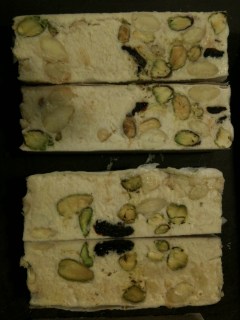
Torrone with dried cherries, almonds and pistachios. Sweets for grown ups

 
Torrone is Italian nougat. It’s usually sold at festas, and at Christmas we always get some. Usually it’s of the rock hard variety (I get the impression this is easier to make as the softer one – which I thought of as the ultimate luxury as a child – is much harder to find and more expensive). Sometimes it’s covered in chocolate and sometimes it’s pantorrone which is torrone with a booze-soaked sponge that runs through it, covered in chocolate.

The only person I know who ever made their own torrone was my uncle Bruno, but he died some years ago, so I couldn’t ask him.  I knew it was fiendishly difficult.

I was not proved wrong.

Actually I don’t want to scare you. It’s not that it’s difficult, difficult. But it’s a lot about technique and temperature and there’s no correcting it if you get it wrong. My heart was beating really fast when I made it and I think I probably shortened my life by six months.

Please do not try to make it if you’re in a rush or you have young children running round the house.

Don’t make it if you haven’t got the right ingredients or utensils. You really need a sugar thermometer for example. 

You heat the mixture up to 130C and you have minutes to make it once it’s at temperature. You really need to have all your equipment near to you (I actually moved my Kenwood Chef out of its specially built cubby hole next to my cooker and I strongly suggest you have your mixer next to your hob, too).

I wouldn’t try to make this without a freestanding mixer.

And as I said, no small children that only you are in charge of; getting 130C sugar solution on skin is not a joke. I know, I’ve done it (when I made toffee apples one year) and the burn was ferocious.

So now that I’ve scared you stupid, here’s the good bit. If you get it right – and you will – it’s glorious. It looks lovely and it’s pretty much all over in half an hour.

I got this recipe from the Donna Hay (I LOVE HER) magazine Dec/Jan2012 magazine, however I can’t find it on line so I can’t link to it. Which is a shame cos the pictures are GORGEOUS. If you have an iPad, do get the app (which is currently free). I’ve adapted it slightly in that I added the nuts and dried fruits I wanted to add. Basically once you’ve got the nougat done (and I wouldn’t mess with that part of it) you can add any nuts/dried fruits you want up to a point. You don’t want to overload the mixture. I’d say 400g total of nuts/dried fruits is probably the limit. I used about 200g and could easily have had more.

You need 2 x sheets of confectionery rice paper (I got mine from Amazon; Lakeland also sells it as does the Jane Asher on line shop. You may be able to get it locally, I couldn’t).

550g caster sugar
350g liquid glucose
115g honey
1 teaspoon of vanilla extract
2 eggwhites, at room temperature
100g butter, softened – mine was melted but cooled
then whatever nuts/dried fruits you want. I used about 160g almonds and pistachios and 60g dried cherries. Hazelnuts would also be lovely I think. Toast the nuts gently first.

A word about liquid glucose. You can buy it in small tubes/tubs from the supermarket. Your chemist may be able to sell you culinary grade liquid glucose in bigger quantities. I buy mine from Jayson’s Pharmacy. JM Loveridge also sells it (and in fact the one I got from Jayson’s was marked Loveridge) but I couldn’t work out how to buy it on site and was in a rush.

You need to line the base of a 20cm square tin with the rice paper. My rice paper wasn’t big enough so I overlaid another sheet to fill the gap. Keep the other sheet for the top.

Now, place the sugar, glucose, honey and vanilla in a saucepan with a handle. Very important this, as you’ll need to use just one hand to eventually pour the ingredients into the mixer bowl.

Over a low heat, let it all dissolve. Stir until this happens. Once the mixture starts to boil, put in a sugar thermometer and watch the temperature rise as it heats. You need to watch it. Don’t wander off. Donna Hay says that once it gets to about 110C put the egg whites in the free standing mixer and start whisking until stiff peaks form. I found that by doing this (my mixer was right next to me by the hob, have I mentioned) I had plenty of time.

You’ll find the temperature goes up in leaps, then seems to stagnate (you may need to gently increase the heat but keep watching it), then jumps up again. Once it’s at 130 you are green for go.

With the mixer beating (I had mine on medium speed), pour the molten sugar mixture very slowly into the egg whites. The idea is that it you cook the egg whites with the sugar mixture. A slow, steady, thin stream is what you’re looking for. Beating continuously all the time. Don’t stop! Once all the sugar mixture is in, continue beating for about a minute, until thick and glossy. But don’t hang around or it will start to set and you won’t get anything else into it. Now add the softened butter, whisking til well incorporated before adding more. It may start to look greasy and slightly separate. Do not panic. Once all the butter is added, keep whisking for another minute until it all looks well combined.

Now, working fast, lift up the mixer and take the bowl out. Stir in the nuts and fruits manually – you need to make sure they’re evenly distributed but as you stir it you’ll feel it setting so be quick – and pour/spoon the mixture into the prepared tin.

Cover with the other rice paper (again, using more than one sheet if yours isn’t big enough) and flatten with another tin or just your  hands. Now leave to set. Donna doesn’t say where, I think a cool kitchen is fine. Leave to set for eight hours (mine was done way before this). Then turn out – it can take some wrestling and cut into strips/cubes.

When I first made it and tasted it, it was really chewy. So chewy that I thought “hmm, my dentist isn’t going to like this” but after a few days it changed to a really lovely, soft consistency that wasn’t remotely filling pulling. Donna Hay says to keep it cold as the humidity will make it melt. In Italy they say to keep it in the fridge, too. But it’s zero degrees here in Suffolk and my nougat has been at room temperature (room temp being about 20C) and it’s absolutely fine. But if you do want to keep it cold, just remember to get it up to room temperature before eating it.

It’s very delicious. Would make – has made – great presents. I wouldn’t make this for every day but once/twice a year, a wonderful treat. And I feel it’s elevated me onto a whole other level of ‘cooking’. I mean, I made torrone and lived!
Your own orange chocolate orange

Okay. Two chocolate recipes in a row and then I think that’s enough. I must talk about something hard core and tecchy next like SIM card entry systems (I do know about those, actually).

Hmm. I can’t work out how to rotate this. Although I guess there’s no right way up…

These are even simpler than the salted caramel chocolates because it’s all done in one stage. BUT you do really need to have made the candied orange peel before that. That’s the secret weapon.

The good news is that you eat far less chocolates if you’ve made them yourself. Promise. At least you do once the novelty has worn off.

So obviously you can do this in any sort of mould. You could even make them lolly shaped. But I just happentohave, woudln’t you know it, some orange segment moulds.

Melt some chocolate, I always use 70% cocoa but you could use more or less. Chop up some candied orange peel, really small. Then pour some chocolate into the moulds, half way, sprinkle the chopped up candied orange peel in. Top up with more melted chocolate. If you put the orange peel in first (which you can do) they will show at the top. Perfectly fine but not as pretty. That’s it. Put in fridge for half an hour. Turn out. Eat. Won’t make you quite as sick as a Terry’s chocolate orange and much better for you.

I’ve checked with the Department of Health and these are officially one of your five a day…