Tag Archives: chocolate

Monday morning bread, aka chocolate sourdough

I need a bit of help on a Monday morning. Weekends are usually cosy, engaged, involved, family affairs and splitting us all up on a Monday morning can hurt. Even though I do a job I love, and I work mostly from home – so am incredibly fortunate – Monday mornings sometimes need a bit of easing into.

Thus it is that I decided to corrupt one of the baguettes I was making last night, for baking this morning, by rolling the dough around a few pieces of chocolate (a high cocoa content milk chocolate). Everything else stayed the same. But this morning, the promise of these served warm from the oven, aside a bowl of caffe latte for dunking into, just helped get us all downstairs.

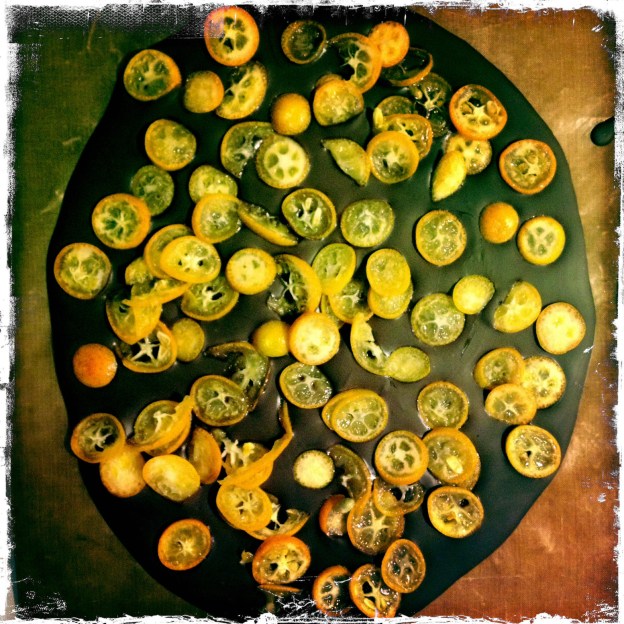
A last minute Christmas present idea: Kumquat chocolate slab


This is a really easy, delicious thing to make. Yes you do need a) chocolate and b) kumquats in the house to make this exact one, but the idea is that with a bit of imagination, you have a really easy, original gift to make for someone at the last minute. Perhaps you’ve been invited round to someone’s house and want to take a little gift.

I used kumquats, because that’s what I saw in Martha Stewart Living. This decision also resulted in perhaps my most middle class quest of the year: going in search of them (Sainsbury’s had them). It was worth it because kumquats lend themselves really beautifully to this idea and weren’t madly expensive. A packet that would have made this twice over cost £1.50. Plus they look festive, colourful and this was absolutely delicious: like a grown up, not too sickly, Terry’s Chocolate Orange.

But if you don’t have kumquats, or don’t like them you can put anything on top of the chocolate: slices of stem ginger, roasted hazelnuts, sliced pistachios, what ever takes your fancy, you get the idea.

For this I used a mixture of Green and Black’s milk chocolate and Waitrose Continental 70% cocoa chocolate, because I wanted it to be quite creamy. You want the slab to ‘snap’ when you serve it so don’t go too milky chocolatey, even if you want to serve it to children. To make it really grown up and ‘snappy’, make it out of all 70% cocoa chocolate. I used about 250g of chocolate in total to make this slab, which fed sixteen at after lunch coffee.

Melt in a bowl, over boiling water, then pour onto baking parchment on a baking tray. Scatter over your topping of choice. Put in fridge to set. If giving as a present – and not serving at your own dinner party – then break it up and put it in cellophane bag or if you have food-grade cellophane wrap (naturally, ahem, I do) then you can wrap the whole thing in one piece.

That’s it. So easy and looks so impressive.

How to make your own salted caramel wagon wheels

What I want to know is, when did this blog become almost exclusively about food? I used to write about coffee machines, and fridges ‘n’ stuff. I think it’s partly to do with laziness, greed and also that as I get more serious in my day job, I want to write about things that comfort and soothe.

This is my excuse for writing about Wagon Wheels a week before Christmas when I have at least twenty-three other things to be doing.

I never liked original Wagon Wheels. So this wasn’t about trying to recreate something I loved, but in more, ahem, nutritious format. This is entirely about being seduced by a picture in a Donna Hay magazine in which she makes them. I hesitated before posting the recipe. These are, by no stretch of the imagination, good for you. They use Fluff – jarred, spreadable marshmallow – which contains corn syrup which is really really bad for you. So you must ASSURE me that you will only make these once a year.

These biscuits are, however, really fun. They are not difficult to make, and can be made in stages. The trickiest bit, I found, was the dipping them in chocolate. There is no easy way to do this and you end up making a great big mess. I made the biscuits differently to how Donna recommended – she uses three tiers and smaller biscuits. In an attempt to recreate a more authentic WW look I went for two tiers and larger.

Big mistake. They end up being quite a biscuit. I’d say probably 500 calories a piece. Which isn’t good. I definitely wouldn’t serve these if Gwyneth were coming round to tea. When I first made them I stored them in the fridge which was a mistake as they go kinda crispy and I didn’t like them so much (so perhaps not a mistake after all). After a few hours out of the fridge and stored in a biscuit jar, they were just perfect. Strangely addictive. People I gave them to started making weird, primal noises. They started telling me they loved me.

Be warned.

Don’t go fooling yourself you will only take one bite of these and not eat the whole thing. So make them small. And make them when you have lots of people coming round so you’re not left alone with them. I made a few changes: I substituted salted caramel for jam as I had a jar of caramel that my friend Helen had made for me and everyone preferred them to the jam version (I made a few with jam to try).

And I used about 2/3rds 34% cocoa chocolate and to 1/3rd 70% cocoa chocolate to coat them instead of doing half of them with white chocolate and half with plain as Donna Hay suggested. I actually think I’d slip into a diabetic coma if I made these with white chocolate.

Anyway, enough chat, here is the recipe as I did them, and the low down.

170g unsalted, softened butter

160g icing sugar

1 teaspoon of vanilla extract

2 teaspoons of honey

1 egg

335g plain flour

1 teaspoon of baking powder

half a teaspoon of bicarbonate of soda

A jar of Fluff – marshmallow spread in a jar

Either a jar of blackberry jam/jelly or salted caramel (I say jelly as that’s all I could fine, not because I’ve gone American)

About 200g high cocoa content milk chocolate (I used Green and Blacks, which is 34%)

100g 70% cocoa chocolate (I always use Waitrose Continental)

Put the butter, sugar and vanilla extract in an electric mixer (I used the whisk attachment) and beat for 5-7 minutes. Imagine doing this by hand?! Scrape down the sides and then add the honey and egg and beat again for a bit until combined.

Now add the flour, bicarb and baking powder and beat on a low speed until combined – just a minute or so. Flatten the dough into a disc. It will be very soft. Put in cling film and put it in the fridge for about an hour (longer is fine). It should be firm before you start to roll it out.

Now, preheat the oven to 180C and line a baking tray with baking parchment. Roll the dough out bit by bit between two pieces of baking parchment until about 5mm thick. This is a very soft dough so after a few rollings out it will be hard to handle so put it back in the fridge if need be.

Cut circles of 5cm. I did larger but as I said, I think that was a mistake as I ended up with a really calorific biscuit!

Place on baking trays – they don’t spread out much so you can go quite close together but not too close. About 1cm is fine.

Bake for just a scant 4-5 minutes, until the edges are just tinged with a golden brownness. Take out of the oven and leave to cool completely. You will need to cook these in batches.

When the biscuits are completely cool it’s just a case of assembling them, then dipping. So, spread one biscuit with the salted caramel, one with fluff and sandwich together. Don’t be too mean with the filling but don’t go mad either. When they are all sandwiched together put in the fridge to firm up for a bit whilst you melt the chocolate in a bowl, atop a saucepan of boiling water.

When melted, dip the biscuits in the chocolate. If there’s an easy, non-messy way to do this, I haven’t discovered it yet. I tried painting the biscuits with chocolate and that worked but left brush marks. After several goes I discovered the best thing to do was coat the edges then dip quickly one side then another. If you end up with bald patches where your fingers were then you can remedy by just spreading a bit over with the back of a spoon. Leave to drip for a few seconds over the chocolate bowl, then leave to set on a rack. Be careful though. If you do like I did one time and put it straight in the fridge, the chocolate will set around the bars of the cooling rack and you will end up with half a wagon wheel when you prise it off.

This is no bad thing in a way, as you immediately lower the calorific value, but it makes a mess. So be aware this can happen.

Do leave them to set in the fridge at some point, then you can store them in a biscuit jar in a cool place, preferably at someone else’s house.

IMG_4336

How to make your own jaffa cakes

Inside. Luscious. The perspective makes these look giant, they are in fact the same size as regular jaffa cakes. And that’s a three year old holding one.

I bake, not only because I love cakes ‘n’ stuff and I prefer home made, but I bake when I need to feel safe. I find baking immensely therapeutic. The fact that I’m quite skilled at it is helpful because when I’m, say, grappling with a difficult deadline, as if it were a salt water crocodile (and we know how slippy they can be)  I have a need to achieve.  I have an almost pathological need to achieve. Something. Anything.

And when that something happens to result in baking a good biscuit, just baked into a chewy crispness, with hidden little bullets of chocolate. Or a fluffy, jolly cake, heavy with a mascarpone frosting stained red with raspberries, so large that you have to dislocate your jaw to get a slice in…well where’s the fucking harm in that.

When the news makes me feel like the world is too big, baking reminds me that the gentle stirring (or sometimes, vigorous whisking) of a few fine ingredients, can come together to make something good.

This is how I found myself making jaffa cakes.

Jaffa cakes. I don’t even really like jaffa cakes. But they seemed tricky enough to take my mind off all the bad news.

This recipe is from Jamie magazine. They weren’t tricky at all, but they did result in something so excellent and delicious and authentic (similar enough to shop bought ones to not alienate fans, different enough from to entice the not so keen) I had to keep eating them to make sure.

You need:

1 egg
50g caster sugar
65g self raising (I never sift flour but I guess you should)
butter for greasing
250g marmalade
100g 70% cocoa chocolate, chopped
Finely grated zest of half an orange
2 teaspoons of vegetable oil
 (the original recipe also asks for a tablespoon of water to use when melting the chocolate) but I didn’t use it and never use water in when melting chocolate).

You need a jam tart tin or shallow ‘bun’ tin with 12 holes. Grease this well, I also dusted it with flour (not from the 65g!)

Oven to 200C.

You do:

Okay so whisk the egg and sugar together, using an electric mixer if you have one (don’t sweat if you haven’t, you think sponge cakes were never made before the advent of the electric mixer?) if not by hand. Get those biceps and triceps working. Beat until the colour has lightened and the mixture has thickened. I’ll admit this is a a hell of a lot easier with an electric mixer.

Now stir in the flour by hand.

This is so easy isn’t it?

Now dollop about a tablespoon of the mixture into each hole, evenly. So if you get it wrong you’ll need to go round and nick a bit from the moulds that have too much.

Bake in the oven for 8-10 mins. Be careful: you want them lightly golden.

When done turn out and let cool. When cool slice in half horizontally. Are you seeing these jaffas taking shape?

Hopefully you’re the sort of person who reads recipes through before embarking on making something. And therefore you’ll know that whilst the cakes are cooling, put the marmalade in a pan, on the stove. I didn’t use the whole 250g but if you have any left over, once cool, you can put it back in the jar.

The sponge cakes fresh out of the oven.

So, heat the marmalade until it’s melted and stirrable and all one big thing and not little clumps of marmalade skulking round the pan, like nervous teenagers circling each other at a party, and then take off the heat and leave to cool. You can leave it for a good 20-30 mins, perhaps more and in fact it’s easier to use when it’s cooler. You could sieve out the peel in the marmalade but come on! Butch up and leave it in. I did and it was delicious.

Note the bit with a slice off? I ate it. Couldn’t wait.

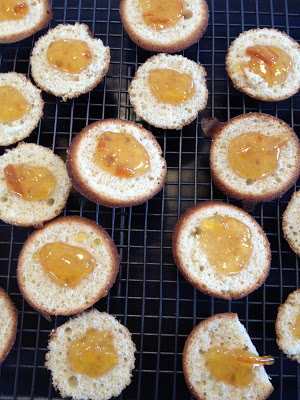
Now. Take a teaspoon of the marmalade and dollop it in the centre of each sponge.

Melt the chocolate, with the orange zest and oil (oil not essential but gives a nice gloss), in a bowl over a pan of water. When melted, spoon over each marmalade covered sponge. What I did was put the cooling rack over a baking tray to catch any drips (ahem, I took it away for the photo below for better contrast), and then pick up each sponge and spoon the chocolate over, spreading it delicatedly with the back of the spoon – you don’t want to compromise the blobs of marmalade – then putting each back on the rack over the tray to catch any drips. And there were hardly any drips. I guess you could be more slap happy and just spoon the chocolate over each sponge whilst they’re sat on the rack and let the chocolate drip gaily.

Just one left to do.

But I think that’s more wasteful.

I ate at least six of these waiting for the chocolate to set. My youngest went potty for them. My eldest doesn’t like jaffa cakes and wasn’t convinced by these.

Make them and tell me what you think.

Eclairs

The best compliment I got was from a nine year old girl (not mine) who said “these are like real eclairs”

Here is a confession. I really am not that into eclairs. I know people who go cuckoo for them. Not me. I’m not overly a fan of choux (unless in a Paris Brest), nor whipped cream. Basically, eclairs aren’t piggy enough for me.

The first time I made choux pastry I was very young, about eleven and it was in HE. No-one told me it was difficult so I didn’t sweat over the choux pastry and I made the most amazing profiteroles. (Equally, no-one told me puff pastry was difficult and I used to make a great puff pastry.)

As I got older, and everyone went on about how hard choux pastry is, well that, coupled with my slight meh-ness towards them…meant I didn’t really try.

My children love eclairs so I decided to give them a go. They were easy. So easy I was expecting the sky to fall in.

I’d love to hear how you customise them.

The recipe for choux is pretty standard:

125ml water
50g butter
75g plain flour
3 medium eggs (at room temperature, this is important)
pinch of salt (I think this is key, choux is pretty tasteless, but the salt adds something).

The filling

I just used double cream, about 300ml, whipped up with a spoon of vanilla essence and a tablespoon of icing sugar. Or try delicious white chocolate cream, which is what I use as a default filling these days.

The topping

I used 150g 70% cocoa chocolate and a teaspoon of vegetable oil, melted in a bowl, over a pan of boiling water. Then manually just dipped the eclair tops in and set them down on a cooling rack. Hardly any drips..

Obviously with both filling and topping you can change it. Next time I’m going to try something a bit more adventurous.

You also need a piping bag and plain nozzle of about 1cm diameter. A baking tray and some baking parchment.

Oven to 180C.

Put the water and butter in a sauce pan and cook over a high heat. Stir until butter is melted and bring to the boil. When this happens, lower the heat and add in the flour. Beat with a wooden spoon until smooth and the mixture leaves the sides of the pan. For me this happened almost immediately.

Remove from the heat. Now. Some recipes say to let the mixture cool and then add the eggs. I can only tell you how I did it which was to add the eggs straight away to the mixture, once in the electric mixer bowl.

So. Put the butter/water dough in an electric mixer with the whisk attachment and add the eggs one at a time.

This is the important bit. After you’ve added the first egg, the mixture must be absolutely smooth before you add the next egg. At first the mixture seems to curdle, more so if your butter/water dough is hot and the eggs are very cold. It will look like scrambled eggs. You will want to cry.

Don’t. And don’t panic. Keep mixing. It will eventually blend together and go smooth. Honestly mine took a good five-ten minutes during which I started to panic and think “why the hell did I not LISTEN to everyone who told me choux pastry was so hard.” Keep the faith. Keep mixing. It will smooth out. Then, add the next egg and mix until smooth and then the next one. I added the salt with the third egg. No idea why just did.

The mixture is ready when you lift the whisk and it leaves ribbon marks – indentations in other words.

Put into the piping bag. I find it useful to a) use a clip to secure the top of the icing bag – just above the nozzle – so that the mixture can’t ooze out. By clip I mean like those Klip-it things you use to keep food in a plastic bag fresh. b) put the bag in a tall glass and fold the top of the bag over so you can spoon the mixture in. Obviously when you are ready to pipe, you take the Klip-it off.

This mixture pipes really beautifully, so pipe eclair shapes (or profiterole shapes) onto the tray, leave a good gap as they do grow.

Put in the oven. I cooked mine for 30 mins and they were perfect, dry and crispy. My patisserie expert said that’s how high quality eclairs should be – kinda dry and not soggy like shop bought ones. You can’t really overcook eclairs (well, actually you can but you know…). I cooked some profiteroles another time and gave them 35 minutes and they were fine.

Don’t be tempted to open the oven at all if possible and certainly not before about 25 minutes.

They should be puffed and golden. Mine were almost empty inside. There was no need to dry them out inside as some recipes suggest, by placing them back in an oven.

I just cut them lengthways when they were completely cool and did the topping first (put the topped eclairs in the fridge for five mins to make the topping set if you’re in a hurry), then I added the cream with another piping bag (I was piping bag mad by this stage).

They all got eaten that day. And when I served them the second time round, because I had some salted caramel left, I added a dollop of that in too. I am salted caramel crazy though.

The reason I’m writing about these is that they were so easy and the return to effort ratio so madly unbalanced in favour of the return part, that I did wonder why I had left it so long.

Update on 6th March 2013. I thought it might be useful to have some troubleshooting here.

There are a couple of key important bits in making eclairs. The bit in the saucepan, with the flour and the butter/water…make sure you really dry this mixture out. By that I mean, even when it starts to come off the sides, keep going for a minute longer. The more you dry it out now, the more eggs you will be able to add (more on this later). The more eggs you can add, the more the eclairs will rise.

What do you mean, the more eggs I can add? Don’t you say three eggs?

Yes, yes I do. But here’s the other thing. I make this all the time with three eggs but mine are medium (in fact I’ve altered the recipe above to say this). Eggs differ in size, although it’s usually the amount of white in an egg that differs between the different sizes. So if you were to crack open a medium and extra large egg, the real difference is in the white, not the yoke.

Anyway, when you’re at the adding the eggs stage, if you’re new to this, I’d whisk up the third egg before adding it and then add it a bit at a time. What you want is a mixture that’s thick. Don’t be afraid to give it a really good whisking, don’t stop just the moment you think it’s done. You want the mixture to be able to stand in stiff peaks. If it’s not thick enough at this stage, it won’t get any thicker at the piping them out stage. So when you stop whisking you need to be absolutely sure it’s thick enough, otherwise,  you pipe it the eclairs will spread.

If you add too much egg, then the mixture might get too sloppy which is why I recommend adding it in stages if you’re new to this.

Should I cool down the butter/water/flour mixture before putting it in the mixer?

Almost every recipe tells you to do this, to cool it down otherwise it will cook the eggs.

I don’t. I know, madness, but I’ve tried it both ways and for whatever reason I’ve found that if I add this to the mixer and add the eggs straight after the sauce pan stage, my eclairs rise more. Yes you do need to beat the first egg in for much longer and it will go through a scrambled egg phase. Try it whichever way you want and see how you go. I’m fairly brave with patisserie making so I like to fly by the seat of my pants. You may want to go more slowly. Both are fine approaches.

If you’d like more ideas about what to fill them with, other than cream: chocolate ganache filling recipe here; white chocolate cream filling here (this is YUM). And not long after I originally wrote this I stopped cutting the eclairs in half and instead using a piping nozzle to fill them.

Home made bourbon biscuits

Although I make almost all the biscuits and cakes we eat, I do think there are some things that are just better shop bought. Shop bought custard creams are just what they are and impossible to replicate at home. (This doesn’t mean I won’t try but I won’t expect to get them to compete with shop bought and compete is the right word here.)

But a few weeks ago, I was out for brunch and gossip a very important business meeting with my friend Fiona Hughes and we went to the Orchard Cafe in London’s Holborn.  On the way out, after we’d devoured extremely good scrambled eggs with home made bread and smoked tomato ketchup, I spotted a giant bourbon biscuit, filled with salted caramel goo.

Now. I don’t eat biscuits and cakes ‘n’ stuff like that, during the week, only at the weekend. And as this was a Tuesday, I couldn’t justify it.

However, because I am a greedy thing at heart, the memory of these biscuits scratched away at me, like a sticky out label on a T-shirt, and eventually I decided to try to make my own.

I finally found a mention of an edition of Jamie Magazine that had a recipe for home made bourbon biscuits and so determined was I, I tracked a back issue down, paid for it and waited for it to arrive.

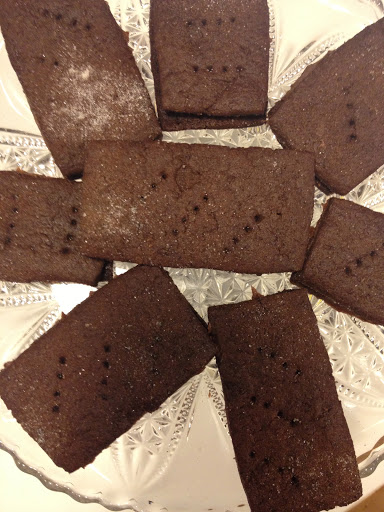
These biscuits are great. Really, really good. I do of course want to get a specialist rectangular cutter and maybe a Barbieri stamp. [Update: believe it or not, I now have both of these.]  But until then, I just cut a line of these, and then cut the rectangles by hand. It made for a very artisan finish but no less impressive.

You need:

For the biscuits:

50g soft butter, unsalted
50g soft brown sugar (I used dark)
1 tablespoon of golden syrup
110g plain flour
20g good cocoa powder (don’t go using any of that ‘bad’ stuff)
half a teaspoon of bicarbonate of soda
a bit of caster sugar for sprinkling

For the filling:

75g icing sugar
50g soft butter
1 tablespoon of cocoa powder
1 teaspoon of cold, strong coffee (use milk if you don’t like coffee, but the coffee really, really adds something)

Put the oven on to gas 150C. You need a baking tray lined with baking parchment.

Either cream the butter and sugar for the biscuits by hand, or use an electric whisk (the recipe calls for latter, I did former). Do this until pale and fluffy. I love the word fluffy.

Then beat in the golden syrup using a wooden spoon (even if you’ve used an electric whisker you’re now instructed to STOP and use a wooden spoon and put your arms to work). Then sift in the flour, cocoa powder and bicarbonate and beat into an even dough. You may need a few drops of milk. Try not to use it but if you do, literally put the milk in half a teaspoon at a time, you want a fairly dry, low hydration dough not something really sticky.

Turn it out onto a piece of baking parchment and top it with more baking parchment so you roll it out between two sheets of baking parchment. Roll until about 3mm thick. Because you want the biscuit to be crisp, don’t make it too thick, although you can’t make it too thin either. Get the ruler out, this is biscuits for goodness sake. It’s important to get it right.

Cut the dough, however works for you, into about 24 fingers of about 5cm x 3cm. I cut long rectangles and then cut into smaller rectangles. Place on parchment lined baking tray, with about 1cm gap in between (they do rise a bit but not much). I prick with a fork for a birruva pretty pattern.

Sprinkle with caster sugar and cook for 8-10 minutes. Make sure they are cooked, not soft as they won’t harden up much and you really do want these to be crispy not cakey. But of course, don’t overcook (am I being too bossy? I want you to get these right you see).

When done, wipe the sweat from your brown, transfer to a wire rack etc. Cool.

For the filling mix the sugar and butter together, add the cocoa powder. At this point it will look pale and unpromising and you may start to panic. Have faith! When you add the milk (a scant teaspoon, just to bring everything together), it will go dark and glossy and glorious and you will be SO pleased with yourself.

Spread on one biscuit, sandwich with another. Daintily arrange. Eat and be amazed.

Willie’s Delectable Cacao Single Squares

Happy Easter. This is what I got today instead of an Easter egg. I really love plain chocolate, preferable 70% cocoa one, for a real punch.

You can get these Single Squares from Waitrose and they cost from £1.80. Not cheap (they weigh 50g) but the chocolate is excellent; I much prefer it to Green and Black’s dark chocolate which I find bitter. And I’d rather have a hit of really good chocolate than lots of cheap, sugar-filled stuff.

The ones I got – you can see them above – were hazelnut and raisin, ginger and lime and luscious orange. They are all delicious. There are others that are just chocolate: milk, plain or white.

I haven’t managed to ascertain what the fairtrade credentials, if any, are (I do try to buy fairtrade wherever possible). But you can read more about Willie’s chocolate  here.

Your own orange chocolate orange

Okay. Two chocolate recipes in a row and then I think that’s enough. I must talk about something hard core and tecchy next like SIM card entry systems (I do know about those, actually).

Hmm. I can’t work out how to rotate this. Although I guess there’s no right way up…

These are even simpler than the salted caramel chocolates because it’s all done in one stage. BUT you do really need to have made the candied orange peel before that. That’s the secret weapon.

The good news is that you eat far less chocolates if you’ve made them yourself. Promise. At least you do once the novelty has worn off.

So obviously you can do this in any sort of mould. You could even make them lolly shaped. But I just happentohave, woudln’t you know it, some orange segment moulds.

Melt some chocolate, I always use 70% cocoa but you could use more or less. Chop up some candied orange peel, really small. Then pour some chocolate into the moulds, half way, sprinkle the chopped up candied orange peel in. Top up with more melted chocolate. If you put the orange peel in first (which you can do) they will show at the top. Perfectly fine but not as pretty. That’s it. Put in fridge for half an hour. Turn out. Eat. Won’t make you quite as sick as a Terry’s chocolate orange and much better for you.

I’ve checked with the Department of Health and these are officially one of your five a day…

Salted caramel chocolates

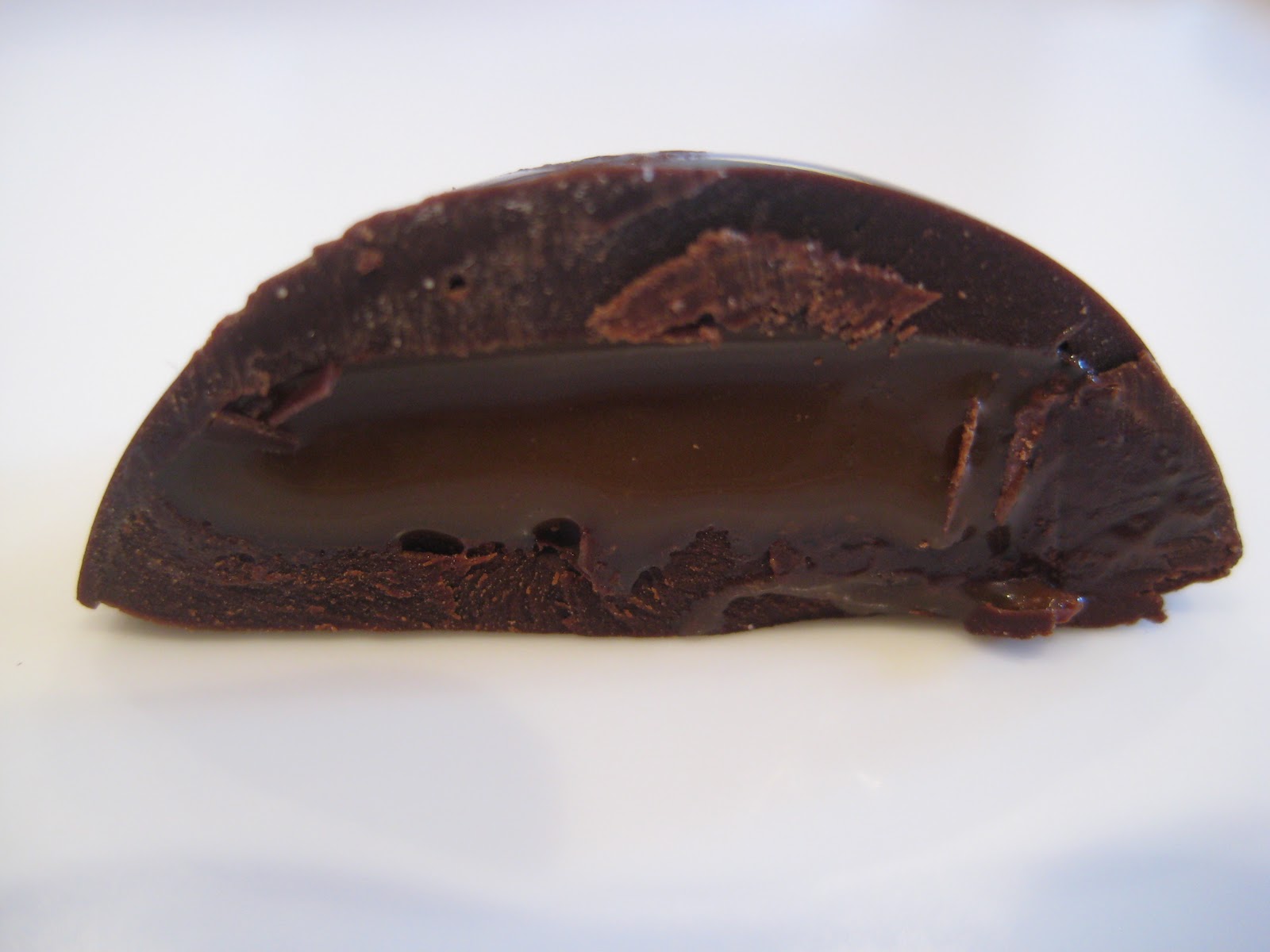
Here it is, cut in half.

I’m very fond of salted caramel chocolates. I know salted caramel is a bit everywhere now, but I am partial.

L’Artisan du Chocolat’s are my favourite. But expensive. I went into the store within Selfridges not so long ago and a box costs £12 million pounds. Or nearly that.

Anyway, whenever I’m on a deadline, which is often, I think about how I can waste time in the kitchen. Because when I am failing at writing I need to achieve at something. Be it ironing or stuffing envelopes. I need a task that has a beginning, middle and end. Unlike writing which seems like all beginning and then huge relief followed by anxiety.

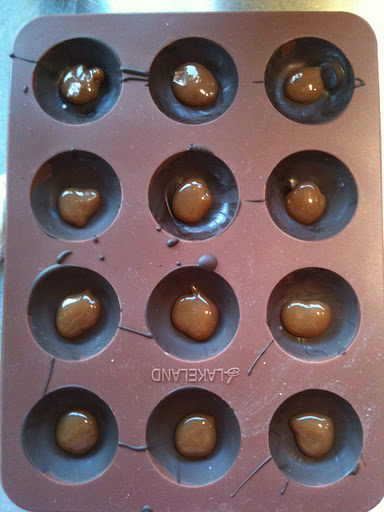
So this is what I did. I got my button chocolate mould, what I bought at Lakeland. This doesn’t make buttons like Cadbury’s buttons, it’s bigger. Each button is about 2cm across at the widest part. (Or something, I haven’t measured it I can if anyone wants me to). I melted some 70% cocoa chocolate, which isn’t really chocolate, it’s health food. I half filled the mould. Then put it in the fridge until set (not long). Then I put in some caramel sauce.

Here they are, chocolate at the bottom already. I actually put a bit more caramel in than is shown because I am very greedy.

Don’t be mean with the caramel sauce. But don’t fill so much that you can’t seal the chocolate up. They key is not to get the chocolate too thick, but to strike the right balance between enough chocolate to hold the caramel in, without making it too thin/thick. Even if you get it wrong the result is totally delicious, so fret not.

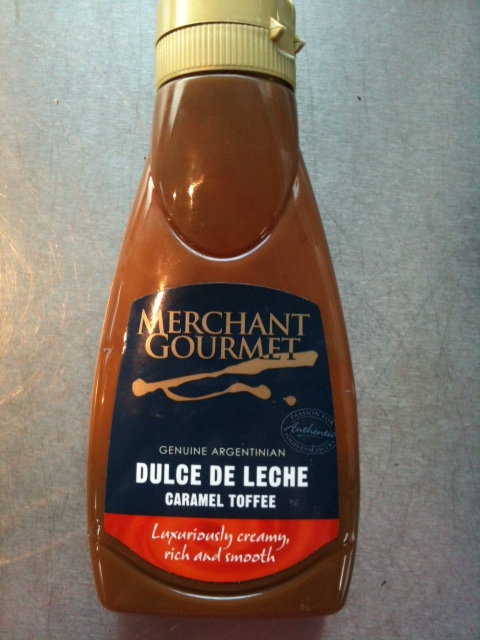
I use this caramel toffee sauce, aka dulce de leche. I don’t know how authentic it is but it’s what I use.

You thought I made my own caramel to go in these? You were wrong.

On top of each puddle of caramel, I then put a sprinkle of sea or rock salt. My two year old sometimes helps with this bit and some get enough salt to put you in a coma and I have to go round cleaning up.

You then let it rest for a bit more in the fridge, then top up with more chocolate. I keep my chocolate runny by keeping it over a pan of boiling water (but not on the stove).

Voila. Easy. Let’s just have another look at the finished product:

Pretty nice eh?


Addendum, November 2012.

I have now started making my own caramel to make these and it elevates them into something else. It doesn’t take long to make, the caramel, but as it’s my secret ingredient I am, for once, not going to share it. I’ll just post this here to be really annoying.

But you can find a recipe for caramel anywhere…

Chocolate Mulled Wine

I found this recipe, in amongst various things I’d torn out of a magazine one Christmas past. It answered my question: “should I serve hot chocolate or booze (to the grown ups)?” for a Trick or Treating treasure hunt extravaganza that we were staging in our garden (for the children). It came from Delicious magazine and was written by Laura Santini. I really can’t impress on you how very good it is. Even my partner – a wine expert and hater of mulled wine – got all knee-buckly about it.

This apparently serves six but there was four of us and we managed quite nicely…

750ml red wine
1 cinnamon stick
1 large dried red chilli (I didn’t have one so I used some chilli flakes)
1tsp ground spice
5 whole cloves
100g caster sugar
50g Venezuelan Black chocolate, 100% cocoa – grated*

*if you’ve never grated 100% cocoa chocolate, be warned: it’s very brittle/dry and it goes EVERYWHERE. I wouldn’t personally recommend grating it, but instead, scraping it off with a sharp knife.

This is what you do:

Put the wine and spices in a saucepan and warm slowly, over a very low heat. Then, add the sugar and stir until dissolved.

Add the chocolate and warm through. I used one of those Aerolatte whizzer things to homogenize it as it had a tendency to go a bit ‘speckedly’ with the chocolate. You can either then strain and serve, or strain and chill until you need it (it says it’ll keep for two days), then warm it up again and serve.

I really don’t plan to make mulled wine any other way now. And look: 100% cocoa is terrifically good for you, so this is practically a health drink.