Category Archives: Children

Lavosh

Lavosh are a bit like Italian Linguette – flat breads that you use with dips. They are so easy to make, the dough can be kept, balled up into individual portions for extra convenience, in the fridge for a day or two, ready to be rolled out and baked and you can have fresh lavosh on the table in under 20 mins.

You need, for eight lavosh

1 teaspoon of dried yeast
125ml of lukewarm water
1 teaspoon of caster sugar


300g of 00 flour (or just plain if you don’t have 00)

60ml of extra virgin olive oil

1 teaspoon of sea salt plus extra for sprinkling

1 egg white

Some herbs for atop, I’ve used basil here but you can use anything you like, fresh rosemary would be nice, as would dried oregano.

Mix together the 1 teaspoon of yeast, 125ml of lukewarm water and the teaspoon of caster sugar in a small bowl and give it 10-15 minutes until the top is frothy.

Whilst you are waiting for this mix together the 300g of flour and one teaspoon of salt in a bowl, make a little well and pour in the 60ml of extra virgin olive oil.. When the yeast/water/sugar mixture is frothy, pout this into the flour mixture too, and mix together until you have a rough dough. Knead this gently for a few minutes (if you need to you can do this on a lightly oiled chopping board or surface) leave for five minutes, go back and knead it again for a a minute or so (nothing strenuous is needed) leave it for another five minutes and by this time it should be smooth. Now leave it covered with a tea towel in a bowl in a warm place until it’s risen slightly. You could also put it in the fridge at this stage and carry on the next day with the cutting up into portions and rolling it out.

When it’s risen slightly cut into eight portions. I then roll them up into balls and with a rolling pin roll them out until they are long and thin. You can then cook, as below.

But if you haven’t previously kept the whole dough overnight you can cook some now and some – balled up in portions or as one big lump of dough – tomorrow as long as you leave the dough in the fridge at about 4C.

Basically when you are ready to bake them, preheat oven to 200C.

You can then either place baking parchment on a baking sheet and put the rolled out lavosh onto it, brush with the egg white, press in the basil leaves or whatever herbs you are using and sprinkle some salt. Then cook for about 12 mins until golden brown.

Or what I do is I preheat the baking sheet with the oven and when the oven is up to temperature the baking sheet is hot. I have separately prepared the lavosh onto the baking parchment (I have a re-usable silicon one). I take out the hot baking sheet and gently slide the lavosh on the baking parchment onto the tray. This way the lavosh puff up more but it’s really not necessary. Then bake as before

They are ready to eat pretty much straight away and are absolutely delicious with dips.
Pretzel Rolls

The food writer Nicola Miller introduced me to what I think is the best bacon roll, from 5 Angel Hill in Bury St Edmunds. Their soft pretzel rolls, filled with salty bacon slices can see me going pretty much all day. Few breakfasts do this.

So when I saw this recipe for soft pretzel rolls in BBC Good Food magazine a while ago, by Edd Kimber (who I think is a genius and the only person I pay for on Substack) I had to make them.

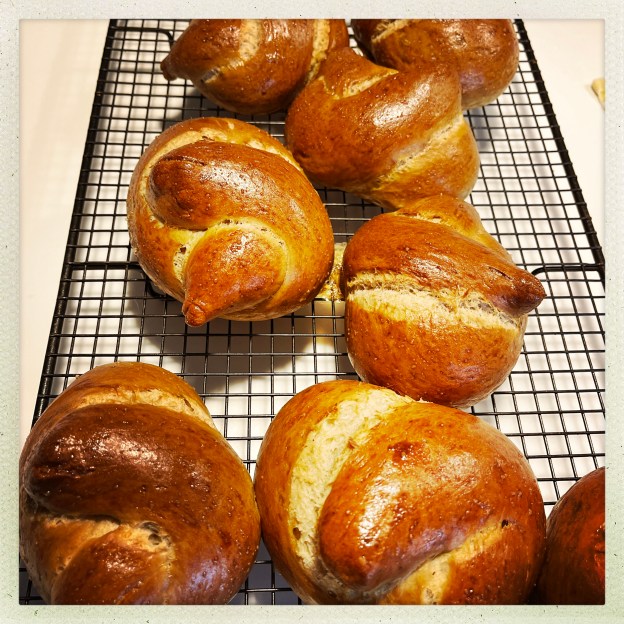
I gave up hope of making them so they looked like pretzels, mine just look like in the picture. They make great rolls for sandwiches, sweet – but not too sweet – and soft. And of course with bacon for breakfast, and maybe an egg. I also really like them on their own.

The baked bicarb bit is a pain but you only need to do it once to yield a jar of baked bicarb which lasts for a good few batches, and it is worth it (I’ve done it without and they are fine but the baked bicarb does add something). I’ve reproduced the recipe here, eversoslightly tweaked, largely to help me as the way it’s laid on in BBC Good Food I always found confusing.

For the pretzel rolls (makes eight)

500g strong white bread flour

7g dried yeast (I use Dove’s Farm)

25g dark brown muscovado sugar

300ml of luke warm water

50g unsalted butter
(I sometimes put 50g of fridge-cold butter into a jug of 300ml of just boiled water and wait til the butter melts, thus cooling the water, and then wait until the water is at the sort of temperature that when you dip your finger in it feels neither hot or cold)

1 teaspoon of salt

For when ready to bake

2tbsp baked bicarb (see later)

An egg for egg wash

Sea salt for sprinkling if you want.

I put all the ingredients for the pretzel rolls (not the ‘for when ready to bake’ bits) into a food mixer with dough attachment and mix for ten minutes. Then I take out the dough hook and leave at room temperature for an hour (less if it’s really hot).

When ready, take the dough out and divide into eight. You roll each piece out into a long sausage and then shape into a U then cross the ends up and over. If you get stuck just YouTube How to shape a pretzel but don’t get fixated on making large holes or gaps. You can also just shape these into little normal buns. Place on parchment covered tray.

Then you can either set these aside for – as the original says – 20 mins (covered with a cloth) or do as I do which is put them in a fridge which is at 4C (on a parchment covered tray, covered with a tea towel). I bake them the next day. Note these won’t keep for ever in the fridge so if you want them the next day, make them late afternoon/evening.

When you are ready to cook, preheat the oven to 200C and bring a large pan of water to the boil put in the two tablespoons of baked bicarb (I will tell you how to do this at the end). Take your tray of pretzel rolls out of the fridge. Depending on how big your saucepan is you put in, say, two pretzel rolls and a time and boil for 20 seconds each side (flip over using the slotted spoon). Take out the pretzel rolls with a slotted spoon and place back on the parchment covered baking tray.

When all are done like this you brush the rolls with beaten egg, sprinkle with sea salt if you so desire and bake them at the 200C for 20 mins. They will be a rich golden brown. As soon as you are able to place them on a cooling rack, off the parchment (otherwise they can go soggy). Wait as long as you can to start enjoying them.

Once cooled these also freeze beautifully, I defrost them in the microwave on the defrost function for about 2 minutes.

Baked bicarbonate

Preheat oven to 120C. Foil line a baking tray and pour a whole tub of bicarbonate of soda (the sort of size you get in the supermarket) . Spread out so it’s all even and bake for one hour. When cool put in a specially marked container so you have it for next time.

Bagels 2.0

I first started making bagels over 13 years ago. I still make them very regularly. Home made bagels are not difficult, completely different to shop bought versions and whilst I won’t say they are ‘healthy’ they are very much better if you make them yourself.

The original recipe still stands but I’ve tweaked it ever so slightly and this is what I do now, making it in a stand mixer.

Ingredients:

450g strong white bread flour

1.5 tablespoons of caster sugar

1.5 teaspoons of salt

230-240 ml of water, at body temperature preferably (but just not ice cold).

1.5 teaspoons of dried yeast

egg wash for later and seeds if you want them.

Method


If you want to eat these the next day, start making them about 5pm. They overprove easily, even at 4C in the fridge, so you don’t want them hanging round too long. If you want to eat them that day, start making these about 3 hours before you want to eat them.

Put everything in a stand mixer with a dough hook. Mix steadily for ten minutes. Take out the dough hook (on very lazy days I don’t even do that, I drape a tea towel over the mixer) and cover.

Leave for one hour at a room temperature. After an hour the mixture should have risen. Obviously if you live somewhere very hot or very cold adjust accordingly. The dough should be puffed up and a bit yielding to the touch.

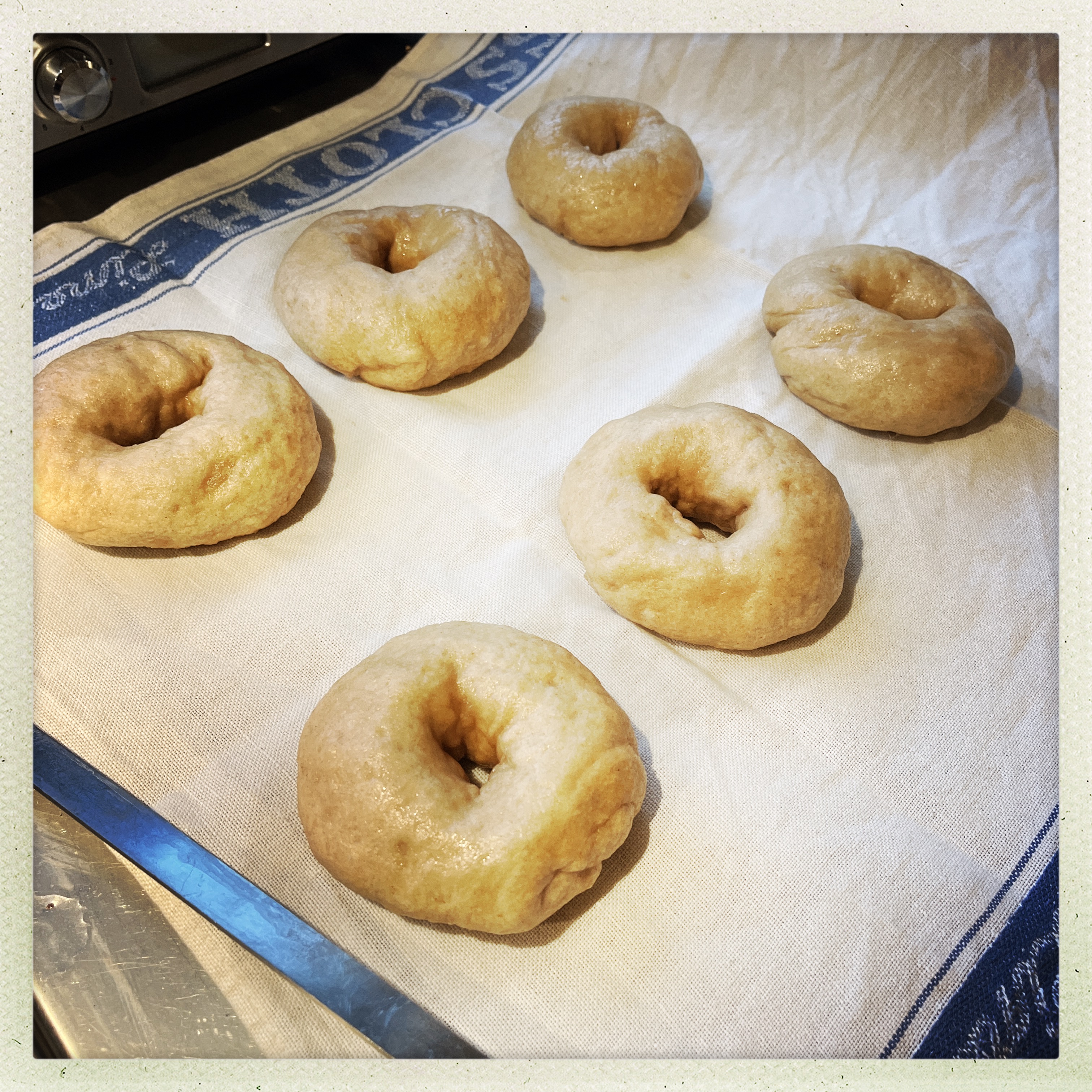
Now cut the dough up, using a bread knife, into eight pieces (more if you want to make smaller bagels). You can now either roll each piece into a long sausage and then join the ends (overlap slightly, as per pic below, although in that they are already baked) or gently knead into a ball (put dough in palm of your hand, cup your other hand over and gently make circles, it’ll ball-up), then make a hole with your finger, or a wooden spoon and make the hole a bit bigger. Place on a baking parchment lined tray. Cover with a clean tea towel.

You can also roll them into a sausage shape and overlap the edges if you prefer.


Now either put in the fridge at 4C if you want to bake these the next day – in which case you can go straight to the boiling of them once you’ve taken them out of the fridge. Or rest for about an hour til they’ve puffed up.

Whenever you are ready to cook:

Preheat oven to 220C.


Bring a wide-mouthed pan of water to the boil. I boil two at a time. Slide in two bagels, upside down to begin with (it doesn’t really matter but this is the way I do them), boil for 45s, tip over with a slotted spoon, boil for another 45s. Take out with the slotted spoon and place them to drain for a few minutes on the tea towel, whilst you do the others.

Once ready to bake put them back on the parchment lined tray you had them on, brush with beaten egg (can be a whole egg or just a yolk if that’s what you have), sprinkle with seeds if you want.


Bake for about 12 minutes (depending on your oven of course).


Voila. They also freeze (once baked) beautifully – better than letting them go stale and then toasted them – and you can defrost them gently in a microwave and they seem like freshly baked.

Courgette and Yuzu cakes

My friend Lucy told me about this original recipe, from the Waitrose site.

I’ve adapted it, to include ground almonds, olive oil, and also tweaked with the icing. If you want to see the original recipe it’s here, otherwise here’s how I make it now.

Because I also like my treats to be contained, I make these in muffin cases and the recipe makes 16.

For those who have done the Zoe Trial, these score 59 per cake (“enjoy regularly” and I do!). They make very moist cakes that keep really well for about a week in the fridge and I think get even better as they age! These have become a real favourite int he house. Just make sure you eat them when they are really cool, or leave them for a day before eating.

200ml extra virgin olive oil

200g caster sugar

4 eggs

2 tablespoons of yuzu juice

125g self raising flour (I have also used white spelt and then a teaspoon of baking powder)

125g ground almonds

1 teaspoon of bicarbonate

250g courgettes – grated and put in a sieve for a bit then squeezed to get moisture out (there won’t be a lot)

pinch of salt

Icing

One and a half tablespoons of icing sugar

250g cream cheese

1 tablespoon of yuzu juice

Method

Oven to 180C. Put muffin cases in a muffin tray (I have a 12 hole one and then a 6 hole one, or you could make these in stages).

Beat together the 200ml of extra virgin oil and the 200g of caster sugar for about two minutes with an electric mixer (whisk attachment). You want it to have thickened. Then add the four eggs, one at a time, the two tablespoons of yuzu juice, the 125g self raising flour (or spelt and baking powder), 125g ground almonds, 1 tsp of bicarb and a pinch of salt, then finally the courgettes.

Spoon carefully into the muffin cases and cook for about 25 minutes. It’s quite hard to see if they are cooked as these are a moist cake, but press down and there should be som resistance. If not cook for a few minutes more.

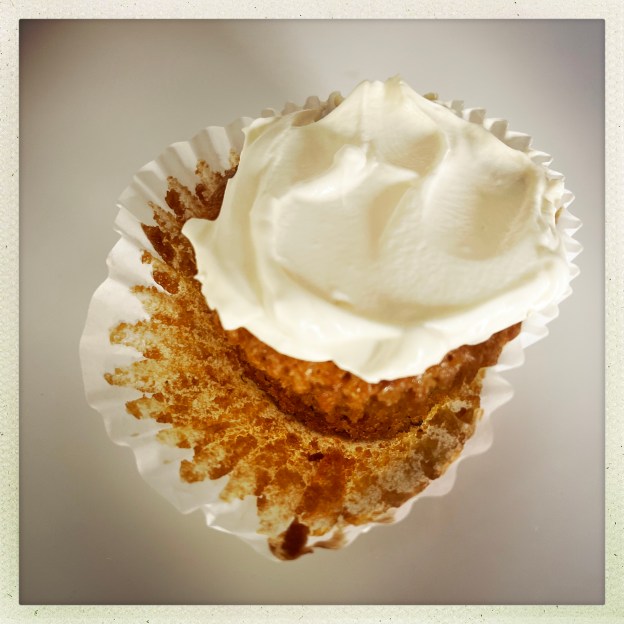
When completely cool, mix together the cream cheese and icing sugar (just with a fork or spoon it should take seconds) and yuzu juice and top each cup cake with icing.

Store in the fridge and enjoy one a day! I don’t have any pics yet as I am both greedy and lazy but will remedy this soon.

Pea and ham pasta

This is surely a nursery stalwart, and I cut this out of a BBC Good Food magazine earlier this year and hid it as it’s pasta and it’s too easy to eat pasta. But, as I seem to be on a carb fest I scheduled this for dinner last night and it was absolutely delicious. Warming, comforting, cosy, just as our government crashes and burns the economy. We ate it in front of the fire trying to keep sane (and warm). I have changed this slightly as don’t agree what they did with the peas (they say cook them in the last few minutes of the pasta cooking but this is impractical if you want to then puree the peas, see later).

This serves two but as a small dinner, augmenting the pasta to 250g, it served three of us fine.

200g conchiglie pasta (don’t fight it like I tried to, this is a great shape for this dish, we used the smaller-size shells, not tiny tiny but just normal, recipe calls for conchiglione which are the big mofos but we didn’t use them)

160g cooked peas
1 red onion, finely chopped

A slosh of olive oil

100g cooked ham

150ml double cream

Juice of half a lemon

40g parmesan, plus extra to serve

Cook the pasta according to the packet instructions, which we know always lie.

At the same time, because cooking is all about multi tasking, heat the oil in the frying pan and fry the onion until soft. Add the ham, cream, lemon juice and parmesan, then season and mix together well. Remove from heat, try not to pick at the bits.

The recipe says to puree some of the peas which you can do if you want (we did). Drain the pasta loosely (ie keep a tiny bit of the water on it) then tip everything into a big pan/frying pan and mix together, serve from the pan if you want and add extra parmesan.

Quick spelt pizza

This is a Donna Hay recipe which makes a really quick, light, and slightly flakey pizza. It’s not pizza as you may know it and I find it best if you fold over the finished product and eat it like that. But it is delicious. And fast. I’ve reproduced the recipe more or less as she originally gave it but you can customise it with any topping you like. This makes two pizzas which we divided up to have half each and I found that was plenty for dinner with a green salad.

The base

1-2 fennel bulbs thinly sliced

Four tablespoons of olive oil

260g white spelt flour plus a little extra

Half a teaspoon of sea salt

250g Greek yoghurt

The Topping

300g soft mozzarella (ie not the block kind, Hay calls for burata but i didn’t use it)

6-8 slices of Parma ham or equivalent

Some fresh basil to scatter atop

Method

Oven to 200C, I put mine a smidge lower and on fan so that I can do both at the same time. Put two large baking trays in the oven to heat up.

Toss the fennel slices in two tablespoons of the olive oil and set aside. To make the pizza dough put the flour and salt in a bowl, stir, make a well in the middle and into that put the yoghurt and the remaining two tablespoons of olive oil and use a fork to mix it all together. Tip onto a lightly oiled board or work surface and gently knead until a smooth dough forms – this doesn’t take long. Now divide into two.

Roll out each piece between two pieces of baking parchment. This always seems wasteful to me but it’s needed and you’ll use two of them for final baking. (I use three piece in total, as I move the top sheet from one piece of dough to the other.) Roll out until, Hay says, they are about 35 x 25 x 0.5 cm. I just did mine until they seemed right (and they were!).

Keeping the dough on the bottom sheet of the baking parchment (you’ll transfer the whole thing onto the baking tray), remove the top piece and arrange the fennel slices on the top. If you’re using something else that needs to be baked – pepper slices, tomato sauce, you’d add that here too. Don’t over do it though, think of this pizza as something you do partly in the oven, partly you top outside of it. But the beauty is that you can also experiment.

When you’ve done that, take the baking trays out of the oven, slide the topped pizza on top, repeat with the other one and then bake for 15-18 minutes until the base is crisp and golden.

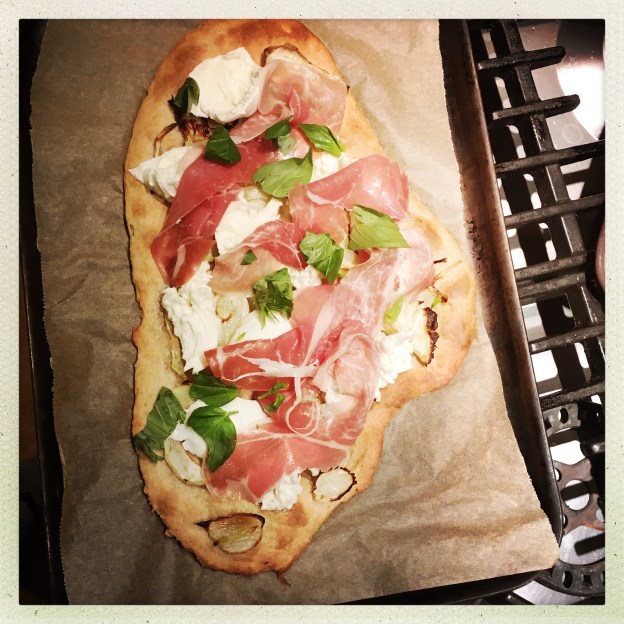
Remove from the oven and top with the slices of mozzarella and Parma ham or other toppings you’ve chosen that don’t need cooking. And scatter over Basil leaves if you have them.

Crème brûlée rice pudding

Sometimes you keep a recipe hanging round for years, meaning to make it. And then you do, and you’re glad you did – keep the recipe and, eventually, make it. This is one such. Like a lot of people, I was late to like rice pudding. In my Italian family we tended to have more of a rice cake – served sliced. I mean I liked it but I didn’t love it. And then of course, the more sloppy rice pudding was served at school and was, like everything about school dinners aside from the fluted shortbread rounds we were occasionally served (which were nectar) – awful.

Anyway when I finally made this it was supremely good. The original recipe calls for light brown sugar for the topping for brûlée-ing but I don’t think it worked great. We have three blow torches, of various degrees of industry and I couldn’t really get any of them to do what I wanted, so in the end I shoved it under the grill. This recipe is originally from BBC Good Food, some time ago now..

75g butter

175g short-grain pudding rice

140g light muscovado sugar

500ml double cream

1 teaspoon of vanilla extract

500-600ml full fat milk

Demerara for sprinkling on top to make the brûlée topping (optional but really good)

Get a large-ish sauce pan that can eventually take all the ingredients. Melt the 75g of butter until it starts sizzling and then add the rice. Stir the175g of rice around for 4-5 minutes until the butter starts to turn golden, then stir in the 140g muscovado sugar and cook for a few minutes more until the sugar starts to dissolve.

Now pour in the 500ml of cream, stir and boil gently unil all the sugar has dissolved and you have a thick butterscotch sauce, now gradually stir in 500ml of the milk and the vanilla.

Simmer all of this for 45 minutes, I stirred every three minutes to stop it catching at the bottom as it has a tendency to at the beginning. Towards the end the rice should feel cooked – not mushy – and if you need to add the extra 100ml of milk (I never need to). You should have what looks like a creamy risotto.

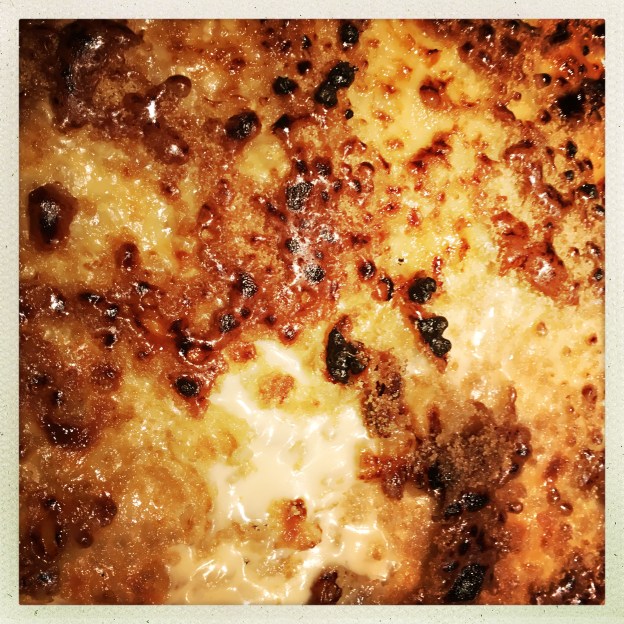
When it’s done pour into a shallow heat proof dish – I use a square Le Creuset. Sprinkle the sugar over the top and either blow torch or put it under a grill for about 5 minutes until the top is golden and set. This might not happen uniformly: don’t worry. It’s still delicious. TBH it’s still amazing without its brûlée hat.

I like this about 30 mins after it’s done, but it’s also good later, if kept at room temperature. It can of course be stored in the fridge – and should be if you are leaving it for more than a few hours – but give it a quick blast in the microwave before eating to loosen it, if you don’t have time to bring it back to room temperature. That said my eldest loves it cold. I don’t.

It’s delicious and comforting and that’s what I need right now.

Sourdough doughnuts

I first made these in the summer of lockdown 2020, when we would ‘go’ for a picnic each Wednesday, which involved us getting into the car, basically driving into the turning circle on our drive and then getting out and having a picnic.

Listen: you make your fun where you can. My friend T gave me this recipe which I have tweaked a bit. It makes a lot – about eight. And they don’t really keep, they’re not the same even two hours after making them. You can use only half the dough at a time and make the rest the next day. (Note: I have pushed these to a 144 hour prove at 4C and they are delicious, so you can absolutely make the dough, cut into doughnuts and keep in the fridge and make in batches, the 144 prove doughnuts were amazing – they puffed up to life-saving-rubber-ring size and tasted amazing.)


Warning: you need to start these the day before you need them.

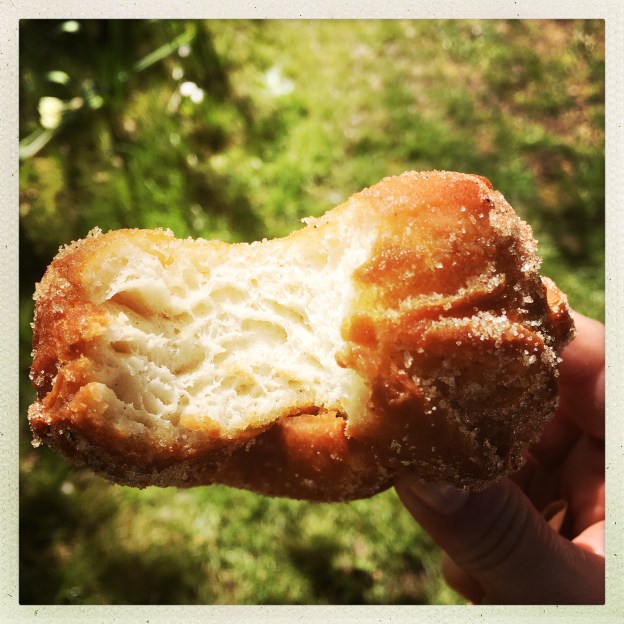
This doughnut had a 144 hour prove.

These are the ingredients:

240 ml whole milk warmed to 50C (I use a thermapen for all my kitchen thermometer needs)

1 large egg at room temperature

Four tablespoons of melted butter, cooled slightly

225g sourdough starter, also at room temperature. This should have been recently refreshed – about 5-6 hours ago at room temperature, the day before if kept in the fridge

500g plain flour

110g granulated sugar

1 teaspoon of salt

1 teaspoon of cinnamon

You’ll also need quite a lot of oil for frying (try not to think about it, I am not a fan of deep frying but you need to for this) and some caster sugar mixed with cinnamon for coating later.

Once the milk has reached 50C mix it together with the butter, starter and egg. You can do this by hand or in a mixer with the whisk attachment. Then add the sugar and the flour.

Now with this bit you can either mix it all up and knead on an oiled board, leave for ten minutes, knead for ten seconds, leave for ten minutes, knead for ten seconds, leave for ten seconds until you have a smooth elastic dough (so repeat one more time if needed). Or you can do it all with a dough hook attachment in a mixer for about 15 mins until it all clumps together.

Once this bit has been reached you get a big bowl, oil it and put the dough in, cover it and refrigerate it overnight/until the next day when it’s needed.

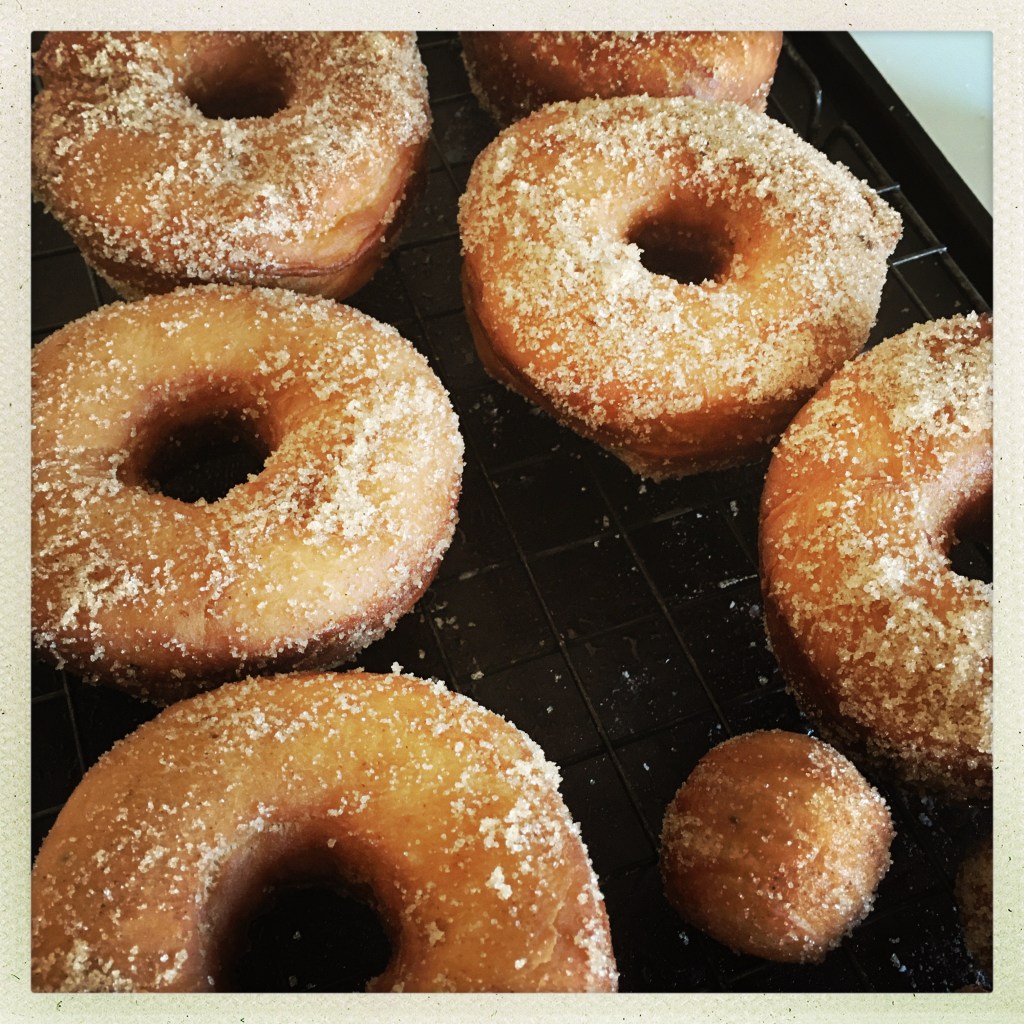
About 2-3 hours before you want to eat your doughnuts, take the mixture out, roll it out on an oiled surface until it’s about 3cm thick. I use a round cookie cutter to cut the doughnuts out, using a small one to make the ‘hole’. See what sort of size you want them to be, mine are about 10cm with the hole in the middle about 2.5cm. You can also do them as round doughnuts but I like ring ones best. The first time I made these I tore the edges slightly and was really upset that they wouldn’t be all perfect but actually, those little tears made (see main picture) something gloriously layered and even tastier! I’ve tried to recreate it ever since and can’t..

Put them on an oiled tray, or one lined with baking parchment and cover with cling film which you can also lightly oil if you are nervous (tbh I cover mine with a tea towel). Leave to rise for about 1-2 hours – depends on how warm your kitchen is. You know the dough is ready when your finger gently pressed makes an indentation but also don’t sweat it.

Fry a pan of oil up (use something light and not highly flavoured: I use a blend of olive oil and sunflower oil). Now here it depends a) how brave you are b) how wasteful you want to be with the oil c) how many you have made and intend to cook d) how many you want to cook at once. I tend to use about a litre of oil in a medium sized sauce pan and cook two at a time. DO NOT OVERFILL and of course be sensible, this is oil you are heating up. When it reaches 175C (use your thermometer) you’re ready to go, using a slotted spoon lower down however many doughnuts you intend to cook. Like I said I do two at a time. They take about 2-3 mins per side, flip with the slotted spoon; the colour is the guide here: you’re looking for a true golden brown. Take out using your slotted spoon and immediately flop the doughnut into caster sugar and cinnamon in a bowl.

Then place on a drying rack. When all are done you’re about to experience something wonderful so take a moment to enjoy it.

And try not to eat more than one.

And try not to eat more than one.

Nigella’s chocolate olive oil cake

This is simple and beautiful. It can be flourless but somehow seems so much better than so many of the flourless chocolate cakes that turn up at gatherings. It’s so easy to throw together. The original recipe is here, but I’ve cut down the sugar and may cut it down further but be careful as sugar plays a role in cake making beyond mere sweetening.

Use a mild olive oil, I have at times used a too fruity one and whilst adding a depth of flavour, it’s distracting.

Once you’ve made this once you’ll realise it’s so easy you can make it in a commercial break, no chocolate to melt or chop. Largely store cupboard ingredients. My children love it.

You need

150ml mild olive oil

50g cocoa powder

125ml boiling water

Two teaspoons of vanilla extract

150g ground almonds (you could also substitute half almond half hazelnut, you can also use flour but unless you are allergic to nuts I implore you not to do this)

Half a teaspoon of bicarbonate of soda

A pinch of salt

175g caster sugar

3 eggs

What you do

Oven to 170C

A 23cm spring form tin, base lined with baking parchment.

Pour the boiling water slowly into the cocoa and stir until no lumps remain, add the vanilla extract.

In a separate bowl, mix together the almonds, bicarb and salt. And then you’re going to beat/whisk together the eggs, olive oil and caster sugar, either by hand (go you) with a whisk/wooden spoon or with an electric contraption (hand held or free standing).

Nigella says to use the paddle attachment, I always use the whisk because I can never find the paddle attachment. Beat electronically for three minutes until it’s syrupy and fluffy and pale yellowy. By hand: until your hand falls off.

To the eggs/oil/sugar mixture slowly add the cocoa mixture (turn down the speed if you are doing this with a gadget). When all incorporated add the ground almonds/bicarb/salt. Scrap down, make sure all mixed then pour into the tin.

Bake for 25-45 mins. Nigella says 40-45, mine is done in 25. You want it to be a bit quivering on top in the middle (Nigella describes it as looking a bit damp) but defo set at the edges. A skewer should come out pretty clean.

Spelt, nut butter, chocolate chip cookies (aka mummy’s lockdown cookies)

I was craving a very particular kind of cookie when I made these: I wanted peanut butter, I wanted spelt or rye flour rather than white flour, and I wanted oats. Basically something a bit wholegrain, not madly high in sugar but definitely still feeling treaty. Because otherwise, just eat something else no?

This is a mishmash of a few recipes I had and really  tasty with, dare I say it, quite a lot of depth to them (dare I say it because: wanker alert). I’m not usually one to ‘make up’ a recipe (and I don’t feel this is really made up in that way but you know…as close as I’ll get). The chocolate chips still make these feel norty, but the other ingredients lessen the sweet-treat hit that makes you want to eat more and more. So in other words, a good, tasty cookie that isn’t just empty calories.

I used some hazelnut paste in the cupboard that I wanted to use up, but if you don’t have it then any nut butter will do. You absolutely do NOT need it for these and I wouldn’t buy it especially, it’s insanely expensive and rather a waste here but like I said, it was in the cupboard and needed using up so…

You need:

100g soft unsalted butter (or you can use salted and don’t add the salt later)

120g nut butter of your choice (so, I used half hazelnut paste, half peanut butter, crunchy)

150g sugar – I used caster and light brown

Two eggs

90g spelt flour (you can also use wholemeal plain, white plain if you must, or rye)

100g oats, any size or if you want to you can blend them so they are fine. I used large oat flakes which makes them a bit chewy

half a teaspoon of baking powder

a good pinch of salt (unless you are using salted butter in which case you don’t need any)

150g chocolate chips/pieces of your choice. I like to use a mix of small pieces and quite large bits and I use milk and dark because I’m all over the place with what I like

Method:

These make about 24. Oven to 190C you’ll also need a baking parchment lined tray.

Mix together the butter, nut butters and sugar until one big, buttery, sugary whole.

Add the eggs one at a time, until all blended, then add the flour, oats and baking powder with the salt if using. You can do this all by hand, it doesn’t need a lot of mixing.

Finally mix in the chocolate chips gently. You can dollop these onto the tray straight away – use a tablespoon or an ice cream scoop. They don’t spread out madly but give them a little space to do their thing.

You can also chill the mixture in the fridge for a few days. I bake some from fresh, chill the rest and I’ve also chilled then rolled into cling film and stored some in the freezer.

I’ll report back on how they fare.

Mine were done in 9/10 minutes. You want to take them out when they are fairly ‘dry’ looking, it’s okay if they look a bit ‘wet’ just in the middle. I like to flatten them gently with a fork the moment they are out. Leave on the baking tray for a few moments before sliding the parchment straight onto a cooling rack. I really like these still a bit warm so the chocolate is still melting and liable to make a mess so you have to sit still for a moment whilst you eat them.

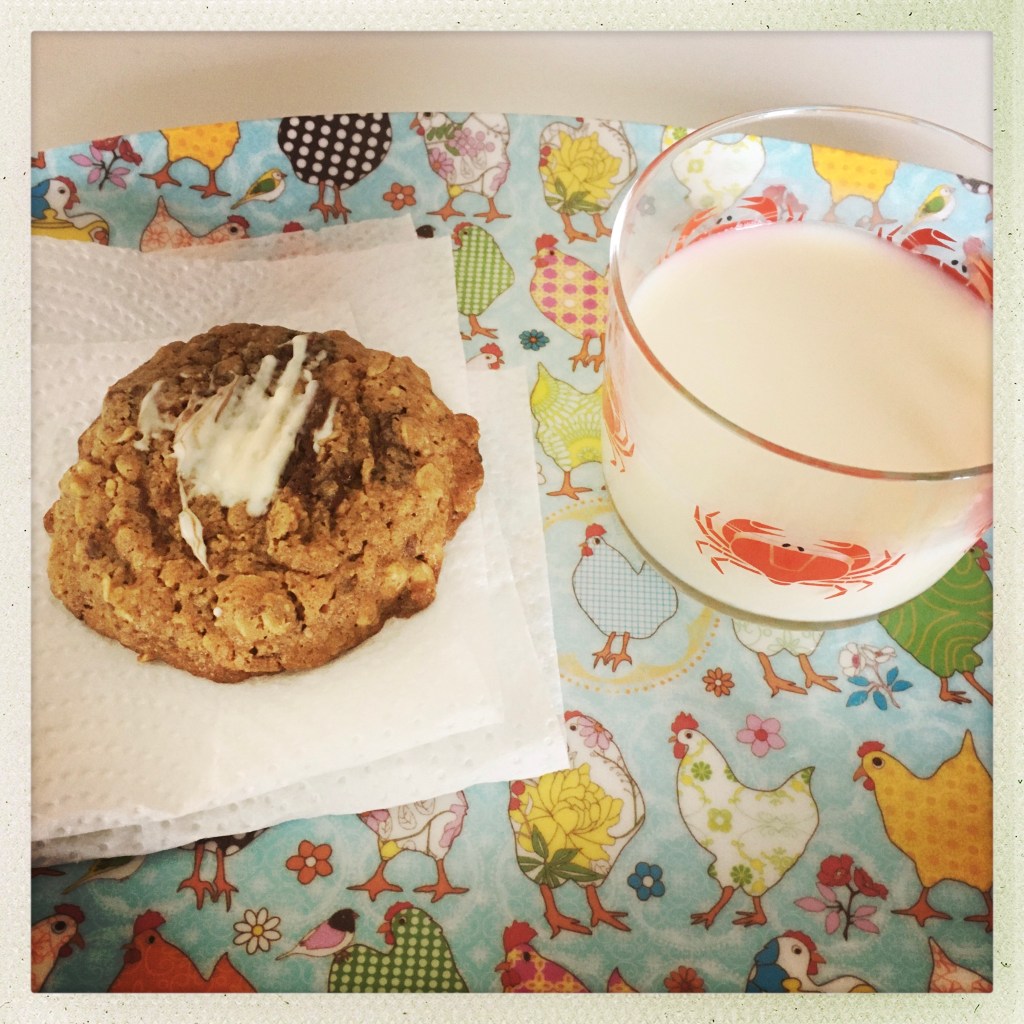
Update. What I do now, if I have some white chocolate spare, and I invariably do, is when the cookies are just out of the oven, I press them down with the back of a fork, then gently press a square of white chocolate in…