Category Archives: Dairy Free

Sourdough bagels

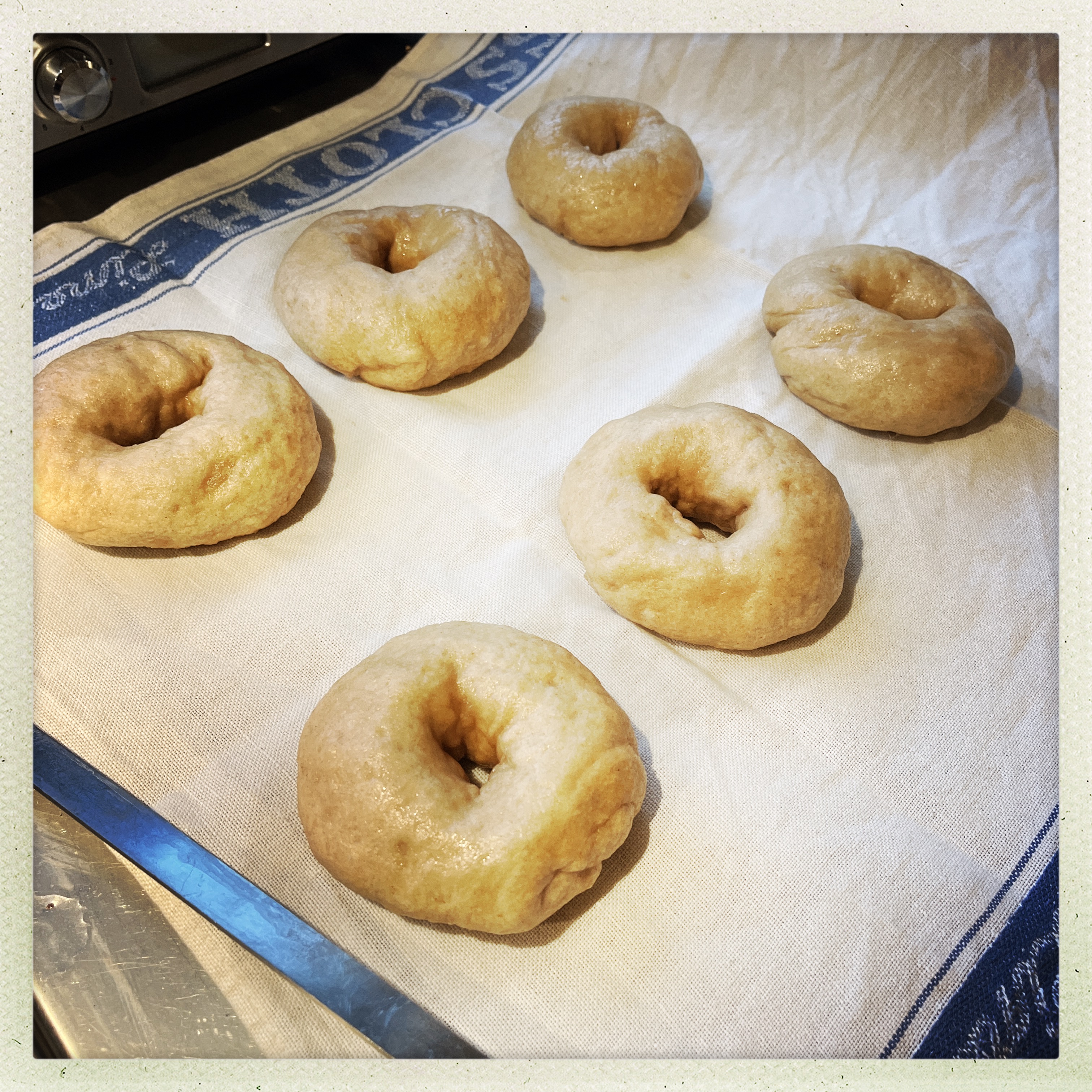
I’ve long made bagels and they are a thing of beauty and deliciousness. I have made sourdough ones but not with any regularity. But recently I started making them again. They take a bit more time, in that they need to be left to rise in their own sweet time, far more than yeasted bagels. I rushed them last week and they were dense – still delicious but not so airy and light.

I tend to shape these into little round rolls first and then puncture a hole with a wood spoon handle. I tend to make these with a smaller hole than my yeasted bagels. Who knows why.

Unlike yeasted bagels these can also be left to prove for 48 hours in the fridge (maybe even longer but I’ve never left them that long), so if there aren’t that many of us, I tend to cook a batch up in two lots so we have fresh bagels for two days running. I can’t do that with yeasted bagels as they really have to be cooked the day after making (after an overnight prove in the fridge, ie they don’t ‘last’ that long in the proving stage).

If you want to make them totally vegan then don’t egg wash them.

You can of course use 500g of just white flour, or mix in a bit of wholemeal. I’m always looking for a more gut-friendly diversity so I add Vanessa Kimbell’s Diversity XXX flour. TBH these days I add 10-15% of it into almost all my bakes but here I use 20% (100g of 500g is 20% isn’t it? I failed maths..)

I think this recipe is, at least in part, from Edd Kimber but I adapted it a while ago. (I love Edd.)

What you need:

185g active sourdough starter
250g warm water
1 tbsp of sugar or barley malt syrup
1 tsp of fine sea salt
400g strong white bread flour
100g Diversity XXX flour

I mix everything together in my Kenwood Chef food mixer with the dough hook. I leave it on low for ten minutes. Then I turn the dough out onto an oiled surface, cover it with a bowl and leave it for an hour. After an hour I give it a gentle knead for ten seconds, leave it for an hour and then knead it again for ten seconds. If your house is very cold you might want to do this one more time. I kinda go on dough-feel (and no I’m not very good at it either).

When you’re ready to shape the bagels, when the dough feels lighter and a little more yielding, then cut it into 6/8/10 depending on how many you want to make (this makes eight regular sized bagels for me). I roll into little balls using my hands, then make a hole with the handle of a wooden spoon, stretching the hole out a little.

Place on a parchment lined tray.

I now leave this out, covered with a tea towel, for about another hour before putting them in the fridge overnight. I also think they benefit from coming up to room temperature after taking them out of the fridge but I never have time to do this so I put them straight away into the boil process.

Boiling and baking

Bring a pan of water to the boil. Some people put things in the water to make them more of a bagel (I don’t know what but stuff that makes it apparently taste more bagel-y) I can never be bothered. When the water is boiling I plop two in there – if you can get more in without them hurtling into each other than do. I give them a minute or two until they float and puff up a little, and turn them with a slotted spoon, another minute or two, then take them out and rest them on a tea towel. When all are done put them back on the parchment lined tray, brush with beaten egg if you want and scatter with seeds if you want and cook at 220C for 14/15 minutes. Check after 12.

These are really very good.
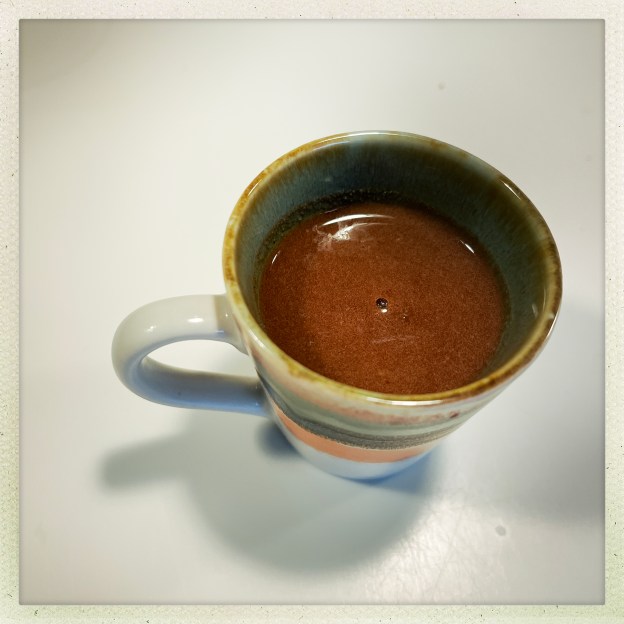
No/low alcoholic chocolate mulled wine (a thing of beauty)

Some years ago I posted about a recipe I’d found for chocolate mulled wine, and indeed I made this for some years. But I stopped drinking about five years ago and life changed and I’d not made it since.

But last week, in preparation for some friends coming round to make wreaths, I decided I’d try to make it again but this time as a no-alcohol version, this was the original plan. This was in part inspired by another girlie-get together a couple of months previously, around the fire pit, where my friend Tracy had brought round some Captain Morgan no-alcohol rum which proved a big hit. I still had some left so I decided to use that as the basis for this no/low alcohol version.

I’m very much not a throw things in a pot kinda girl. I like a recipe and instructions. Sure I sometimes – often – then vary a recipe but I always like a framework to work to. So I was super pleased with how this worked out. I realised, as I started to make it, that I didn’t have the 750ml of liquid the original recipe called for. So I started to panic a bit, looked in the fridge, found some ginger beer, realised that still wasn’t enough to get it to 750ml, panicked some more and added some red wine (hence the low-alcohol title of this post). However you could easily just make this with all no-alcohol rum, or half that and half ginger beer, or what I did. What I did is reproduced below but bear in mind you can, as I did, vary what you use. Add a bit of booze if you like or not.

Chocolate in mulled wine? Don’t knock it til you try it. Don’t be tempted to use anything other than 100% cocoa here. I used Firetree which is the best 100% but you could also use any 100%, most of it is awful on its own but here it could shine. The Fiori di Sicilia essences were, if I say so myself, inspired in this as it adds a wonderfully citrusy note to everything.

Bottled up wouldn’t this make a fabulous present for someone? Shake it up and heat it up before serving. My husband said it was one of the most delicious things he’d ever tasted.

Feeling REALLY pleased with myself over this.

Ingredients:

750ml some sort of liquid, see above. I used 500ml of no-alcohol rum, 150ml of red wine and 100ml of ginger beer. I used this Captain Morgan rum and this gingerbeer.
1 cinnamon stick
1 teaspoon of chilli flakes
1tsp ground mixed spice
5 whole cloves
100g dark muscovado sugar
(you can also use just normal caster/granulated)
80g 100% cocoa chocolate of your choice (I used Firetree), broken into pieces.
A good few drops of Fiori di Sicilia. Of course you can make this without this ingredient but I use it a lot in my cooking and I really think it’s worth buying, you can use it in so many things and it lasts for ages.

Put everything together in a sauce pan and heat through gently until the chocolate has melted. Then either serve immediately or cool, put in the fridge and heat up as required. This will happily see you through Christmas!

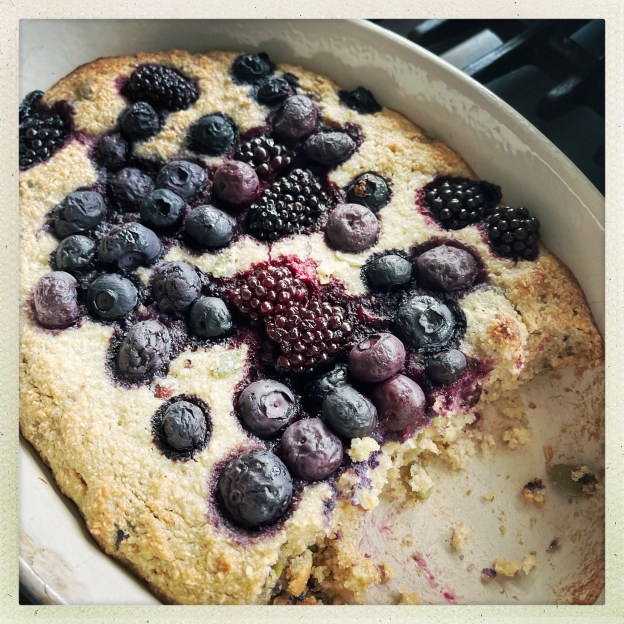
A super healthy clafoutis

So, first up this is from Tim Spector’s excellent The Food for Life Cookbook which you should buy.

I have a very restrictive and healthy diet (no dairy or soya, minimal animal products, nightshades and sugar). Regular cakes, biscuits n ting are a thing of the past. I do taste chocolate as that’s my job, but in tiny amounts. So Tim’s book (as well as some of the Deliciously Ella books: the first one was awful but they’ve got really good since) is a Godsend for me. I still make yummy things for my family and friends but I rarely have anything for me to eat that’s desserty. Don’t feel sorry for me! I look great, have lost a ton of weight, feel pretty good most of the time and can, and still do, eat pasta and bread because my nutritionist – Pr Valter Longo – is Italian!

I didn’t have much hope for this but I made it for some girlfriends and I really loved it and my friend Katie went mad for it, but I thought I could improve it (sorry Tim) and so this is my adapted version.

55g light brown sugar
3 tablespoons of extra virgin olive oil
1 egg
200g kefir (I use coconut kefir)
100g oat bran
100g ground almonds
35g toasted hazelnuts (or nuts of your choice, or more seeds), chopped
35g pumpkin seeds
half a teaspoon of baking powder
Pinch of salt
160g frozen berries or fresh ones (I particularly like cherries when they are in season)
Zest of one lemon

Oven to 200C, oil an oval baking dish (the sort you might make a crumble in, Tims says 23cm round one).

Basically put everything together, mix well, spoon into the dish, whack in the oven for 25 mins. Best eaten warm, it also makes a rather nice breakfast. Serve with whatever you want/can eat. I have mine with coconut yoghurt.

Oat Milk Iced Coffee


I’m always a little embarrassed to post a ‘recipe’ that’s basically just an idea. But tbh I’ve had some of my best tips from people posting mere ideas…

Since I stopped eating sugar and dairy (and soya, nightshades, meat and probably something else I’ve forgotten) to help with my health I’ve felt so much better. But it’d be a lie to say it hasn’t had its challenges. We are a family who loves our coffee and especially in the hot months, our iced coffees.

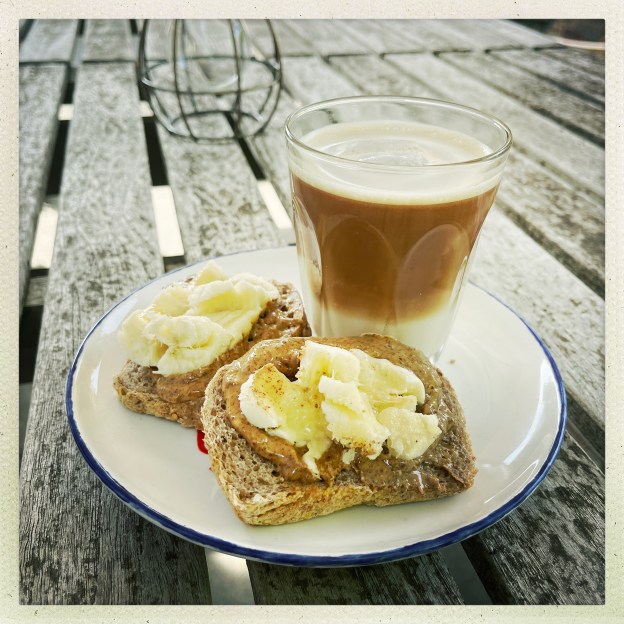
I don’t know why I didn’t think about it before but actually half a glass of oat milk (or plant milk of your choice), half a glass of ice, and an espresso or two makes an excellent cold drink that’s my new favourite way to drink coffee atm.

However, it seems to challenge baristas when I go out.

“Do you have oat milk?” I ask. “Yes they say”.
“Do you have ice?” I ask. “Yes,” they say.”

“Then could I have half a glass of oatmilk, some ice and an espresso?”

You’d be amazed how often the answer to this is ‘no’. (And listen, my parents ran a cafe for years and I worked there so I know what it’s like to work as a barista.)

Pret can’t seem to handle it and insist on giving me an Americano instead (which alters all the proportions). The coffee bar at my otherwise amazing military club can’t get their heads around it, although just a few feet away the staff at the lounge bar can mak a beautiful drink for me. The waiter at Ottolenghi got it and made it for me himself.

But most of the time I just make it for myself at home, thus saving myself £££.

If you like sweet drinks this isn’t for you. But if you like all the component ingredients you’ll love this. And if you’ve been doing this yourself for years then: good for you. Why didn’t you tell me?

Tamsin’s Houmous

I’ll have to add a picture anon and also I can never really decide how you spell houmous so I hope that will do.

Here’s the thing with me and houmous. I’ve never really liked home made, or at least I have never made any at home which pleases me.

But all this has changed. I went to my friend Tamsin’s house; Tamsin is an inaugural member of my Suffolk Chocolate Club and it was her turn to host, and she made this amazing houmous which now I make and it’s, amazingly, still amazing when I make it.

The key is a really whizzy blender. I make mine in my Sage Super Blender, which is not its real name. I find if I make it in my Magimix it needs far longer to make it smooth.

You need (I’m so sorry about the formatting, not sure what’s going on with WordPress atm)

A 400g tin of chickpeas drain the liquid and keep it separate
50ml of the chickpea liquid (but you might need a bit more, I never do though, you can keep it though for aqua faba if that’s your thing – it is mine)
60ml lemon juice, this seems to be about 2/3 of my little organic lemons. Don’t forget you can grate the peel and keep it in the freezer, for something else.
60ml extra virgin olive oil
1 garlic clove, peeled
1 teaspoon of ground cumin
Half a teaspoons of paprika
1 tablespoon of tahini
1 teaspoon of sea salt

Blend it all up til smooth, serve with a drizzle of very good olive oil.
It’s really good. The recipe says you can add 100g roasted red peppers to make it into red pepper houmous.

What I also do now is halve the houmous (how many ways are there to spell houmous?) when it’s done and then, to one half I add a small cooked beetroot and briefly whizz it up again and it makes for something even yummier.

Lavosh

Lavosh are a bit like Italian Linguette – flat breads that you use with dips. They are so easy to make, the dough can be kept, balled up into individual portions for extra convenience, in the fridge for a day or two, ready to be rolled out and baked and you can have fresh lavosh on the table in under 20 mins.

You need, for eight lavosh

1 teaspoon of dried yeast
125ml of lukewarm water
1 teaspoon of caster sugar


300g of 00 flour (or just plain if you don’t have 00)

60ml of extra virgin olive oil

1 teaspoon of sea salt plus extra for sprinkling

1 egg white

Some herbs for atop, I’ve used basil here but you can use anything you like, fresh rosemary would be nice, as would dried oregano.

Mix together the 1 teaspoon of yeast, 125ml of lukewarm water and the teaspoon of caster sugar in a small bowl and give it 10-15 minutes until the top is frothy.

Whilst you are waiting for this mix together the 300g of flour and one teaspoon of salt in a bowl, make a little well and pour in the 60ml of extra virgin olive oil.. When the yeast/water/sugar mixture is frothy, pout this into the flour mixture too, and mix together until you have a rough dough. Knead this gently for a few minutes (if you need to you can do this on a lightly oiled chopping board or surface) leave for five minutes, go back and knead it again for a a minute or so (nothing strenuous is needed) leave it for another five minutes and by this time it should be smooth. Now leave it covered with a tea towel in a bowl in a warm place until it’s risen slightly. You could also put it in the fridge at this stage and carry on the next day with the cutting up into portions and rolling it out.

When it’s risen slightly cut into eight portions. I then roll them up into balls and with a rolling pin roll them out until they are long and thin. You can then cook, as below.

But if you haven’t previously kept the whole dough overnight you can cook some now and some – balled up in portions or as one big lump of dough – tomorrow as long as you leave the dough in the fridge at about 4C.

Basically when you are ready to bake them, preheat oven to 200C.

You can then either place baking parchment on a baking sheet and put the rolled out lavosh onto it, brush with the egg white, press in the basil leaves or whatever herbs you are using and sprinkle some salt. Then cook for about 12 mins until golden brown.

Or what I do is I preheat the baking sheet with the oven and when the oven is up to temperature the baking sheet is hot. I have separately prepared the lavosh onto the baking parchment (I have a re-usable silicon one). I take out the hot baking sheet and gently slide the lavosh on the baking parchment onto the tray. This way the lavosh puff up more but it’s really not necessary. Then bake as before

They are ready to eat pretty much straight away and are absolutely delicious with dips.

Bagels 2.0

I first started making bagels over 13 years ago. I still make them very regularly. Home made bagels are not difficult, completely different to shop bought versions and whilst I won’t say they are ‘healthy’ they are very much better if you make them yourself.

The original recipe still stands but I’ve tweaked it ever so slightly and this is what I do now, making it in a stand mixer.

Ingredients:

450g strong white bread flour

1.5 tablespoons of caster sugar

1.5 teaspoons of salt

230-240 ml of water, at body temperature preferably (but just not ice cold).

1.5 teaspoons of dried yeast

egg wash for later and seeds if you want them.

Method


If you want to eat these the next day, start making them about 5pm. They overprove easily, even at 4C in the fridge, so you don’t want them hanging round too long. If you want to eat them that day, start making these about 3 hours before you want to eat them.

Put everything in a stand mixer with a dough hook. Mix steadily for ten minutes. Take out the dough hook (on very lazy days I don’t even do that, I drape a tea towel over the mixer) and cover.

Leave for one hour at a room temperature. After an hour the mixture should have risen. Obviously if you live somewhere very hot or very cold adjust accordingly. The dough should be puffed up and a bit yielding to the touch.

Now cut the dough up, using a bread knife, into eight pieces (more if you want to make smaller bagels). You can now either roll each piece into a long sausage and then join the ends (overlap slightly, as per pic below, although in that they are already baked) or gently knead into a ball (put dough in palm of your hand, cup your other hand over and gently make circles, it’ll ball-up), then make a hole with your finger, or a wooden spoon and make the hole a bit bigger. Place on a baking parchment lined tray. Cover with a clean tea towel.

You can also roll them into a sausage shape and overlap the edges if you prefer.


Now either put in the fridge at 4C if you want to bake these the next day – in which case you can go straight to the boiling of them once you’ve taken them out of the fridge. Or rest for about an hour til they’ve puffed up.

Whenever you are ready to cook:

Preheat oven to 220C.


Bring a wide-mouthed pan of water to the boil. I boil two at a time. Slide in two bagels, upside down to begin with (it doesn’t really matter but this is the way I do them), boil for 45s, tip over with a slotted spoon, boil for another 45s. Take out with the slotted spoon and place them to drain for a few minutes on the tea towel, whilst you do the others.

Once ready to bake put them back on the parchment lined tray you had them on, brush with beaten egg (can be a whole egg or just a yolk if that’s what you have), sprinkle with seeds if you want.


Bake for about 12 minutes (depending on your oven of course).


Voila. They also freeze (once baked) beautifully – better than letting them go stale and then toasted them – and you can defrost them gently in a microwave and they seem like freshly baked.

Nigella’s chocolate olive oil cake

This is simple and beautiful. It can be flourless but somehow seems so much better than so many of the flourless chocolate cakes that turn up at gatherings. It’s so easy to throw together. The original recipe is here, but I’ve cut down the sugar and may cut it down further but be careful as sugar plays a role in cake making beyond mere sweetening.

Use a mild olive oil, I have at times used a too fruity one and whilst adding a depth of flavour, it’s distracting.

Once you’ve made this once you’ll realise it’s so easy you can make it in a commercial break, no chocolate to melt or chop. Largely store cupboard ingredients. My children love it.

You need

150ml mild olive oil

50g cocoa powder

125ml boiling water

Two teaspoons of vanilla extract

150g ground almonds (you could also substitute half almond half hazelnut, you can also use flour but unless you are allergic to nuts I implore you not to do this)

Half a teaspoon of bicarbonate of soda

A pinch of salt

175g caster sugar

3 eggs

What you do

Oven to 170C

A 23cm spring form tin, base lined with baking parchment.

Pour the boiling water slowly into the cocoa and stir until no lumps remain, add the vanilla extract.

In a separate bowl, mix together the almonds, bicarb and salt. And then you’re going to beat/whisk together the eggs, olive oil and caster sugar, either by hand (go you) with a whisk/wooden spoon or with an electric contraption (hand held or free standing).

Nigella says to use the paddle attachment, I always use the whisk because I can never find the paddle attachment. Beat electronically for three minutes until it’s syrupy and fluffy and pale yellowy. By hand: until your hand falls off.

To the eggs/oil/sugar mixture slowly add the cocoa mixture (turn down the speed if you are doing this with a gadget). When all incorporated add the ground almonds/bicarb/salt. Scrap down, make sure all mixed then pour into the tin.

Bake for 25-45 mins. Nigella says 40-45, mine is done in 25. You want it to be a bit quivering on top in the middle (Nigella describes it as looking a bit damp) but defo set at the edges. A skewer should come out pretty clean.

Olive oil flatbreads

These are so useful to make in a batch and then freeze. To defrost simply leave at room temperature for a bit or microwave for 10 seconds and eat immediately.

I love the meditative nature of making these. I make them on a large, flat skillet pan, prepping the ones still to cook by first rolling them into balls, then squashing into discs and finally rolling them out. I do this in stages – a mini production line – so the gluten has time to relax in between. I can’t get these super thin, but then I don’t really want to. They are really soft and tasty.

I keep them warm in my warming drawer whilst making the whole batch, but a very low oven serves exactly the same purpose.

I make eight out of this recipe, you could make more if you made them smaller as individual (as opposed to ‘tearing’) dipping breads.


7g of dried (fast action) yeast

600g strong white bread flour

100ml of extra virgin olive oil (doesn’t have to be super expensive)

350ml of water

half a teaspoon to half a tablespoon of sea salt

(depending on taste. If you’re going to serve these with super-salted food then you don’t have to put too much salt in. The first time make them with the lower amount and see how you go.)

These couldn’t be easier. You mix the 7g of yeast with the 600g strong white bread flour, and mix in the 100ml of olive oil and 350ml of water and, finally, the salt.  Mix to a rough dough just using a fork, and then rest in the bowl for ten minutes whilst you wash your hands and put everything away.

When the ten minutes is up, turn the dough out onto an oiled surface and give it gentle knead for ten seconds, then cover it with a bowl and rest again for ten minutes. Repeat twice more. By this stage you should have a smooth dough, with no bits.

If you plan to make these the same day, oil a bowl, place the dough in it, cover and leave until doubled in size. How long this will take depends on your kitchen. I tend to use a bowl that the original, unproved, dough comes up half way on, that way, I know that when it’s at the surface it’s doubled in size. If you plan to make these later put in a cold place in the fridge (by that I mean, as close to the bottom as possible) for the final prove, you could leave it overnight but I wouldn’t leave it for more than about 12 hours.

When ready to go, take the dough out, lightly knead and divide into eight/how ever many pieces you want to make. Roll into a ball by placing the dough on the flat palm of one hand and cupping the other hand over the top and making circular movements, or whatever works for you.

Then flatten each ball into a disc. Put a dry, large frying pan on a high heat and when you are ready to go roll out as best you can to about 18-20cm – if you’ve divided the dough into eight, obviously smaller if you’re making more than that.

As I said in the intro, you can get into a production line with them, prepping each before it goes on. I get it so that as I put one on to cook, I roll the other one out in preparation so it has time to relax a bit. If you can get them perfectly circular great – I never can.

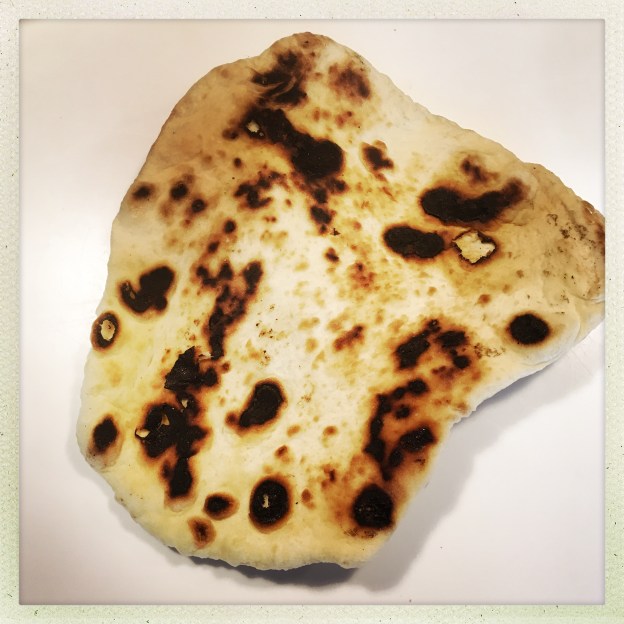
When ready to cook you slap them into the pan and cook for about 5 mins – if you’re like me you’ll turn them often as I’m a bit of a flipper. You can see they’re done as they brown and go ‘dry’ – no more moist bits. If you need to turn the heat down for the second side do so, but turn up again for the new flat bread going on as it’s the dough hitting the hot skillet heat which causes the bubbles to form, which then blister and blacken.


Oat milk for smoothies

I wrote about making almond milk some years ago, and whilst I love almond milk, it’s expensive. We drink a lot of smoothies in our house, and I usually add some sort of non-dairy milk to them. Not because I don’t have dairy – I do, and how! – but I just prefer nut/oak milks in my smoothies; so, in an attempt to make something cheaper,  and to avoid shop-bought ‘mylks’ I tried making my own oat milk. Plenty of people do and it’s so simple I urge you to give it a try.

The basics is one part oat flakes to four parts water, and then, depending on taste and how much you make you can add some vanilla extract, a pinch of salt, or a date for a bit of sweetness. If you use one cup as the measurement, I use a teaspoon of vanilla extract, one date, half a teaspoon of salt. So you can increase or decrease those measurements to suit the quantity you make. But, increasingly I make it using just oats and water. I make it about 1L at a time (I make mine quite thick and then dilute with water at point of making) so it’s pretty fresh. It keeps for a few days in the fridge. It might need a shake/stir before using.

Take your one part of oats (say one cup, in fact I use my 1/3rd cup measurement as that is what works for my bottle), add four parts water, blend for 30-60seconds depending on your blender. You can strain it in through a fine cloth (I do) or in fact just use as is. I don’t find there’s much left behind in the cloth but I do have a ‘super blender’, which basically turns oats to dust.

I felt so disproportionately pleased with myself for saving money making this, I went out and bought a fancy bottle to put it in, thereby completely wiping out this week’s savings.  But I think the presentation is important…