Category Archives: Days out

Sourdough (English) muffins


I’ll get straight to the point. These take time to make but most of that time is resting the dough in some shape or form. You have to cook them slow and low. But they are delicious and they freeze really well. I got the recipe from Facebook, from one of the many sites I follow about sourdough. The original says to use active starter, mine was a few days (in the fridge) old and it did it no harm. But I’ve adapted it slightly. You’ll need to start these the day before you want them. The bulk ferment (the bit where it stays out at room temperature for 10-12 hrs or as long as as possible) takes a long time so best to start these in the morning of the day before you want to eat them. Note you cook these on the hob, not the oven.

Ingredients


250g whole milk
115g water
55g butter (unsalted)
20g honey (or sugar, if using sugar add it with the flour)

75g starter
500g bread flour (I used 50g of Hodmedod’s Sourdough School’s Diversity XXX blend and the rest white but you can also use half wholemeal and half white depends how wholesome you want them to be)
A gently heaped teaspoon of fine grain sea salt

Method

Put the milk, water, butter and honey together in a sauce pan and gently heat til all melted then let it cool for ten minutes. If you’re using sugar then add it to the flour mixture next.

In a large bowl – for this is what you’ll eventually mix everything in, add the starter (sugar if you are using) and then add the milk/honey/water/buttery mixture and mix everything together, now add in the flour and salt. You’ll get a rough dough. Cover it and leave it to rest for 30 mins.

Now over two hours, every thirty minutes, you give it a gentle knead/fold and stretch. When this is done put in a clean bowl (oil with some olive oil) and cover it with a tea towel or a plate if you have one big enough. You leave it out for a looong time for the bulk ferment, or as long as you can. The original recipe says 10-12 hours. But if your kitchen is raging hot then probably half this. I think I left mine out for about 7 hours. Then transfer to the fridge for a day or two. I left mine in for two days.

When you’re ready to make them turn out the dough on a clean surface/board that’s been oiled or lightly floured and roll out to about 1.5cm thick. You don’t want it too thick. Get a biscuit cutter that’s the size you want the muffins to be – mine was about 6-7cm – and cut out as many as you can, transferring them to a baking tray which has either been lined with baking parchment or dusted with polenta. Re shape the dough and roll out again until you’ve used it all up. You’ll have one left that you’ll probably shape by hand. This will be the sacrificial muffin.


Leave out like this, covered with a tea towel, for about an hour. Heat up a cast iron frying pan – big as you got – but make sure you have a lid for it. You can also use a Le Creuset but make sure the heat is low. You can’t rush these babies.

When the pan has warmed up put in the sacrificial one to try out the heat of the pan and how long they take. It’s really worth doing this. Of course I thought I knew best so I ruined four finding out the hard way that my heat was too high.

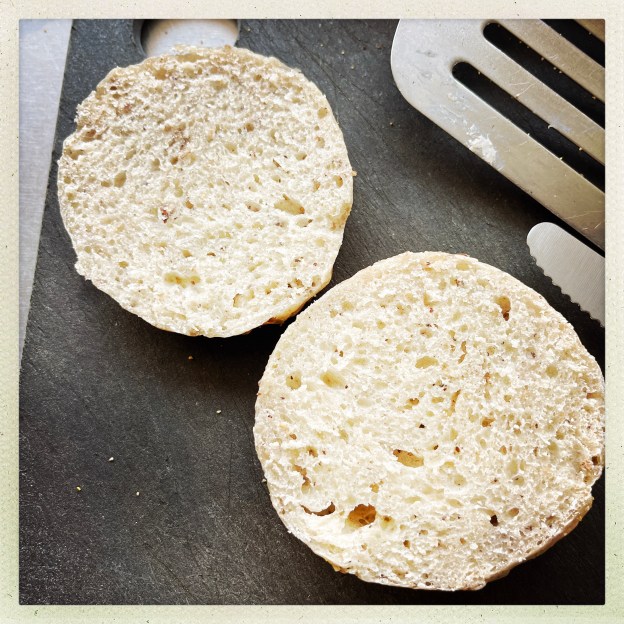
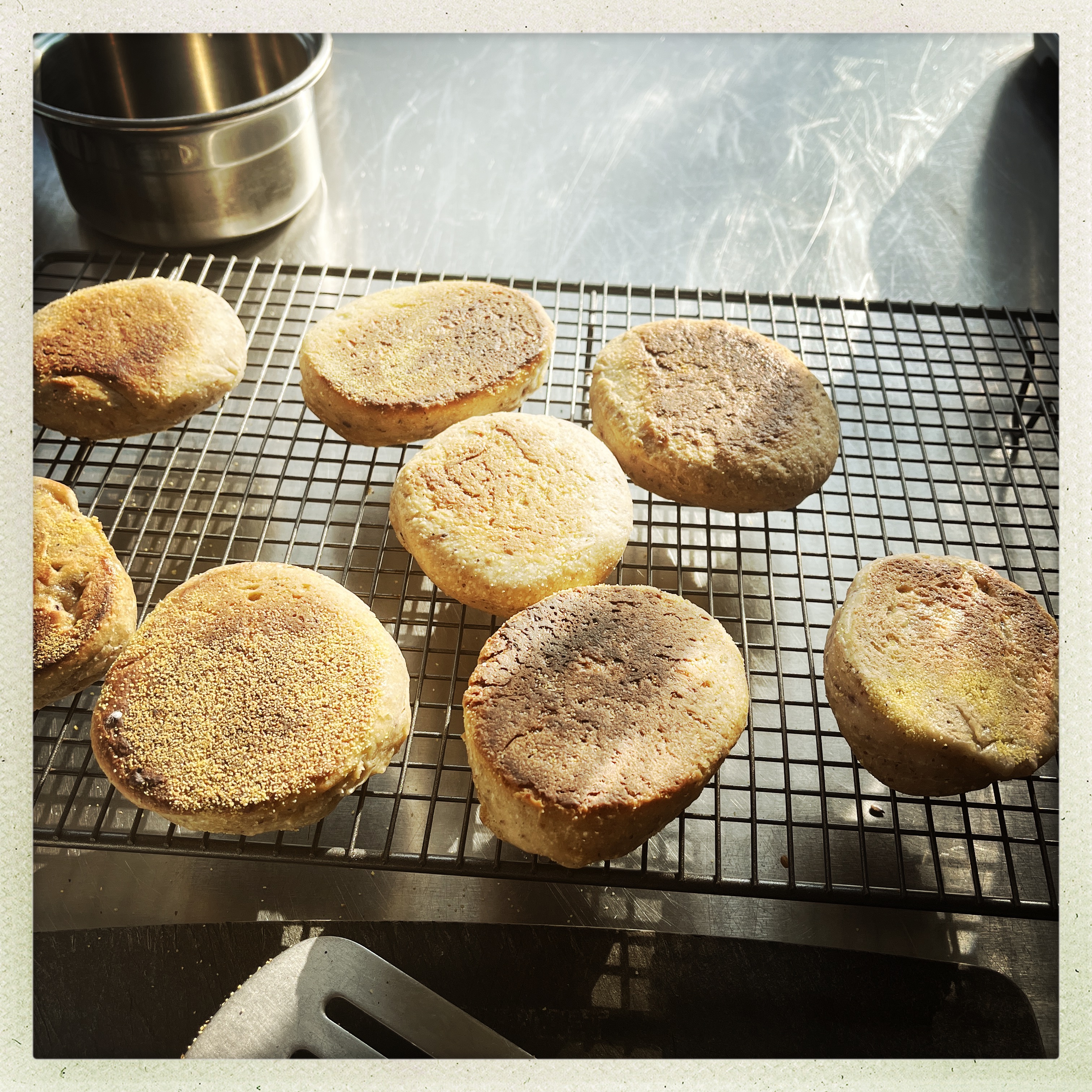
Eventually I worked out mine took about eight minutes each side, on the lowest gas setting. You want them to be gently brown, when done turn over and do the other side for eight minutes. Keep an eye on them, it’s easy for them to burn but be raw in th middle (this is also why you don’t want them to be too thick to start with). Note they do puff up a bit when cooking.

Cook in batches, put on a cooling rack and then eat. With bacon and egg, sausage, cheese and chilli jam, hummus and carrot, whatever you like. They are SO tasty and freeze beautifully. Of course you can also toast them but I had mine fresh.
The best flapjacks you will ever make (a bold claim)

Many years ago, I co-founded a parenting website called I Want My Mum (so named because I said this a lot when I was pregnant and after I had my first born). It was a small but wonderful little site and many of us are still friends today. Aside from mothering tips we also shared recipes.

From somewhere I got this recipe for flapjacks and they were amazing. I shared it on the board and then lost it and then over the years wondered how I’d ever find it when anyone ever talked about flapjacks…. But a wonderful woman called Sarah Green saved it and started making them.

Recently I asked on Facebook if anyone (I’m friends with lots of ex-IWMMers) just happened to have it. “No,” a few said “but Sarah Green makes the best flapjacks”. Sarah was at choir but when she came back she said “the recipe I use is the one YOU posted all those years ago.” The fact she had kept the recipe (and was so generous, she could so easily have just said it was her recipe, after all it wasn’t actually mine, I got it from somewhere) made me unfeasibly happy.

So to avoid having to hunt for it again, here is the original recipe with Sarah’s additions.

250 unsalted butter
Grated ring of one unwaxed orange
325g golden syrup
325g rolled oats (Sarah sometimes replaces 50g of oats for 50g of oat bran which is a great idea)
75g light muscovado sugar

Preheat oven to 180C/350F/Gas mark 4. You need a tin of about 28cm x 20cm which you line with baking parchment.

Put the butter, orange rind, golden syrup and brown sugar in a pan set over a low heat and stir until the butter has melted and everything is coated. The add the oats to the pan and mix it together. Tip the whole lot into the tin and spread evenly.

Bake for 15-20 mins. Don’t overcook or you’ll lose the lovely chewy texture. You know it’s done when it’s just beginning to go golden brown around the edges but don’t panic cos the mixture will be really soft still.

Leave in the tin to cool completely and it will set. Don’t be tempted to take it out before it’s cool. When it is, take the whole thing out of the tin, holding the edges of the baking parchment and cut into slices as desired.

I will make these again and post a picture but in the meantime enjoy them!

Courgette and Yuzu cakes

My friend Lucy told me about this original recipe, from the Waitrose site.

I’ve adapted it, to include ground almonds, olive oil, and also tweaked with the icing. If you want to see the original recipe it’s here, otherwise here’s how I make it now.

Because I also like my treats to be contained, I make these in muffin cases and the recipe makes 16.

For those who have done the Zoe Trial, these score 59 per cake (“enjoy regularly” and I do!). They make very moist cakes that keep really well for about a week in the fridge and I think get even better as they age! These have become a real favourite int he house. Just make sure you eat them when they are really cool, or leave them for a day before eating.

200ml extra virgin olive oil

200g caster sugar

4 eggs

2 tablespoons of yuzu juice

125g self raising flour (I have also used white spelt and then a teaspoon of baking powder)

125g ground almonds

1 teaspoon of bicarbonate

250g courgettes – grated and put in a sieve for a bit then squeezed to get moisture out (there won’t be a lot)

pinch of salt

Icing

One and a half tablespoons of icing sugar

250g cream cheese

1 tablespoon of yuzu juice

Method

Oven to 180C. Put muffin cases in a muffin tray (I have a 12 hole one and then a 6 hole one, or you could make these in stages).

Beat together the 200ml of extra virgin oil and the 200g of caster sugar for about two minutes with an electric mixer (whisk attachment). You want it to have thickened. Then add the four eggs, one at a time, the two tablespoons of yuzu juice, the 125g self raising flour (or spelt and baking powder), 125g ground almonds, 1 tsp of bicarb and a pinch of salt, then finally the courgettes.

Spoon carefully into the muffin cases and cook for about 25 minutes. It’s quite hard to see if they are cooked as these are a moist cake, but press down and there should be som resistance. If not cook for a few minutes more.

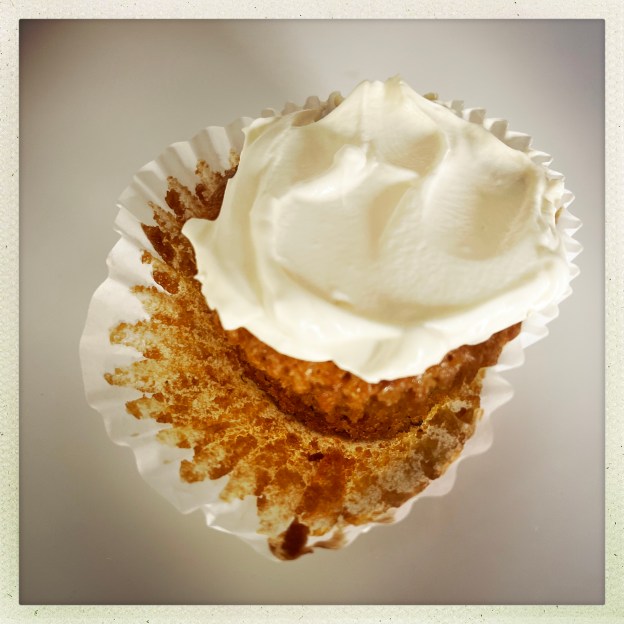
When completely cool, mix together the cream cheese and icing sugar (just with a fork or spoon it should take seconds) and yuzu juice and top each cup cake with icing.

Store in the fridge and enjoy one a day! I don’t have any pics yet as I am both greedy and lazy but will remedy this soon.

Olive oil flatbreads

These are so useful to make in a batch and then freeze. To defrost simply leave at room temperature for a bit or microwave for 10 seconds and eat immediately.

I love the meditative nature of making these. I make them on a large, flat skillet pan, prepping the ones still to cook by first rolling them into balls, then squashing into discs and finally rolling them out. I do this in stages – a mini production line – so the gluten has time to relax in between. I can’t get these super thin, but then I don’t really want to. They are really soft and tasty.

I keep them warm in my warming drawer whilst making the whole batch, but a very low oven serves exactly the same purpose.

I make eight out of this recipe, you could make more if you made them smaller as individual (as opposed to ‘tearing’) dipping breads.


7g of dried (fast action) yeast

600g strong white bread flour

100ml of extra virgin olive oil (doesn’t have to be super expensive)

350ml of water

half a teaspoon to half a tablespoon of sea salt

(depending on taste. If you’re going to serve these with super-salted food then you don’t have to put too much salt in. The first time make them with the lower amount and see how you go.)

These couldn’t be easier. You mix the 7g of yeast with the 600g strong white bread flour, and mix in the 100ml of olive oil and 350ml of water and, finally, the salt.  Mix to a rough dough just using a fork, and then rest in the bowl for ten minutes whilst you wash your hands and put everything away.

When the ten minutes is up, turn the dough out onto an oiled surface and give it gentle knead for ten seconds, then cover it with a bowl and rest again for ten minutes. Repeat twice more. By this stage you should have a smooth dough, with no bits.

If you plan to make these the same day, oil a bowl, place the dough in it, cover and leave until doubled in size. How long this will take depends on your kitchen. I tend to use a bowl that the original, unproved, dough comes up half way on, that way, I know that when it’s at the surface it’s doubled in size. If you plan to make these later put in a cold place in the fridge (by that I mean, as close to the bottom as possible) for the final prove, you could leave it overnight but I wouldn’t leave it for more than about 12 hours.

When ready to go, take the dough out, lightly knead and divide into eight/how ever many pieces you want to make. Roll into a ball by placing the dough on the flat palm of one hand and cupping the other hand over the top and making circular movements, or whatever works for you.

Then flatten each ball into a disc. Put a dry, large frying pan on a high heat and when you are ready to go roll out as best you can to about 18-20cm – if you’ve divided the dough into eight, obviously smaller if you’re making more than that.

As I said in the intro, you can get into a production line with them, prepping each before it goes on. I get it so that as I put one on to cook, I roll the other one out in preparation so it has time to relax a bit. If you can get them perfectly circular great – I never can.

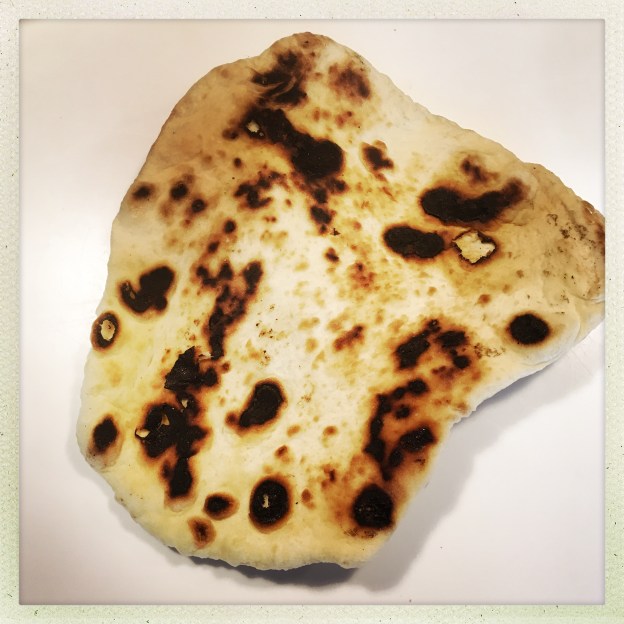
When ready to cook you slap them into the pan and cook for about 5 mins – if you’re like me you’ll turn them often as I’m a bit of a flipper. You can see they’re done as they brown and go ‘dry’ – no more moist bits. If you need to turn the heat down for the second side do so, but turn up again for the new flat bread going on as it’s the dough hitting the hot skillet heat which causes the bubbles to form, which then blister and blacken.


Gingernuts

Gingernuts are not anything I’d really buy in the supermarket but, home made, they are not only delicious, but also super-easy.

This year I decided that, each and every month I would make a positive, healthy change.

This is because I have slid into rather bad habits since late 2016, which was a traumatic year for me. So January was all about giving up NOTHING but instilling an exercise routine – which I have done. And February we are giving up all shop bought cakes, biscuits, sweets, chocolate etc. (aside from high days and holidays, because my children adore the loathsome Fox’s Party Rings for a birthday..).

But home made we can still have. I’m not ready for any sort of deprivation just yet.

I made these a few weeks ago, for a friend who loves ginger. The original recipe is Delia and I’ve adapted it slightly.  The original is from Delia’s Complete Cookery Course which is from 40 years ago and the original recipe calls for margarine. Delia’s more recent incarnations changed it to butter.

You need

110g self raising flour

Two level teaspoons of ground ginger

1 teaspoon of bicarbonate of soda

40g granulated sugar

50g butter, from the fridge, sliced into little pieces

50g golden syrup

1 piece of stem ginger in syrup, drained and chopped (you could also use the syrup in part exchange for the golden syrup)

This is what you do

Heat the oven to 190C.

Put the flour, ginger, bicarb and sugar into a bowl and mix around. Add the butter and rub between fingers to make like fine breadcrumbs. Now add the chopped stem ginger and the golden syrup. Mix together lightly to form a dough.

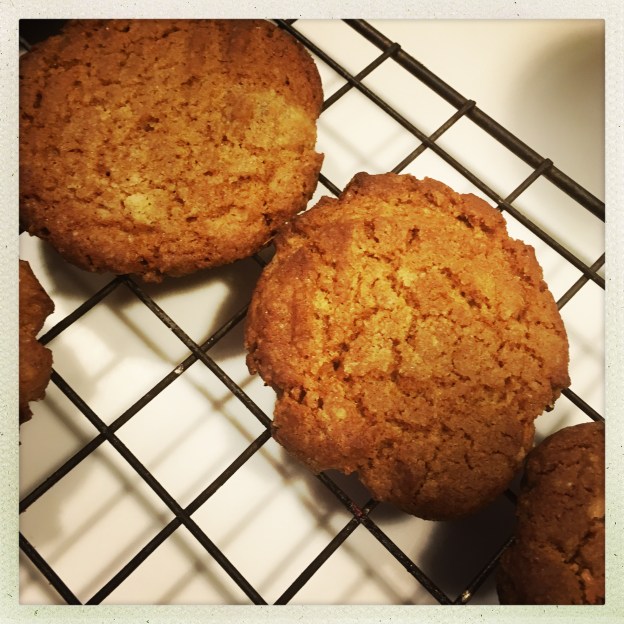
Break off little pieces (my mixture made about 12), roll gently between your palms, put on a baking parchment lined tray, flatten with a fork or your hand.

Bake for a scant seven minutes. Delia says 10-15 mins and I’m not sure what would have been going on in her oven back in the day, mine are over cooked at eight minutes so watch them carefully. In 15 minutes these would be incinerated.

Take out, cool, eat, yum.

Pomegranate and rose lemonade

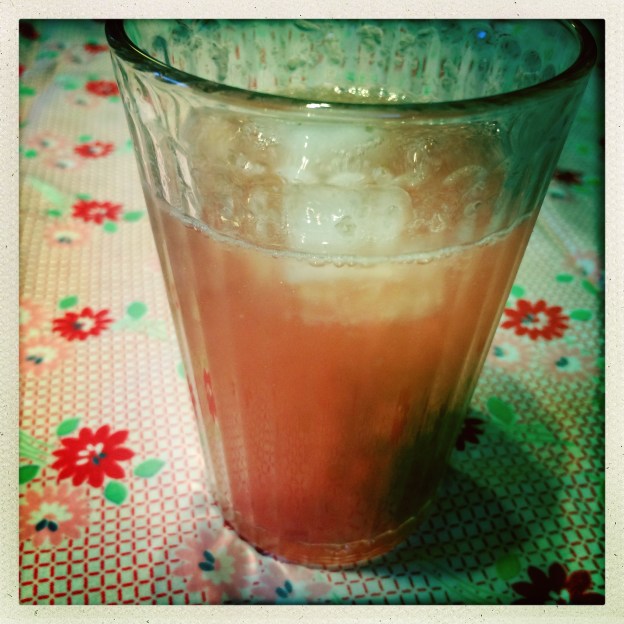
I tried making lemonade a few years ago. It was a faff and nobody really liked it. But recently I tried this, from the Waitrose magazine and it was not only really easy, everyone likes it, it’s luridly (but naturally) pink, and you make a basic syrup which you then dilute. So it makes tons. Perfect for a summer party. It’s not overly sweet, either and I’m sure it works out that it has less sugar in than shop-bought. You can also make this with your children. Supervise the sugar boiling bit of course, but that bit only lasts a minute.

Ingredients

150g caster sugar + 100ml of water

200ml pomegranate juice – make sure you by juice and not the drink which will already have sugar in it

The juice of about 5 lemons – you need 200ml of juice

Pared zest of one lemon

1 teaspoon of rose water

Ice cue and sparkling water to serve. You can dilute with still water too, if you like, but sparkling is more fun, if worse for your teeth and bones…

Method

Put the caster sugar with 100ml of cold water into a medium sized saucepan and heat it gently until the sugar has dissolved. You can stir. Once the sugar has dissolved, bring it to the boil for one minute, then turn it off the heat. Do take care around boiling water/sugar as it’s very hot.

Add the lemon and pomegranate juice and pared lemon zest and leave to cool. Once cool add the rose water and then pour into a clean (supposed to be sterilised, but straight out of the dishwasher will do) bottle/container and store in the fridge. You can keep the pared zest in if you like (I do) but bear in mind the longer it stays in, the more lemony/sour it gets.

To serve, pour 60ml of the syrup into a glass, top up with sparkling/still water, ice cubes and drink!

Daw’s Hall Nature Reserve

Daw’s Hall is not far from where we live, yet, in the nine years we’ve lived here, we’ve never managed to visit. A bit like when I lived in London – which I did for decades, I never visited ‘the sights’ unless we had visiting Italian relatives.

Last weekend we finally made it and it was one of those glorious days. Everyone there was charming and lovely, there is a bee house where you can learn all about bees, amazing scenery, you can walk all around the reserve, slowly, in under an hour – so not onerous. And there are ducks and geese and lots and lots of flowers – depending on the time of year. If you’re lucky you can see the little train toot by. At the end, you can stop and have home made cakes (not tried) and cake.

It’s only open at certain times of year, so do check, but I’m reliably informed that in June the roses are magnificent. Open days coming up are this half of 2016: 29th May, June 5th, 12th and 19th.

There is an admission charge, but it’s not much – £5 for adults, £1 for children.

No pictures cos I left my phone at home. Maybe this made it even more magical…